

Slovak National Gallery
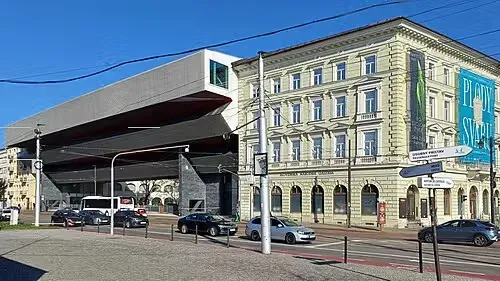
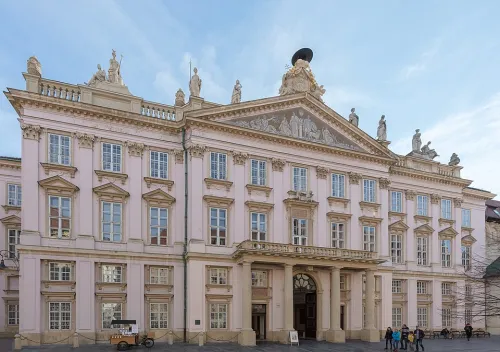
Your walk begins on the Danube embankment at the Slovak National Gallery, the largest network of art museums in Slovakia, with its headquarters right here in Bratislava. The building is the Baroque Water Barracks (Vodné kasárne), chosen as the gallery's home in 1951. It first had to be rebuilt, to plans by František Florians and Karol Rozmány, and opened in 1955, timed for the tenth anniversary of the city's 'liberation' by the Red Army.
The gallery's birth tells you a lot about Slovak history. Under the Habsburgs, when today's Slovakia belonged to Hungary and lived under strong pressure to become Hungarian, a museum devoted to Slovak art was unthinkable. The democratic First Czechoslovak Republic didn't want one either, because its official doctrine held that Czechs and Slovaks were a single nation. It took the Communist takeover of 1948: on 29 July that year the Slovak National Council passed the law that founded the gallery. Its driving force, the commissioner for schools and folk culture Ladislav Novomeský, was dismissed in 1950 and imprisoned in 1951.
The start was tiny: 500 artworks and as many books, two staff and two exhibition rooms, with the Old Masters shown for the first time in 1949. Under the art historian Karol Vaculík, director from 1952, the collection grew to more than 2,500 works within a year, and entry was free from the start.
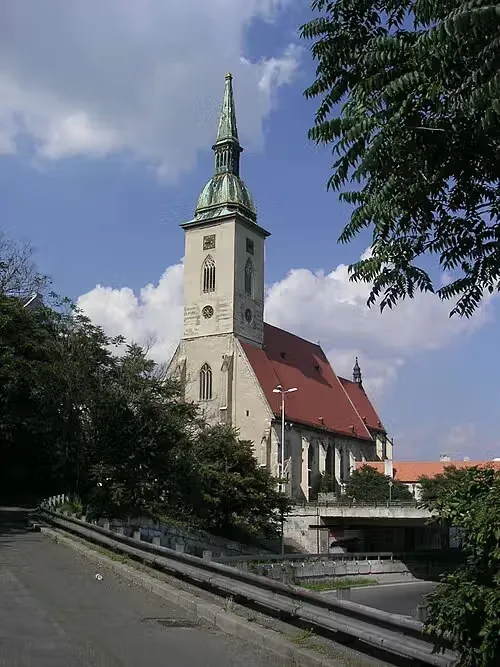
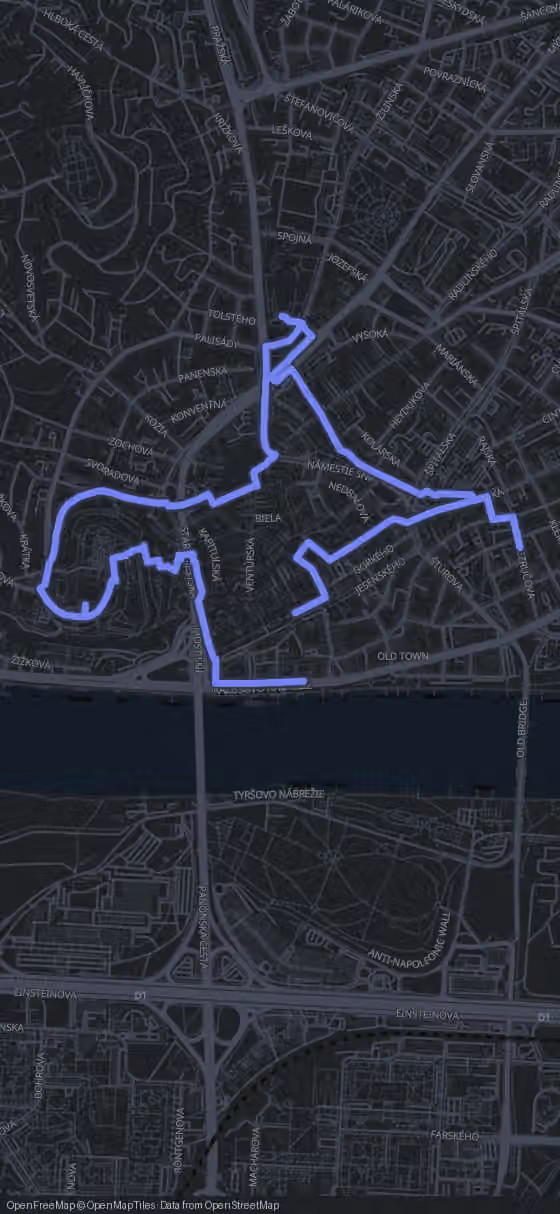
It still is, which makes even half an hour inside an easy yes for anyone who likes art. From here it is 490 m, about 7 minutes, to St. Martin's Cathedral, where the kings of Hungary were crowned.