Free Walking Tour Mexico City: Chapultepec to Zócalo

Start among Olmec heads and the Sun Stone in Chapultepec Park and finish at the Aztec Templo Mayor, with Rivera murals and a golden Angel on the way.

11 Stops 8.4 km ~1 h 55 min walking
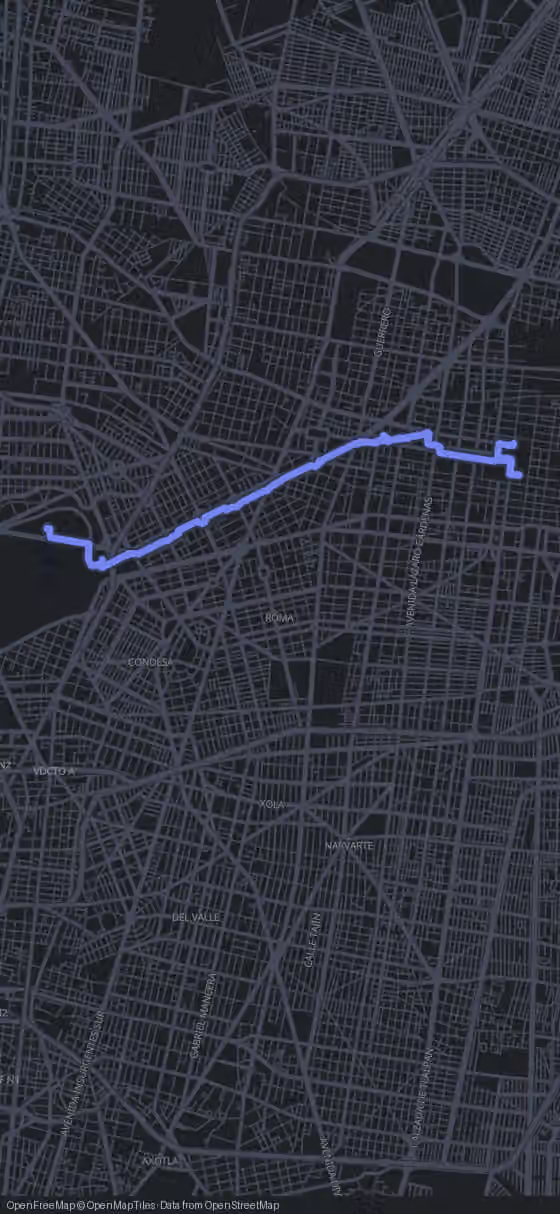
Route map for the Mexico City walking tour
Stop 1 of 11
1,060 m·13 min
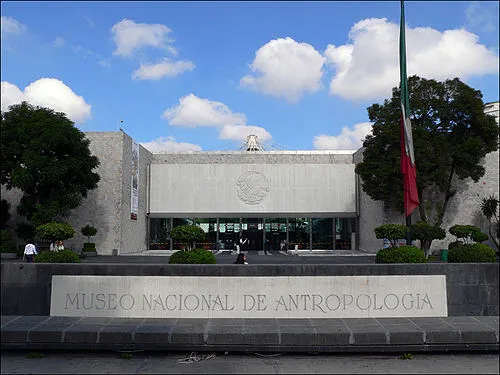
National Museum of Anthropology
Head south-east through the park toward the Museo de Arte Moderno
Welcome to Mexico City. I'm Alex, and our first story begins beneath a vast concrete canopy balanced on one column.
Try this tour with Alex

What This Walk Through Mexico City Covers

This route links 11 stops, from the National Museum of Anthropology in Chapultepec Park to the Templo Mayor in the historic center: 8.4 km and 1 h 55 min of pure walking. With the museum visits that deserve time, plan on about eight hours.

The squares, the Ángel de la Independencia and the nave of the Mexico City Metropolitan Cathedral are free; the big museums charge admission. The GPS route in your browser costs nothing, and the optional AI Tour Guide tells the stories as you walk.

Open free GPS & optional AI Tour Guide
This short shows highlights of the route. All 11 stops follow below.

The Route

Walking Map of Mexico City: Chapultepec Park to the Historic Center

11 stops 8.4 km 1 h 55 min walking
Tap to load interactive map

The 11 stops along this route

  1. National Museum of Anthropology in Mexico City, stop 1 on the self-guided walking tour
    1National Museum of Anthropology
  2. Museo de Arte Moderno in Mexico City, stop 2 on the self-guided walking tour
    2Museo de Arte Moderno
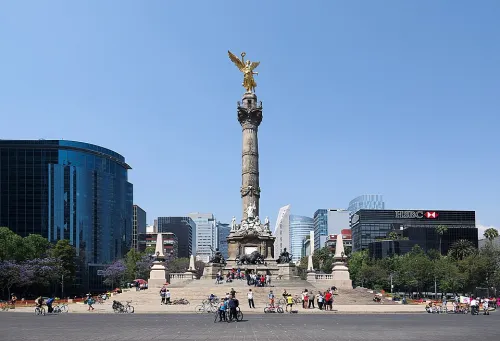
  3. Ángel de la Independencia in Mexico City, stop 3 on the self-guided walking tour
    3Ángel de la Independencia
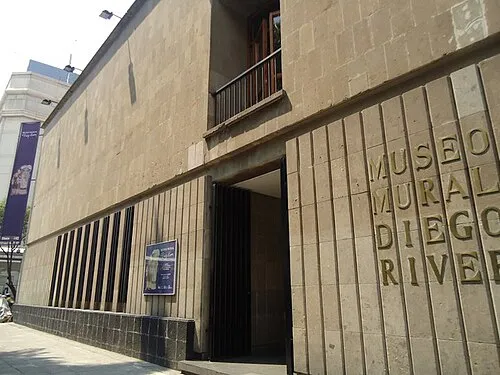
  4. Museo Mural Diego Rivera in Mexico City, stop 4 on the self-guided walking tour
    4Museo Mural Diego Rivera
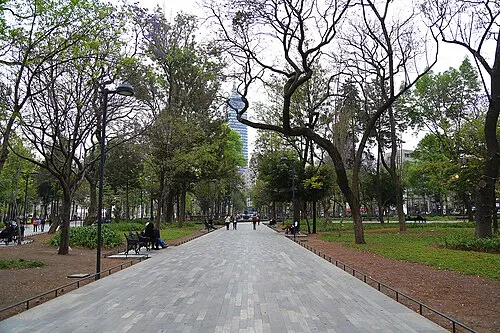
  5. Alameda Central in Mexico City, stop 5 on the self-guided walking tour
    5Alameda Central
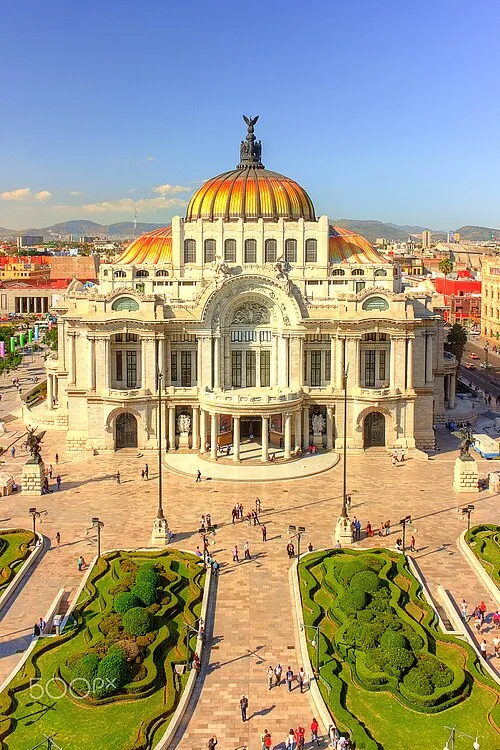
  6. Palacio de Bellas Artes in Mexico City, stop 6 on the self-guided walking tour
    6Palacio de Bellas Artes
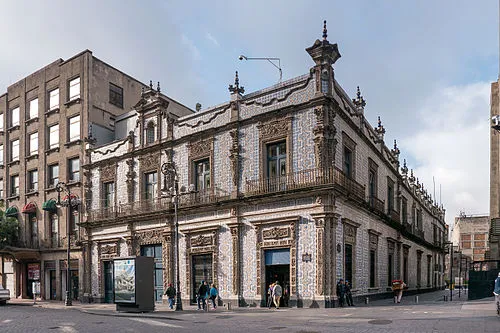
  7. Casa de los Azulejos in Mexico City, stop 7 on the self-guided walking tour
    7Casa de los Azulejos
  8. Zócalo (Plaza de la Constitución) in Mexico City, stop 8 on the self-guided walking tour
    8Zócalo (Plaza de la Constitución)
  9. Palacio Nacional in Mexico City, stop 9 on the self-guided walking tour
    9Palacio Nacional
  10. Mexico City Metropolitan Cathedral, stop 10 on the self-guided walking tour
    10Mexico City Metropolitan Cathedral
  11. Templo Mayor in Mexico City, stop 11 on the self-guided walking tour
    11Templo Mayor
  12. That's the full route.

    Walk it with an AI Tour Guide talking you through every one of these streets.

    Start free in your browser
    You made it

Your Mexico City Walking Tour Stop by Stop: From the Sun Stone to Tenochtitlan

  1. 1

    National Museum of Anthropology

    National Museum of Anthropology in Mexico City, stop 1 on the self-guided walking tour

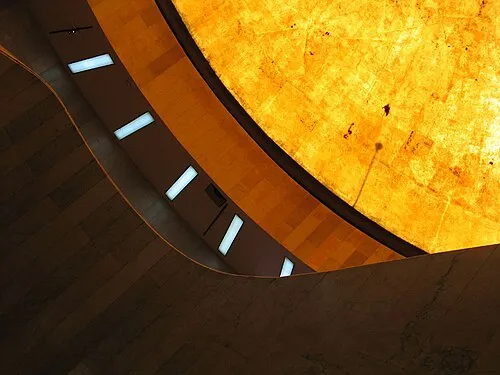
    Your walk starts in Chapultepec Park at one of the most important museums in Mexico and the Americas. Before you reach the door, the Monolith of Tláloc stands guard at the entrance, a first hint of the scale inside. The building went up in 1963 and 1964 on the orders of President Adolfo López Mateos, designed by Pedro Ramírez Vázquez with Rafael Mijares and Jorge Campuzano, and López Mateos opened it on 17 September 1964.

    Inside, 22 permanent galleries hold the archaeological legacy of Mesoamerica and show the ethnic diversity of the country today; the National Library of Anthropology and History is here too. The heart of the museum is the Sun Stone. Make time as well for the colossal Olmec heads, the monumental Teotihuacan sculptures dedicated to the water gods, the tomb of Pakal, the funerary offerings from Monte Albán, the stelae of Xochicalco and a Toltec Atlantean figure brought from Tollan-Xicocotitlan.

    More than two million people visit every year, it is one of the largest museums on the continent, and in 2025 it received the Princess of Asturias Award for Concord. If Mexico's ancient cultures are part of why you came, going in is not optional. Two hours let you see the highlights without rushing; real enthusiasts could easily stay all day and finish the route another time.

    From here it is 1060 m, about 14 minutes, to the Museo de Arte Moderno, also in Chapultepec Park and co-designed by the same architect.
    Local name
    Museo Nacional de Antropología
    Hours
    Tue–Sun 09:00–18:00, Mon closed
    Price
    210 MXN general admission, 105 MXN Mexican nationals & resident foreigners; free on Sundays for Mexican nationals & residents
  2. 2

    Museo de Arte Moderno

    Museo de Arte Moderno in Mexico City, stop 2 on the self-guided walking tour

    The Museo de Arte Moderno is devoted to modern Mexican art, mainly from the 1930s onward, and belongs to the national institute of fine arts and literature. Pedro Ramírez Vázquez designed it with Carlos A. Cazares Salcido, in collaboration with Rafael Mijares Alcérreca. The gardens and walkways were laid out by Juan Siles under the direction of the artist Helen Escobedo, so give the grounds a few minutes even if you skip the galleries.

    Its story began in 1947, when Carlos Chávez created a National Museum of Plastic Arts inside the Palacio de Bellas Artes, which you reach later today. In 1953 Carmen Barreda founded a board to build a proper home for modern Mexican art. It took more than ten years, and she became the museum's first director, serving from 1964 to 1972. Part of the original plan, including an auditorium and a library, was never completed.

    The permanent collection reads like a roll call of modern Mexican art: Frida Kahlo, Diego Rivera, David Alfaro Siqueiros, José Clemente Orozco, Rufino Tamayo, Remedios Varo, Leonora Carrington, Olga Costa, Manuel Álvarez Bravo, Juan Soriano and Vicente Rojo Almazán, among others. Temporary shows bring in Mexican and international contemporary artists.

    The galleries charge admission. If you want to see Kahlo, Varo or Carrington in person, go in. If ancient Mexico is your main interest, enjoy the gardens and keep your energy for the historic center. The Ángel de la Independencia is 1650 m away, a walk of about 23 minutes.

    Hours
    Tue–Sun 10:15–17:45, Mon closed
    Price
    95 MXN general admission; free on Sundays
  3. 3

    Ángel de la Independencia

    Ángel de la Independencia in Mexico City, stop 3 on the self-guided walking tour

    Rising from a roundabout on Paseo de la Reforma, El Ángel is one of the most recognizable landmarks in Mexico City. Officially the Monumento a la Independencia, it was built in 1910 under President Porfirio Díaz by architect Antonio Rivas Mercado to mark 100 years since the start of the War of Independence. Later it became a mausoleum for the war's most important heroes.

    Look at the base first. At each corner a bronze figure stands for law, war, justice and peace. On the main face, toward downtown, the inscription reads La Nación a los Héroes de la Independencia, ‘The Nation to the Heroes of Independence’. In front of it a giant laureled bronze lion guides a child; Rivas Mercado said it symbolized the Mexican people, ‘strong during war and docile during peace’. Beside the column stands a group of marble statues of independence heroes.

    The column is 36 m of steel clad in quarried stone, decorated with garlands, palms and rings bearing the names of independence figures. Its Corinthian capital carries four eagles with outstretched wings from the coat of arms of the time, and on top stands Enrique Alciati's 6.7 m Nike, the Greek goddess of victory: bronze covered in 24k gold, restored in 2006, weighing seven tons. The ground here keeps sinking, an ongoing problem across Mexico City, and the base has had to be extended since the monument was built.

    The Angel is free and accessible at any hour, and it has become the city's gathering point for both celebration and protest. Next comes the longest leg of the day: 2570 m, about 36 minutes, to the Museo Mural Diego Rivera.

    Local name
    Monumento a la Independencia
    Hours
    24/7
    Price
    Free
  4. 4

    Museo Mural Diego Rivera

    Museo Mural Diego Rivera in Mexico City, stop 4 on the self-guided walking tour

    This small museum exists for one painting: Diego Rivera's Sueño de una tarde dominical en la Alameda Central, Dream of a Sunday Afternoon in the Alameda Central, painted in 1946 and 1947. The fresco measures 4.70 by 15.6 m, and the building was literally constructed around it after the mural had been set in place.

    Architect Carlos Obregón Santacilia commissioned it in 1946 for the Versalles dining room of the Hotel del Prado, across the street from the Alameda. When the 1985 earthquake severely damaged the hotel, the wall holding the mural was cut out, and a metal structure was built to carry its 15 ton weight; that structure is still there today. The museum was built in 1986 and opened on 19 February 1988.

    Stand back and take in more than 150 figures. Hernán Cortés, Benito Juárez, Maximilian of Habsburg, Francisco I. Madero and Porfirio Díaz share the scene with street vendors and revolutionaries, and Rivera painted in Frida Kahlo, other wives and some of his daughters, with the Alameda itself in the background. He said the mural was made of memories of his life, his childhood and his youth, from 1895 to 1910.

    Admission is a small price for a painting this size, and half an hour is enough. It is a must if you have never seen a Rivera up close. Then walk 390 m, about 5 minutes, into the very park the mural shows.

    Hours
    Tue–Sun 10:00–18:00, Mon closed
    Price
    45 MXN general admission; free on Sundays
  5. 5

    Alameda Central

    Alameda Central in Mexico City, stop 5 on the self-guided walking tour

    Now you are inside the painting. The Alameda Central, established in 1592, is the oldest public park in the Americas. On 11 January 1592 Viceroy Luis de Velasco II ordered a public green space for the city's residents on what was then the western edge of the city; before that the area had been an Aztec marketplace. The name comes from álamo, the poplar trees planted here, and many parks across Mexico have taken the name Alameda ever since.

    The park grew in stages, and one of them has a dark past. The original reached only from today's Palacio de Bellas Artes to the Hemiciclo de Juárez. The western section was a plaza known as El Quemadero, the Burning Place, where people convicted by the Inquisition were burned at the stake. In 1770, with the Inquisition nearly over, Viceroy Marqués de Croix had it torn up to enlarge the park. In 1791 the Count of Revillagigedo put a wooden fence around it to reserve it for the nobility.

    That did not last. After independence was won in 1821, the Alameda became the center of popular celebrations, and in 1846 President Santa Anna, riding triumphantly into the city, ordered its fountains filled with alcohol.

    Walk the paved paths past the fountains and statues: the Benito Juárez Hemicycle, the Beethoven Monument, a statue of Alexander von Humboldt, the fountains of Mercury, Neptune and Venus, and sculptures such as Malgré Tout and Désespoire. The park is free and open at all hours. The Palacio de Bellas Artes stands right next to it, 390 m and about 5 minutes away.

    Hours
    24/7
    Price
    Free
  6. 6

    Palacio de Bellas Artes

    Palacio de Bellas Artes in Mexico City, stop 6 on the self-guided walking tour

    Called the ‘art cathedral of Mexico’, the Palacio de Bellas Artes is a cultural center for performing arts, literature and exhibitions on the western side of the historic center. Compare outside and inside: the exterior is mainly Art Nouveau and Neoclassical, the interior mainly Art Deco. That split tells its story.

    Italian architect Adamo Boari began the building in 1904 to replace the old National Theater, as an opulent showpiece for the 1910 centennial of independence. The soft subsoil and political turmoil before and during the Mexican Revolution slowed the work and stopped it completely by 1913. Mexican architect Federico Mariscal resumed in 1932, finished in 1934, and the palace opened on 29 November 1934.

    The ground holds older layers. The first known building here was the Convent of Santa Isabel, whose church dated from 1680, and Mexica finds include a sacrificial altar shaped like a plumed serpent. The convent was forcibly closed under the Reform Laws in the 1860s and replaced by a textile mill and housing, part of which gave way to the National Theater.

    Go inside for the murals by Diego Rivera, Siqueiros, González Camarena and others. The museum spaces charge admission, and half an hour covers the murals. Having just seen Rivera's Alameda mural, comparing it with his work here is the reason to come in. From here it is 290 m, about 4 minutes, to the Casa de los Azulejos.

    Hours
    Tue–Sun 10:00–18:00 (museum exhibition spaces), Mon closed; box office Mon–Sat 11:00–18:00, Sun 08:00–18:00
    Price
    95 MXN general admission for Museo del Palacio de Bellas Artes; free on Sundays
  7. 7

    Casa de los Azulejos

    Casa de los Azulejos in Mexico City, stop 7 on the self-guided walking tour

    You will recognize it at once: the facade is covered in Talavera tiles from Puebla, which gives the House of Tiles its name and makes it one of the finest pieces of civil Baroque architecture from New Spain. In the 18th century it was known as the Palacio Azul, the Blue Palace. Look at the carved stone balconies and moldings that frame the tiles.

    It was the main residence of the Counts of the Valle de Orizaba during the viceroyalty, and one of their descendants had the entire exterior tiled in the 18th century, which is how the house has come down to us. The family lived here until shortly after independence in the early 19th century. Then came a string of prominent owners: the Jockey Club de México moved in in 1881, the Casa del Obrero Mundial used it briefly, and the Yturbe Idaroff family lived here too.

    Since the early 20th century it has been the flagship of Sanborns, a well known Mexican chain of cafés, restaurants and stores, so you can walk in for free. For people in the city it is both a symbol and a familiar meeting point.

    The house stands between pedestrian Madero street and Cinco de Mayo street. The Zócalo is 780 m away, about 11 minutes on foot.

    Hours
    Daily 07:00–01:00
    Price
    Free entry (commercial historic building / Sanborns restaurant and store)
  8. 8

    Zócalo (Plaza de la Constitución)

    Zócalo (Plaza de la Constitución) in Mexico City, stop 8 on the self-guided walking tour

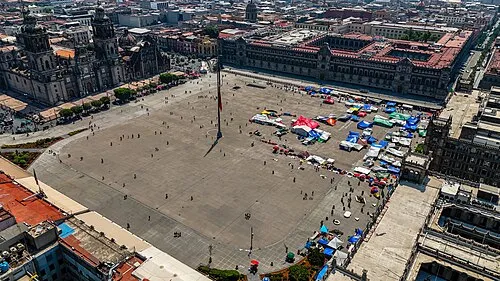
    The Plaza de la Constitución, known to everyone as the Zócalo, is the main square of Mexico City. Together with the surrounding streets it covers about 46,800 m², roughly 195 by 240 m, making it the second largest square in the world after Tiananmen Square in Beijing and the largest in the Spanish-speaking world.

    The Spanish conquerors chose this spot right beside the political and religious center of México-Tenochtitlan, the Mexica capital. Turn around slowly: the Mexico City Metropolitan Cathedral fills the north side, the Palacio Nacional the east, the old City Hall and the government building that replicates it the south, and shops, offices and hotels such as the Portal de Mercaderes the west. The Templo Mayor museum sits at the northeast corner.

    Over five centuries, gardens, monuments, circuses, markets, tram routes and fountains have been installed here and removed again; the square's present look dates from 1958. Since Mesoamerican times it has been the stage for key moments in Mexican history, and it is still where people come together to celebrate and to protest.

    The square is free and open at all hours. Take a few minutes in the middle to feel its scale, then head to the Palacio Nacional, 410 m and about 5 minutes away.

    Hours
    24/7
    Price
    Free
  9. 9

    Palacio Nacional

    Palacio Nacional in Mexico City, stop 9 on the self-guided walking tour

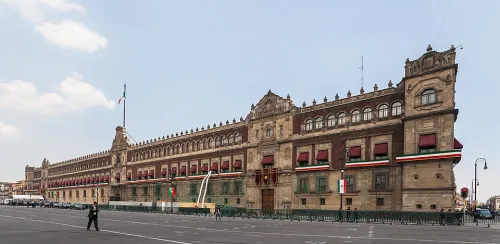
    The red tezontle facade of the National Palace fills the entire east side of the Zócalo, over 200 m long. It is the seat of Mexico's federal executive and, since 2018, the official residence of the president. This site has been a palace for the ruling class since the Aztec Empire, and much of the building material comes from the original palace of the 16th century ruler Moctezuma II.

    Read the facade from end to end: a tower at each end and three main doors, each leading to a different part of the building. The southern door leads to the Patio of Honor and the presidential offices, with no public access. The northern one, the Mariana Door, is named after Mariano Arista, who had it built in 1850. Beside it was the old court prison with courtrooms and torture chambers; today the Finance Ministry uses that wing, including the Treasury Room behind an iron and bronze door by Augusto Petriccioli.

    Above the central door is the main balcony. Just before 11 pm on 15 September, the president gives the Grito de Dolores here to commemorate independence and rings the bell above it: the original bell Father Miguel Hidalgo rang to call for rebellion against Spain, brought from the church of Dolores Hidalgo in Guanajuato. In its niche the Mexican coat of arms is flanked by an Aztec eagle knight and his Spanish counterpart, sculpted by Manuel Centurion as a symbol of the fusion of both cultures.

    Entry is free, but only on a guided tour with mandatory advance registration. Without a booking, the facade alone rewards a careful look. Then it is 560 m, about 8 minutes, to the Mexico City Metropolitan Cathedral.

    Hours
    Tue–Sun 10:00–16:00, Mon closed (guided tour access by appointment)
    Price
    Free entry (guided tours with mandatory advance registration)
    Website
    gob.mx ↗
  10. 10

    Mexico City Metropolitan Cathedral

    Mexico City Metropolitan Cathedral, stop 10 on the self-guided walking tour

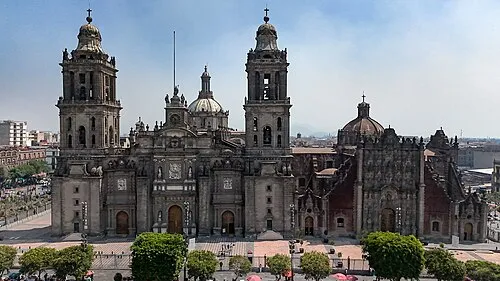
    Built over almost 250 years, the Mexico City Metropolitan Cathedral is one of the outstanding works of Spanish American architecture and the seat of the Primate Archdiocese of Mexico. It was founded in 1570 to replace a first cathedral from 1524; the first stone was laid in 1571, work formally began in 1573, the interior was finished in 1667 and the exterior only in 1813.

    Spanish architect Claudio de Arciniega drew the plans, inspired by Spanish cathedrals and above all by the one in Jaén. Because construction dragged on for so long, nearly every major architect, painter, sculptor and gilder of the viceroyalty worked on it at some point. The building is about 61 m wide and 128 m long, the towers reach 67 m, and as part of the historic ensemble around the square it has been a World Heritage Site since 1987.

    Entry to the main nave is free, for visits and worship alike, so keep it respectful when a service is on. Paid guided tours open special areas: the choir, the crypts or the whole building on a full tour. The nave is enough for most visitors; the crypt tour suits anyone curious about what lies beneath the floor.

    The Templo Mayor is only 270 m away, about 4 minutes on foot.

    Local name
    Catedral Metropolitana de la Ciudad de México
    Hours
    Daily 08:00–20:00 (visiting and worship); tourism guided tours daily 10:30–17:00
    Price
    Free entry to main nave; paid guided tours for special areas (Coro 30 MXN, Criptas 150 MXN, full tour 250 MXN)
  11. 11

    Templo Mayor

    Templo Mayor in Mexico City, stop 11 on the self-guided walking tour

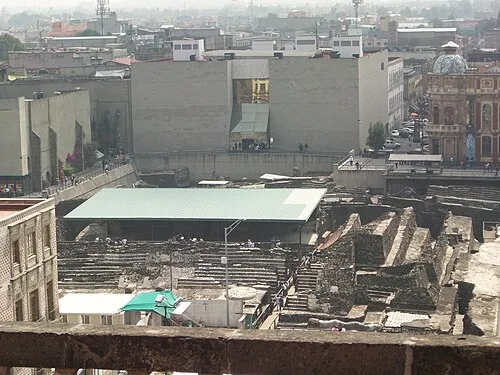
    Your walk ends where the religious life of Tenochtitlan was centered. The Templo Mayor, Huey Teuccalli in Náhuatl, was the main tower of a walled sacred precinct whose gates opened onto the city's main causeways. Political, religious and economic life met here: the festivals of the ritual calendar, the enthronement of tlatoanis and the funerals of former rulers all took place in this precinct.

    The temple was built in seven stages and reached about 45 m. Twin shrines crowned it, dedicated to the gods of war and of rain. They expressed a worldview of paired opposites: sky and earth, drought and rain, summer and winter solstice. Huitzilopochtli held the southern side, where the Coyolxauhqui monolith lies, and Tláloc the other.

    The Templo Mayor was also the symbolic center of the Mexica tribute network, where sacred offerings and funerary deposits were gathered, and a statement of Aztec triumph over their enemies. If you began the day among the sculptures of the anthropology museum, this is where that story touches real ground.

    The site charges admission; arrive with at least an hour and a half to spare before it closes. It is the natural end of the route: from here the whole day, from Chapultepec to the ruins of the Aztec capital, falls into place.

    Hours
    Tue–Sun 09:00–17:00, Mon closed
    Price
    210 MXN general admission, 105 MXN Mexican nationals & resident foreigners; free on Sundays for Mexican nationals & residents
Walking tour route map of Mexico City Route loaded
National Museum of AnthropologyMuseo de Arte ModernoÁngel de la IndependenciaMuseo Mural Diego Rivera+7
All 11 stops are already on the map.
You just press start.
AI Tour Guide

You just read the route from Chapultepec to the Templo Mayor. Now walk it with a guide in your ear.

Press start wherever you are, even hundreds of kilometres from Mexico City, and the guide begins telling its stories right away. In the city, pick any of the 11 stops to start from: it leads you there, then talks with you the whole route, asking, listening, remembering, and shaping the tour around your answers.

11stops 8.4km 1 h 55 minwalking 13languages
▶Start the tour free

Free to start · Runs in your browser · No app, no download

Shorter Ways to Split Chapultepec and the Historic Center

The long leg between the Angel and the Rivera mural divides the route naturally, so it is easy to walk it in two halves or to focus on the Aztec heart of the city.

Chapultepec museums and the Angel

Stops: 1, 2, 3

For a morning devoted to ancient and modern Mexican art. About 37 minutes of walking; admission at the National Museum of Anthropology and the Museo de Arte Moderno, while the Angel is free.

Historic center, from Rivera to the Aztecs

Stops: 4, 5, 6, 7, 8, 9, 10, 11

For a full day in the old city when Chapultepec has to wait. Only about 42 minutes on foot; tickets for the Museo Mural Diego Rivera, the Bellas Artes museum and the Templo Mayor, everything else is free.

Zócalo and the Aztec city

Stops: 8, 9, 10, 11

For an afternoon or a first short visit. About 17 minutes of walking; only the Templo Mayor charges admission, plus the optional cathedral tours.

How Long Does This Mexico City Tour Take, Museums Included?

The 1 h 55 min of walking is spread unevenly: the three legs from the anthropology museum via the Museo de Arte Moderno and the Angel to the Rivera mural take 73 minutes, while the eight stops in the historic center are linked by just 42 minutes on foot.

With the worthwhile visits, plan about eight hours. Start at the anthropology museum in the morning and give it two hours, look around the Museo de Arte Moderno gardens and the Angel briefly, spend half an hour each with the Rivera mural and inside Bellas Artes, take short looks at the tiled house, the Zócalo and the palace facade and 20 minutes in the cathedral, and you reach the Templo Mayor around 15:20 with time for the ruins. Going inside the Museo de Arte Moderno adds roughly 45 minutes and makes the Templo Mayor tight, so in that case split the route over two days.

The Chapultepec half takes about three and a half hours with both museums, the historic center half about four and a half hours, and the Zócalo variant about two and a half hours including a proper visit to the Templo Mayor.

Before You Set Off in Chapultepec Park

  • Start: The National Museum of Anthropology, right at its morning opening, is the recommended start; you can also join the route at any stop.
  • Finish: The Templo Mayor, next to the Zócalo in the historic center.
  • Best day: Tuesday to Saturday, when the anthropology museum, the Museo de Arte Moderno, the Rivera mural museum, the Bellas Artes museum, the Palacio Nacional and the Templo Mayor are all open.
  • Admission budget: Five museums on the route charge general admission, plus any optional cathedral tour. The Angel, the Alameda, the Casa de los Azulejos, the Zócalo and the cathedral nave cost nothing.
  • Plan ahead: If you want to see inside the Palacio Nacional, register for a guided tour in advance.
Walking tour route map of Mexico City
AI Tour Guide

Your guide is ready when you are, from Chapultepec to the Zócalo.

Press start and a voice AI Tour Guide takes it from here: leading the route through Mexico City, telling the stories, and turning your walk into a real back-and-forth conversation. No app or download is needed; it runs in your browser.

11stops 8.4km 1 h 55 minwalking 13languages
▶Start the tour free

Free to start · Runs in your browser · No app, no download

What the AI Tour Guide Adds Between the Sun Stone and the Zócalo

This route jumps from Mesoamerican stone to Rivera's murals to the ruins of Tenochtitlan, and the AI Tour Guide ties those threads together as a conversation. It greets you in Chapultepec Park, tells the stories at each place, asks what caught your attention and builds on it, so a Kahlo fan hears different things at Bellas Artes than someone hooked on the Aztecs. You can interrupt any time, for instance to ask who Pakal was or what myth lies behind Coyolxauhqui. The GPS route stays free; the guide starts with 100 free credits, after which you choose this tour all-inclusive for €19.99 with no time limit, or €5 per hour.

A Real Conversation A voice AI Tour Guide greets you, leads the whole route, and tells the stories and facts as you walk, asking what you want to see and keeping a real conversation going. Not a recording you press play on.
Map Navigation Follow the route on the map and walk at your own pace. You choose where to start and when to move to the next stop.
Ask Anything Curious about a building you pass? Ask your AI Tour Guide on the spot and the conversation carries on.
13 Languages Switch language anytime. No separate tour needed.
Start free in your browser

Common Questions About Walking Mexico City

Is there free or reduced entry at the museums?

Yes, at certain times the Museo de Arte Moderno, the Museo Mural Diego Rivera and the Bellas Artes museum are free for everyone. At the National Museum of Anthropology and the Templo Mayor, free and reduced entry applies only to Mexican nationals and residents.

Why is the Zócalo officially called Plaza de la Constitución?

It was named in honor of the Constitution of Cádiz, proclaimed in 1812.

Was the cathedral built on top of the Templo Mayor?

No. Both the first cathedral and today's building stand on the esplanade of Tenochtitlan's old ceremonial center, facing the Templo Mayor rather than on it. The opposite was widely believed until the ruins were located in 1978.

Can I see a performance at the Palacio de Bellas Artes?

Yes, it hosts theater and dance, including the Ballet Folklórico de México. Ask at the box office for the program and prices.

Is the tour really free?

Yes. The whole tour is free: the route, the interactive map and the navigation cost you nothing. Only the voice AI Tour Guide is optional and paid: you test it with 100 free credits, then you pay either €5 per hour or €19.99 for this whole tour, with no time limit. Admission to 5 of the 11 stops is not included: National Museum of Anthropology, Museo de Arte Moderno, Museo Mural Diego Rivera, Palacio de Bellas Artes and Templo Mayor charge their own entry fees.

Do I need to download an app?

No. Everything runs in your phone browser. Open the route and start walking, no download and no sign-up required.

Do I need to book the walking tour in advance?

No booking needed. This self-guided tour is available anytime. Open the route in your browser and start walking. The AI Tour Guide works instantly, no app, no reservation required.

What languages is the AI Tour Guide available in?

The AI Tour Guide speaks 13 languages, so you take the tour in your own language and can switch at any time.

Can I skip stops or change the route?

Yes. Skip any stop, spend extra time at places you like, or start the route from any point. It is your walk, you set the pace.
Image credits
▶ Start free in your browser Runs in your browser, no app, no download