Free Walking Tour Havana: Malecón to Capitolio

From the seawall to the Capitol dome: four colonial squares, a 16th-century fort, Hemingway's daiquiri bar and a palace turned revolution museum.

12 Stops 4.5 km ~1 h 5 min walking
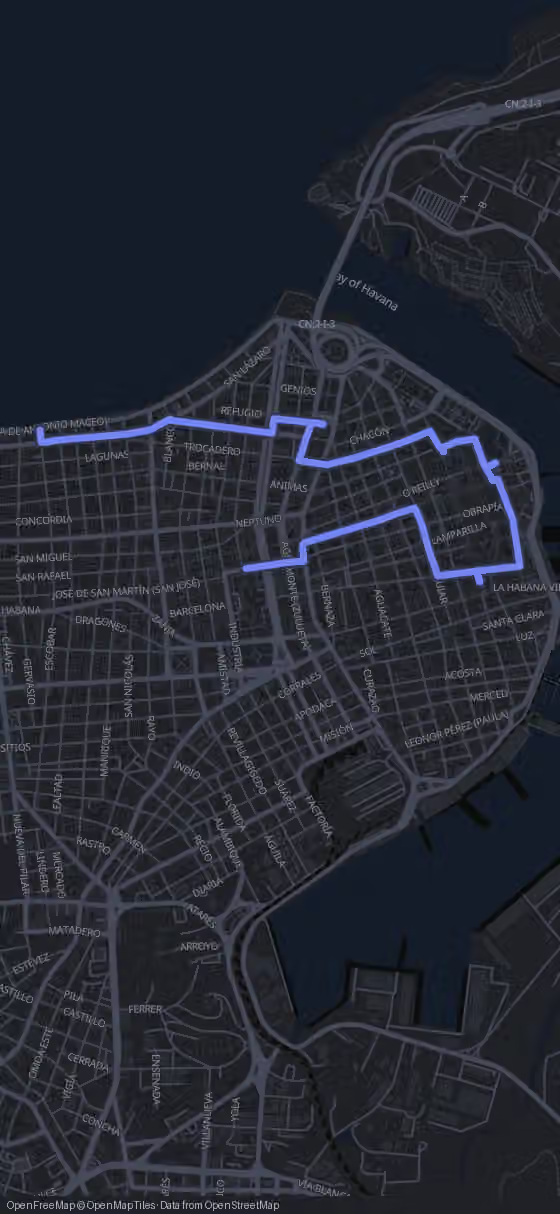
Route map for the Havana walking tour
Stop 1 of 12
1.3 km·16 min
El Malecón
Head east along the seawall toward the Museo de la Revolución
Hola, welcome to Havana. I’m Alex, and this city’s favourite front porch was built to hold back an ocean.
Try this tour with Alex

What This Havana Route Covers

12 stops from El Malecón through the squares of Old Havana to the Capitolio Nacional: 4.5 km and 1 h 5 min of pure walking. With the museums worth entering, plan about six and a half hours.

The seafront, the squares and the streets are free. Entry is charged at the Museo de la Revolución, the Museo Nacional de Bellas Artes, the Castillo de la Real Fuerza, the Gran Teatro de la Habana Alicia Alonso and the Capitolio Nacional. The GPS route runs free in your browser; the AI Tour Guide is optional.

Open free GPS & optional AI Tour Guide
This short shows highlights of the route. All 12 stops follow below.

The Route

Walking Map of Havana: Seawall, Squares and Capitol

12 stops 4.5 km 1 h 5 min walking
Tap to load interactive map

The 12 stops along this route

  1. El Malecón in Havana, stop 1 on the self-guided walking tour
    1El Malecón
  2. Museo de la Revolución in Havana, stop 2 on the self-guided walking tour
    2Museo de la Revolución
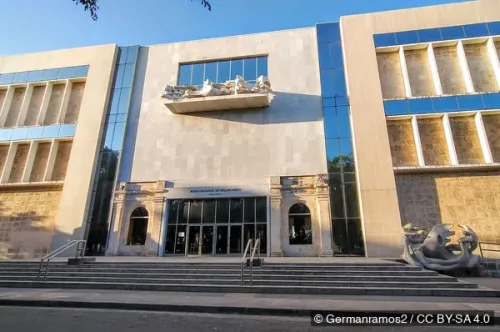
  3. Museo Nacional de Bellas Artes in Havana, stop 3 on the self-guided walking tour
    3Museo Nacional de Bellas Artes
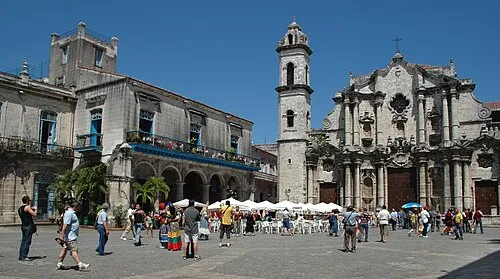
  4. Plaza de la Catedral in Havana, stop 4 on the self-guided walking tour
    4Plaza de la Catedral
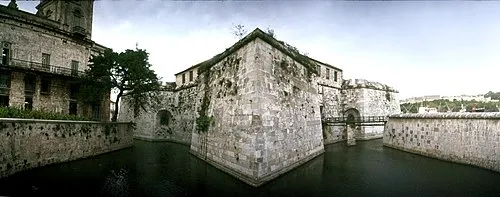
  5. Castillo de la Real Fuerza in Havana, stop 5 on the self-guided walking tour
    5Castillo de la Real Fuerza
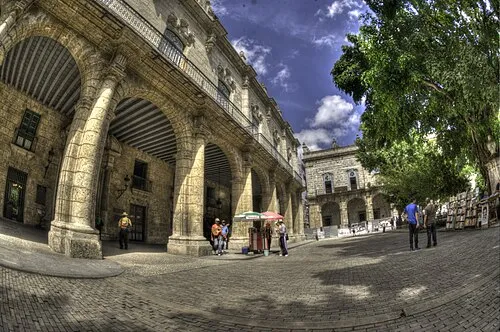
  6. Plaza de Armas in Havana, stop 6 on the self-guided walking tour
    6Plaza de Armas
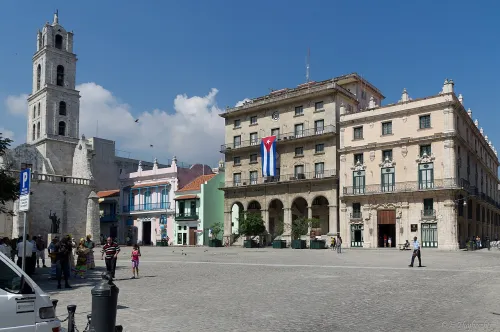
  7. Plaza de San Francisco de Asís in Havana, stop 7 on the self-guided walking tour
    7Plaza de San Francisco de Asís
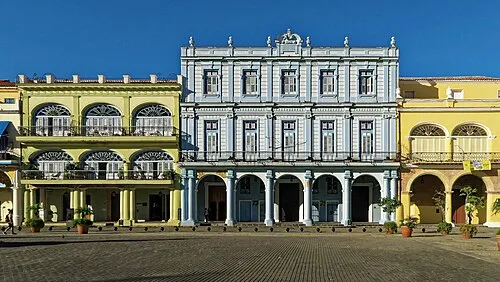
  8. Plaza Vieja in Havana, stop 8 on the self-guided walking tour
    8Plaza Vieja
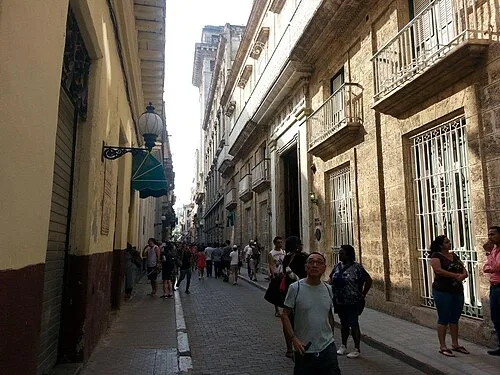
  9. Calle Obispo in Havana, stop 9 on the self-guided walking tour
    9Calle Obispo
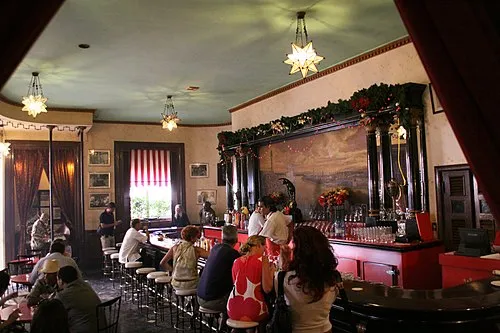
  10. El Floridita in Havana, stop 10 on the self-guided walking tour
    10El Floridita
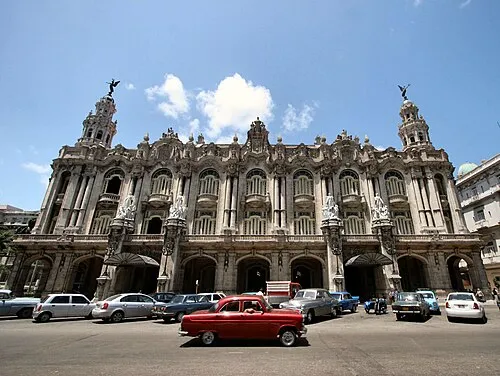
  11. Gran Teatro de la Habana Alicia Alonso in Havana, stop 11 on the self-guided walking tour
    11Gran Teatro de la Habana Alicia Alonso
  12. Capitolio Nacional in Havana, stop 12 on the self-guided walking tour
    12Capitolio Nacional
  13. That's the full route.

    Walk it with an AI Tour Guide talking you through every one of these streets.

    Start free in your browser
    You made it

Your Havana Walking Tour, 12 Places Stop by Stop

  1. 1

    El Malecón

    El Malecón in Havana, stop 1 on the self-guided walking tour

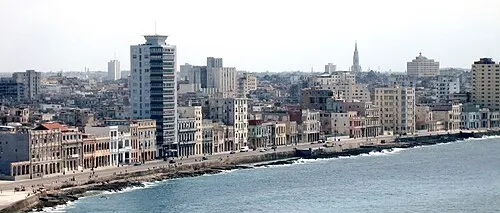
    Start with the sea. The Malecón, officially Avenida de Maceo, is a broad promenade, roadway and seawall that runs for 8 km along Havana's coast, from the mouth of the harbour in Old Havana past Centro Habana and Vedado to the mouth of the Almendares river. Lean on the wall, look back at the facades and you see why it exists: the cold fronts the locals call frentes fríos used to whip the waves right against the houses on San Lázaro.

    Work began in 1901, during the temporary U.S. military rule. To celebrate the first 500 m, the American government built a roundabout where the seawall meets the Paseo del Prado, said by architects of the time to be the first in Cuba made of steel-reinforced concrete. Bands played Cuban melodies there every Sunday. Facing it stood the Miramar Hotel, the first in Cuba whose waiters wore tuxedos and waistcoats with gold buttons; for the first 15 years of independence it was the place to be seen. The Royalton Habana stands on the site today.

    Later Cuban governments kept pushing the wall west. By 1923 it reached streets K and L in Vedado, and only in the early 1950s did it arrive at the Almendares. In 1957 and 1958 the roadway even served as the circuit of the Cuban Grand Prix.

    Today the Malecón belongs to the Habaneros: people meet, sit and talk on the wall, and poorer families fish here at night for their dinner. It's free and open at any hour. From here the longest leg of the walk, 1300 m and about 19 minutes, takes you inland to the Museo de la Revolución.
    Local name
    Malecón habanero
    Hours
    Open 24/7
    Price
    Free
  2. 2

    Museo de la Revolución

    Museo de la Revolución in Havana, stop 2 on the self-guided walking tour

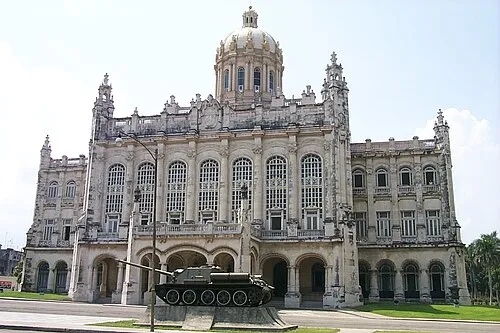
    The grand building in front of you was Cuba's Presidential Palace. It was begun in 1909 as the seat of Havana's provincial government, but in 1917 President Mario García Menocal, encouraged by his wife, chose it for the national executive instead. It opened on 31 January 1920 and served presidents until the Revolution.

    Look closely at the entrance: next to a bust of José Martí and the Lone Star flag you'll find bullet impacts from 13 March 1957, the day the palace was attacked. Inside, the events of that day are staged in the very rooms where they took place.

    The museum itself was created by decree on 12 December 1959, signed by Raúl Castro, then minister of the armed forces. It first lived in the Castillo de la Punta and at the base of the Martí monument on the Plaza de la Revolución, and only moved into the palace on 4 January 1974. Its founding collection was gathered by Celia Sánchez, a fighter of the 26th of July Movement in the Sierra Maestra. Today more than 30 rooms hold about 9,000 pieces covering every stage of Cuba's struggle for independence; the Granma Memorial was added as an annex in 1976, and the building has been a National Monument since 2010.

    Is it worth going in? If you want to understand modern Cuba, clearly yes, even with the entry fee, and you'll want at least an hour. If politics leaves you cold, the facade and the bullet marks tell the story in a few minutes. The Museo Nacional de Bellas Artes is only 260 m away, a four-minute walk.

    Hours
    Daily: 09:30–16:00
    Price
    8 USD
  3. 3

    Museo Nacional de Bellas Artes

    Museo Nacional de Bellas Artes in Havana, stop 3 on the self-guided walking tour

    Havana's national art museum is spread over two buildings near the Paseo del Prado: the Palacio de Bellas Artes, devoted to Cuban art, and the Palacio del Centro Asturiano, devoted to art from the rest of the world. A third building, the old militia barracks, houses the administration. Together they hold more than 45,000 works, one of the largest collections of painting and sculpture in Latin America and the largest in the island Caribbean.

    The museum opened on 28 April 1913 as the Museo Nacional de la República, in a building on Calle Concordia in Centro Habana. For decades it was an encyclopaedic museum showing a bit of everything; only after the Revolution did it specialise in art history.

    The Cuban building holds the largest collection of Cuban art in the world, from colonial portraits to the 20th century. The international building shows works of the major European schools and antiquities from Greece, Rome and Egypt. The museum also runs a theatre, concerts and talks, and keeps a library of more than 120,000 volumes.

    You can buy a ticket for one building or a combined one for both. If you only have time for one, go for the Cuban art: you won't see it anywhere else on this scale. Then the route turns into Old Havana: 630 m, about 8 minutes, to the Plaza de la Catedral.

    Local name
    Museo Nacional de Bellas Artes de Cuba
    Hours
    Tue–Sat 09:00–17:00, Sun 10:00–14:00, Mon closed
    Price
    15 CUP (1 building), 20 CUP (2 buildings)
  4. 4

    Plaza de la Catedral

    Plaza de la Catedral in Havana, stop 4 on the self-guided walking tour

    Stand in the middle and turn slowly: the cathedral that gives the square its name, opposite it the Museo de Arte Colonial in the former Casa Bayona, the Palacio del Conde Lombillo, the Mansión del Marqués de Aguas Claras and a row of restaurants. All of it belongs to Old Havana's UNESCO World Heritage site.

    It's hard to believe, but this was once a swamp. In the 16th century the first settlers built their houses around it and left the middle empty, because the water of the Zanja Real, the canal that carried water through the town, drained out here. People called it the Plaza de la Ciénaga, the swamp square. Once the canal was in place, the spot turned attractive: whoever lived here had water at the door.

    Around 1700 the Jesuit bishop Diego Evelino de Compostela had land bought here for a small hermitage dedicated to Saint Ignatius of Loyola. The Jesuits then planned a college and a far grander church, but their expulsion from Spanish territories cut the project short. The abandoned church was finished as the Iglesia de la Santísima Concepción, and the college became a seminary.

    In front of the Palacio del Conde Lombillo, look for the bronze of the Spanish flamenco dancer Antonio Gades by the Cuban sculptor José Villa Soberón. Gades came to Cuba in 1975 after disbanding his company in Spain in protest against Franco. The square is free and open at all hours. The Castillo de la Real Fuerza is only 220 m away, about 3 minutes.

    Hours
    Open 24/7
    Price
    Free
  5. 5

    Castillo de la Real Fuerza

    Castillo de la Real Fuerza in Havana, stop 5 on the self-guided walking tour

    Thick sloping walls of limestone, a moat, a drawbridge: the Castillo de la Real Fuerza is considered the oldest stone fort in the Americas and has been part of the UNESCO World Heritage site of Old Havana and its fortifications since 1982.

    Its story starts with a disaster. In 1555 the French privateer Jacques de Sores attacked Havana and damaged the old fort, the Fuerza Vieja. In 1558 Bartolomé Sánchez, an engineer sent by King Philip II, began a new one closer to the harbour. Progress was slow: residents complained about being moved out for the building site, and Sánchez quarrelled with the governor. The first stones went in only in 1562, and the fort was finished in 1577, built mostly by enslaved people and French prisoners. The limestone was quarried from Havana's own shoreline.

    Then came the embarrassment. Governor Francisco Carreño added an upper floor for barracks and munitions, yet the fort turned out too small to be of much use, and still too far inside the bay to guard the harbour mouth. So Governor Juan de Tejeda simply moved in, and the castle became the residence of Havana's governors, each of whom changed the building a little.

    The modest entry fee is an easy yes if you like fortifications and want to see the walls and the moat up close; half an hour is enough. The fort borders the Plaza de Armas, just 110 m and 2 minutes away.

    Local name
    Castillo de la Real Fuerza de La Habana
    Hours
    Mon: Closed | Tue–Sun: 09:30–17:00
    Price
    3 USD
  6. 6

    Plaza de Armas

    Plaza de Armas in Havana, stop 6 on the self-guided walking tour

    This is where Havana began. The Plaza de Armas is the city's oldest square, dating back to the founding in 1519, and today it feels more like a small park, with gardens and shaded paths. In the centre stands the monument to Carlos Manuel de Céspedes, the man who started Cuba's wars of independence. Before him, a statue of the Spanish king Ferdinand VII stood on the same spot, removed after the political changes of the 19th century.

    Look around the edges: the Castillo de la Real Fuerza and the Palacio del Segundo Cabo on one side, the Palacio de los Capitanes Generales on another, and the former mansion of the Counts of Santovenia, now the Hotel Santa Isabel. The Museo Nacional de Historia Natural is nearby too.

    On the corner sits El Templete, a small neoclassical temple. According to tradition, the town's first mass and first council meeting were held right here under a ceiba tree, and El Templete was built in the 19th century to remember it.

    For decades the square was known for its stalls of used and antique books, until they were moved elsewhere in this century. Calle Obispo touches the square here; you'll walk its full length later. The square is free and open around the clock. Next comes the Plaza de San Francisco de Asís, 480 m and about 7 minutes away.

    Hours
    Open 24/7
    Price
    Free
  7. 7

    Plaza de San Francisco de Asís

    Plaza de San Francisco de Asís in Havana, stop 7 on the self-guided walking tour

    Under your feet there used to be sea. A map from 1603 still shows a small inlet here, used as a landing point for boats in the bay. Over the 17th century it was filled in, and by 1628 the square had taken shape, the third in the city after the Plaza de Armas and the Plaza Nueva.

    Its name comes from the Franciscans, who had a convent here from 1575. In the 18th century they built a new convent of San Francisco de Asís, and its tower was for a time the tallest in the city.

    Unlike the other colonial squares, this one was shaped by the port rather than by markets or arcades. The customs house, the council, the jail and the convent stood around it, the fleets took on fresh water here, and goods were stored on the square.

    Twice people tried to rename it: once as Plaza Fernando VII, which never caught on, and in 1947 officially as Plaza de Key West, in honour of the Cuban emigrants in that Florida city. Havana ignored both and kept calling it after the friars. The square is free and always open. The Plaza Vieja is just 240 m on, about 3 minutes.

    Hours
    Open 24/7
    Price
    Free
  8. 8

    Plaza Vieja

    Plaza Vieja in Havana, stop 8 on the self-guided walking tour

    The "Old Square" was once the new one. It was laid out in 1559 as the Plaza Nueva, and unlike the military Plaza de Armas or the church squares it was meant for ordinary civic life: wealthy families built their houses around it, and it became the meeting point of daily life inside the city walls.

    It has seen a lot: celebrations, social events and public executions. In the 19th century a market hall was built in the middle and changed its whole character. In the 20th century things got worse: the square decayed and ended up as a car park.

    From the 1980s, the Office of the City Historian restored it step by careful step: later additions were removed, facades repaired, the original layout brought back. That's why the Plaza Vieja today is such a good place to read Havana's architecture, with buildings ranging from colonial baroque through neoclassicism to modernism. Walk the four sides slowly and compare the facades.

    The square is free and open at all hours. From here the route heads 510 m, about 7 minutes, to Calle Obispo.

    Local name
    Plaza Vieja de La Habana
    Hours
    Open 24/7
    Price
    Free
  9. 9

    Calle Obispo

    Calle Obispo in Havana, stop 9 on the self-guided walking tour

    Calle Obispo is one of Havana's best-known pedestrian streets and one of the oldest in the city. It runs from Avenida de Bélgica, also called Monserrate, past the Plaza de Armas down to the Avenida del Puerto by the bay. From the earliest years it linked the port with the administrative and residential heart of the colonial town, and it has been a shopping street ever since.

    The street has worn many names: San Juan, Del Obispo, Weyler, Pi y Margall. Only in 1936 did "Obispo" stick for good, after the bishop's palace that once stood nearby.

    As you walk, watch the mix of buildings. In the 19th and 20th centuries hotels, banks, bookshops and restaurants moved in alongside the small traditional shops, and taller buildings went up between the low colonial houses. That contrast is the whole history of the city in one street. Today it's lined with shops, bookstores, restaurants and small museums, and it's free to stroll at any hour.

    Follow Obispo for 480 m, about 7 minutes, to its end on the corner of Monserrate, where El Floridita is waiting.

    Hours
    Open 24/7
    Price
    Free
  10. 10

    El Floridita

    El Floridita in Havana, stop 10 on the self-guided walking tour

    On the corner of Obispo and Monserrate, right across from the Museo Nacional de Bellas Artes, stands Havana's most famous bar. It opened in 1817 as La Piña de Plata, the Silver Pineapple, in the very spot it still occupies. Almost a century later, so many North American visitors came that the owner renamed it El Florida.

    The man who made it legendary was Constantino Ribalaigua Vert, a Catalan immigrant who started behind the bar in 1914 and owned it from 1918. "Constante" is credited with inventing the frozen daiquiri in the early 1930s, and the bar still calls itself la cuna del daiquiri, the cradle of the daiquiri. He turned it into a school for cantineros mixing cocktails with fresh fruit juice and rum, and his disciples keep those traditions alive.

    Ernest Hemingway was a regular. Through most of the 1930s he kept a room at the Hotel Ambos Mundos, a short walk away, and even after moving to his house Finca Vigía outside Havana he kept driving in for drinks. A life-size bronze of him now leans on his favourite spot at the end of the bar, and a plaque carries his signed line: "My mojito in La Bodeguita, my daiquiri in El Floridita."

    Entry is free, but you're expected to order, and the classic choice is a daiquiri. It's also a fish restaurant. Then it's 290 m, about 5 minutes, to the Gran Teatro.

    Hours
    Daily 12:00–01:00
    Price
    Free admission (consumption charges apply, drinks approx. 6.25 USD)
  11. 11

    Gran Teatro de la Habana Alicia Alonso

    Gran Teatro de la Habana Alicia Alonso in Havana, stop 11 on the self-guided walking tour

    The ornate building on the Paseo del Prado is the home of the Cuban National Ballet, named after its great dancer Alicia Alonso. It was designed by the Belgian architect Paul Belau and built in 1914 by the engineering firm Purdy and Henderson. Galician immigrants paid for it as their community and social centre, the Centro Gallego de La Habana.

    Look up at the facade: the sculptures by Giuseppe Moretti stand for benevolence, education, music and theatre. Inside are theatres, a concert hall, rehearsal rooms for dance companies, an art gallery and a choral centre.

    The building swallowed an older one. The Teatro Tacón had stood on this site since 1838, and Enrico Caruso and Sarah Bernhardt performed there. When the Gran Teatro was built, its auditorium was kept and wrapped into the new building. Today the main hall is the García Lorca Auditorium with 1,500 seats, and the International Ballet Festival of Havana has been held here every two years since 1960. Anna Pavlova, Maya Plisetskaya, Carla Fracci and the company of Antonio Gades, whose statue you passed at the cathedral, all danced on this stage.

    Visits are paid; ask at the entrance when the next one starts. Worth it if you love theatre and ballet; otherwise the facade is enough. The Capitolio Nacional is right next door, 20 m and about a minute away.

    Price
    10 USD
  12. 12

    Capitolio Nacional

    Capitolio Nacional in Havana, stop 12 on the self-guided walking tour

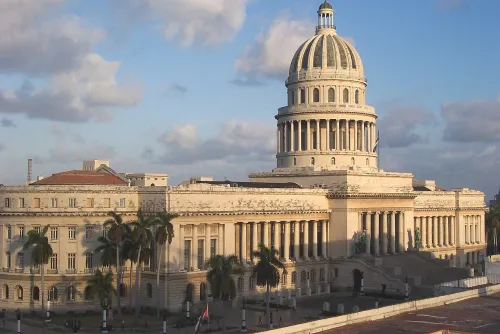
    The walk ends at the building that dominates this part of Havana. El Capitolio was commissioned by President Gerardo Machado and built under Eugenio Rayneri Piedra, begun in April 1926 and completed in 1929, on land that had been a railway terminal of the Villanueva Railway. The same firm that built the Gran Teatro next door, Purdy and Henderson, oversaw construction. It took more than 5,000 workers, 3 years, 3 months and 20 days, and around 17 million dollars.

    It's 207 m long and 91 m wide, and yes, it looks like the Capitol in Washington, but it isn't a copy. Rayneri said the dome took its inspiration from the Panthéon in Paris by way of Bramante's Tempietto in Rome. At almost 92 m, the dome was the highest point in Havana until the FOCSA Building reached 121 m in 1956, and when it was built it was the third-highest dome in the world.

    At the main entrance, two 6.5 m statues by the Italian Angelo Zanelli stand guard: Work on the left, The Tutelary Virtue on the right. Inside, under the dome, stands La República, the Statue of the Republic, the third-largest indoor statue in the world. After a long renovation, the city historian Eusebio Leal unveiled the restored dome on 30 August 2019.

    Go in: the statue and the halls are worth the entry fee. Plan your day to arrive by early afternoon so you aren't rushed. If you want to return to the start, the GPS navigation leads you back to the Malecón.

    Local name
    Capitolio Nacional de Cuba
    Hours
    Daily: 09:00–16:00
    Price
    USD 10
Walking tour route map of Havana Route loaded
El MalecónMuseo de la RevoluciónMuseo Nacional de Bellas ArtesPlaza de la Catedral+8
All 12 stops are already on the map.
You just press start.
AI Tour Guide

You've read the route. Now walk Havana with a guide in your ear.

Press start wherever you are, even hundreds of kilometres from Havana, and the guide begins telling its stories right away. In the city, pick any of the 12 stops to start from: it leads you there, then talks with you the whole route, asking, listening, remembering, and shaping the tour around your answers.

12stops 4.5km 1 h 5 minwalking 13languages
▶Start the tour free

Free to start · Runs in your browser · No app, no download

Shorter Ways to Walk Havana

Not every day has room for six hours. These three sections of the route each work on their own.

Old Havana's colonial squares

Stops: 4, 5, 6, 7, 8

For a first morning or a short window: Plaza de la Catedral, the fort, Plaza de Armas, Plaza de San Francisco de Asís and Plaza Vieja. Only 15 minutes of walking in total, and the only paid entry is the Castillo de la Real Fuerza. Allow about an hour and a half with the fort.

Seawall and the two big museums

Stops: 1, 2, 3

For history and art lovers: the Malecón, then the Museo de la Revolución and the Museo Nacional de Bellas Artes. 23 minutes of walking, two entries, and most of the time goes into the museums. Check that Bellas Artes is open on your day.

Hemingway, ballet and the Capitol

Stops: 8, 9, 10, 11, 12

For an afternoon: from Plaza Vieja along Calle Obispo to El Floridita for a daiquiri, then the Gran Teatro and the Capitolio Nacional. 20 minutes of walking; you pay for your drink, the theatre visit and the Capitolio. Arrive at the Capitolio well before it closes.

How Long This Havana Tour Takes, With and Without Museums

The pure walking time is 1 h 5 min. The longest leg is the first one, 1300 m from the Malecón to the Museo de la Revolución; after that the stops sit close together, most of them only a few minutes apart.

With the Museo de la Revolución, one building of Bellas Artes, the fort, a drink at El Floridita and the Capitolio, the whole walk takes about six and a half hours. A plan that works: start on the Malecón at 09:00, reach the Museo de la Revolución at 09:39, be at Bellas Artes at 10:58, in the old squares from 12:06, at El Floridita at 14:00 and at the Capitolio at 14:46, comfortably before it closes.

If you only look at the buildings from outside, the walk shrinks to about two and a half hours. The colonial squares alone take about an hour and a half, the seawall with both museums about three hours, the Hemingway and Capitol section about two hours.

Before You Set Off in Havana

  • Start: El Malecón is the recommended start, but you can join at any stop and pick up the route from there.
  • Finish: The walk ends at the Capitolio Nacional. If you like, the GPS navigation leads you back to the Malecón.
  • Best day: Check before you go that the Museo Nacional de Bellas Artes and the Castillo de la Real Fuerza are open on your day.
  • Time of day: Start in the morning so you reach the Museo de la Revolución and the Capitolio Nacional in good time; El Floridita then falls naturally into the afternoon.
  • Costs: Five stops charge admission: the Museo de la Revolución, the Museo Nacional de Bellas Artes (one building or both), the Castillo de la Real Fuerza, the Gran Teatro and the Capitolio Nacional. Entry to El Floridita is free, but you pay for your drink. Everything else on the route costs nothing.
Walking tour route map of Havana
AI Tour Guide

Your Havana guide is ready when you are.

Press start and a voice AI Tour Guide takes it from here: leading the route through Havana, telling the stories, and turning your walk into a real back-and-forth conversation. No app or download is needed; it runs in your browser.

12stops 4.5km 1 h 5 minwalking 13languages
▶Start the tour free

Free to start · Runs in your browser · No app, no download

What the AI Tour Guide Adds on This Havana Walk

The AI Tour Guide walks this route with you as a conversation. It greets you on the Malecón, tells the stories of the palace, the squares and the fort as you reach them, asks what you care about and builds on it: if the bullet marks at the Museo de la Revolución make you curious, it can tell you what happened on 13 March 1957; at Plaza de Armas it can explain how Carlos Manuel de Céspedes started the wars of independence. You can interrupt it whenever something catches your eye. It starts with 100 free credits; after that you choose between this tour all-inclusive for €19.99 with no time limit, or €5 per hour.

A Real Conversation A voice AI Tour Guide greets you, leads the whole route, and tells the stories and facts as you walk, asking what you want to see and keeping a real conversation going. Not a recording you press play on.
Map Navigation Follow the route on the map and walk at your own pace. You choose where to start and when to move to the next stop.
Ask Anything Curious about a building you pass? Ask your AI Tour Guide on the spot and the conversation carries on.
13 Languages Switch language anytime. No separate tour needed.
Start free in your browser

Common Questions About Walking Havana

Can I walk this route in the afternoon or evening?

Partly. The Malecón, the squares and Calle Obispo are open around the clock and El Floridita serves late into the night, but the museums, the fort and the Capitolio are daytime visits. Late in the day, enjoy the outdoor stops and save the museums for another morning.

Why are some entry fees in US dollars and one in Cuban pesos?

The Museo Nacional de Bellas Artes charges in CUP, the other paid stops in USD. Carry some of both and ask at each ticket desk how you can pay.

Can I see a ballet at the Gran Teatro?

The theatre is home to the Cuban National Ballet, which performs in the García Lorca Auditorium. Ask at the theatre for the current programme and tickets; a daytime visit is a separate thing from an evening performance.

Do I have to order something at El Floridita?

Entry is free, but it's a bar: you're expected to order. A daiquiri is the classic choice.

Is the tour really free?

Yes. The whole tour is free: the route, the interactive map and the navigation cost you nothing. Only the voice AI Tour Guide is optional and paid: you test it with 100 free credits, then you pay either €5 per hour or €19.99 for this whole tour, with no time limit. Admission to 5 of the 12 stops is not included: Museo de la Revolución, Museo Nacional de Bellas Artes, Castillo de la Real Fuerza, Gran Teatro de la Habana Alicia Alonso and Capitolio Nacional charge their own entry fees.

Do I need to download an app?

No. Everything runs in your phone browser. Open the route and start walking, no download and no sign-up required.

Do I need to book the walking tour in advance?

No booking needed. This self-guided tour is available anytime. Open the route in your browser and start walking. The AI Tour Guide works instantly, no app, no reservation required.

What languages is the AI Tour Guide available in?

The AI Tour Guide speaks 13 languages, so you take the tour in your own language and can switch at any time.

Can I skip stops or change the route?

Yes. Skip any stop, spend extra time at places you like, or start the route from any point. It is your walk, you set the pace.
Image credits
▶ Start free in your browser Runs in your browser, no app, no download