

Forsyth Park
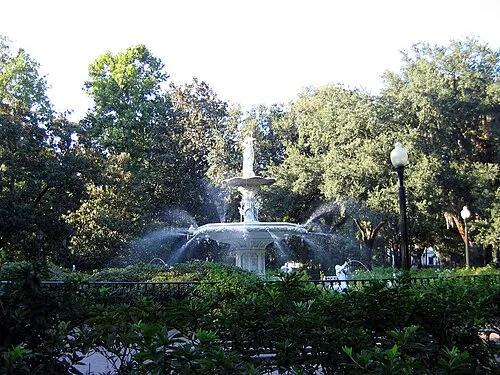
Begin at the large fountain in Forsyth Park, 30 acres of green inside Savannah's Historic District, framed by Gaston Street, Drayton Street, Park Avenue and Whitaker Street. Around you run walking paths past a children's play area, tennis and basketball courts and open lawns used for soccer and Frisbee; the Savannah Shamrocks rugby club plays its home games here. Look for the Fragrant Garden, laid out for blind visitors, and keep an eye out for posters: from time to time the park hosts free public concerts.
The park goes back to the 1840s, when William Brown Hodgson donated the first 10 acres. In 1851 it was enlarged and named after Georgia governor John Forsyth, and General James Oglethorpe's original town plan had already reserved room for such a space. By 1853 every ward of that original plan was occupied, and the city needed more open ground.
That need explains the southern lawns. In 1853 the mayor and aldermen dedicated part of the old cantonment area as a Military Parade Ground, placed in the hands of the captains of Savannah's volunteer companies. In 1859 the 18.9-acre ground was sold to the Military Captains Association, and ordinances in 1914 and 1923 confirmed the deal: the owners let the city use the land for public enjoyment, and in return the city exempts it from property tax and maintains and secures it forever.
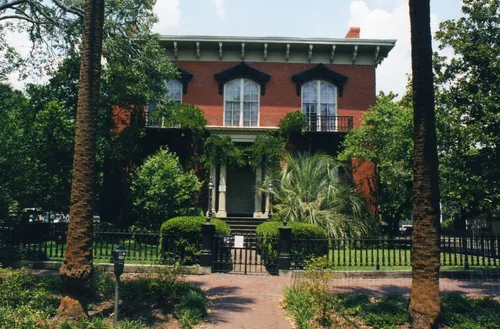
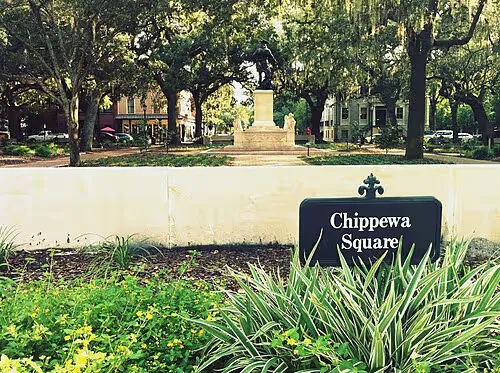
Remember the park when you reach Chippewa Square later: two busts of Confederate officers, Francis Stebbins Bartow and Lafayette McLaws, were moved from there to Forsyth Park to make room for a new monument. From the park it is 470 m, about 7 minutes, to Mercer Williams House on Monterey Square.