

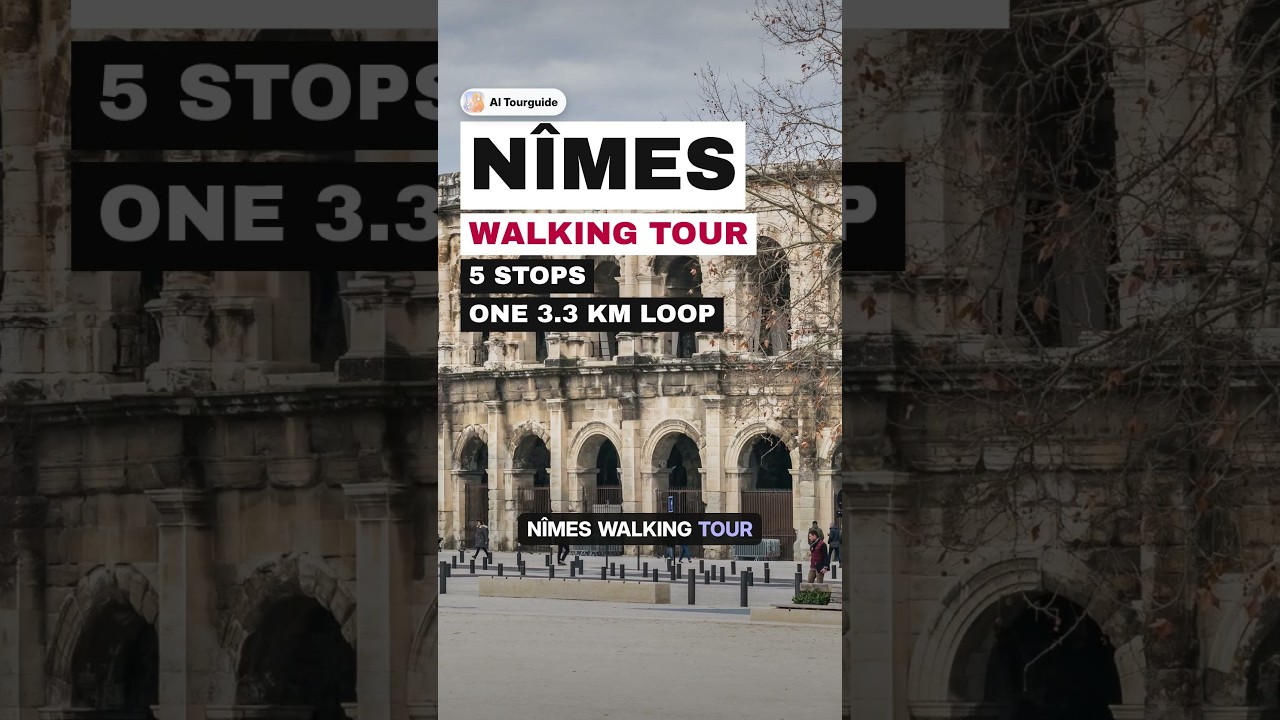


Arènes de Nîmes
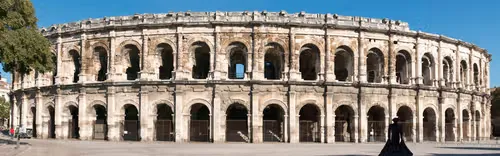
Start with the full curve of the facade: two storeys of 60 arcades each, rising 21 metres. The oval measures 133 by 101 metres, and the sandy arena floor inside is 68 by 38. It was built around 100 AD, only about twenty years after the Colosseum in Rome, and it is one of the best-preserved Roman amphitheatres anywhere, among the 20 largest of the roughly 400 that survive.
Amphitheatres were essentially two theatres set face to face around an oval, so that every spectator, wherever they sat, could follow the fights on the sand without missing a thing. Here up to 24,000 people filled 34 tiers, divided into four separate zones. They came to watch gladiators fight each other and wild animals.
The games faded with the cities that paid for them. In the third century civil wars, raids and epidemics shook the empire, and with early medieval Christianity the spectacles ended for good. The arena became a fortress, then a walled town of its own, with houses built inside the arcades. Only in the 19th century were those houses cleared and the building restored.
It is still in use: two bullfights a year during the Feria de Nîmes, a reenactment called “The great Roman Games” and concerts. Going inside costs entry and is worth it for almost everyone, because only from the tiers do you grasp the scale; give it about an hour.
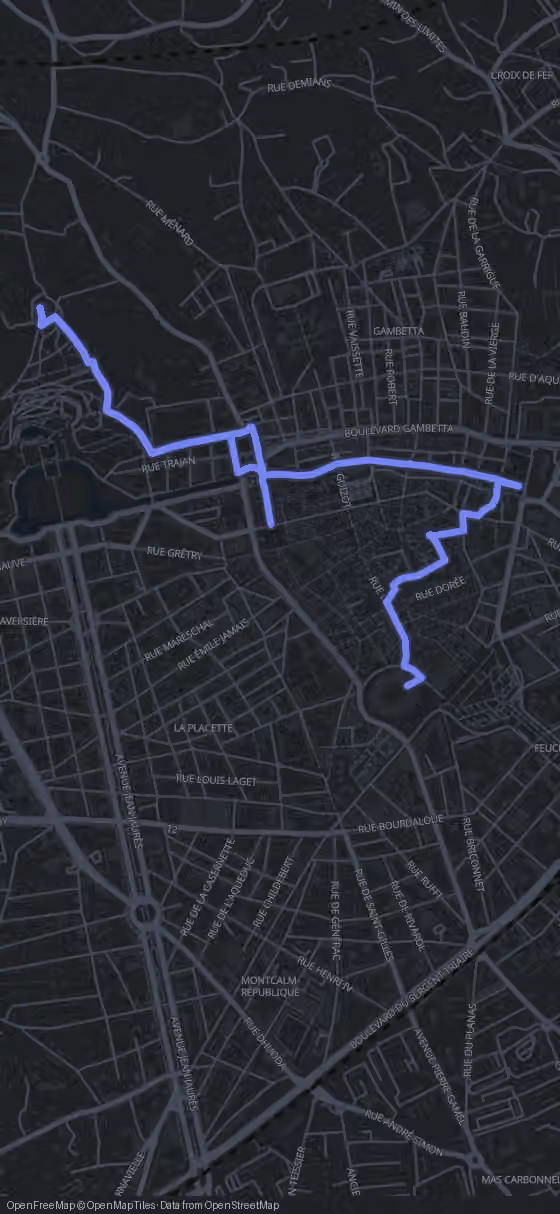
From here it is 510 m, about 7 min, to the cathedral, passing the Musée de la Romanité and Nemausus on the way.