

Fort Zeelandia
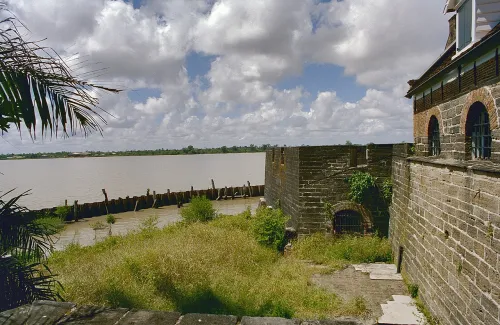
You start where Paramaribo itself started. This five-sided fort on the left bank of the Suriname River grew out of a trading post that Dutch settlers set up in the early 17th century near the indigenous village of Parmurbo, the name that later became Paramaribo. The fortification was built to protect that small settlement, and walking its ramparts you can still read the outline of a place made for defence.
The fort changed hands more than once. The English took it in 1651 and called it Fort Willoughby, after Francis Willoughby. In March 1667 Zeelanders under Abraham Crijnssen captured fort and settlement, renamed the fort Fort Zeelandia and the village Nieuw Middelburg. Look for the coat of arms of Zeeland on one of the powder houses: it is still there. The English briefly retook the fort on 13 October 1667, but it returned to the Dutch under the Treaty of Breda, which had already been signed on 31 July.
The Dutch gave the fort five bastions. Three survive, named Middelburgh, Veere and Zierikzee; the two on the land side were removed when Fort Nieuw-Amsterdam was built across the river after a French raid on the surrounding plantations in 1712. From then on Zeelandia served as barracks and later as a prison. Its darkest chapter came in 1940: after Germany invaded the Netherlands, Governor Johannes Kielstra had about 50 German men over the age of 15 locked up here, many of them missionaries, teachers or Jewish refugees, before they were moved a week later to a camp more than 15 km outside the city.
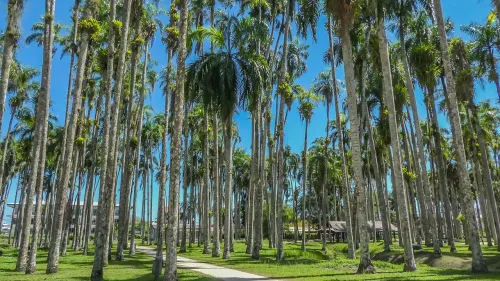
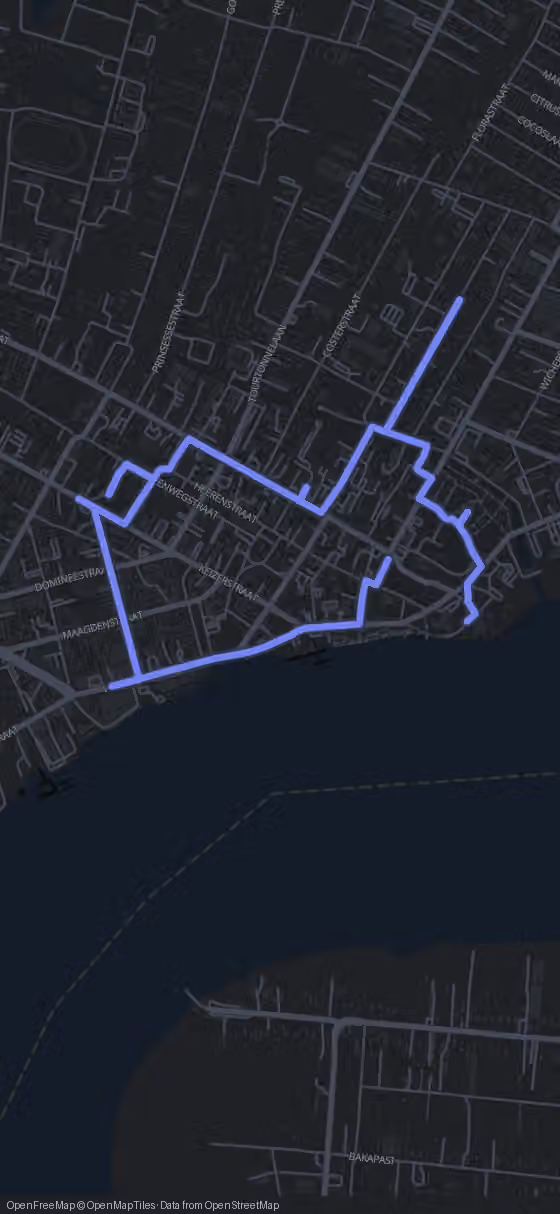
Since 1995 the Surinaams Museum is back inside the walls, and entry is charged. If you care about how Suriname became Suriname, go in; this is the best place on the route to give the rest of the walk its context. From the fort it is 360 m, about 5 minutes, to the Palmentuin; you pass the Surinaams Museum on the way out.