

Hallgrímskirkja
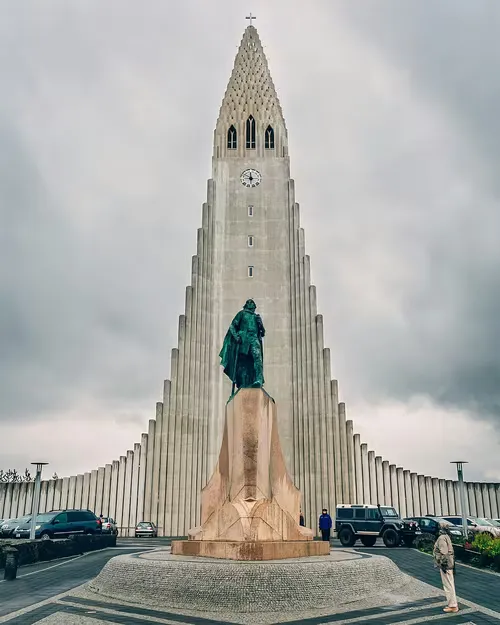
You start on Skólavörðuholt, the hilltop where Hallgrímskirkja rises 74.5 metres: the largest church in Iceland and the second tallest building in the country. Because you can see it from almost anywhere in the city, it is also your compass for the rest of the walk. Stand back from the front and look at how the tower falls away on both sides in curved wings. State Architect Guðjón Samúelsson is said to have drawn on Iceland's own landscape, its mountains, glaciers and above all the columns of basalt that look like organ pipes, as you can see at Svartifoss.
Samúelsson received the commission in 1937, but this was never a quick project. Construction began in 1945 and the church was only finished in 1986, 41 years later; the tower stood long before the rest was complete. Since then it has become a symbol of Icelandic national identity. It carries the name of Hallgrímur Pétursson, the 17th-century poet and cleric who wrote the Passion Hymns.
The building has three parts. The tower with its wings holds service rooms; behind it comes a nave in a more traditional style; and at the far end sits the sanctuary, whose cylindrical shape has been compared to a Viking war helmet. Architecturally it is Expressionism, and two churches are named as likely models: Grundtvig's Church in Copenhagen, which has the same organ-like look, and the church on Hohenzollernplatz in Berlin.
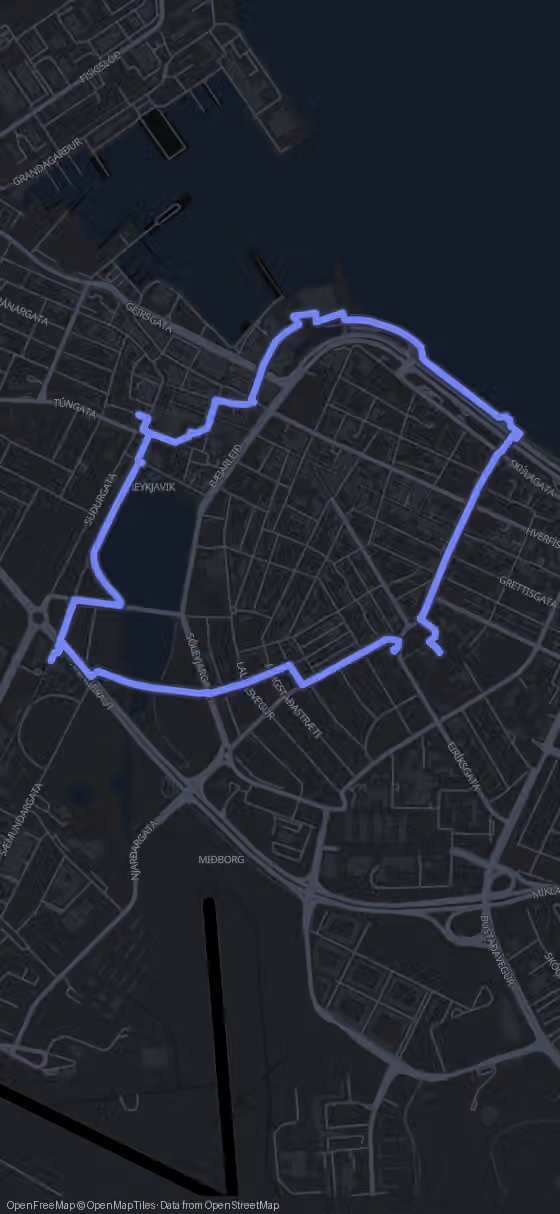
Going into the nave is free, and worth a few minutes for everyone. The tower costs a ticket; pay for it if you want to see the city from the top of its best-known landmark. Visits are restricted during services and concerts. Then head down to the sea: 760 m, about 10 minutes, to the Sun Voyager on the Sæbraut waterfront.