Free Walking Tour Edinburgh: Castle to Holyrood

From the castle rock down through the Old Town and over Calton Hill to Holyrood: eleven stops on 5.6 km, with a free GPS route leading you from one to the next.

11 Stops 5.6 km ~1 h 22 min walking
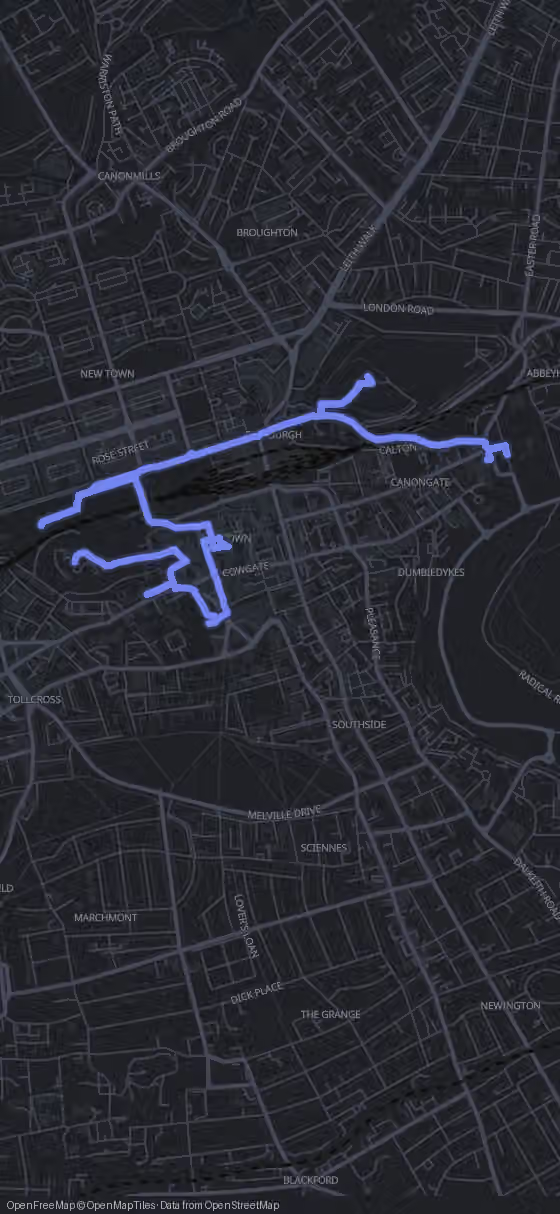
Route map for the Edinburgh walking tour
Stop 1 of 11
370 m·5 min
Edinburgh Castle
Head east down the Royal Mile toward Camera Obscura
Welcome to Edinburgh. I'm Alex, and some of its finest scenery began as things the city wanted to forget.
Try this tour with Alex

Eleven Stops from Castle Rock to Holyrood

Eleven stops take you from Edinburgh Castle on its rock down through the Old Town, across the gardens and over Calton Hill to the Scottish Parliament at Holyrood: 5.6 km and 1 h 22 min of pure walking, about three and a half hours with short visits.

Edinburgh Castle, Camera Obscura and the Palace of Holyroodhouse charge entry; Greyfriars Kirk, St. Giles' Cathedral, Scott Monument and Scottish Parliament let you in free. The GPS route in your browser is free and leads you stop to stop; the AI Tour Guide is optional.

Open free GPS & optional AI Tour Guide
This short shows highlights of the route. All 11 stops follow below.

The Route

Edinburgh Walking Map: Castle Rock to Holyrood

11 stops 5.6 km 1 h 22 min walking
Tap to load interactive map

The 11 stops along this route

  1. Edinburgh Castle, stop 1 on the self-guided walking tour
    1Edinburgh Castle
  2. Camera Obscura in Edinburgh, stop 2 on the self-guided walking tour
    2Camera Obscura
  3. Victoria Street in Edinburgh, stop 3 on the self-guided walking tour
    3Victoria Street
  4. Grassmarket in Edinburgh, stop 4 on the self-guided walking tour
    4Grassmarket
  5. Greyfriars Kirk in Edinburgh, stop 5 on the self-guided walking tour
    5Greyfriars Kirk
  6. St. Giles' Cathedral in Edinburgh, stop 6 on the self-guided walking tour
    6St. Giles' Cathedral
  7. Princes Street Gardens in Edinburgh, stop 7 on the self-guided walking tour
    7Princes Street Gardens
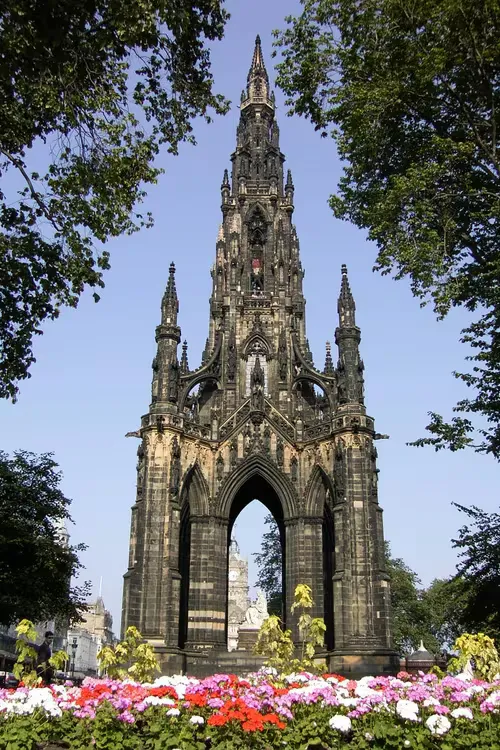
  8. Scott Monument in Edinburgh, stop 8 on the self-guided walking tour
    8Scott Monument
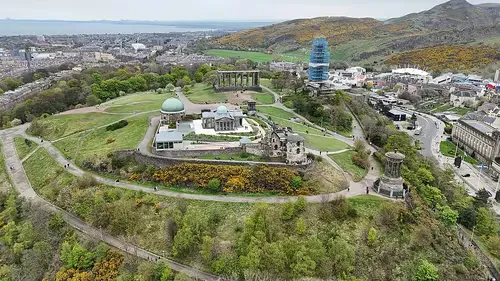
  9. Calton Hill in Edinburgh, stop 9 on the self-guided walking tour
    9Calton Hill
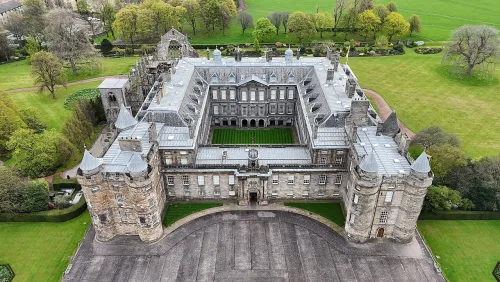
  10. Palace of Holyroodhouse in Edinburgh, stop 10 on the self-guided walking tour
    10Palace of Holyroodhouse
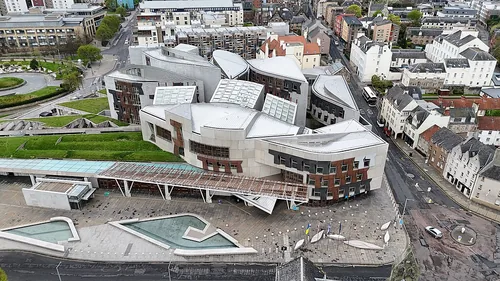
  11. Scottish Parliament in Edinburgh, stop 11 on the self-guided walking tour
    11Scottish Parliament
  12. That's the full route.

    Walk it with an AI Tour Guide talking you through every one of these streets.

    Start free in your browser
    You made it

The Edinburgh Walking Tour, Stop by Stop from Castle to Parliament

  1. 1

    Edinburgh Castle

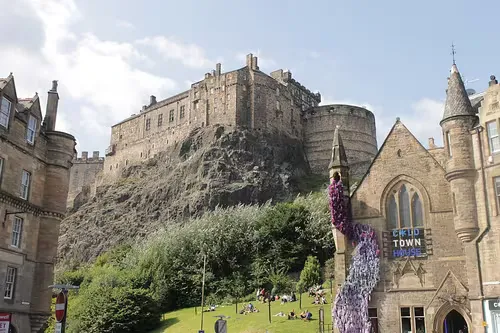
    Edinburgh Castle, stop 1 on the self-guided walking tour

    Edinburgh Castle sits on Castle Rock, a volcanic crag people have lived on since at least the Iron Age. There has been a royal castle up here since Malcolm III in the 11th century, and kings and queens lived in it until 1633. Long before that, from the 15th century, its royal role faded, and by the 17th century it was above all a garrison. Over the centuries it served as a palace, arsenal, treasury, national archive, mint, prison and fortress, and it still guards the Honours of Scotland, the Scottish crown jewels.

    Few places have been fought over as often. A study in 2014 counted 26 sieges in 1,100 years, which gives the castle a claim to being the most besieged place in Great Britain. That is also why most of what you see is younger than you might expect: the Lang Siege of 1573 smashed the medieval defences with artillery. Look for the survivors. St Margaret's Chapel from the early 12th century is regarded as the oldest building in Edinburgh; the Royal Palace and the early 16th-century Great Hall also made it through.

    The army has not entirely left. Its presence is now mostly ceremonial, but the castle is still the regimental headquarters of the Royal Regiment of Scotland and the Royal Scots Dragoon Guards, whose museums sit inside alongside that of the Royal Scots, the Scottish National War Memorial and the National War Museum.

    Is it worth going in? If you care about Scottish history, yes: the crown jewels, the chapel and the Great Hall are the core of the whole story this walk tells. Allow around two hours, and buy your ticket online, where it costs less. If you only want the setting, the esplanade and the view down the Royal Mile cost nothing. From the gate it is 380 m, about five minutes, down Castlehill to Camera Obscura.
    Hours
    Apr–Sep: Daily 09:30–18:00 (last entry 17:00) | Oct-23 Dec & 2 Jan-31 Mar: Daily 09:30–17:00 (last entry 16:00) | 24 Dec: 09:30–16:00 (last entry 14:30) | 25-26 Dec: closed | 1 Jan: 11:00–17:00 (last entry 16:00)
    Price
    23.50 GBP adults (16-64) online / 26.00 GBP walk-up
  2. 2

    Camera Obscura

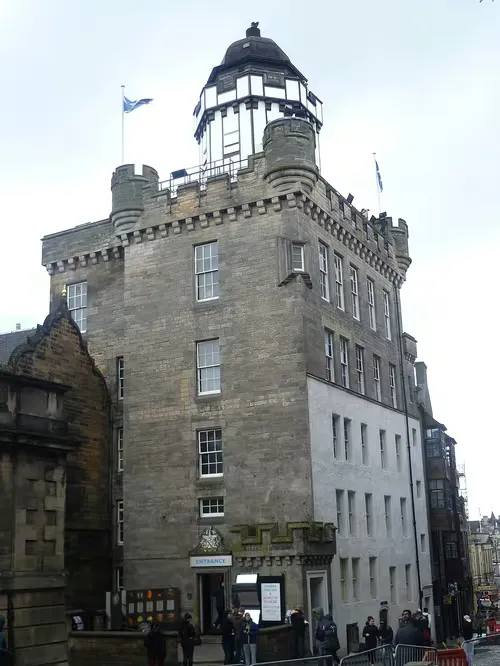
    Camera Obscura in Edinburgh, stop 2 on the self-guided walking tour

    A few minutes below the castle gate, on the Castlehill stretch of the Royal Mile, stands the Outlook Tower. Inside is Camera Obscura and World of Illusions, a museum of interactive exhibits built around a Victorian camera obscura in the topmost room, which projects a live picture of the city onto a viewing table.

    The story behind it belongs to a remarkable woman. The Edinburgh instrument maker Thomas Short had shown his instruments to the public on Calton Hill, but his lease barred female relatives from inheriting, so when he died in 1788 his wife and children got nothing. In 1827 Maria Theresa Short arrived from the West Indies, said she was his daughter and claimed his Great Telescope. Against strong rivals she won it, and in 1835 opened Short's Popular Observatory on Calton Hill, beside the National Monument, open until nine every evening.

    The authorities tore that observatory down in 1851 over her protests. She simply moved across town: in 1852 she bought the Laird of Cockpen's townhouse here on Castlehill, added two storeys and opened Short's Observatory, Museum of Science and Art in 1853. After her death in 1869 her husband Robert Henderson ran it, and in 1892 the planner Patrick Geddes took over, renamed it the Outlook Tower and turned it into a museum and study centre for looking at the city as a whole.

    Inside is a good call for families and anyone who likes optical tricks, and since it stays open into the evening, it also fits at the end of a day. Keep Maria Short in mind: you will stand where her first observatory was when you reach Calton Hill. Victoria Street is just 150 m on, two minutes away.

    Hours
    Daily 08:00–22:00 (closed only 25 Dec)
    Price
    £15 adults, £10 children
  3. 3

    Victoria Street

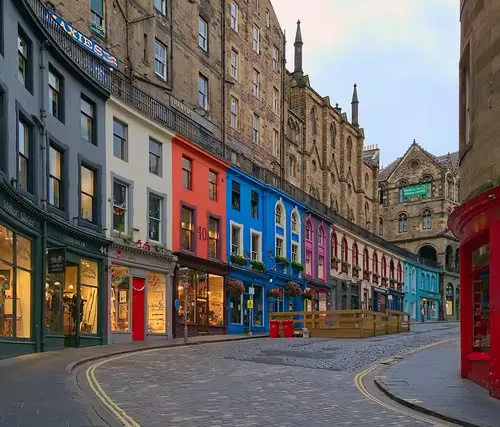
    Victoria Street in Edinburgh, stop 3 on the self-guided walking tour

    Victoria Street is a curve of coloured shopfronts bending downhill towards the Grassmarket. It is one of the most photographed streets in Scotland and is credited with inspiring Harry Potter. The curve is the whole trick: the buildings slide out of sight in both directions, so the street never shows you its end. Walk it slowly and let the bend carry you down.

    Its lower end is the old West Bow, and it was a working street long before it was a pretty one. When Daniel Defoe came to Edinburgh as an English government agent in 1706, he found the Bow full of wholesale traders dealing in iron, pitch, tar, oil, hemp, flax, dyes and timber, supplying country shopkeepers and keeping their heavier goods in warehouses down in Leith. The Victorians rebuilt much of it, which is the street you see today.

    Timing decides everything here. Before 9am on any day, or before 10am from Tuesday to Thursday, you get the street nearly to yourself; on a weekend afternoon it is shoulder to shoulder. It is free and open around the clock, so the only question is whether you want the photograph or the buzz. Either way, 240 m and three minutes later the bottom of the curve spills you into the Grassmarket.

    Hours
    Open 24/7 (public street)
    Price
    Free
  4. 4

    Grassmarket

    Grassmarket in Edinburgh, stop 4 on the self-guided walking tour

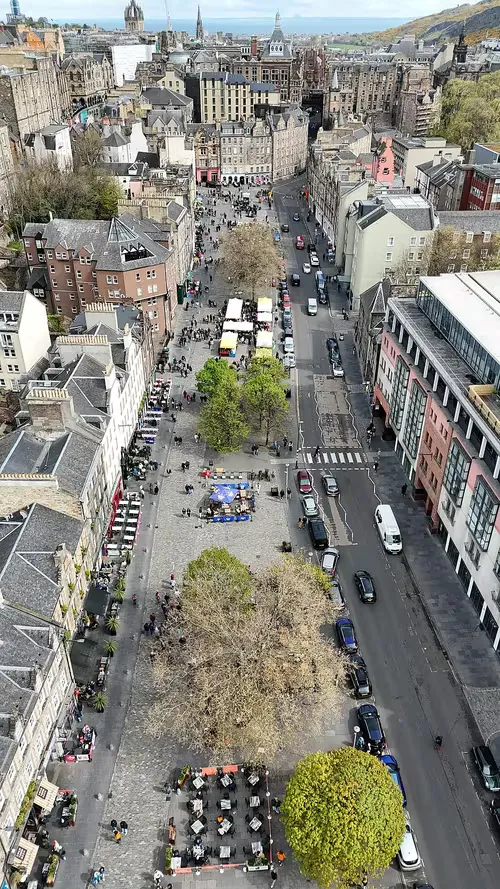
    The Grassmarket lies in a valley at the south-west foot of Castle Rock, well lower than the streets around it, and that is exactly why you should turn round once you are in it. The view north, with the castle filling the sky, has been a favourite of painters and photographers for generations.

    The place is old. It first appears in 1363 as the street called Newbygging, new buildings, under the castle, and from 1477 it was one of Edinburgh's main market places. Part of it was set aside for horses and cattle, and the name probably comes from livestock grazing in pens beyond its western end. Defoe, in 1706, described two open-air markets here, the Grass-market and the Horse-market. From 1800 the area drew large numbers of Irish immigrants, and cheap lodging houses sprang up to house them.

    Look at how the square plugs into the old town: the Cowgate and Candlemaker Row join at the east end, the West Bow at the north-east corner, King's Stables Road to the north-west and the West Port to the west. From the south-west corner runs the Vennel, where on the east side you can still see some of the best surviving pieces of the Flodden and Telfer town walls. It is worth the short detour if you like tangible traces of the medieval city.

    The square is public and free at any hour. From here it is 420 m, about seven minutes, to Greyfriars Kirk.

    Hours
    Open 24/7 (public square)
    Price
    Free
  5. 5

    Greyfriars Kirk

    Greyfriars Kirk in Edinburgh, stop 5 on the self-guided walking tour

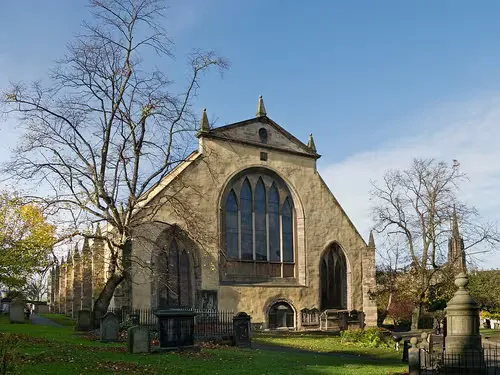
    Greyfriars Kirk stands in the middle of Greyfriars Kirkyard, and both take their name from the Observantine Franciscans, the Grey Friars, who came to Edinburgh from the Netherlands in the mid-15th century and were given land for a friary on the south-western edge of the town. After the Reformation the abandoned friary grounds became a burial ground, and the church you see was built inside it between 1602 and 1620 for a parish founded in 1598, whose congregation had first met in the western part of St Giles'.

    Few Scottish churches have lived through so much. In 1638 the National Covenant was signed here, a defining moment of Scottish Presbyterianism. Under Cromwell's Protectorate soldiers used the church as barracks. In 1718 an explosion destroyed the tower, and in the rebuilding Alexander McGill added two bays and a Palladian north porch and split the building into two churches, Old and New Greyfriars. A fire gutted Old Greyfriars in 1845; afterwards its minister Robert Lee installed the first organ and stained glass windows in a Scottish parish church since the Reformation.

    Only in 1929 did the two congregations unite again, and between 1932 and 1938 Henry F. Kerr restored the interior. Inside you see a simple aisled nave of eight bays in Survival Gothic with Baroque touches.

    Going in is free and worth a quarter of an hour for the Covenant story alone. Then it is 520 m, seven minutes, back up through the lanes of Edinburgh Old Town to St. Giles' Cathedral, the church where it all began.

    Hours
    Mon–Sat: 10:30–16:30 | Sun: 09:00–17:00
    Price
    Free
  6. 6

    St. Giles' Cathedral

    St. Giles' Cathedral in Edinburgh, stop 6 on the self-guided walking tour

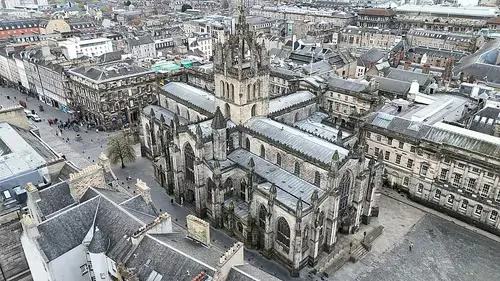
    St. Giles' Cathedral, also called the High Kirk of Edinburgh, is the building the city's religious history keeps circling back to. A church here was probably founded in the 12th century and dedicated to Saint Giles; of that small Romanesque church only fragments remain. The present building was begun in the 14th century and enlarged until the early 16th, and in 1467 Pope Paul II raised it to a collegiate church.

    In 1559 it turned Protestant, with John Knox, the leading figure of the Scottish Reformation, as its minister. Afterwards it was partitioned inside to serve several congregations and even secular uses, including a prison and a meeting place for the Parliament of Scotland. In 1633 Charles I made it the cathedral of a new Diocese of Edinburgh, and his attempt to impose a new Prayer Book caused a riot inside on 23 July 1637. That riot led to the Covenanters, whose Covenant you just met at Greyfriars, and on to the Wars of the Three Kingdoms. It is why St. Giles' is called the Mother Church of World Presbyterianism.

    What you see inside owes a lot to the 19th century. William Burn altered the church in 1829 and 1833, and William Hay restored it between 1872 and 1883 with the backing of William Chambers, who wanted a Westminster Abbey for Scotland and filled it with memorials to notable Scots. The Thistle Chapel is a later addition.

    Entry is free, with a donation welcomed. Go in, it is a highlight of the Old Town. Then comes the longest Old Town leg: 1,050 m, about 14 minutes, down to Princes Street Gardens.

    Hours
    Mon–Fri 10:00–18:00 | Sat 09:00–17:00 | Sun 13:00–17:00
    Price
    Free (donation welcomed)
  7. 7

    Princes Street Gardens

    Princes Street Gardens in Edinburgh, stop 7 on the self-guided walking tour

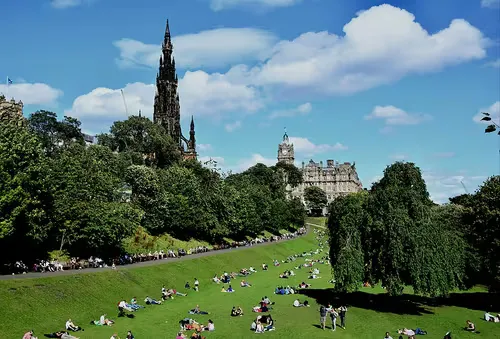
    Princes Street Gardens fill the valley between the Old Town and the New Town, in the shadow of the castle, and the valley once held water. The Nor Loch was an artificial lake, part of the medieval defences, and it made any growth north almost impossible. It was also filthy, fed by sewage running downhill from the Old Town. Draining it took a long time; the New Town was built from the 1760s, and the gardens followed in the 1820s.

    There are really two parks, divided by The Mound, where the National Gallery of Scotland and the Royal Scottish Academy stand. East Princes Street Gardens run from The Mound to Waverley Bridge and cover 8.5 acres; the larger West Gardens, 29 acres, stretch towards the churches of St John's and St Cuthbert's near Lothian Road. The eastern garden only exists because of a quarrel between the town council and the first New Town owners, among them the philosopher David Hume, who lived on St David Street just off Princes Street.

    Watch for the trains. In 1846 a railway was cut along the southern edge of the gardens to link Haymarket with the new terminus that became Waverley Station, with a 910 m tunnel at the western end and a shorter one straight through The Mound.

    The gardens are free; sit for a while with the castle above you. The Scott Monument stands in the eastern garden, 710 m and about ten minutes away.

    Hours
    Daily 07:00–21:35
    Price
    Free
  8. 8

    Scott Monument

    Scott Monument in Edinburgh, stop 8 on the self-guided walking tour

    The dark Victorian Gothic spire of the Scott Monument honours Sir Walter Scott and is the second-largest monument to a writer in the world, after the José Martí monument in Havana. It rises 61.11 m, dominates the eastern part of Princes Street Gardens, and stands opposite the former Jenners building, close to Waverley Station, which takes its name from Scott's Waverley novels. It is set on the axis of South St David Street, so from St Andrew Square it fills the view and hides the Old Town behind.

    The stone is Binny sandstone from West Lothian, and its hardness came at a terrible price. The hewing masons who cut and carved the blocks worked in closed sheds full of fine dust, and many died of what was then called phthisis, silicosis today. One observer wrote that the monument killed twenty-three of the finest hewers in Edinburgh. The foundation stone was laid on 15 August 1840 by the Lord Provost, Sir James Forrest, and building began in 1841 and ran for nearly four years.

    Inside are viewing platforms with panoramic views over central Edinburgh. Entry is free, but the monument closes for a break around lunchtime, so plan around that gap. From here it is 860 m, about 14 minutes, to Calton Hill beyond the east end of Princes Street.

    Hours
    Daily: 10:00–12:30, 13:45–15:30
    Price
    Free
  9. 9

    Calton Hill

    Calton Hill in Edinburgh, stop 9 on the self-guided walking tour

    Calton Hill rises beyond the east end of Princes Street, part of the city's UNESCO World Heritage Site, and views of the hill and from it turn up again and again in paintings and photographs of Edinburgh. Up top you find a crowd of monuments and buildings: the National Monument, the Nelson Monument, the Dugald Stewart Monument, the Robert Burns Monument, the Political Martyrs' Monument, the City Observatory and the old Royal High School.

    Stand by the National Monument and think back to Castlehill: this is where Maria Theresa Short ran her Popular Observatory from 1835 until the authorities pulled it down in 1851. On the steep southern slope sits St Andrew's House, headquarters of the Scottish Government.

    The name has travelled. In a charter of James II from 1456 the hill appears as Cragingalt, and the 1560 Petworth map of the Siege of Leith writes Cragge Ingalt. It may come from Old Welsh for crag on the hill or wooded hillside, or from Brittonic words meaning place of the small wood, the same sense as the Gaelic Coilltinn. In 1591 the area was called Caldtoun, sometimes anglicised as Cold town; Calton only appears after Edinburgh bought the land in 1725.

    The hill is open at all hours and free. Take your time up here before the longest leg of the route: 1,150 m, about 17 minutes, down to the Palace of Holyroodhouse near the foot of the hill.

    Hours
    Open 24/7
    Price
    Free
  10. 10

    Palace of Holyroodhouse

    Palace of Holyroodhouse in Edinburgh, stop 10 on the self-guided walking tour

    At the bottom of the Royal Mile, at the opposite end from the castle, stands the Palace of Holyroodhouse, the monarch's official residence in Scotland and the main royal home here since the 16th century. It is still used for state occasions, and it also houses the Lord High Commissioner during the annual General Assembly of the Church of Scotland. Its gardens lie within Holyrood Park.

    Next to it are the ruins of Holyrood Abbey, founded in 1128 by King David I. The name comes either from a vision of the cross David is said to have seen, or from a relic of the True Cross, the Holy Rood or Black Rood, which belonged to his mother, Saint Margaret, the same Margaret whose chapel you saw at the castle. The abbey was a centre of power: a papal legate was received here in 1177, nobles met in 1189 to raise a ransom for the captive William the Lion, and the Scottish Parliament met here seven times between 1256 and 1410. In 1328 Robert the Bruce signed the Treaty of Edinburgh-Northampton in the King's Chamber. David II was buried here in 1371, and James II was born, crowned, married and buried at Holyrood.

    Inside you see the 16th-century apartments of Mary, Queen of Scots and the State Apartments, and the King's Gallery, opened in 2002, shows works from the Royal Collection. For anyone drawn to Mary's story, the visit is the emotional counterpart to the castle. Booking ahead saves money; check the opening times when you book. The last stop is only 150 m away, two minutes across the road.

    Price
    Adults 22 GBP booked in advance, 26 GBP on the day; ages 18–24 14/17 GBP; children 5–17 11/13 GBP; under 5 free
    Website
    rct.uk ↗
  11. 11

    Scottish Parliament

    Scottish Parliament in Edinburgh, stop 11 on the self-guided walking tour

    After a walk through nine centuries, the Scottish Parliament Building brings you right into the present. Building work began in June 1999, members held their first debate here on 7 September 2004, and Queen Elizabeth II opened it on 9 October 2004. Its Spanish architect, Enric Miralles, did not live to see it finished. Until then the Parliament had met in the General Assembly Hall on The Mound, which you passed at Princes Street Gardens.

    Few buildings in Scotland have been argued over this much. Location, architect, design and builder were all criticised, and the opening came more than three years late, at an estimated final cost of £414 million against early figures between £10m and £40m. A public inquiry led by Lord Fraser of Carmyllie ran from 2003 to September 2004 and criticised how the project was managed. Architecture critics, though, welcomed it, and the design aims at a poetic union of the Scottish landscape, its people, its culture and the city.

    Look for one link to the past inside: the original lintel from Parliament House, home of the Parliament of Scotland until 1707, now sits above the debating chamber. The building houses 129 members and more than 1,000 staff.

    Entry is free. If you have the time, go in: after the castle, the abbey and the palace, it is a fitting end to see where Scotland governs itself today.

    Local name
    Scottish Parliament Building
    Hours
    Mon–Sat 10:00–17:00 (last entry 16:30) | closed Sundays
    Price
    Free
Walking tour route map of Edinburgh Route loaded
Edinburgh CastleCamera ObscuraVictoria StreetGrassmarket+7
All 11 stops are already on the map.
You just press start.
AI Tour Guide

You know the way now. Walk it with a guide in your ear.

Press start wherever you are, even hundreds of kilometres from Edinburgh, and the guide begins telling its stories right away. In the city, pick any of the 11 stops to start from: it leads you there, then talks with you the whole route, asking, listening, remembering, and shaping the tour around your answers.

11stops 5.6km 1 h 22 minwalking 13languages
▶Start the tour free

Free to start · Runs in your browser · No app, no download

Shorter Ways to Walk Edinburgh's Old Town and Holyrood

The full route is a long day if you go inside the castle and the palace. These cuts follow the natural break between the Old Town and the walk east to Holyrood.

Old Town in a morning

Stops: 1, 2, 3, 4, 5, 6

For a first visit with limited time: castle, Castlehill, Victoria Street, the Grassmarket and the two great churches. Only 24 minutes of walking in total, so the time goes into looking. Entry costs only at Edinburgh Castle and, if you want it, Camera Obscura; Greyfriars Kirk and St. Giles' Cathedral are free.

Gardens, Calton Hill and Holyrood

Stops: 7, 8, 9, 10, 11

For an afternoon or a second day: from Princes Street Gardens past the Scott Monument, up Calton Hill and down to the palace and the Parliament. 43 minutes of walking. The only ticket is the Palace of Holyroodhouse; Scott Monument and Scottish Parliament are free.

Every stop, no tickets

Stops: 1, 2, 3, 4, 5, 6, 7, 8, 9, 10, 11

For a tight budget: walk the whole route, view the castle, Camera Obscura and the palace from outside, and go into the four free interiors instead: Greyfriars Kirk, St. Giles' Cathedral, the Scott Monument and the Scottish Parliament. 1 h 22 min of walking, and nothing to pay.

How Long the Edinburgh Tour Takes, With and Without the Castle

The route runs downhill and eastward in one line: the Old Town legs are short, between two and seven minutes, and only after St. Giles' Cathedral do the distances grow, with 14 minutes to Princes Street Gardens and 17 minutes from Calton Hill down to Holyrood. Pure walking adds up to 1 h 22 min.

With the castle inside (allow around two hours) and the palace inside (around one and a half), the day stretches to roughly seven hours. If you start at the castle in the morning, as soon as it has opened, and take your time in the Old Town churches, you reach the Scott Monument around 14:00, in good time for its afternoon session.

The tight spot is the end. The Scottish Parliament takes its last visitors in the afternoon, and after a long castle visit you will not fit a full palace tour in before that. Either step into the Parliament first, it is only 150 m on, or split the route: the Old Town half takes about three hours with the castle, the eastern half about three with the palace.

Before You Set Off in Edinburgh

  • Start: Edinburgh Castle is the recommended start, because the whole route then runs downhill and east. You can join at any stop; the order here is simply the one that flows best.
  • End: The Scottish Parliament at Holyrood, next to the Palace of Holyroodhouse at the bottom of the Royal Mile.
  • Best day: Not every stop is open every day, and over Christmas the castle closes too, so check the opening days of the Scottish Parliament, St. Giles' Cathedral and Edinburgh Castle before you set out.
  • Time of day: Start in the morning, once the castle has opened, so you have time for everything that follows.
  • Costs: Edinburgh Castle, Camera Obscura and the Palace of Holyroodhouse charge entry, and the castle and palace are cheaper booked ahead; every other stop is free. The GPS route is free. The AI Tour Guide starts with 100 free credits; after that you choose this tour all-inclusive for €19.99 with no time limit, or €5 per hour.
Walking tour route map of Edinburgh
AI Tour Guide

Your Edinburgh guide is ready whenever you are

Press start and a voice AI Tour Guide takes it from here: leading the route through Edinburgh, telling the stories, and turning your walk into a real back-and-forth conversation. No app or download is needed; it runs in your browser.

11stops 5.6km 1 h 22 minwalking 13languages
▶Start the tour free

Free to start · Runs in your browser · No app, no download

What the AI Tour Guide Adds Between Castle and Parliament

This route is full of threads that run from one end of the city to the other: queens and kings, preachers and riots, an observatory that moved across town. The AI Tour Guide walks with you as a conversation. It greets you at the castle, tells the stories as you go, asks whether the royal Edinburgh or the crowded market town pulls you more, and remembers it at the next stop, so the Grassmarket or Holyrood sounds different depending on what you care about. You can break in whenever something catches your eye; the route itself stays exactly as it is.

A Real Conversation A voice AI Tour Guide greets you, leads the whole route, and tells the stories and facts as you walk, asking what you want to see and keeping a real conversation going. Not a recording you press play on.
Map Navigation Follow the route on the map and walk at your own pace. You choose where to start and when to move to the next stop.
Ask Anything Curious about a building you pass? Ask your AI Tour Guide on the spot and the conversation carries on.
13 Languages Switch language anytime. No separate tour needed.
Start free in your browser

Common Questions About Walking Edinburgh

Should I book Edinburgh Castle and Holyroodhouse tickets in advance?

Yes, it saves money at both: castle and palace tickets cost less online or booked ahead than on the day. Young adults and children pay less at the palace, and the youngest go in free.

Is the Palace of Holyroodhouse ever closed to visitors?

Yes. The apartments of Mary, Queen of Scots and the State Apartments are open through the year except when members of the royal family are in residence. King Charles III spends one week there at the beginning of summer, so check the palace calendar before you plan your day around it.

Can I walk through Princes Street Gardens in the evening?

Yes, the gardens stay open into the evening, so a late stroll after the route works well. Calton Hill is open around the clock.

Where can I do a similar self-guided walk after Edinburgh?

If you travel on, there are routes in London and across the water in Dublin, both built the same way with a free GPS route.

Is the tour really free?

Yes. The whole tour is free: the route, the interactive map and the navigation cost you nothing. Only the voice AI Tour Guide is optional and paid: you test it with 100 free credits, then you pay either €5 per hour or €19.99 for this whole tour, with no time limit. Admission to 3 of the 11 stops is not included: Edinburgh Castle, Camera Obscura and Palace of Holyroodhouse charge their own entry fees.

Do I need to download an app?

No. Everything runs in your phone browser. Open the route and start walking, no download and no sign-up required.

Do I need to book the walking tour in advance?

No booking needed. This self-guided tour is available anytime. Open the route in your browser and start walking. The AI Tour Guide works instantly, no app, no reservation required.

What languages is the AI Tour Guide available in?

The AI Tour Guide speaks 13 languages, so you take the tour in your own language and can switch at any time.

Can I skip stops or change the route?

Yes. Skip any stop, spend extra time at places you like, or start the route from any point. It is your walk, you set the pace.
Image credits
▶ Start free in your browser Runs in your browser, no app, no download