

Trinity College Dublin
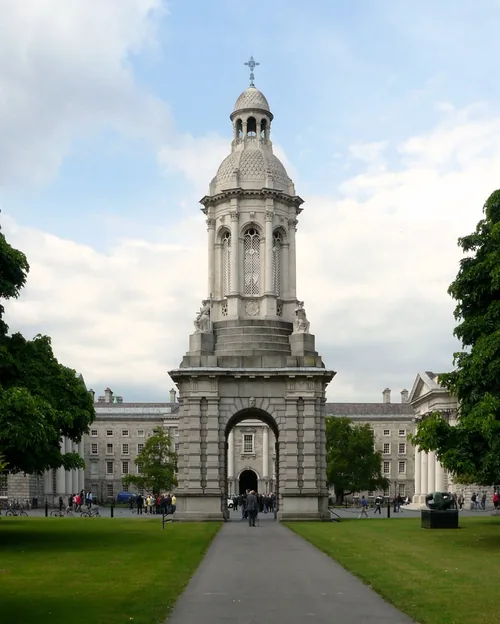
Walk through the gate and the city noise drops away: cobbled squares, lawns and stone buildings that have been teaching students since 1592, when Queen Elizabeth I granted the royal charter. Look for the Campanile in the middle of the main square, then the GMB and The Rubrics, the landmarks every student here knows. Ireland's oldest university still in operation draws more than two million visitors a year, and the campus has appeared in films and novels.
Trinity was founded to consolidate Tudor rule in Ireland. Provost Adam Loftus named it after Trinity College, Cambridge, and it rose on the site of the Priory of All Hallows, which Henry VIII had torn down. For more than two centuries it was the Protestant university of the Ascendancy, the ruling elite, and it carried a reputation for social exclusivity for most of its history. Its debating society, The Hist, founded in 1770, is the oldest student society in the world.
The real draw is the library. It has kept the Book of Kells since 1661, the Brian Boru harp since 1782 and a copy of the Proclamation of the Irish Republic since 1916, and its 18th century Long Room is the hall with the endless rows of old books you have probably seen in photos.
Which ticket? The Book of Kells & Old Library ticket gives you 45 minutes with the manuscript and the Long Room, which is the true highlight. The full Book of Kells Experience costs more, runs to 90 minutes and adds a digital projection show. You only spend a few minutes in front of the manuscript itself, so for most visitors the Book of Kells & Old Library ticket is the right call; the campus itself is free to stroll.
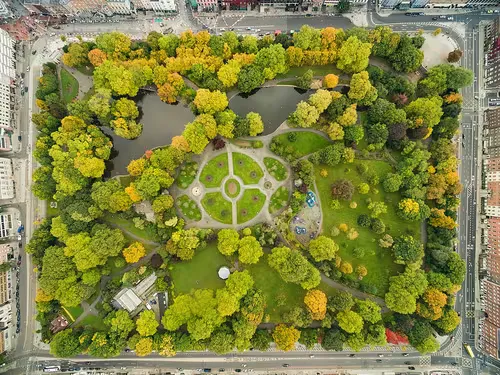
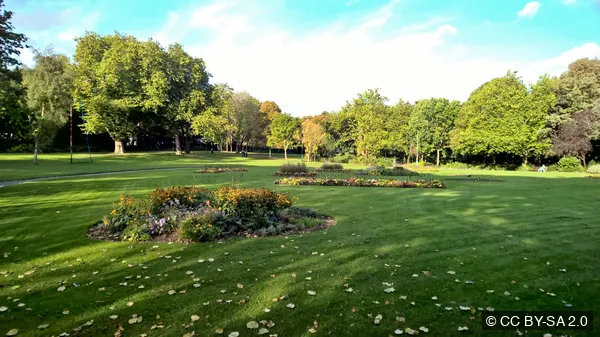
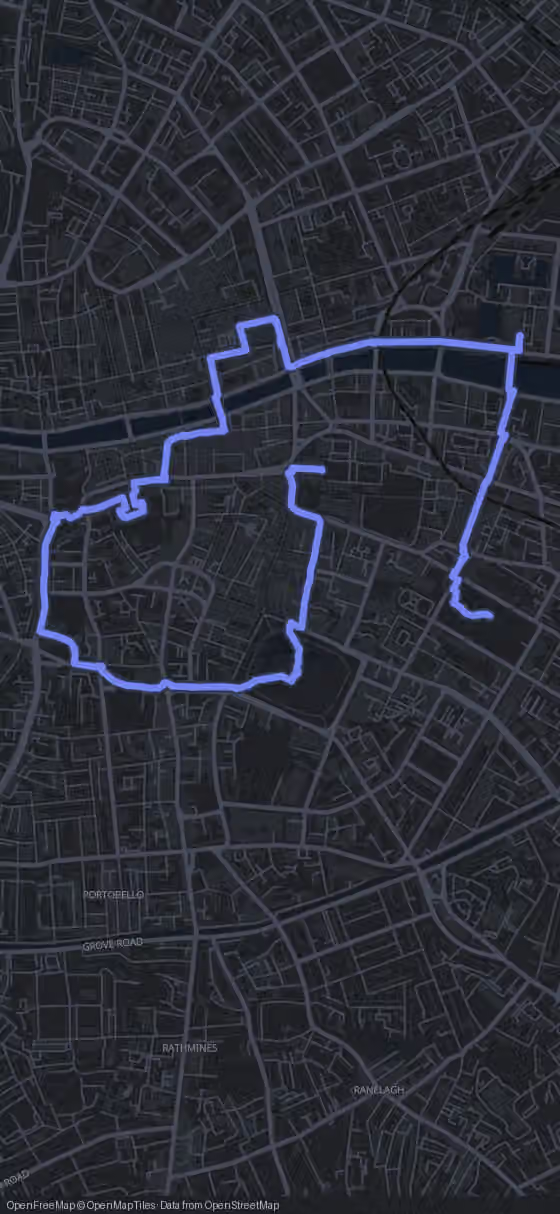
From here it is 980 m, about 14 minutes, to St Stephen's Green, the park that marks the southern edge of Georgian Dublin's grand squares.