

Angkor National Museum
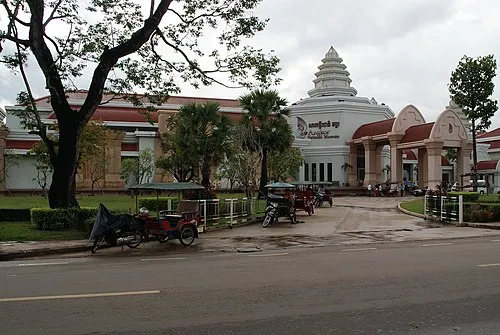
Before you see a single temple, this museum shows you what the Khmer Empire left behind. It opened on 12 November 2007 and is devoted entirely to the Angkor period, roughly the 9th to the 14th century, the golden era when the Khmer kings raised their great stone monuments. Most of the objects on display were found in and around the Angkor archaeological sites just outside town.
The collection comes from two places. Part of it is on loan from the National Museum in Phnom Penh; the rest comes from the Conservation d'Angkor, a storage depot for some 6,000 pieces set up by the École française d'Extrême-Orient in 1908 and now held by Cambodia's Ministry of Culture. So many of the statues you see here spent a century in storage before they went on public view.
The visit runs in one direction through eight themed galleries. It begins in the Briefing Hall, an 80-seat theater where a short orientation film plays every 15 minutes in seven languages. The Gallery of 1,000 Buddha follows Buddhism's influence on Cambodian life from ancient Khmer times to today, with rows of Buddha statues and relics. Gallery A, Khmer Civilization, explains how the empire was founded, what drove its people to build on such a colossal scale and how they saw their kings. Audio guides are available at the entrance in eight languages, including English, French and German.
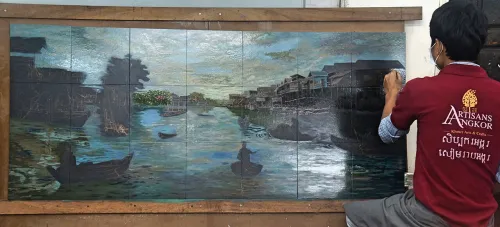
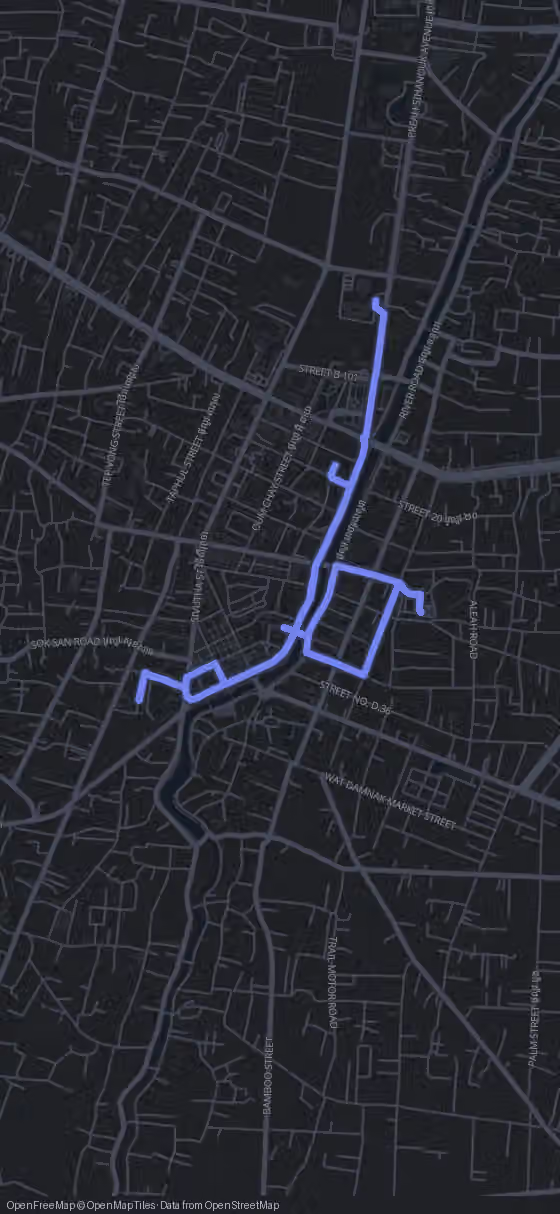
Is it worth going in? If you are heading to the Angkor temples, yes: an hour and a half here turns piles of carved stone into a story you can follow. If temples are not on your plan, you can skip it and start at Artisans Angkor instead. From here the longest leg of the route takes you 2200 m, about 30 minutes, to the craft workshop.