

Longshan Temple
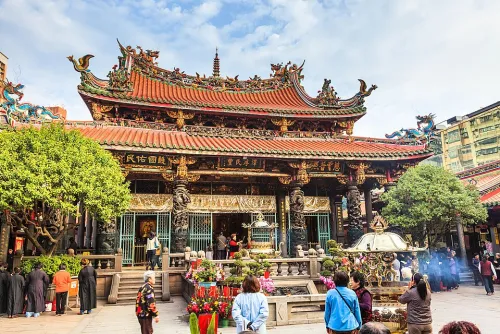
You enter Longshan Temple the traditional way: in through the Dragon Gate, out through the Tiger Gate. As you pass through a gateway, don't stand on the threshold; it's a matter of temple etiquette, and regulars notice. The main dedication is to Guanyin, but walk through the halls and you'll find altars to folk deities such as Mazu, goddess of the sea, and Guan Yu beside the Buddhist figures. That blend is what makes this a Taiwanese folk temple rather than a purely Buddhist one.
The story starts in Fujian. Early in the eighteenth century, settlers from the counties of Chin-chiang, Nan-an and Hui-an came to Manka, the old name of this district, also written Bangka or Mengjia. At home they had worshipped at an ancient Lungshan Temple founded in the seventh century, so in 1738 they built a branch temple here and gave it the same name. It was a place to pray and also the place where the new community gathered.
None of what you see dates from 1738. Earthquakes and fires destroyed the temple in whole or in part again and again, and each time Taipei's residents rebuilt it. The current buildings go back to a reconstruction begun in 1919 and finished in 1924, under Japanese rule. On 31 May 1945, during the Taihoku Air Raid, American bombers hit the temple because the Japanese were reportedly hiding weapons here. The main building and the left corridor were damaged, a side hall was lost, and with it the Statue of Shakyamuni Emerging along with many other artworks. It was rebuilt once more after the war.
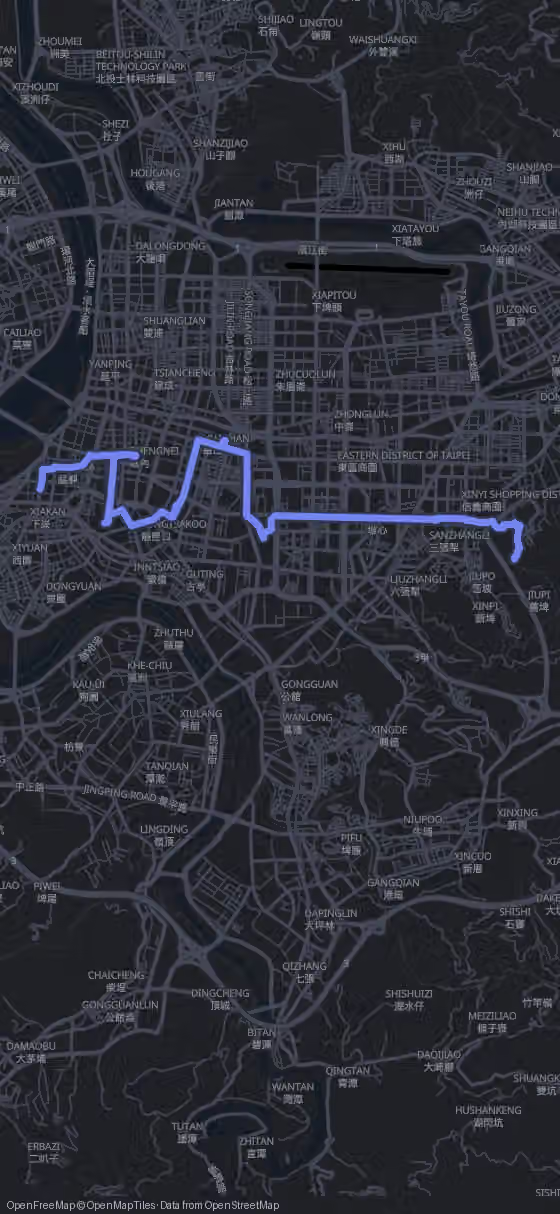
Entry is free, and going inside is the whole point: give it half an hour to walk the halls and watch worship going on around you. From here it's 1,210 m, about 17 minutes, to Ximending, still in the same old district of Wanhua.