

St. Sava Temple
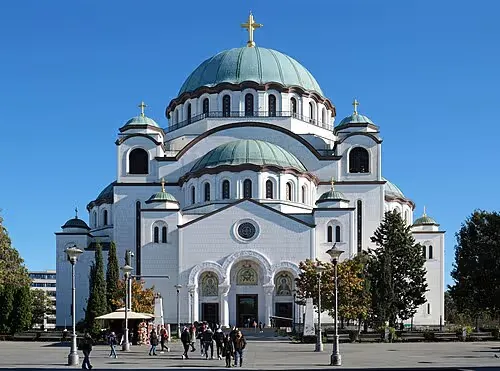
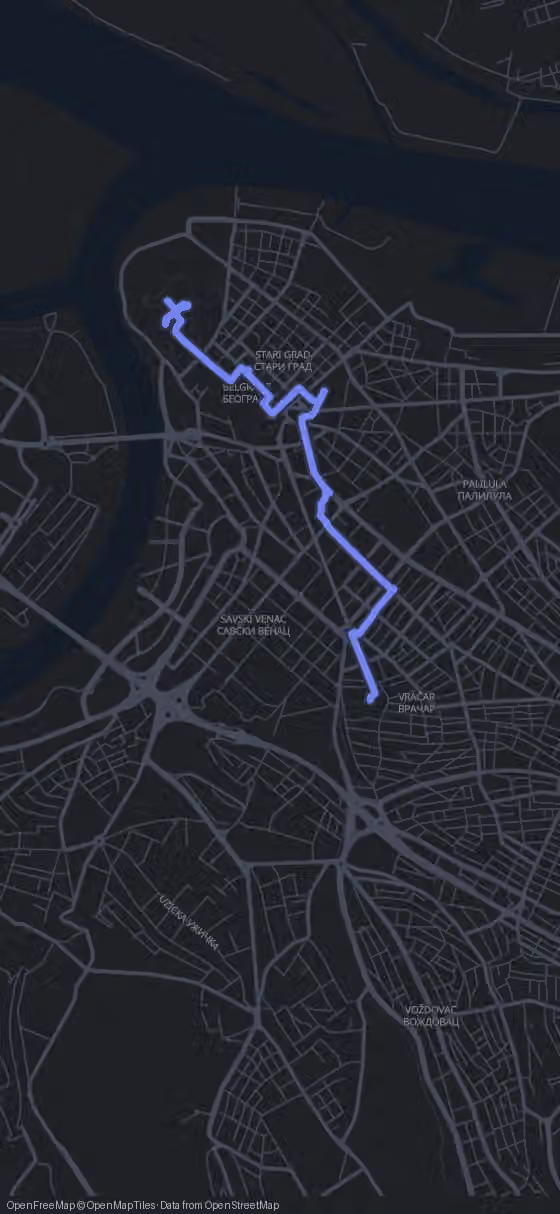
You start on the Svetosavski plateau in Vračar, where St. Sava Temple fills the eastern side. It is the largest Serbian Orthodox church and the second largest Orthodox church in the Balkans, after the People's Salvation Cathedral in Bucharest. It was planned as the seat of the episcopate and the main cathedral of the Serbian Orthodox Church, and it is dedicated to Saint Sava, who founded that church and remains one of the central figures of Serbian history.
The site carries a dark story. In 1595 the Grand Vizier Koca Sinan Pasha had the coffin with Sava's relics brought from the monastery of Mileševa to Belgrade and burned them on a pyre. The temple was built where that burning is believed to have happened, though the exact spot was never settled: one tradition points to a hill called Čupina umka at Tašmajdan, near today's St. Mark's Church, an area that was then also called Vračar.
Getting the church built took a long argument. A second design competition in 1926 and 1927 awarded no first prize; Bogdan Nestorović came second, and in 1930 a committee led by Patriarch Varnava chose him and paired him with Aleksandar Deroko. The decision set off a public debate across Yugoslavia about the size, look and national meaning of the church. The floor plan grew far beyond the original brief, now modelled on Hagia Sophia. The foundation stone was laid in 1935; when Yugoslavia fell under Nazi occupation in 1941, the walls stood about ten metres high.
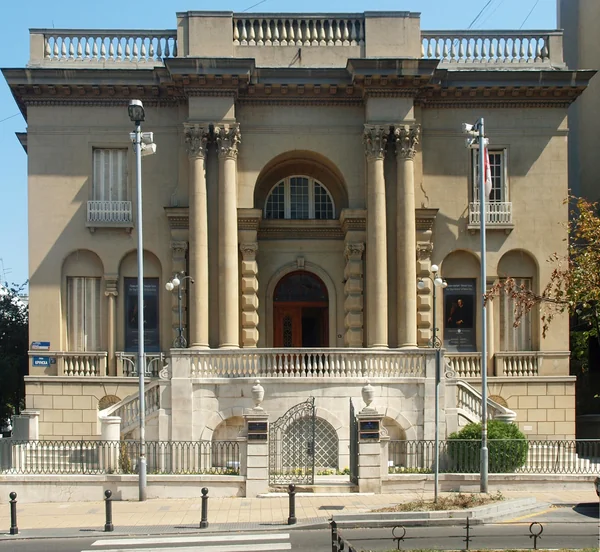
Go inside, it is free. Both the domed main church and the lower church are worth a look, and half an hour is enough to take in the scale. From here it is 1000 m, about 14 minutes on foot, to the Nikola Tesla Museum.