Free Walking Tour Budapest: Castle Hill to Market Hall

Start among Buda's royal walls, cross the Danube on its oldest bridge and finish with sausage in a bread cone under the market hall's roof.

11 Stops 7.6 km ~1 h 49 min walking
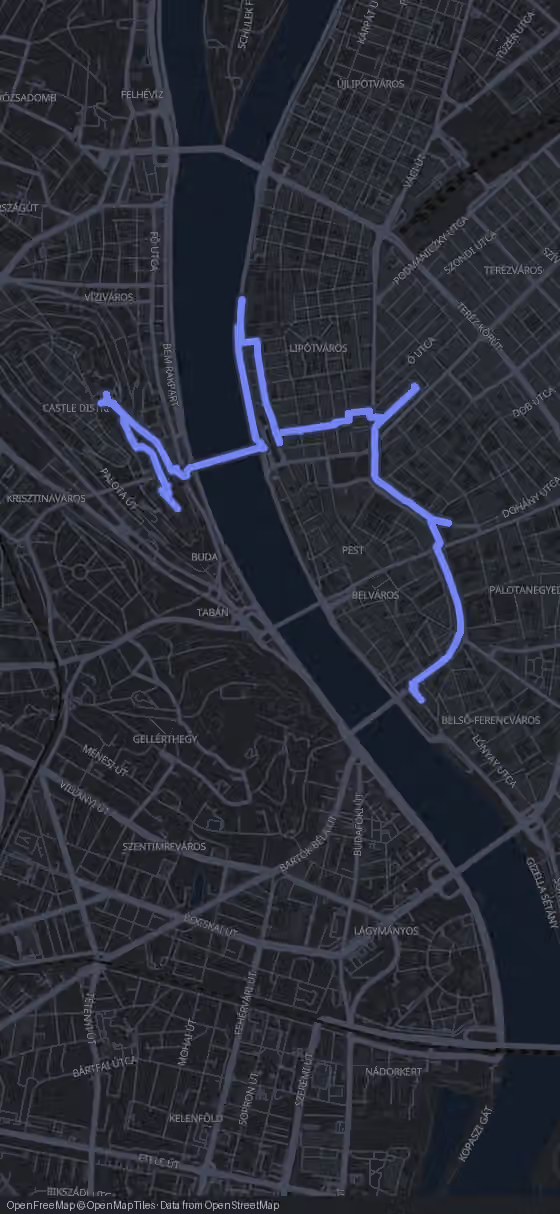
Route map for the Budapest walking tour
Stop 1 of 11
960 m·12 min
Buda Castle
Head north-west toward Fisherman's Bastion
Szia, welcome to Budapest. I'm Alex, and some of its grandest buildings survived major setbacks before they were completed.
Try this tour with Alex

Your Budapest walk at a glance

Eleven stops lead from Buda Castle down to the river, across the Chain Bridge and through Pest to the Great Market Hall: 7.6 km and 1 h 49 min of pure walking, around four and a half hours once you add a few interiors.

The bridge, the Shoes on the Danube Bank and the Great Market Hall cost nothing; Fisherman's Bastion (upper terrace), Matthias Church, St. Stephen's Basilica and the Great Synagogue charge entry. The GPS route in your browser is free, and the AI Tour Guide is optional.

Open free GPS & optional AI Tour Guide
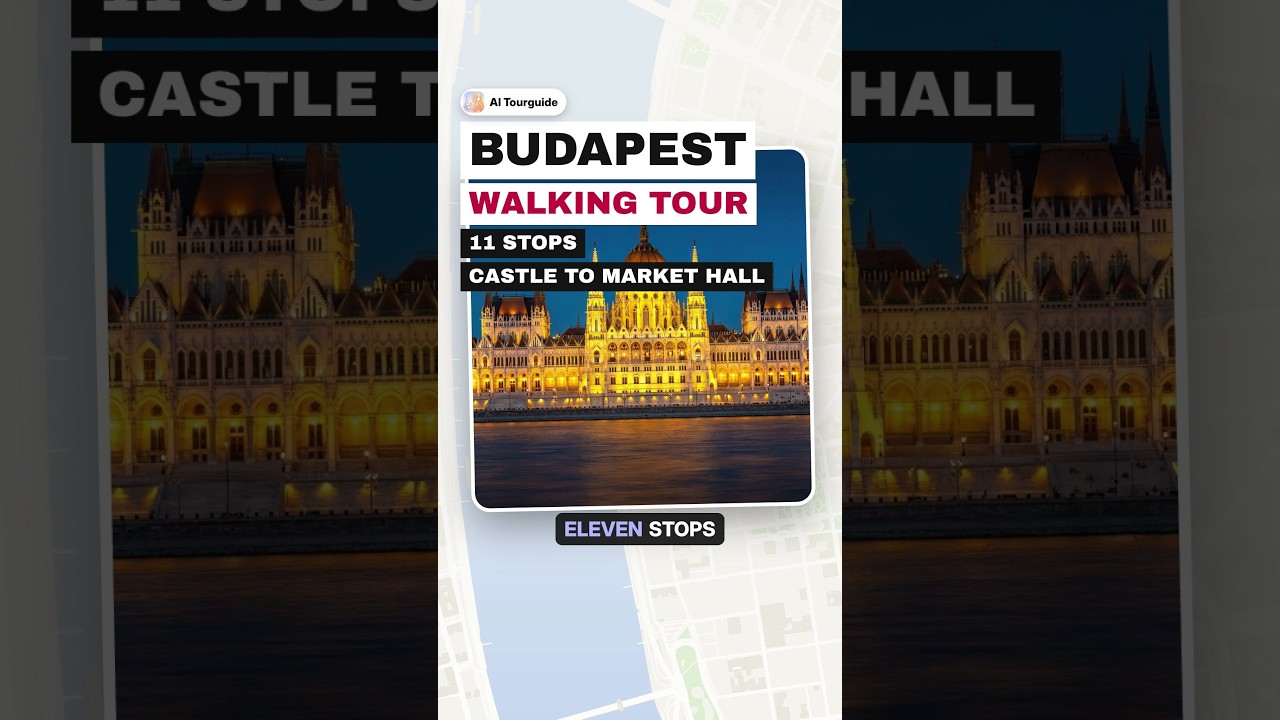
This short shows highlights of the route. All 11 stops follow below.

The Route

Walking Map of Budapest from Buda to Pest

11 stops 7.6 km 1 h 49 min walking
Tap to load interactive map

The 11 stops along this route

  1. Buda Castle in Budapest, stop 1 on the self-guided walking tour
    1Buda Castle
  2. Fisherman's Bastion in Budapest, stop 2 on the self-guided walking tour
    2Fisherman's Bastion
  3. Matthias Church in Budapest, stop 3 on the self-guided walking tour
    3Matthias Church
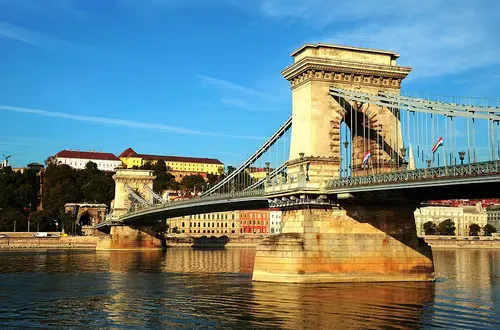
  4. Chain Bridge in Budapest, stop 4 on the self-guided walking tour
    4Chain Bridge
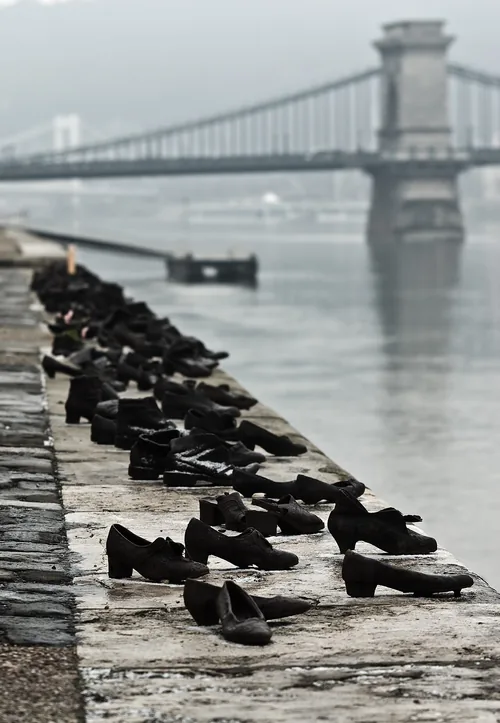
  5. Shoes on the Danube Bank in Budapest, stop 5 on the self-guided walking tour
    5Shoes on the Danube Bank
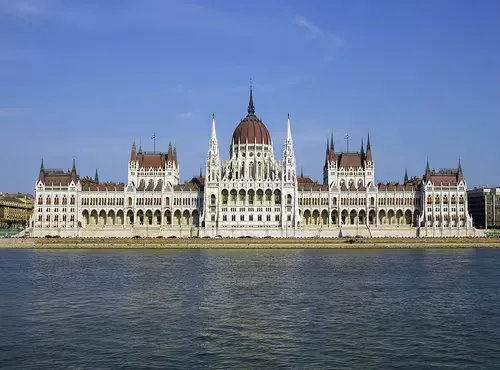
  6. Hungarian Parliament Building in Budapest, stop 6 on the self-guided walking tour
    6Hungarian Parliament Building
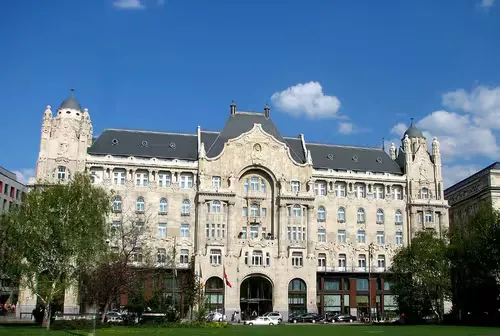
  7. Gresham Palace in Budapest, stop 7 on the self-guided walking tour
    7Gresham Palace
  8. St. Stephen's Basilica in Budapest, stop 8 on the self-guided walking tour
    8St. Stephen's Basilica
  9. Hungarian State Opera House in Budapest, stop 9 on the self-guided walking tour
    9Hungarian State Opera House
  10. Great Synagogue in Budapest, stop 10 on the self-guided walking tour
    10Great Synagogue
  11. Great Market Hall in Budapest, stop 11 on the self-guided walking tour
    11Great Market Hall
  12. That's the full route.

    Walk it with an AI Tour Guide talking you through every one of these streets.

    Start free in your browser
    You made it

The Budapest walking tour, one landmark after another

  1. 1

    Buda Castle

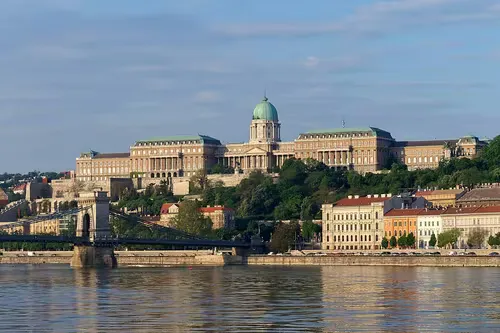
    Buda Castle in Budapest, stop 1 on the self-guided walking tour

    Locals simply call it a Vár, the Castle. The long Baroque palace on the southern tip of Castle Hill is what you see first, but the fortress walls run north around the whole Castle Quarter, a neighbourhood of medieval, Baroque and neoclassical houses that belongs to Budapest's UNESCO World Heritage area since 1987.

    The story starts with King Béla IV, who built the first royal residence here between 1247 and 1265. In the 14th century Stephen, Duke of Slavonia, brother of King Louis I, raised a keep known as Stephen's Tower; only its foundations survive. King Sigismund later enlarged the palace and its defences, because as Holy Roman Emperor he wanted a residence that impressed the rest of Europe. Most of what stands today is the Baroque palace built from 1749 to 1769, wrecked in the Siege of Budapest in the Second World War and rebuilt in a simplified style under communism.

    Inside are the Hungarian National Gallery, the National Széchényi Library and the Castle Museum of the Budapest History Museum. The museum ticket is paid, with reduced prices for young people and EEA seniors. It's worth it if you want the medieval layers of the palace; if your time is short, the courtyards and terraces give you the setting for free.

    From here it's 960 metres, about 17 minutes, north through the Castle Quarter to Fisherman's Bastion, passing the Hungarian National Gallery on the way.
    Local name
    Budavári Palota
    Hours
    Castle Museum daily 10:00–18:00 (last entry 17:30)
    Price
    Castle Museum (Budapest History Museum) 3,800 HUF; ages 6–26 and seniors 62–70 (EEA nationals) 1,900 HUF; under 6 and over 70 (EEA nationals) free
  2. 2

    Fisherman's Bastion

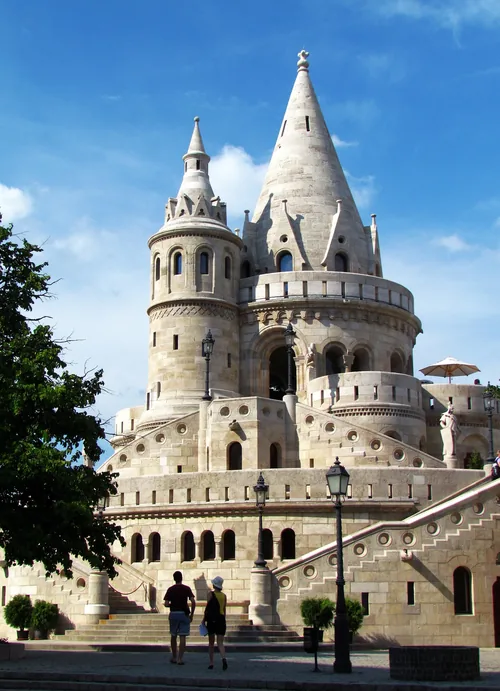
    Fisherman's Bastion in Budapest, stop 2 on the self-guided walking tour

    The white towers and arcades look medieval, but they are a romantic piece of the 1890s. Architect Frigyes Schulek built the bastion from 1895 to 1902 in Neo-Romanesque style on a stretch of the old castle walls. Count the high, pointed stone towers: there are seven, one for each of the seven Hungarian chieftains who founded the country in 895.

    The front facing the Danube is about 140 metres long. The name points back to the Middle Ages, when the guild of fishermen is thought to have defended this part of the wall. They lived below in Fishtown, or Watertown, by the river, sold their catch at the fish market near the church and in wartime stood on the walls themselves.

    Looking is free; the ticket covers the panorama terraces, either the upper viewing terrace alone or a panorama ticket for both areas, with reduced prices available. Pay if the view across the Danube to the Parliament matters to you; skip it if you plan to spend on the church next door.

    Matthias Church is just 90 metres away, about a minute's walk.

    Local name
    Halászbástya
    Hours
    2. Jan – 31. May: 09:00–19:00 | 1. Jun – 30. Sep: 09:00–21:00 | 1. Oct – 23. Dec: 09:00–19:00
    Price
    1700 HUF full price / 850 HUF reduced (upper viewing terrace only); 2700 HUF full price / 1350 HUF reduced (panorama ticket, both areas)
  3. 3

    Matthias Church

    Matthias Church in Budapest, stop 3 on the self-guided walking tour

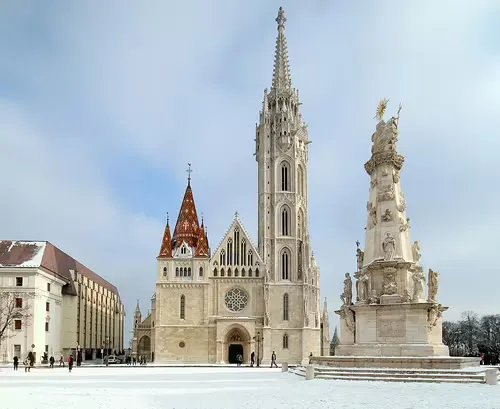
    Look up at the colourful patterned roof tiles and the tall Gothic tower: officially this is the Church of Our Lady of Buda, but everyone calls it after King Matthias, who married twice within these walls. Two royal couples were crowned here, Franz Joseph and Elisabeth, and later Charles IV and Zita. The guest book holds signatures from Emperor Akihito, Princess Diana and Margaret Thatcher.

    Tradition says a first Romanesque church stood here from 1015. The present building is late Gothic from the second half of the 14th century. After Buda fell to the Ottomans in 1541 it served as the city's main mosque, and the Gothic frescoes inside were lost. In 1686, during the siege by the Holy League, cannon fire broke a wall and revealed a hidden statue of the Virgin; the story goes that the garrison's morale collapsed and the city fell the same day. The Gothic look you see now comes from Frigyes Schulek's rebuilding from 1874 to 1896.

    Entry is paid, with reduced tickets for students and seniors; an audio guide and the tower cost extra. Go inside if you care about painted interiors and royal history; it's one of the most rewarding interiors on Castle Hill.

    Now the route leaves the hill: 960 metres, around 14 minutes, down to the Chain Bridge.

    Local name
    Mátyás-templom
    Hours
    Daily 09:00–17:00
    Price
    3400 HUF adults / 2700 HUF students+seniors (church); 5000 HUF / 4300 HUF with audio guide; 4000 HUF / 3300 HUF tower ticket; children under 6 free
  4. 4

    Chain Bridge

    Chain Bridge in Budapest, stop 4 on the self-guided walking tour

    This was the first permanent bridge across the Danube anywhere in Hungary, and for a long time the only fixed link between Buda and Pest. Count István Széchenyi pushed for it, banker György Sina organised the money, the Englishman William Tierney Clark designed it and the Scot Adam Clark ran the construction. The square on the Buda end, Clark Ádám tér, is named after him.

    Work began in 1839 and the bridge opened on 20 November 1849. Sina received the right to collect tolls for 87 years, but after 1867 the state bought the bridge back. The stone lions at the bridgeheads are by sculptor János Marschalkó. At the end of the Second World War the retreating German army blew the bridge up; it reopened, slightly widened, exactly 100 years after its first inauguration. Look at the right lion's base on the Buda side for the Széchényi family crest and its Latin motto: if God is with us, who can be against us?

    The bridge is free and open around the clock, freshly renovated between 2021 and 2023. Walk it slowly and look back at Castle Hill.

    On the Pest side, turn north along the river: 780 metres, about 11 minutes, to the Shoes on the Danube Bank.

    Local name
    Széchenyi lánchíd
    Hours
    Open 24/7
    Price
    Free
  5. 5

    Shoes on the Danube Bank

    Shoes on the Danube Bank in Budapest, stop 5 on the self-guided walking tour

    Sixty pairs of iron shoes stand at the edge of the embankment: men's boots, women's heels, children's shoes, all in the styles of the 1940s. Film director Can Togay conceived the memorial and created it with sculptor Gyula Pauer; it was unveiled on 16 April 2005.

    It remembers people murdered here by Arrow Cross militiamen in 1944 and 1945. Victims had to take off their shoes, which were valuable and could be resold, and were shot at the water's edge so the river carried their bodies away. The memorial speaks of 23,500 people shot into the Danube during the Arrow Cross terror, 20,000 of them Jews. Most killings took place in December 1944 and January 1945, when militiamen took as many as 3,600 Jews from the newly established ghetto. Soviet forces liberated Budapest in February 1945.

    Behind the shoes runs a 40 metre stone bench, and three cast iron plaques explain the memorial in Hungarian, English and Hebrew. It's free and always accessible. Give it a quiet moment; people often leave candles or flowers.

    The Parliament is 360 metres further, about 5 minutes on foot.

    Local name
    Cipők a Duna-parton
    Hours
    Open 24/7
    Price
    Free (public memorial)
  6. 6

    Hungarian Parliament Building

    Hungarian Parliament Building in Budapest, stop 6 on the self-guided walking tour

    The neo-Gothic giant on Kossuth Square has been the largest building in Hungary since it was completed. Its name, Országház, means House of the Country. After Buda, Óbuda and Pest merged in 1873, the Diet decided the united capital needed a parliament that faced the Danube and expressed the nation's sovereignty.

    Imre Steindl won the international competition, partly because his design echoed the Palace of Westminster in London: Hungarian reformers saw Britain as their political model. Two losing entries were built anyway, as the Ethnographic Museum and the Ministry of Agriculture, both facing the Parliament. Construction began in 1885, the building was inaugurated in 1896 for the country's presumed 1,000th anniversary and finished in 1904, using 40 million bricks, half a million precious stones and 40 kg of gold. Steindl went blind and died before it was done.

    Visits inside are paid and run as tours; the ticket office on Kossuth Square tells you prices and times. Book it if you want the domed hall and the ceremonial interiors; otherwise the river facade is the sight.

    Next comes a 940 metre walk, about 13 minutes, back south to the Gresham Palace.

    Local name
    Országház
  7. 7

    Gresham Palace

    Gresham Palace in Budapest, stop 7 on the self-guided walking tour

    At the Pest end of the Chain Bridge, by Széchenyi Square, stands one of the city's showpieces of Art Nouveau. The London based Gresham Life Assurance Company bought the plot in 1880, at a time when British insurers could not invest in shares but could earn rent. Architects Zsigmond Quittner and József Vágó built the new palace from 1904 to 1906, named after Sir Thomas Gresham, the 16th century founder of London's Royal Exchange.

    It held offices and flats for senior staff. After the Second World War the Red Army used it as barracks, and under communism it decayed into an apartment block. Legal battles with residents drove away one hotel group in the 1990s, before a reconstruction worth $85 million restored the Art Nouveau interiors. Today it is the Four Seasons Hotel Budapest Gresham Palace.

    The lobby is free to see. Step in for the ironwork and mosaics, keep it short and quiet, and don't expect a museum.

    St. Stephen's Basilica is 590 metres inland, about 8 minutes.

    Local name
    Gresham-palota
    Price
    Free (lobby only)
  8. 8

    St. Stephen's Basilica

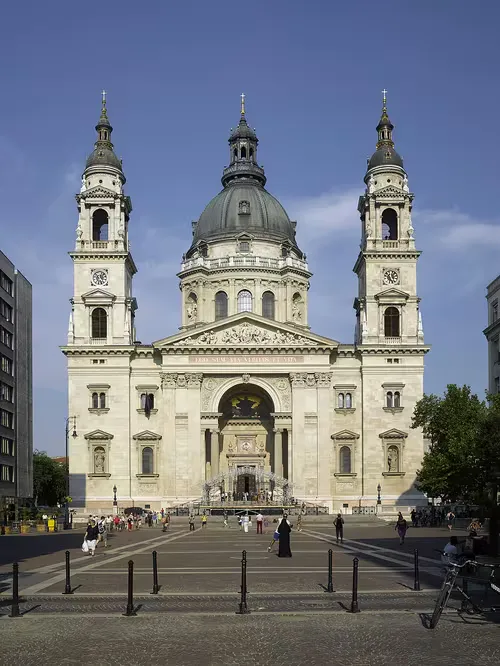
    St. Stephen's Basilica in Budapest, stop 8 on the self-guided walking tour

    The largest church in Budapest is dedicated to Stephen, Hungary's first king, whose mummified right hand is kept here in a reliquary. Before the church, this spot was home to the Hetz Theater, known for animal fights. During the great flood of 1838 the higher ground here gave residents refuge, and in thanks they donated toward the new church.

    Building took 54 years. József Hild began in 1851 in neoclassical style, but in 1858 the dome collapsed and everything had to be torn down and started again. After Hild's death in 1867 Miklós Ybl took over and shifted the design toward neo-Renaissance; József Kauser finished it in 1905, with Emperor Franz Joseph present for the keystone. In the Second World War its cellar sheltered refugees and part of the National Archives.

    The church charges admission, the panorama terrace with treasury has its own ticket, and a combined ticket covers both. The terrace is the better buy if you skipped Fisherman's Bastion.

    The Opera House is 450 metres away, about 6 minutes along a grand boulevard.

    Local name
    Szent István-bazilika
    Hours
    Mon–Sat 09:00–18:00, Sun 13:00–18:00 | panorama terrace & treasury: daily 09:00–19:00
    Price
    2600 HUF adults, single ticket for the church interior; 5000 HUF panorama terrace + treasury; 6800 HUF combined ticket (church + panorama terrace + treasury)
  9. 9

    Hungarian State Opera House

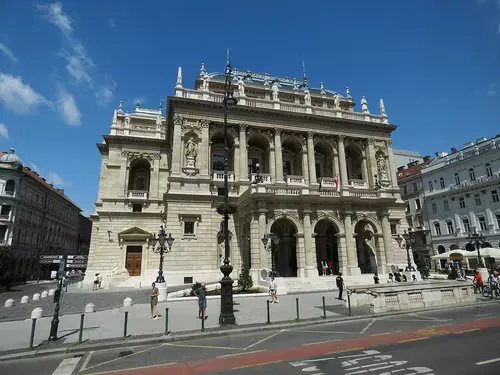
    Hungarian State Opera House in Budapest, stop 9 on the self-guided walking tour

    Miklós Ybl, who also worked on the Basilica, designed this neo-Renaissance opera house, one of the city's key 19th century monuments. Painters Mór Than, Károly Lotz and Bertalan Székely decorated the lavish interiors. Building started in 1875 and took nine years.

    It opened on 27 September 1884 in the presence of Franz Joseph, with Ferenc Erkel conducting acts from Bánk bán and Lohengrin. The company soon struggled for money and quality until Gustav Mahler became director from 1888 to 1891 and gave it its first golden age. It closed for a year in the First World War, survived the Second with minor damage and reopened in March 1945.

    Entry inside is paid; the box office tells you current tour and ticket prices. If you love music or gilded halls, a tour or an evening performance is worth fitting in. Otherwise enjoy the facade and move on.

    The next leg is longer: 1150 metres, around 16 minutes, to the Great Synagogue.

    Local name
    Magyar Állami Operaház
    Website
    opera.hu ↗
  10. 10

    Great Synagogue

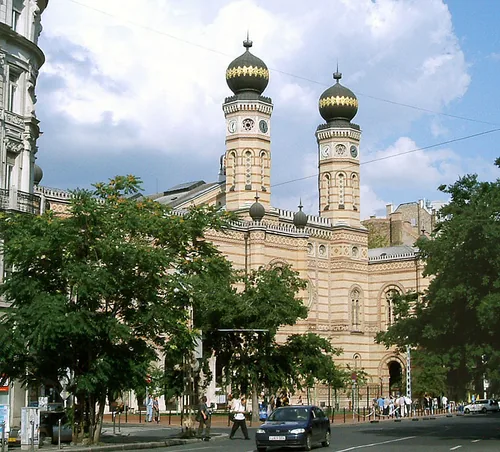
    Great Synagogue in Budapest, stop 10 on the self-guided walking tour

    The two onion topped towers on Dohány Street mark the largest synagogue in Europe, seating 3,000. Viennese architect Ludwig Förster built it from 1854 to 1859 in Moorish Revival style, inspired by North Africa and the Alhambra, because he believed there was no distinct Jewish architecture to draw on. Part of the interior is by Frigyes Feszl.

    The Jewish community of Pest wanted a visible statement of its place in the city. At the consecration on 6 September 1859 the keystone was set in the Torah ark with a silver trowel made for the occasion; trowel and keys are kept in the Jewish Museum next door, built where Theodor Herzl was born. The complex also includes the Heroes' Temple, a graveyard and a memorial. During the Holocaust, Dohány Street was the border of the ghetto.

    Admission is paid, with reduced tickets for students, and includes a guided tour. Arrive well before closing, as last entry comes early. It's the stop to pay for if Jewish history matters to you.

    The final leg is the longest: 1340 metres, about 19 minutes, to the Great Market Hall.

    Local name
    Dohány utcai zsinagóga
    Hours
    Sun–Thu 10:00–16:00, Fri 10:00–14:00 (7 January – 28 February and 2 November – 31 December); Sun–Thu 10:00–18:00, Fri 10:00–16:00 (1 March – 23 May and 1-31 October); Sun–Thu 10:00–20:00, Fri 10:00–16:00 (24 May – 30 September); last entry one hour before closing
    Price
    14,500 HUF adults / 12,000 HUF students (2026 admission, incl. guided tour)
  11. 11

    Great Market Hall

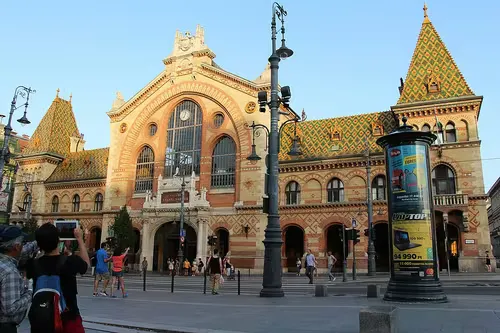
    Great Market Hall in Budapest, stop 11 on the self-guided walking tour

    Budapest's largest and oldest indoor market sits at Fővám Square, at the end of Váci utca and the Pest end of Liberty Bridge. It was the biggest project of the city's first mayor, Károly Kamermayer, who had already retired when he attended the opening on 15 February 1897.

    Plans had dragged on for decades. Since the 1860s officials wanted market halls to improve the city's food supply, with one strict aim: only inspected food should be sold. A committee chose the site of the old salt depot in 1883, and Sóház Street nearby still means salt house.

    Entry is free. Browse the ground floor for paprika and produce, then go up to the food counters for a late lunch that ends the walk.

    Local name
    Központi Vásárcsarnok
    Hours
    Mon–Fri: 06:00–18:00 | Sat: 06:00–16:00 | Sun: 10:00–16:00
    Price
    Free
Walking tour route map of Budapest Route loaded
Buda CastleFisherman's BastionMatthias ChurchChain Bridge+7
All 11 stops are already on the map.
You just press start.
AI Tour Guide

You've read the route. Now walk it with a guide who talks with you.

Press start wherever you are, even hundreds of kilometres from Budapest, and the guide begins telling its stories right away. In the city, pick any of the 11 stops to start from: it leads you there, then talks with you the whole route, asking, listening, remembering, and shaping the tour around your answers.

11stops 7.6km 1 h 49 minwalking 13languages
▶Start the tour free

Free to start · Runs in your browser · No app, no download

Shorter ways to walk this Budapest route

Not every day has room for all eleven stops. These cuts keep the route's logic and save walking or entry fees.

Castle Hill only

Stops: 1, 2, 3

For a morning in Buda or a first visit on a tight schedule. Just 18 minutes of walking between the palace, the bastion and the church, so nearly all your time goes into the sights. Entry applies at the Castle Museum, the upper terrace of Fisherman's Bastion and Matthias Church; the palace courtyards and the lower bastion cost nothing to look at.

Free riverside loop in Pest

Stops: 4, 5, 6, 7, 8

For a budget day or an evening walk. From the Chain Bridge past the memorial shoes, the Parliament facade and the Gresham Palace lobby to the Basilica square takes 37 minutes on foot. Everything is free from outside; only the Basilica interior and the Parliament tour cost money if you want them.

Pest from the bridge to the market

Stops: 4, 5, 6, 7, 8, 9, 10, 11

For people staying in Pest who skip Castle Hill. Eight stops and 1 h 18 min of walking; pick one or two interiors, for example the Basilica and the Great Synagogue, and end with lunch in the Great Market Hall.

How long the Budapest tour takes, with and without interiors

The order follows the city's history downhill: royal Buda first, then the bridge that tied it to Pest, then the parliament, churches, opera and synagogue of the 19th century boom, and finally the market where Budapest still shops. Walking alone adds up to 1 h 49 min over 7.6 km. The longest legs are the last two, 16 minutes from the Opera House to the Great Synagogue and 19 minutes on to the Great Market Hall.

With Matthias Church, the bastion terrace, the Basilica and the Great Synagogue inside, plan around four and a half hours; add an hour if you also want the Castle Museum. The Castle Hill variant fits into two hours with interiors, the free Pest loop into about an hour and a half, and the full Pest version into a long afternoon.

Before you set off on Castle Hill

  • Start and finish: The recommended start is Buda Castle; the walk ends at the Great Market Hall on the Pest side. You can join at any stop, the GPS route simply picks up from there.
  • Best day: Weekdays work best, since the Great Synagogue, the Basilica and the market hall all keep limited hours on some days.
  • Time of day: Start in the morning. That way you reach the synagogue in good time before its last entry.
  • Costs: Route, map and GPS navigation are free. Several interiors charge admission, from the bastion terrace to the Great Synagogue with its guided tour, the most expensive stop. The AI Tour Guide starts with 100 free credits, then you choose this tour all-inclusive for €19.99 with no time limit, or €5 per hour.
  • Getting to the start: If you come from Pest, the Castle Hill Funicular runs from Clark Ádám Square by the Chain Bridge up to the palace.

Where to eat and rest between the stops

Castle Hill is touristy, but it still has a few honest places to eat, and the Pest half of the route passes bakeries, a rose gelato counter and a market hall with Hungarian food under one roof.

AranybástyaDuck breast with plum sauce or creamy paprika chicken with dumplings. A better choice than the overpriced cafés right by the sights. (Near Buda Castle and Fisherman's Bastion)
Ruszwurm Confectionery and Fekete HollóTwo of the authentic spots in the Castle District, good for coffee and cake before you head down to the river. (Castle Hill, District I)
Kispiac BisztróTraditional Hungarian cooking a few minutes from the Parliament, a good lunch stop in the middle of the Pest half. (Hold str. 13, near the Parliament)
Artizan BakeryPistachio cheesecake and custard Danish with cardamom and berries, with locals in the queue. (Hold u. 3, District V)
Pörc & PrézliHungarian restaurant close to the Basilica, handy if you reach Pest around lunchtime. (Lázár str. 1, near St. Stephen's Basilica)
Gelarto RosaGelato shaped into a rose from two to four flavours. Touristy, but the ice cream is genuinely good. (Szent István tér 3, by St. Stephen's Basilica)
TATI Farm to TableOn the synagogue's street, a fitting break before the long last leg to the market. (Dohány u. 58-62, District VII)
Fakanál Bistro and KolbiceFakanál serves stuffed cabbage with sour cream (share a portion, it's heavy), sausages, stuffed peppers and goulash. Kolbice puts Hungarian sausage in a bread cone with cabbage, onion and cheese sauce. (Upper floor, Great Market Hall)

Budapest tourist traps on and near this route

  • The friendly stranger bar scam: Someone asks for directions or a photo, then suggests a drink in a bar where the bill turns out to be absurd. Angelo's Coffee & Pub near Váci utca is named again and again. Say no and walk on. (On and near Váci utca)
  • Hajos Caffe: Victims describe the same pattern here: other guests turned away, then an extortionate bill behind closed doors. Avoid it. (Hajos utca, near the Opera House)
  • Fake police officers: A 'plainclothes officer' asks to check your wallet for counterfeit notes and pockets cash. Real police carry visible ID; offer to walk to the nearest station together.
  • Mixed up banknotes: 20,000 HUF notes look a lot like 2,000 HUF notes. Check every note before you pay, especially at market stalls.
Walking tour route map of Budapest
AI Tour Guide

Your guide is ready when you reach Castle Hill.

Press start and a voice AI Tour Guide takes it from here: leading the route through Budapest, telling the stories, and turning your walk into a real back-and-forth conversation. No app or download is needed; it runs in your browser.

11stops 7.6km 1 h 49 minwalking 13languages
▶Start the tour free

Free to start · Runs in your browser · No app, no download

Walk Buda and Pest with a guide beside you

On this route the AI Tour Guide turns eleven landmarks into one story: it greets you on Castle Hill, tells how kings, fishermen, bankers and bridge builders shaped the city, and asks what draws you, so it can linger on the war years at the river or on Art Nouveau in Pest. Ask it which coronation dress Elisabeth wore, what Mahler changed at the Opera or how the Market Hall plans stalled for years; you can interrupt it any time.

A Real Conversation A voice AI Tour Guide greets you, leads the whole route, and tells the stories and facts as you walk, asking what you want to see and keeping a real conversation going. Not a recording you press play on.
Map Navigation Follow the route on the map and walk at your own pace. You choose where to start and when to move to the next stop.
Ask Anything Curious about a building you pass? Ask your AI Tour Guide on the spot and the conversation carries on.
13 Languages Switch language anytime. No separate tour needed.
Start free in your browser

Questions visitors still ask

Does the Great Synagogue charge admission?

Yes, and the ticket includes a guided tour. It isn't open every day, so plan your visit ahead.

Do I need a ticket for Fisherman's Bastion?

Only for the upper viewing terrace or the panorama ticket for both areas. The towers and arcades can be seen without paying.

Where is St. Stephen's right hand kept?

In a reliquary inside St. Stephen's Basilica. The church interior is paid, and a combined ticket also covers the panorama terrace and treasury.

Can I go inside the Gresham Palace?

Yes, the lobby is free to see. The building is a luxury hotel today, so keep it to a short, quiet look.

Is the Chain Bridge open to pedestrians?

Yes, it's open around the clock and free to cross. It reopened after a renovation between 2021 and 2023.

Is the tour really free?

Yes. The whole tour is free: the route, the interactive map and the navigation cost you nothing. Only the voice AI Tour Guide is optional and paid: you test it with 100 free credits, then you pay either €5 per hour or €19.99 for this whole tour, with no time limit. Admission to 6 of the 11 stops is not included: Buda Castle, Matthias Church, Hungarian Parliament Building, St. Stephen's Basilica, Hungarian State Opera House and Great Synagogue charge their own entry fees.

Do I need to download an app?

No. Everything runs in your phone browser. Open the route and start walking, no download and no sign-up required.

Do I need to book the walking tour in advance?

No booking needed. This self-guided tour is available anytime. Open the route in your browser and start walking. The AI Tour Guide works instantly, no app, no reservation required.

What languages is the AI Tour Guide available in?

The AI Tour Guide speaks 13 languages, so you take the tour in your own language and can switch at any time.

Can I skip stops or change the route?

Yes. Skip any stop, spend extra time at places you like, or start the route from any point. It is your walk, you set the pace.
Image credits
▶ Start free in your browser Runs in your browser, no app, no download