Free Walking Tour Sofia: Domes, Markets and Roman Brick

Walk 3.8 km through 1,700 years of Sofia, from gold domes to a Roman brick rotunda, past a busy market and a mosque built beside a hot spring.

10 Stops 3.8 km ~53 min walking
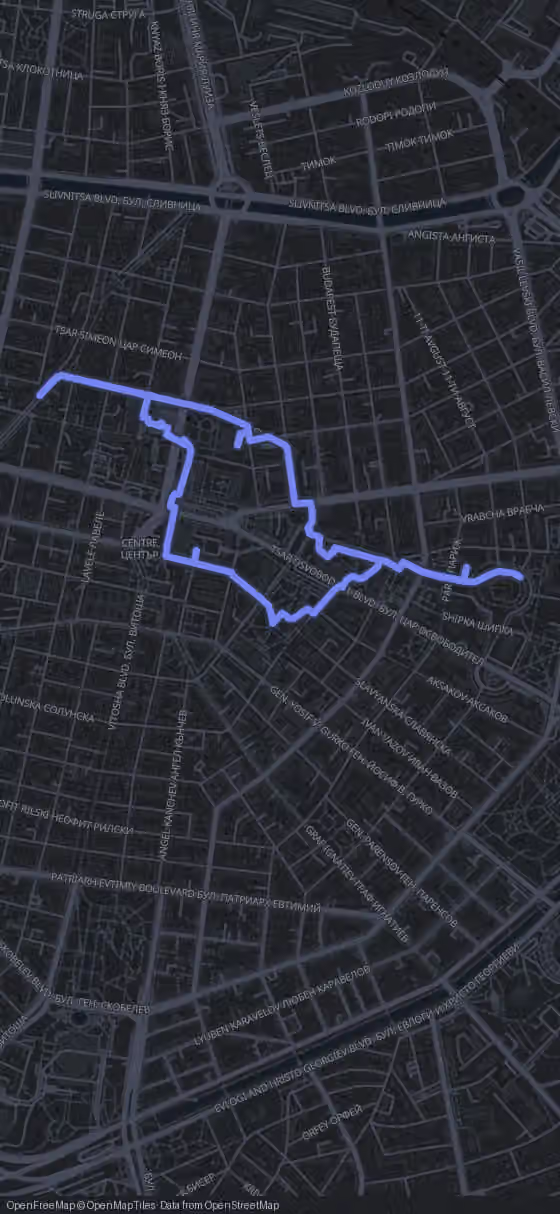
Route map for the Sofia walking tour
Stop 1 of 10
560 m·7 min
Alexander Nevsky Cathedral
Head west toward the Sofia National Gallery
Welcome to Sofia. I'm Alex, and our first story begins with a Roman rotunda hidden inside a much newer courtyard.
Try this tour with Alex

Sofia's Centre in Ten Stops

Ten stops lead from the Alexander Nevsky Cathedral to the Saint Sofia Church: 3.8 km and 53 minutes of pure walking, about three hours with time at each stop. The Sveta Nedelya Cathedral, the St. George Rotunda, the Banya Bashi Mosque, Zhenski Pazar, the Central Market Hall and the City Garden cost nothing to enter.

Only the Sofia National Gallery and the Regional History Museum charge admission. The route and the GPS navigation in your browser are free; the AI Tour Guide is optional.

Open free GPS & optional AI Tour Guide
View of Sofia

The Route

Walking Map of Sofia: Ten Stops, 3.8 km

10 stops 3.8 km 53 min walking
Tap to load interactive map

The 10 stops along this route

  1. Alexander Nevsky Cathedral in Sofia, stop 1 on the self-guided walking tour
    1Alexander Nevsky Cathedral
  2. Sofia National Gallery, stop 2 on the self-guided walking tour
    2Sofia National Gallery
  3. Regional History Museum in Sofia, stop 3 on the self-guided walking tour
    3Regional History Museum
  4. Zhenski Pazar in Sofia, stop 4 on the self-guided walking tour
    4Zhenski Pazar
  5. Central Market Hall in Sofia, stop 5 on the self-guided walking tour
    5Central Market Hall
  6. Banya Bashi Mosque in Sofia, stop 6 on the self-guided walking tour
    6Banya Bashi Mosque
  7. Sveta Nedelya Cathedral in Sofia, stop 7 on the self-guided walking tour
    7Sveta Nedelya Cathedral
  8. St. George Rotunda in Sofia, stop 8 on the self-guided walking tour
    8St. George Rotunda
  9. City Garden in Sofia, stop 9 on the self-guided walking tour
    9City Garden
  10. Saint Sofia Church, stop 10 on the self-guided walking tour
    10Saint Sofia Church
  11. That's the full route.

    Walk it with an AI Tour Guide talking you through every one of these streets.

    Start free in your browser
    You made it

Your Sofia Walking Tour, from Nevsky to Saint Sofia

  1. 1

    Alexander Nevsky Cathedral

    Alexander Nevsky Cathedral in Sofia, stop 1 on the self-guided walking tour

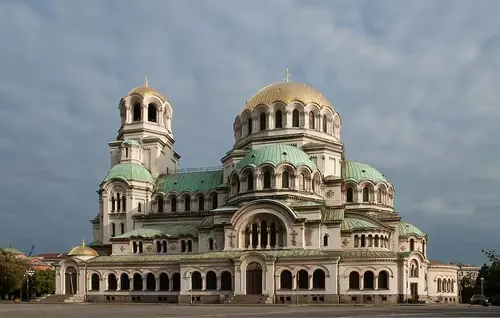
    Start under the gold. The Alexander Nevsky Cathedral is a Neo-Byzantine cross-domed basilica with an emphasised central dome, gold-plated and 45 metres high, while the bell tower reaches 53 metres. It covers 3,170 square metres and holds 5,000 worshippers, which puts it among the ten largest Eastern Orthodox church buildings and makes it one of Sofia's symbols. It is also the cathedral church of the Patriarch of Bulgaria.

    The name surprises many visitors. Alexander Nevsky was a Russian prince, and the cathedral honours the Russian soldiers who died in the Russo-Turkish War that freed Bulgaria from Ottoman rule in 1878. Planning began on 19 February 1879 and the foundation stone was laid in 1882, yet most of the building went up between 1904 and 1912.

    Architect Alexander Pomerantsev radically reworked an earlier project by Ivan Bogomolov and finished the design in 1898. Then half of Europe pitched in: the marble and the lamps came from Munich, the metal for the gates from Berlin, the gates themselves from Karl Bamberg's factory in Vienna, and the mosaics were shipped from Venice. Bulgarian painters such as Ivan Mrkvička worked alongside Russian artists like Vasily Bolotnov and Nikolay Bruni.

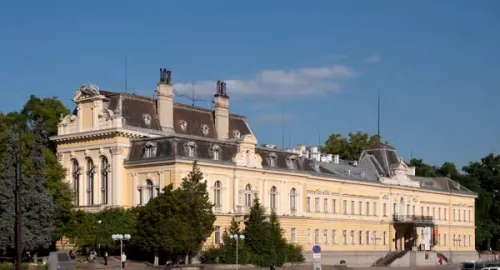
    Entry is free, so step inside even if you only have ten minutes; the volume of the space is something you feel rather than read about. From the cathedral it is 560 metres, about 8 minutes, to a royal palace that became an art gallery.
    Hours
    Daily: 07:00–19:00
    Price
    Free
  2. 3

    Regional History Museum

    Regional History Museum in Sofia, stop 3 on the self-guided walking tour

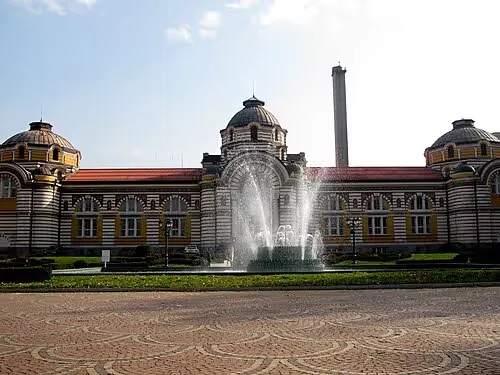
    The Regional History Museum lives in the former Central Mineral Bath, built in 1913 on a spot where a hot spring has risen since Roman times. The building is part of the story: in 1998 the city decided to turn its main public bath into a museum of Sofia, and the doors opened on 17 September 2015.

    The museum is much older than its home. Mayor Vladimir Vazov proposed a city museum in 1928, and its first permanent exhibition opened on 1 December 1941 at 3 Banski Square, only for that building to be destroyed by bombing in the Second World War. For decades the museum had no exhibition space of its own, yet it kept organising shows and researching the city's heritage. In its early years it also served as the city library and archive, which became separate institutions in 1952. At the end of 2016 it was upgraded and renamed the Regional History Museum.

    Inside are more than 120,000 objects. The earliest come from the Neolithic settlement excavated in the Slatina district, and the research library of about 12,000 volumes includes a manuscript from 1820 and a book printed in 1714. Go in if you want the whole story of Sofia in one place; ask about admission at the desk.

    From the bath it is 650 metres, about 9 minutes, to the city's oldest open-air market. You will come back to this square shortly, because the market hall and the mosque stand right opposite.

  3. 4

    Zhenski Pazar

    Zhenski Pazar in Sofia, stop 4 on the self-guided walking tour

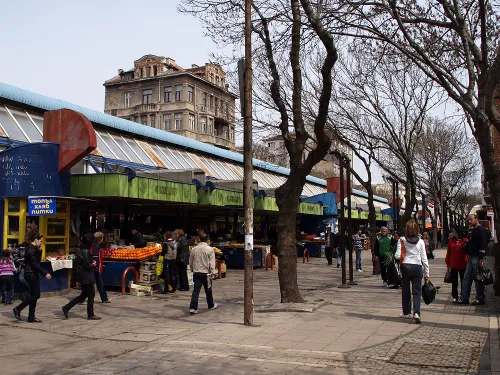
    Zhenski Pazar, the Women's Market, is Sofia's largest and oldest open-air market. It fills about two thirds of Stefan Stambolov Boulevard, between Ekzarh Yosif Street and Slivnitsa Boulevard, close to Lion's Bridge. Walking in costs nothing; you simply drift between the stalls of produce.

    It was already a market before the Liberation from Ottoman rule in 1878. Its older names tell you what changed hands here: the Grain Market and the Horse Market. Until 1990 it carried the name Georgi Kirkov, after the boulevard's former name, which honoured a prominent socialist, deputy and trade union leader.

    Next to the market stands the Orthodox church of Saints Cyril and Methodius. Enjoy the noise and the colours, and keep your bag zipped while you browse.

    From the market it is 440 metres, about 6 minutes, to the covered hall where Sofia first shopped under a glass roof.

    Hours
    Daily: 08:00–19:00
    Price
    Free (entry)
  4. 5

    Central Market Hall

    Central Market Hall in Sofia, stop 5 on the self-guided walking tour

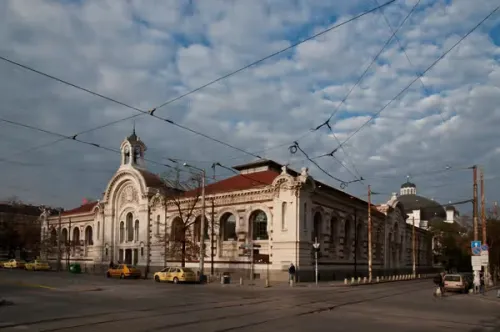
    The Central Market Hall, which Sofians simply call Halite, 'the Halls', borrowing from the Paris Les Halles, was built between 1909 and 1911 and was the first market hall of its kind in modern Bulgaria. The style is Neo-Renaissance with Neo-Byzantine and Neo-Baroque touches. A steel and glass roof spans a floor of 65 by 55 metres, and there is an entrance on each of the four sides.

    Look at the main entrance on Maria Luisa Boulevard. The clock tower got its three clocks in 1915. Over the door is Sofia's coat of arms in relief, made before the motto 'Grows but does not age' was added in 1911 and before the laurel branches, so you are looking at an older version of the city's emblem.

    The hall has been a cultural monument of national importance since 1955. Directly behind it stands the Sofia Synagogue of 1909, and across the boulevard Banski Square opens between the hall and the old mineral bath. Entry is free, so take a few minutes to look around inside.

    The mosque is just 130 metres away, 2 minutes on foot.

    Hours
    Daily: 07:00–22:00
    Price
    Free (entry)
  5. 6

    Banya Bashi Mosque

    Banya Bashi Mosque in Sofia, stop 6 on the self-guided walking tour

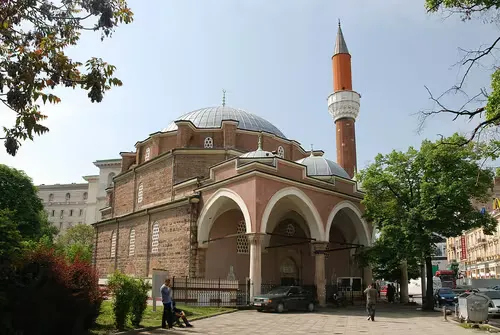
    The Banya Bashi Mosque is the largest and the only active mosque in Sofia, built in the 1560s and one of the oldest mosques in Europe. Its name gives away its setting: banya means bath, and Banya Bashi means 'in front of the bath'. A thermal spring at 46 °C has risen here since Roman times, and from at least the 16th century a Turkish bath stood right against the mosque. That old hammam was already in ruins when the large Central Mineral Bath next door was built in 1913.

    The founder was Mullah Efendi Kadı Seyfullah, who built the mosque in memory of his late wife. That is why older texts call it the Molla Efendi or the Kadı Seyfullah Mosque.

    Its survival is the remarkable part. When the traveller Evliya Çelebi visited in the 17th century, Sofia had 53 mosques, later by some accounts more than 100. An earthquake in 1858 brought down 19 of the 24 minarets standing in the city at the time. This is the one still in use today. Entry is free; remember that it is an active place of worship.

    Walk 330 metres, about 5 minutes, to Sveta Nedelya Cathedral, and keep your valuables close if you take the underpass at Sveta Nedelya Square.

    Hours
    Daily: 10:30–22:00
    Price
    Free
  6. 7

    Sveta Nedelya Cathedral

    Sveta Nedelya Cathedral in Sofia, stop 7 on the self-guided walking tour

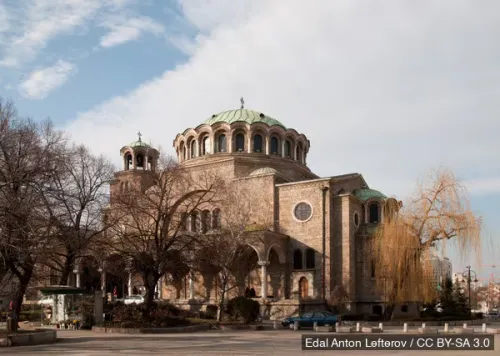
    Sveta Nedelya Cathedral is the cathedral of the Sofia bishopric, and the site has carried a church probably since the 10th century. For most of that time it had stone foundations and wooden walls, and unlike most churches in town it stayed wooden until the middle of the 19th century. A German traveller named Stephan Gerlach mentioned it when he passed through Sofia in 1578.

    The church guards an unusual relic: the remains of the Serbian king Stefan Uroš II Milutin, brought to Bulgaria around 1460 and kept here, with some interruptions, since the church became a bishop's residence in the 18th century. In the late 19th and early 20th century that earned it a second name, Sveti Kral, the Holy King.

    The old church was demolished on 25 April 1856 to make room for a bigger one, 35.5 metres long and 19 metres wide. Work started that summer, was set back by the earthquake of 1858 and finished in 1863; 20,000 people attended the inauguration on 11 May 1867. In 1879 the Russian prince Alexander Dondukov-Korsakov gave eight bells, which needed a new belfry, and in 1898 new domes were added. The present building is the work of the Bulgarian architects Vasilyov and Tsolov. Entry is free.

    The Rotunda is only 130 metres away, about 2 minutes, and it takes you back another thousand years.

    Hours
    Daily: 07:00–19:00
    Price
    Free
  7. 8

    St. George Rotunda

    St. George Rotunda in Sofia, stop 8 on the self-guided walking tour

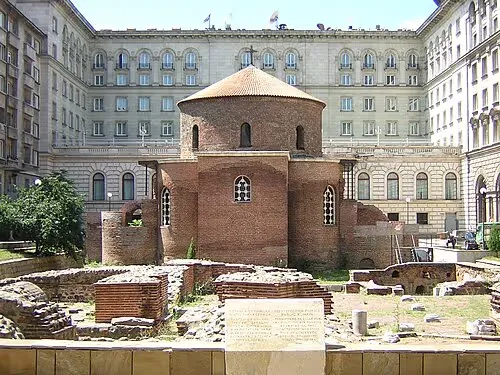
    In the courtyard between Hotel Balkan and the Presidency, the St. George Rotunda appears: a red brick cylinder with a dome on a square base, sitting a few metres lower than the modern streets around it. It dates from the early 4th century, when Sofia was Serdica and the residence of the emperors Galerius and Constantine the Great, and it is considered the oldest preserved building in the city.

    Built as Roman baths, it became a church inside the walls of Serdica. Inside the dome, 22 prophets more than two metres tall look down on you. Three layers of frescoes were discovered, the earliest from the 10th century, the best known from the 12th, 13th and 14th centuries. In Ottoman times the building served as a mosque and the paintings were covered over; they were uncovered and restored only in the 20th century.

    Walk round behind the apse. You can see part of a Roman street with its drainage, the foundations of a large basilica and a building with hypocaust heating, where the tiles that lifted the floor are still visible. Some of the most important meetings of the Council of Serdica are thought to have taken place in this church.

    Entry is free, and the frescoes alone make it worth going in. From here, 320 metres, about 4 minutes, bring you to the City Garden.

    Hours
    Daily: 08:00–19:30
    Price
    Free
  8. 9

    City Garden

    City Garden in Sofia, stop 9 on the self-guided walking tour

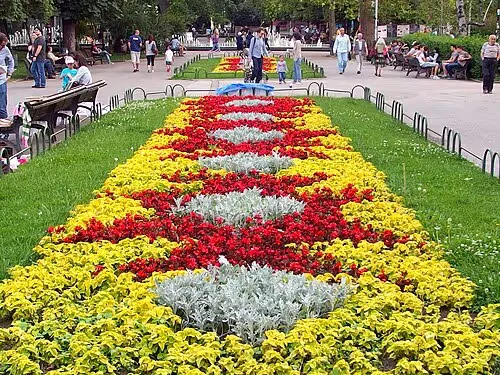
    The City Garden is Sofia's oldest and most central public garden, in existence since 1872 and framed by Tsar Osvoboditel Boulevard, Knyaz Alexander Battenberg Street and Gourko Street. Laid out in the last years of Ottoman rule, it was transformed right after the Liberation, when Sofia became the capital, by city architect Antonín Kolář on the initiative of governor Pyotr Alabin: new paths and plants, a low wooden fence, a coffeehouse and a kiosk for musicians.

    It was first named the Alexander II Garden, after the Russian tsar who started the war that led to the Liberation. The gardeners Karl Betz, Daniel Neff and Iliya Todorov gave it the look it kept until the Second World War.

    Then came the communist years. The Georgi Dimitrov Mausoleum, since demolished, was built here, and redesigns in 1951, 1959, 1976 and 1978 turned the garden away from the former royal palace, today's Sofia National Gallery, and towards the Ivan Vazov National Theatre. Along the way the garden lost ground and key architectural features.

    Today it is where Sofians sit down, and a good place for you to do the same. Look for the amateur chess players who gather in the small garden in front of the National Theatre. Then walk 660 metres, about 9 minutes, to the last stop: the church that gave the city its name.

    Hours
    Open 24/7
    Price
    Free
  9. 10

    Saint Sofia Church

    Saint Sofia Church, stop 10 on the self-guided walking tour

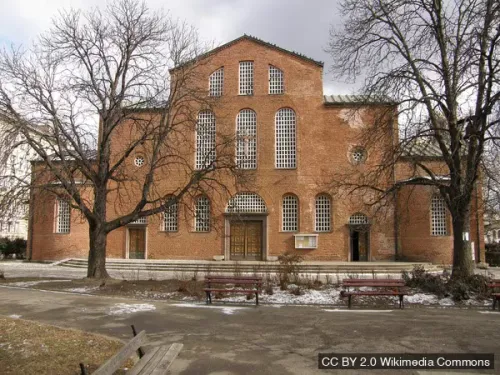
    The Saint Sofia Church, the Church of Holy Wisdom, gave Sofia its name: in 1329 the town of Serdica was renamed after it. The ground has been sacred for a very long time. In the 2nd century a Roman theatre stood here, the area later became the necropolis of Serdica, and several churches from the 4th century came before the present one, built and destroyed in turn during the wars with Goths, Huns and others.

    The basilica you see, with its cross plan, two towers and one tower cupola, is believed to date from the reign of the Byzantine emperor Justinian I, which makes it a contemporary of Hagia Sophia in Constantinople. Serdica mattered in early Christianity: around 343 the Council of Serdica brought 316 bishops to the city.

    In the 16th century the church was turned into a mosque, its 12th-century frescoes were destroyed and minarets were added. In the 19th century two earthquakes brought down one of the minarets and the mosque was abandoned. Bogdan Filov began the restoration around 1926 and completed it around 1935, and today the church counts among the most valuable pieces of early Christian architecture in south-eastern Europe.

    Entry is free. Inside is a cross basilica with three altars; look down at the floor, covered with early Christian mosaics of ornaments, plants and animals. This is where the walk ends, and if you want to return to the Alexander Nevsky Cathedral, the GPS navigation leads you back.

    Hours
    Daily: 07:00–18:00
    Price
    Free
Walking tour route map of Sofia Route loaded
Alexander Nevsky CathedralSofia National GalleryRegional History MuseumZhenski Pazar+6
All 10 stops are already on the map.
You just press start.
AI Tour Guide

You've read the route. Now walk Sofia with a guide in your ear.

Press start wherever you are, even hundreds of kilometres from Sofia, and the guide begins telling its stories right away. In the city, pick any of the 10 stops to start from: it leads you there, then talks with you the whole route, asking, listening, remembering, and shaping the tour around your answers.

10stops 3.8km 53 minwalking 13languages
▶Start the tour free

Free to start · Runs in your browser · No app, no download

Shorter Ways to Walk Sofia

Not every day has room for all ten stops. These cuts follow the same route and keep the walking legs as they are.

The free western half

Stops: 4, 5, 6, 7, 8, 9, 10

For anyone skipping museums: from Zhenski Pazar through the market hall, the mosque, Sveta Nedelya and the Rotunda to the City Garden and Saint Sofia Church. About 2 km and 28 minutes of walking, and every stop is free to enter.

Serdica in an hour

Stops: 5, 6, 7, 8

For a short window: the Central Market Hall, the Banya Bashi Mosque, Sveta Nedelya Cathedral and the St. George Rotunda sit close together, 590 metres and 9 minutes of walking in total. Ottoman, Orthodox and Roman Sofia within a few streets, all free.

Museum morning

Stops: 1, 2, 3

For art and history lovers: the Alexander Nevsky Cathedral, then the Sofia National Gallery in the old royal palace and the Regional History Museum in the former mineral bath. About 1.1 km and 16 minutes of walking; the cathedral is free, the gallery and the museum charge admission.

How Long Does This Sofia Tour Take on Foot?

Pure walking time is 53 minutes over 3.8 km. Plan about three hours if you step into the free churches, the mosque, the market hall and the Rotunda and look at the two museums from outside. Add roughly an hour for the gallery and 45 minutes for the history museum, and the day grows to about four and a half hours.

The order puts the two museums early, while you still have energy for exhibitions. From Zhenski Pazar onward the stops sit close together and no leg is longer than 660 metres, so the second half feels like a stroll.

The free western half takes about two hours, the Serdica cluster about an hour, and the museum morning about two and a half hours with both collections.

Before You Set Off in Sofia

  • Start: The Alexander Nevsky Cathedral is the recommended start, but you can join the route at any stop.
  • End: The walk finishes at the Saint Sofia Church. If you want to get back to the start, the GPS navigation in your browser leads you there.
  • Time of day: Start in the morning if you want proper time in the gallery and the history museum; the churches, the market and the garden fit easily into the rest of the day.
  • Tickets: Only the Sofia National Gallery and the Regional History Museum charge admission. Everything else on the route is free to enter.
  • Water: Tap water is safe. In restaurants ask for cheshmyana voda, tap water, because some places bring bottled water by default and charge for it.

Food and Breaks Along the Route: Mekitsi, Soup and Mineral Water

Sofia feeds you well on this walk: fresh pastry near the cathedral, fried mekitsi by the market, a quick soup at lunch and free mineral water from the city's own springs.

Chimney Cake SofiaHot chimney cakes baked to order, with toppings such as pistachio, cinnamon or chocolate. A good reason not to skip dessert. (Near the Alexander Nevsky Cathedral)
Vino VinoItalian classics and a strong list of Bulgarian and international wines, with a summer garden and reasonable prices. The pizza has a loyal following. (Near the Alexander Nevsky Cathedral)
The mekitsa shop on Stefan StambolovNo name, a yellow front with green shutters and a queue of locals. Mekitsi are doughy fried dough cakes, often topped with yogurt and honey. (On Stefan Stambolov, the street Zhenski Pazar runs along)
Supa StarThe go-to for a quick, cheap and good lunch, recommended again and again for its soups.
Hadjidraganov's CellarsFor dinner after the walk: an underground wine-cellar tavern with old barrels, wooden beams and traditional live music in the evenings.
Free mineral water tapsSofia has free mineral water taps all over town, and locals fill huge bottles at them. The best known is beside the old bathhouse, so bring an empty bottle. (Next to the old Central Mineral Bath, home of the Regional History Museum)

Tourist Traps to Avoid in Sofia's Centre

  • Pickpockets at Zhenski Pazar: The market is lively and great for produce, but it is a known pickpocket zone. Keep bags zipped and phones out of back pockets. (Zhenski Pazar)
  • The Sveta Nedelya Square underpass: Another known pickpocket hotspot. Stay alert or cross at street level. (Sveta Nedelya Square, near the Sheraton Hotel)
  • Dishes priced per 100 grams: Before ordering anything priced by weight, ask how much the portion weighs. An honest place answers straight away; if the reply is vague, order something else.
  • Street cons: Friendship bracelets tied on your wrist and then charged for, a 'found' gold ring that is brass, petitions demanding cash, fake tourist police checking wallets, and the three-cup game, where the player always loses. Walk on.
Walking tour route map of Sofia
AI Tour Guide

Your guide is ready when you are, at any stop.

Press start and a voice AI Tour Guide takes it from here: leading the route through Sofia, telling the stories, and turning your walk into a real back-and-forth conversation. No app or download is needed; it runs in your browser.

10stops 3.8km 53 minwalking 13languages
▶Start the tour free

Free to start · Runs in your browser · No app, no download

What the AI Tour Guide Adds in Sofia

On this route the layers pile up fast: Roman Serdica, Ottoman baths, a royal palace, communist redesigns. The AI Tour Guide walks you through them as a conversation, greets you, tells the stories at each place, asks what you are curious about, remembers it and goes deeper where you want; you can interrupt it any time. Ask it what daily life in Constantine's Serdica looked like or how the old Turkish bath worked. You start with 100 free credits; after that you choose between this tour all-inclusive for €19.99 with no time limit, or credits at €5 per hour.

A Real Conversation A voice AI Tour Guide greets you, leads the whole route, and tells the stories and facts as you walk, asking what you want to see and keeping a real conversation going. Not a recording you press play on.
Map Navigation Follow the route on the map and walk at your own pace. You choose where to start and when to move to the next stop.
Ask Anything Curious about a building you pass? Ask your AI Tour Guide on the spot and the conversation carries on.
13 Languages Switch language anytime. No separate tour needed.
Start free in your browser

Common Questions About Walking Sofia

Should I carry cash in Sofia?

Yes. Some restaurants do not take cards, Made in Home for example is cash only, and the same goes for a number of smaller cafés and bakeries.

Does a head shake mean no in Bulgaria?

Often the opposite. If you ask for a free table in a half-empty pub and the staff shake their heads, they are telling you yes, sit down.

How do I take a taxi without getting overcharged?

Uber does not operate in Sofia. Avoid cars without a company logo or with a meter that is 'broken', check the rate sticker on the window before getting in and insist on the meter. TaxiMe, Yellow Taxi and OK Supertrans are the names to book with; at the airport, Yellow Taxi is the official provider at Terminal 2.

Where can I walk next after Sofia?

Bucharest is 295 km away and Belgrade 329 km; both have their own free self-guided walking route.

Is the tour really free?

Yes. The whole tour is free: the route, the interactive map and the navigation cost you nothing. Only the voice AI Tour Guide is optional and paid: you test it with 100 free credits, then you pay either €5 per hour or €19.99 for this whole tour, with no time limit.

Do I need to download an app?

No. Everything runs in your phone browser. Open the route and start walking, no download and no sign-up required.

Do I need to book the walking tour in advance?

No booking needed. This self-guided tour is available anytime. Open the route in your browser and start walking. The AI Tour Guide works instantly, no app, no reservation required.

What languages is the AI Tour Guide available in?

The AI Tour Guide speaks 13 languages, so you take the tour in your own language and can switch at any time.

Can I skip stops or change the route?

Yes. Skip any stop, spend extra time at places you like, or start the route from any point. It is your walk, you set the pace.
Image credits
▶ Start free in your browser Runs in your browser, no app, no download