

Museum of Zakopane Style at Villa Koliba
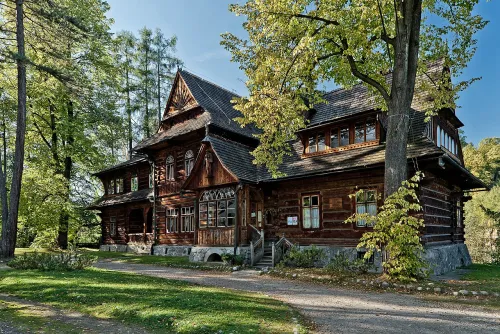
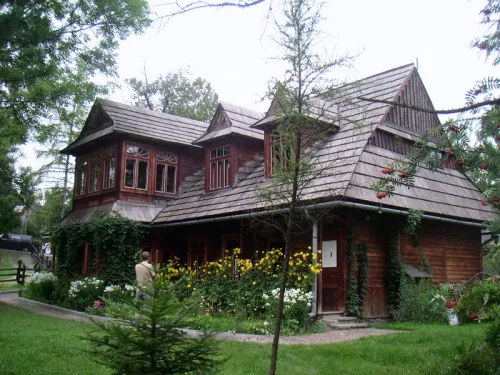
You start on Kościeliska street at a wooden villa that changed the look of a whole town. Villa Koliba, put up by local workers in 1892 and 1893, was the first building ever raised in Zakopane style, and it has been a registered Polish monument since 1983. The name comes straight from the Goral dialect of the region: a koliba is a shepherds' hut.
That name hints at what the house was almost meant to be. Zygmunt Gnatowski needed somewhere to keep his collection of ethnographic objects and planned a simple hut modelled on the existing Podhale buildings. Stanisław Witkiewicz, already known as an artist, draughtsman and playwright, talked him out of it and into a house in a style that was only just taking shape.
Witkiewicz had a mission. He had watched wealthy residents build houses in the Swiss folk style and wanted Poland to have its own rustic architecture instead. He drew on local decorative motifs, made the sketches for Koliba in 1891, and this villa became the first proof that his idea could stand as a real building.
Inside, it has been the Museum of Zakopane Style since 4 December 1993. The five rooms in the original part are arranged as they were in Gnatowski's day: dining room, drawing room and bedroom on the ground floor, Gnatowski's own room and the servant's room on the top floor. His collection lives in the Tatra highlander's chamber, with furniture, utensils and craft objects made in Zakopane style around 1900, many to Witkiewicz's own designs. If you care about architecture or want to understand why so many houses in town look the way they do, this is the interior to choose.
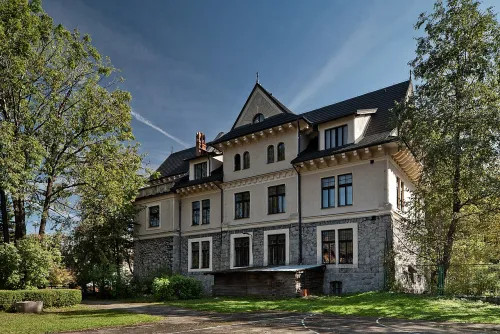
From here it is 1340 m, about 19 minutes, to Villa Atma, a house built in the same style a few years later that found a very different calling.