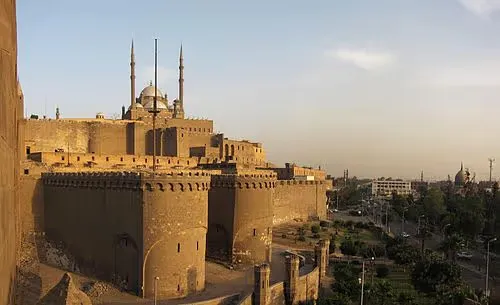


Al-Hakim Mosque
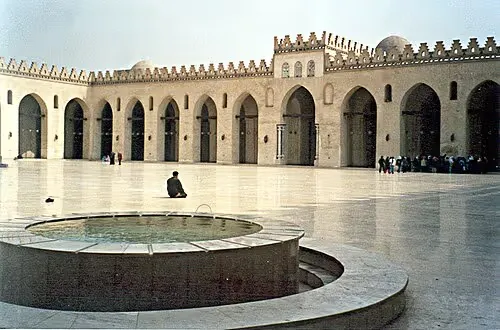
Your walk starts at a mosque that looks more like a fortress. Two massive square bastions frame its front, and hidden inside them are the original minarets, ornate towers built in several tiers. Nobody knows for certain why they were encased so soon after they went up, in 1010, but the bastions are what you see today. Pass through the projecting entrance portal and the space opens into a wide courtyard, the sahn, with the columns of the hypostyle prayer hall beyond.
The mosque carries the name of al-Hakim bi-Amr Allah, the sixth Fatimid caliph, yet his father al-Aziz began it in 990. The first Friday prayers were held a year later in an unfinished building, which suggests the prayer hall came first. Al-Hakim and his overseer, Abu Muhammad al-Hafiz 'Abd al-Ghani ibn Sa'id al-Misri, took up the work again in 1002 and 1003, and the mosque was inaugurated in Ramadan 1013. At 120 by 113 metres it was more than twice the size of the al-Azhar Mosque.
Its later centuries were less grand. The building was neglected, used for other purposes and finally fell into ruin, until the Dawoodi Bohras completed a major restoration and reconstruction in 1980 and it returned to religious use. That explains why so much of it looks crisp and new. You will also hear it called al-Anwar, 'the Illuminated'. It stands on the east side of al-Mu'izz Street, just south of Bab al-Futuh, the northern gate of the old city.
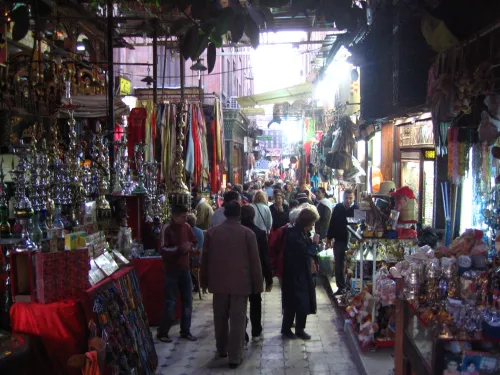
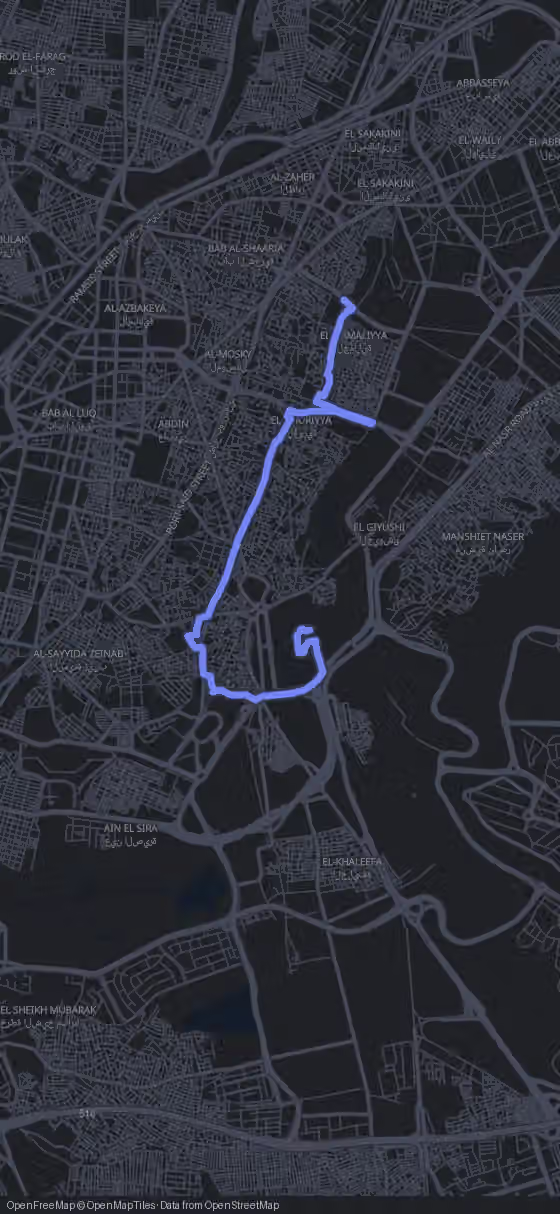
Entry is free, so go in and spend some time in the courtyard; twenty minutes is plenty unless architecture is your passion. From here it is 1020 m, about 14 minutes on foot, to the Khan El-Khalili Bazaar.