



Přemysl Otakar II Square
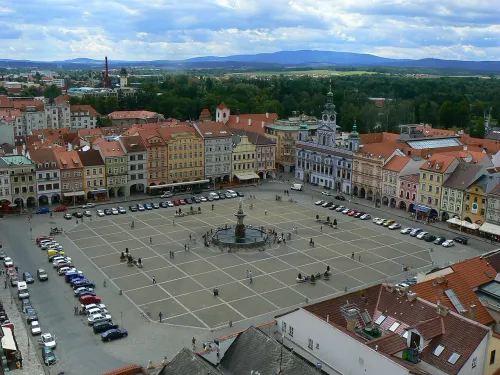
This is where České Budějovice begins, in every sense. King Přemysl Otakar II founded the town, and around 1265 a man named Hirzo laid out this square: almost perfectly square, about 133 metres on each side, with plots roughly 8 metres wide marked out around it for the burghers' houses. Walk an edge and you'll feel how regular it is. It counts as the second largest square-shaped plaza in the Czech Republic, after the one in Vysoké Mýto.
The centre is a field of ceramic tiles from 1939, an 80 by 80 metre area framed by a 10 metre strip on each side. Look for the Stray Stone, a boulder lying where the town's execution ground once stood. A well stood on the square too, and for a while so did the meat shops, until Charles IV had them torn down and moved to Krajinská Street. In the first half of the 20th century, trams even ran along the far sides.
The name is younger than it looks. For centuries this was simply the Main Square. From 1915 it was Emperor Franz Joseph Square, from 1918 Freedom Square, from 1934 Masaryk Square, during the occupation Adolf Hitler Platz, after May 1945 Masaryk Square again, from 1951 Žižka Square, and only since 1 January 1991 has it carried the founder's name. Every regime of the 20th century rewrote the signs.
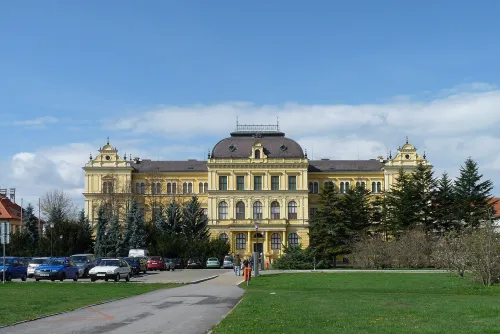
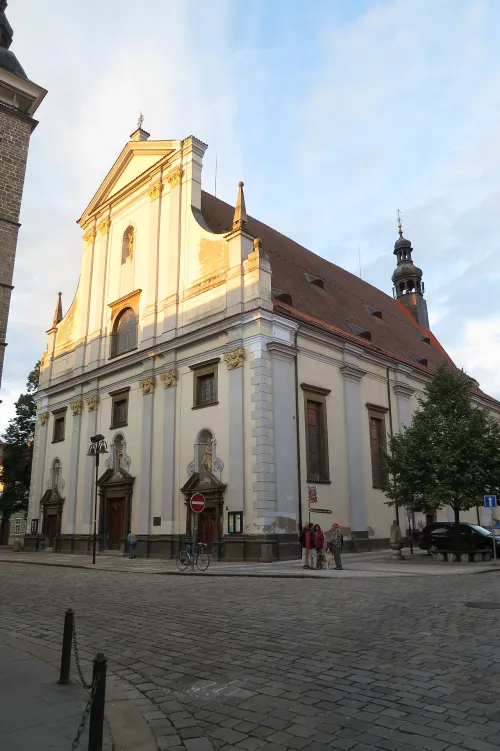
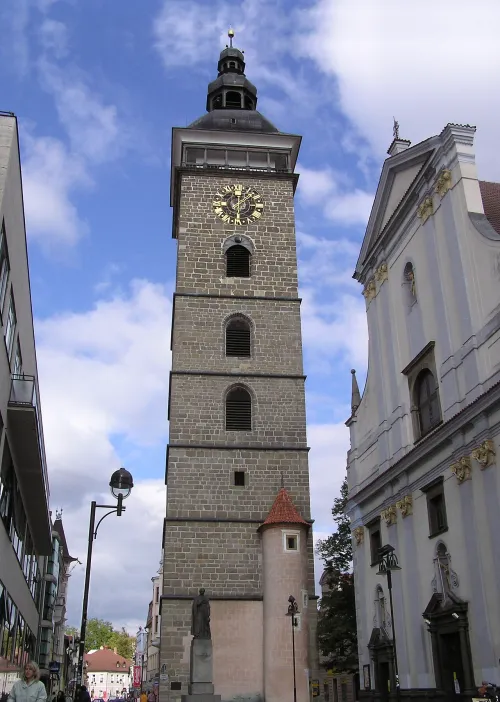
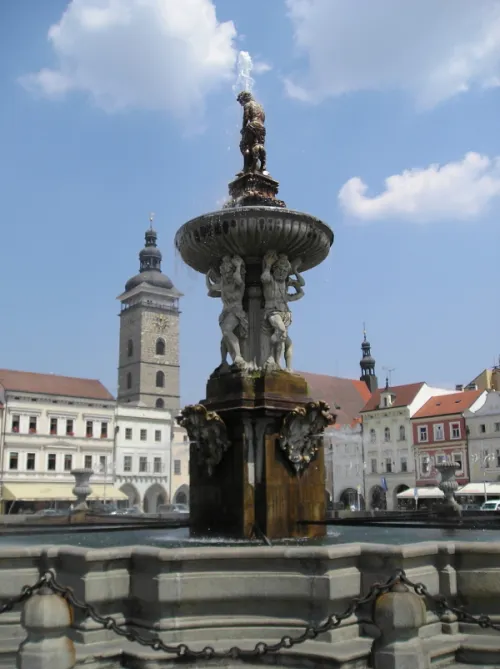
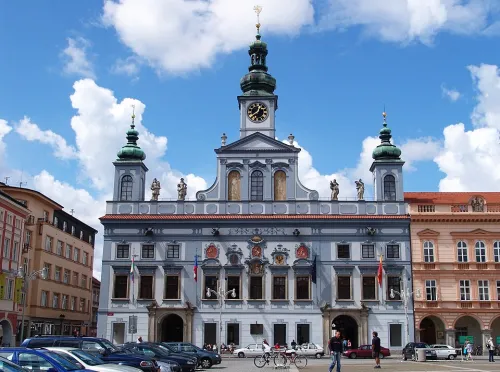
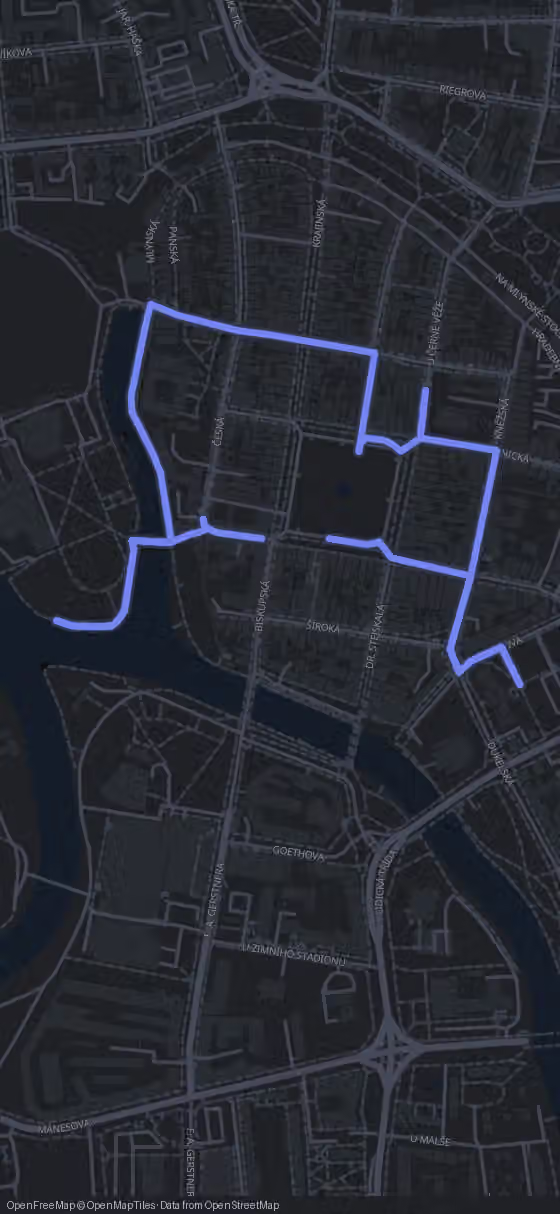
Take your bearings before you go: the Black Tower and St. Nicholas Cathedral rise near the northeast corner, the Town Hall where the walk ends stands on the southwest corner, and the Samson Fountain is here for later. The square is free and open around the clock. First comes a short detour of 380 metres, about 5 minutes, to the South Bohemian Museum.