

Sedlec Ossuary
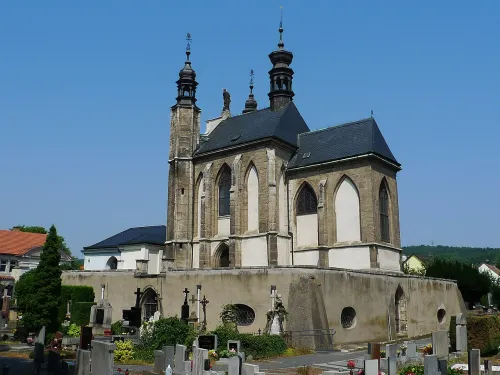
Start in Sedlec, a suburb of Kutná Hora, at the Cemetery Church of All Saints, once part of Sedlec Abbey. The ossuary is the chapel beneath it, and more than 200,000 people a year come to see it. Inside lie the skeletons of an estimated between 40,000 and 70,000 people, and in many cases their bones have been arranged into decorations and furnishings. Look first at the centre of the nave: the chandelier holds at least one of every bone in the human body, and garlands of skulls drape the vault around it.
Then take your time with the details. Four bell-shaped mounds of bones fill the corners of the chapel. Beside the altar stand piers and monstrances made of bone, there is a coat of arms of the House of Schwarzenberg, and on the wall near the entrance František Rint signed his work, in bone as well.
Why so many dead in one place? In 1278 King Ottokar II of Bohemia sent Henry, abbot of the Cistercian monastery here, to the Holy Land. He came back with a little earth from Golgotha and sprinkled it over the abbey cemetery, and soon people across Central Europe wanted to be buried in Sedlec. The Black Death in the mid 14th century and the Hussite Wars of the early 15th filled the ground so quickly that the cemetery had to be greatly enlarged. Around 1400 a Gothic church rose in its middle, with a vaulted upper level and a lower chapel for the bones from mass graves dug up during construction or cleared for new burials. Legend says that after 1511 a half-blind monk was given the task of exhuming and stacking them.
Between 1703 and 1710 Jan Santini Aichel designed a new entrance to support the front wall, which was leaning outward, and rebuilt the upper chapel in Czech Baroque style. Admission is charged, but this is the one interior on the route nobody should skip, and it makes the natural first stop of the day.
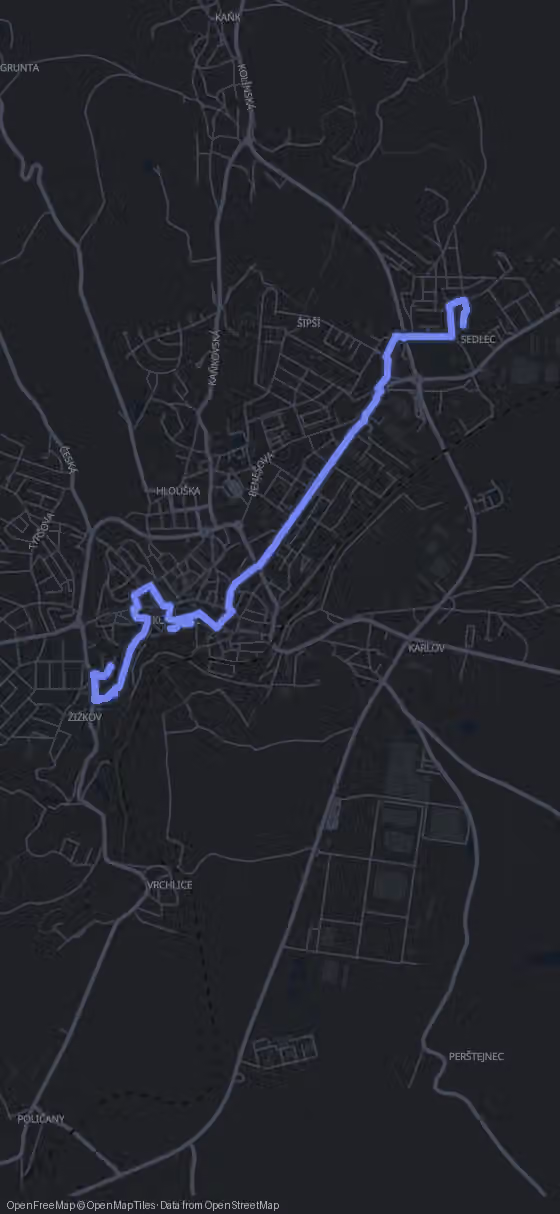
From Sedlec comes the longest leg of the walk: 2840 m, about 40 minutes, into the historic centre to St. James Church.