Free Walking Tour Saint-Tropez: Port, Citadel and Art

From the yachts of the Old Port to the fishermen's lanes of La Ponche, up to the citadel and on to the painters who found this village first.

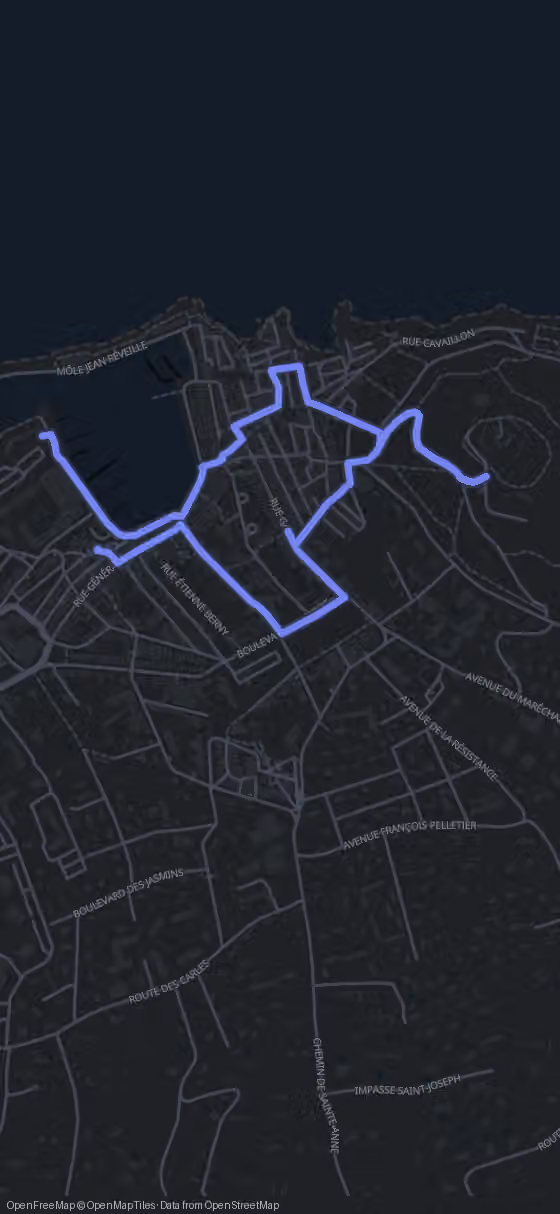
7 Stops 2.1 km ~30 min walking
Route map for the Saint-Tropez walking tour
Stop 1 of 7
390 m·5 min
Old Port of Saint-Tropez
Head east along the quay toward Place aux Herbes
Welcome to Saint-Tropez. I'm Alex, and our first story begins with the sailor-painter who arrived before a wave of modern artists.
Try this tour with Alex

The Route at a Glance

Seven stops over 2.1 km: from the Old Port of Saint-Tropez via Place aux Herbes, La Ponche Quarter, the Citadel of Saint-Tropez, the Chapelle de la Miséricorde and Place des Lices to the Musée de l'Annonciade. Pure walking time is 30 min; plan about two hours, or three and a half with both museums.

Five stops are free; the citadel and the museum charge entry. Route, map and GPS navigation are free in your browser, and the AI Tour Guide is optional.

Open free GPS & optional AI Tour Guide
View of Saint-Tropez

The Route

Walking Map of Saint-Tropez, From the Harbor to the Annonciade

7 stops 2.1 km 30 min walking
Tap to load interactive map

The 7 stops along this route

  1. Old Port of Saint-Tropez, stop 1 on the self-guided walking tour
    1Old Port of Saint-Tropez
  2. Place aux Herbes in Saint-Tropez, stop 2 on the self-guided walking tour
    2Place aux Herbes
  3. La Ponche Quarter in Saint-Tropez, stop 3 on the self-guided walking tour
    3La Ponche Quarter
  4. Citadel of Saint-Tropez, stop 4 on the self-guided walking tour
    4Citadel of Saint-Tropez
  5. Chapelle de la Miséricorde in Saint-Tropez, stop 5 on the self-guided walking tour
    5Chapelle de la Miséricorde
  6. Place des Lices in Saint-Tropez, stop 6 on the self-guided walking tour
    6Place des Lices
  7. Musée de l'Annonciade in Saint-Tropez, stop 7 on the self-guided walking tour
    7Musée de l'Annonciade
  8. That's the full route.

    Walk it with an AI Tour Guide talking you through every one of these streets.

    Start free in your browser
    You made it

Your Saint-Tropez Walking Tour: Seven Places, Port to Painters

  1. 1

    Old Port of Saint-Tropez

    Old Port of Saint-Tropez, stop 1 on the self-guided walking tour

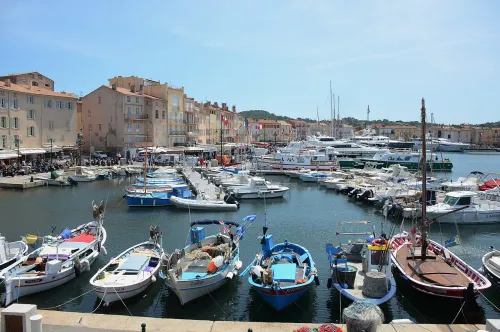
    Start where everyone ends up: the Old Port of Saint-Tropez, its quays lined with moored yachts and, behind them, the ochre facades of Provençal village houses. Café terraces, boutiques, ice cream shops and galleries fill the waterfront, and Sénéquier is the café name you will hear most. Today the harbor spreads over two basins covering 9 hectares, with moorings for nearly 800 boats; one jetty, the Môle d'Estienne-d'Orves, takes yachts longer than 50 m.

    The glamour is recent. Tradition holds that Greeks from Phocaea founded a trading post here around 600 BC, under the name Athenopolis Massiliensium. Through the Middle Ages this was a harbor of fishermen, merchants and corsairs, shipping fish, wine, timber and local cork until the 18th century. Shipyards built tartanes and pointus, the traditional wooden boats of this coast, and the town had its own national school of navigation. The Tour Suffren, from the 11th century, belongs to that older harbor.

    What changed everything was a film. In 1956 Roger Vadim shot And God Created Woman here with Brigitte Bardot and Jean-Louis Trintignant, and its international success turned the fishing port into a summer harbor for yachts and one of the emblems of Saint-Tropez. The water still belongs to sailors too: the Voiles de Saint-Tropez, the Giraglia Rolex Cup and the Trophée du Bailli de Suffren all start from these quays.

    Take your time on the quays, it costs nothing. Then turn away from the water: Place aux Herbes is 390 m into the old town, about 5 minutes on foot.
    Local name
    Port de Saint-Tropez
    Hours
    Open 24/7
    Price
    Free
  2. 2

    Place aux Herbes

    Place aux Herbes in Saint-Tropez, stop 2 on the self-guided walking tour

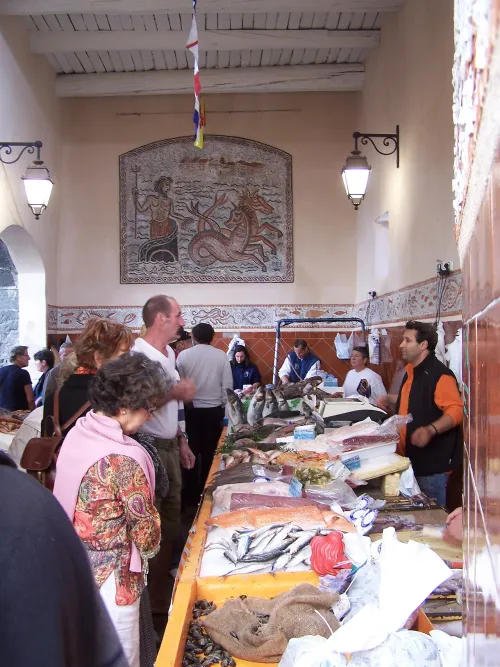
    Rue du Marché does the introductions: market street, then market square. Place aux Herbes is the old town's trading floor, public and free at any hour, but the real action is in the morning, when the stalls sell fish, fruit, vegetables and local specialties. Later in the day the square goes quiet, so either time your visit for the morning or treat it as a pleasant square on the way to La Ponche.

    The two market squares of Saint-Tropez split the work. On Tuesday and Saturday the bigger weekly market runs on Place des Lices, which you reach later on this walk. On both squares the same rule holds: locals shop early, visitors arrive late.

    If the stalls are trading as you pass, buy something. Market food is the one souvenir from Saint-Tropez that is neither luxury nor cliché.

    From here La Ponche Quarter is only 240 m away, about 4 minutes; on the way you pass the Fish Market.

    Hours
    Open 24/7
    Price
    Free
  3. 3

    La Ponche Quarter

    La Ponche Quarter in Saint-Tropez, stop 3 on the self-guided walking tour

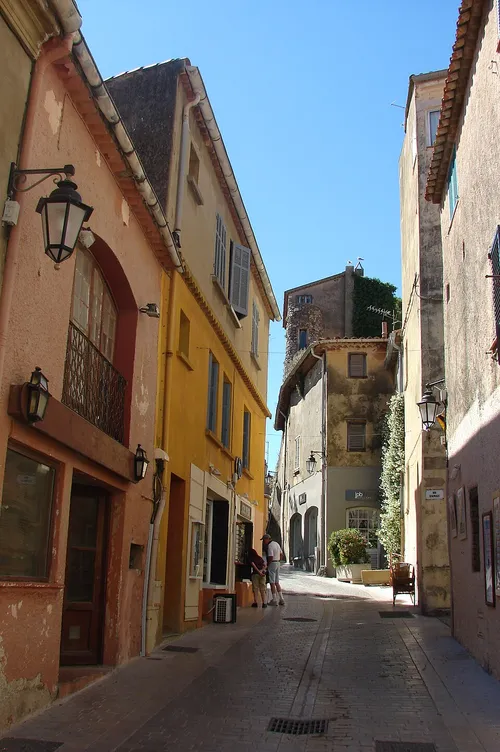
    One turn off the market square and the tone changes. La Ponche is the historic fishing quarter, the village before the fame: narrow lanes, stone walls and the scale of the place Saint-Tropez used to be. The money floating in the harbor is only minutes away, and none of it reaches here. This is where you feel the old size of the town most clearly.

    Think back to the harbor: the fishermen, the boatbuilders and the sailors who carried wine and cork along the coast lived in lanes like these. The public lanes are free to explore at any hour, and on an ordinary day this is the quietest stretch of the walk.

    The calendar can change that. On 16, 17 and 18 May, Rue de la Ponche is one of the streets of the Bravade procession, blocked for hours while costumed brotherhoods fire their musket salvos.

    Walk it slowly, because the next leg is the only climb of the route: 400 m, about 7 minutes up to the Citadel of Saint-Tropez.

    Hours
    Open 24/7
    Price
    Free
  4. 4

    Citadel of Saint-Tropez

    Citadel of Saint-Tropez, stop 4 on the self-guided walking tour

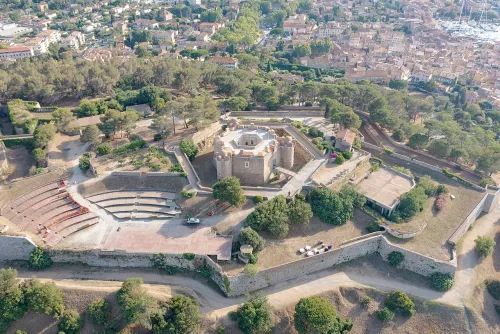
    The Citadel of Saint-Tropez is a pre-Vauban fortress from the early 17th century, and today it houses the maritime history museum of Saint-Tropez. Its keep has been a listed historic monument since 1921, the surrounding walls since 1995. It stands on the hills that once held windmills and that dominate the town and the gulf, which is exactly why a fortress was built here.

    The town needed one. After the wars that followed the death of Queen Joanna and raids by Barbary pirates, Saint-Tropez lay ruined and was emptied of its people in 1388. On 14 February 1470 the Genoese Raphaël de Garezzio arrived with sixty families of settlers to repopulate it. In return for rebuilding and fortifying the town and defending a long stretch of coast, the inhabitants were declared free and exempt from all taxes, a deal that lasted until Louis XIV ended it in 1672.

    The walls were tested. They held against the Constable of Bourbon in 1524. A larger bastioned wall of packed earth, built in 1534 for a growing population, resisted a Barbary attack in 1556 after the raiders had devastated neighbouring towns. In 1564 the local lord had a cannon tower built by masons brought in from Antibes, and in 1583 the first fortification rose up here on the wooded windmill hills, part of the coastal defence against pirates, corsairs and the Ottoman Empire.

    Going inside costs entry. It is worth it if the harbor story hooked you: the maritime museum ties together the corsairs, the boats and the fortress. If you are short on time, the climb and the walls from outside already tell you why this hill mattered. From here the route heads back down: 460 m, about 6 minutes, to the Chapelle de la Miséricorde.

    Hours
    Apr–Sep: Daily 10:00–18:30; Oct–Mar: Daily 10:00–17:30
    Price
    5 EUR full
  5. 5

    Chapelle de la Miséricorde

    Chapelle de la Miséricorde in Saint-Tropez, stop 5 on the self-guided walking tour

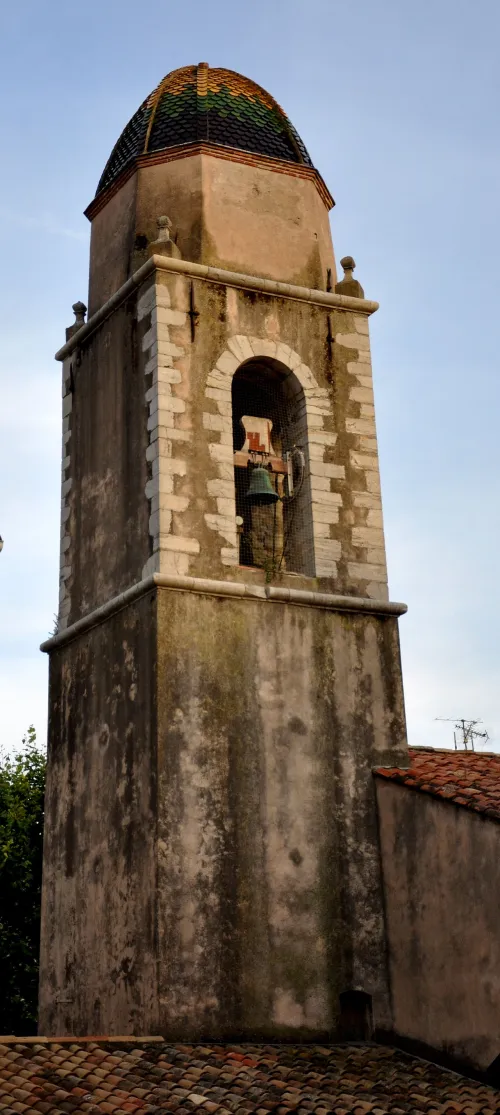
    On Rue Gambetta, in the old quarter of the seafaring families, stands the Chapelle de la Miséricorde. Look up at the bell tower: its dome is covered in glazed tiles that shine in the light, typical of the churches along the Provençal coast. Then look at the doorway, carved from serpentine, a green stone quarried not far from Saint-Tropez.

    The town bought the land in 1633, building began in 1635 and was finished just a year later; the chapel was meant to include a new hospital, and it still belongs to the town. From 1656 it was the meeting place of the Black Penitents, a brotherhood that visited the sick, carried the dead and walked in processions.

    Their feast fell on Candlemas, when they carried out the statues, above all those of Saint Vincent and Saint Victor. The two saints looked in opposite directions, and the locals joked that one looked to port and the other to starboard, a very Saint-Tropez way to describe two saints.

    The chapel's later life was restless. In 1776 it replaced the crumbling parish church for services, to the Penitents' displeasure. Sold off in 1808, it was bought by private owners who gave it back to the parish in 1818. The brotherhood used it until it dissolved around 1854, and for a long time it served for exhibitions and concerts. A full restoration began in 1973, the statues were regilded, and it reopened on 15 December 1997.

    Entry is free, so if the doors are open, go in for the gilded statues. Place des Lices is just 170 m on, about 2 minutes.

    Hours
    Mon–Wed & Sat–Sun 10:00–12:30, Thu–Fri closed
    Price
    Free
  6. 6

    Place des Lices

    Place des Lices in Saint-Tropez, stop 6 on the self-guided walking tour

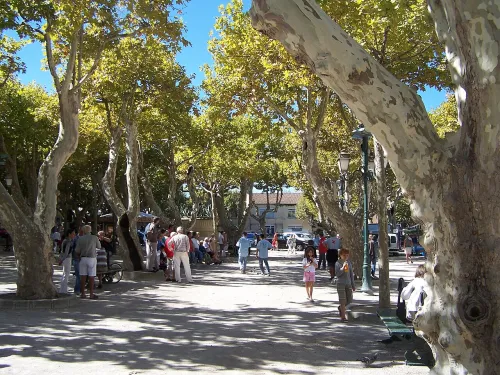
    Place des Lices, officially Place Carnot, is the big open heart of Saint-Tropez: a rectangle of white sand shaded by rows of plane trees, with public benches, an 18th century fountain in the middle and café and hotel terraces around the edges, the Byblos among them. In summer you hear the cicadas before you see the players.

    Because this is above all a pétanque ground, laid out in its present form in the early 1800s. Locals, visitors and celebrities have all played here, among them Brigitte Bardot, Eddie Barclay, Johnny Hallyday, Karl Lagerfeld, Vanessa Paradis and Patrick Bruel; its only rival for celebrity pétanque is Saint-Paul-de-Vence. On Tuesday and Saturday the square becomes the Provençal market, and in May it belongs to the Bravade.

    Painters and filmmakers found it too. Paul Signac painted the square in 1893; that canvas, Place des Lices, Saint-Tropez, now hangs in the Carnegie Museum of Art in the United States. Fans of Le Gendarme de Saint-Tropez should know one thing: the famous pétanque game with Louis de Funès was not filmed here but in a pine forest near town. La Cage aux Folles 2, on the other hand, sets part of its plot in a hotel on this square.

    Sit on a bench or watch a game; it is free and the best way to feel the town's rhythm. The last leg to the Musée de l'Annonciade is 400 m, about 5 minutes.

    Hours
    Open 24/7
    Price
    Free
  7. 7

    Musée de l'Annonciade

    Musée de l'Annonciade in Saint-Tropez, stop 7 on the self-guided walking tour

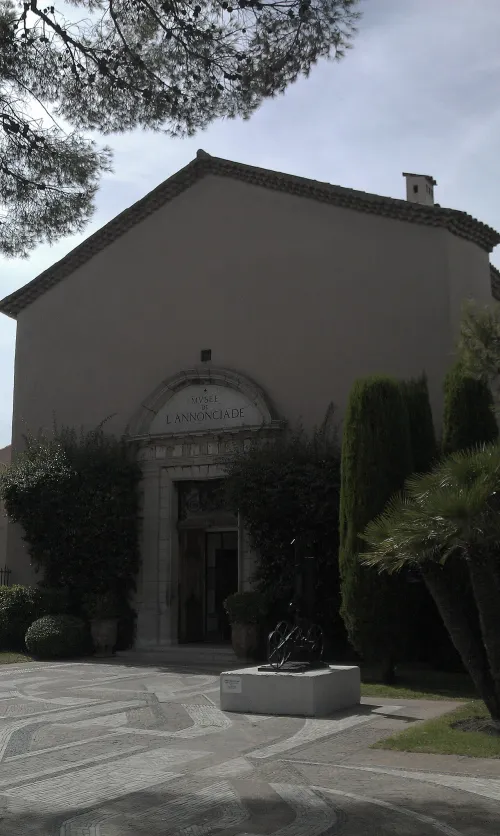
    The walk ends with the people who first saw something special in this place. The Musée de l'Annonciade shows mainly art of the 19th and 20th centuries, with a focus on painters who worked in Saint-Tropez or found their subjects on the Mediterranean coast. The first of them was Paul Signac, the painter of Place des Lices, who arrived in 1892 when Saint-Tropez was still an unremarkable fishing village.

    The museum began modestly. In 1922 the painters Henri Person and André Turin founded the Muséon Tropelen with 32 works donated by artists such as Pierre Bonnard, Maximilien Luce, Charles Camoin, Henri Manguin, Paul Signac and Théo van Rysselberghe. It was shown in a single room of the town hall, and the town showed little interest. After Person died in 1926, his widow kept pushing, and from 1936 the collector Georges Grammont backed the project with his own works.

    The building has its own story. It is the Chapelle Notre-Dame de l'Annonciade, built around 1510 by a confraternity of penitents. It became state property in the Revolution, lost its bell tower in 1821 and served as a storehouse, then as a boatyard for sailing boats. The museum moved into the upper floor in 1937, while the ground floor was still a theatre; only in 1950 did it get the whole building. After a redesign by the architect Louis Süe it has shown, since 1955, among other works the 56 paintings of the Grammont collection, donated to the state.

    Entry costs a ticket, and it is worth it if you enjoy painting: after the harbor, the square and the light you have just walked through, the canvases make sense in a way they never do in a book. This is the end of the route; if you want, the GPS navigation leads you back to the Old Port of Saint-Tropez.

    Hours
    Jul–Sep: Daily 10:00–19:00; Apr–Jun & Oct: Tue–Sun 10:00–18:00, Mon closed; Nov–Mar: Tue–Sun 10:00–17:00, Mon closed
    Price
    5 EUR to 6 EUR full (depending on exhibition), 3.50 EUR reduced
Walking tour route map of Saint-Tropez Route loaded
Old Port of Saint-TropezPlace aux HerbesLa Ponche QuarterCitadel of Saint-Tropez+3
All 7 stops are already on the map.
You just press start.
AI Tour Guide

You know the route now. Walk it with a guide talking beside you.

Press start wherever you are, even hundreds of kilometres from Saint-Tropez, and the guide begins telling its stories right away. In the city, pick any of the 7 stops to start from: it leads you there, then talks with you the whole route, asking, listening, remembering, and shaping the tour around your answers.

7stops 2.1km 30 minwalking 13languages
▶Start the tour free

Free to start · Runs in your browser · No app, no download

Shorter Ways to Walk Saint-Tropez

The full route is compact, but you can split it by mood: the free harbor and village half, or the history and art half that holds both paid visits.

Harbor and fishing village, all free

Stops: 1, 2, 3

For a morning stroll or a first look before lunch on the quays. Old Port, market square and La Ponche are 630 m apart in total, about 9 minutes of walking, and nothing costs entry. Allow around 45 minutes.

Fortress, chapels and painters

Stops: 4, 5, 6, 7

For history and art lovers who already know the harbor. From the citadel down to the chapel, across Place des Lices to the museum is 1,030 m, about 13 minutes on foot. The Citadel of Saint-Tropez and the Musée de l'Annonciade charge entry, the chapel is free. With both museums, plan about two and a half hours.

The whole walk with both museums

Stops: 1, 2, 3, 4, 5, 6, 7

For a full half day. All seven stops, 2.1 km and 30 minutes of pure walking; entry at the citadel and the Annonciade. Count on about three and a half hours.

How Long This Saint-Tropez Walk Takes, With and Without Museums

The order follows the town's own story: the harbor where it began, the market and fishing lanes of the old village, the climb to the fortress that defended it, then down to the chapel, the big square and finally the museum of the painters who made it famous. Every leg is short, from 2 minutes to 7, adding up to 30 minutes of pure walking.

Walked with time to look around but without going inside the museums, the route takes about two hours. Give the maritime museum in the citadel and the Annonciade about an hour each and you are at roughly three and a half hours. The free harbor and village loop fits into 45 minutes, the fortress and art half into about two and a half hours.

Before You Set Off From the Old Port

  • Start: The Old Port of Saint-Tropez is the recommended start, but you can join the walk at any stop.
  • End: The route ends at the Musée de l'Annonciade. If you want, the GPS navigation leads you from there back to the Old Port.
  • Best time: Start in the morning, when the stalls on Place aux Herbes are trading. On Tuesday and Saturday the bigger market fills Place des Lices as well.
  • Entry: The Citadel of Saint-Tropez and the Musée de l'Annonciade charge entry. The Chapelle de la Miséricorde is free, and the harbor, squares and lanes are public.
Walking tour route map of Saint-Tropez
AI Tour Guide

Your guide for the port, the fortress and the painters is ready

Press start and a voice AI Tour Guide takes it from here: leading the route through Saint-Tropez, telling the stories, and turning your walk into a real back-and-forth conversation. No app or download is needed; it runs in your browser.

7stops 2.1km 30 minwalking 13languages
▶Start the tour free

Free to start · Runs in your browser · No app, no download

What the AI Tour Guide Adds in Saint-Tropez

This short walk carries a lot of stories: Greek traders, Genoese settlers, Black Penitents, Bardot and Signac. The AI Tour Guide tells them as a conversation while you walk, notices whether you lean toward boats, battles or paintings and follows that thread, and you can interrupt it whenever you like. Ask who the Bailli de Suffren of the harbor regatta was, or how the Genoese families lived after 1470, and it takes the talk there. You start with 100 free credits; after that, choose this tour all-inclusive for €19.99 with no time limit, or €5 per hour.

A Real Conversation A voice AI Tour Guide greets you, leads the whole route, and tells the stories and facts as you walk, asking what you want to see and keeping a real conversation going. Not a recording you press play on.
Map Navigation Follow the route on the map and walk at your own pace. You choose where to start and when to move to the next stop.
Ask Anything Curious about a building you pass? Ask your AI Tour Guide on the spot and the conversation carries on.
13 Languages Switch language anytime. No separate tour needed.
Start free in your browser

Common Questions About Walking Saint-Tropez

Can I arrive by ferry and start the walk straight away?

Yes. Regular ferry lines link the Old Port with other harbors on the coast, including Cannes and Nice, so you step off right at the first stop.

If I only have time for one museum, which should it be?

Pick the citadel if the harbor, the corsairs and the fortifications interest you most; it houses the maritime history museum. Pick the Annonciade if you came for the painters who discovered Saint-Tropez.

Is Saint-Tropez worth combining with another Riviera town?

It pairs well with an art town: Antibes or Saint-Paul-de-Vence continue the story of painters on the Mediterranean coast.

Is the tour really free?

Yes. The whole tour is free: the route, the interactive map and the navigation cost you nothing. Only the voice AI Tour Guide is optional and paid: you test it with 100 free credits, then you pay either €5 per hour or €19.99 for this whole tour, with no time limit. Admission to 2 of the 7 stops is not included: Citadel of Saint-Tropez and Musée de l'Annonciade charge their own entry fees.

Do I need to download an app?

No. Everything runs in your phone browser. Open the route and start walking, no download and no sign-up required.

Do I need to book the walking tour in advance?

No booking needed. This self-guided tour is available anytime. Open the route in your browser and start walking. The AI Tour Guide works instantly, no app, no reservation required.

What languages is the AI Tour Guide available in?

The AI Tour Guide speaks 13 languages, so you take the tour in your own language and can switch at any time.

Can I skip stops or change the route?

Yes. Skip any stop, spend extra time at places you like, or start the route from any point. It is your walk, you set the pace.
Image credits
▶ Start free in your browser Runs in your browser, no app, no download