

Anchiskhati Basilica
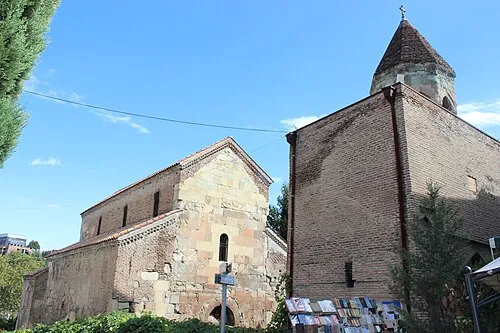
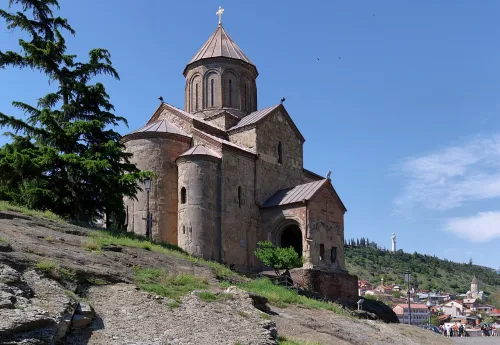
You start at the oldest surviving church in Tbilisi. Old Georgian annals credit King Dachi of Iberia, who made Tbilisi his capital in the sixth century, with building it. Look at the walls: the original church was raised from yellow tuff blocks, while the restoration of 1958 to 1964 added a lot of brick. Inside, two abutments divide the three-span basilica and form horseshoe-shaped conches, a sign of how old the construction is. Of the three entrances, only the western one is still used.
The church was first dedicated to the Virgin Mary. Its present name, icon of Ancha, arrived in 1675, when a treasured icon of the Saviour made by the twelfth-century goldsmith Beka Opizari was carried here from the Ancha monastery in Klarjeti to save it from an Ottoman invasion. The icon stayed for centuries and now hangs in the Art Museum of Georgia. The brick belfry beside the church dates from the same year, built by Catholicos Domenti.
Wars with Persians and Turks damaged the church again and again, and a dome added in the 1870s changed its look completely. Under Soviet rule services stopped; the building became a handicraft museum and later an art studio. The restoration for the city's 1500th jubilee brought back the seventeenth-century form, but worship only returned in 1991.
Entry is free and the visit is short; step in if you like quiet, dim early churches. If you ever get the chance to hear the Anchiskhati Choir, known worldwide for Georgian polyphonic singing, take it. From here it is 630 m, about 8 minutes, to Rike Park.