Free Walking Tour Chur: Bishop's Hill to Roman Ruins

A Romanesque cathedral, a 14.5 m wine press, Roman wall paintings and the late-Gothic spire of Martinskirche, all on one easy loop through Chur.

13 Stops 3.9 km ~58 min walking
Route map for the Chur walking tour
Stop 1 of 13
70 m·1 min
Postplatz
Head north-east toward the Buendner Kunstmuseum
Welcome to Chur. I'm Alex, and beneath a modern timber shell, this city's oldest layers are still visible.
Try this tour with Alex

The Chur walking route at a glance

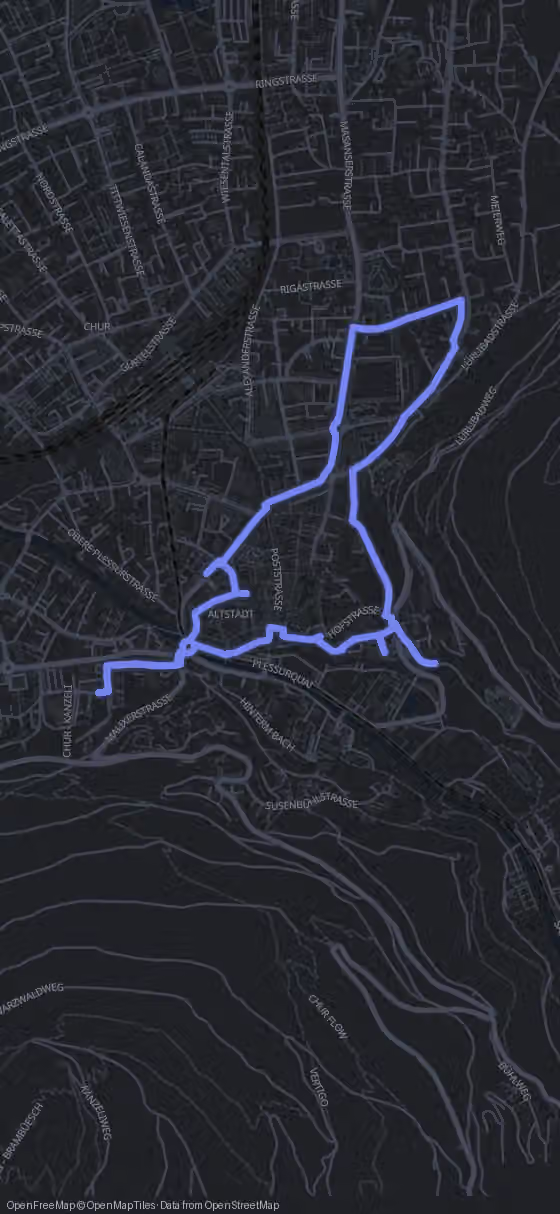
This loop links 13 stops, starting and ending at Postplatz: out to the museums, up to St. Luzius Church and the Cathedral of the Assumption of Mary, then down past Martinskirche through the Old Town. It covers 3.9 km with 58 min of pure walking; plan about three hours with church visits, more with a museum.

Squares, churches and Welschdörfli are free. The Bündner Kunstmuseum, Bündner Naturmuseum and Rätisches Museum charge admission. Route, map and GPS navigation are free in your browser; the AI Tour Guide is optional.

Open free GPS & optional AI Tour Guide
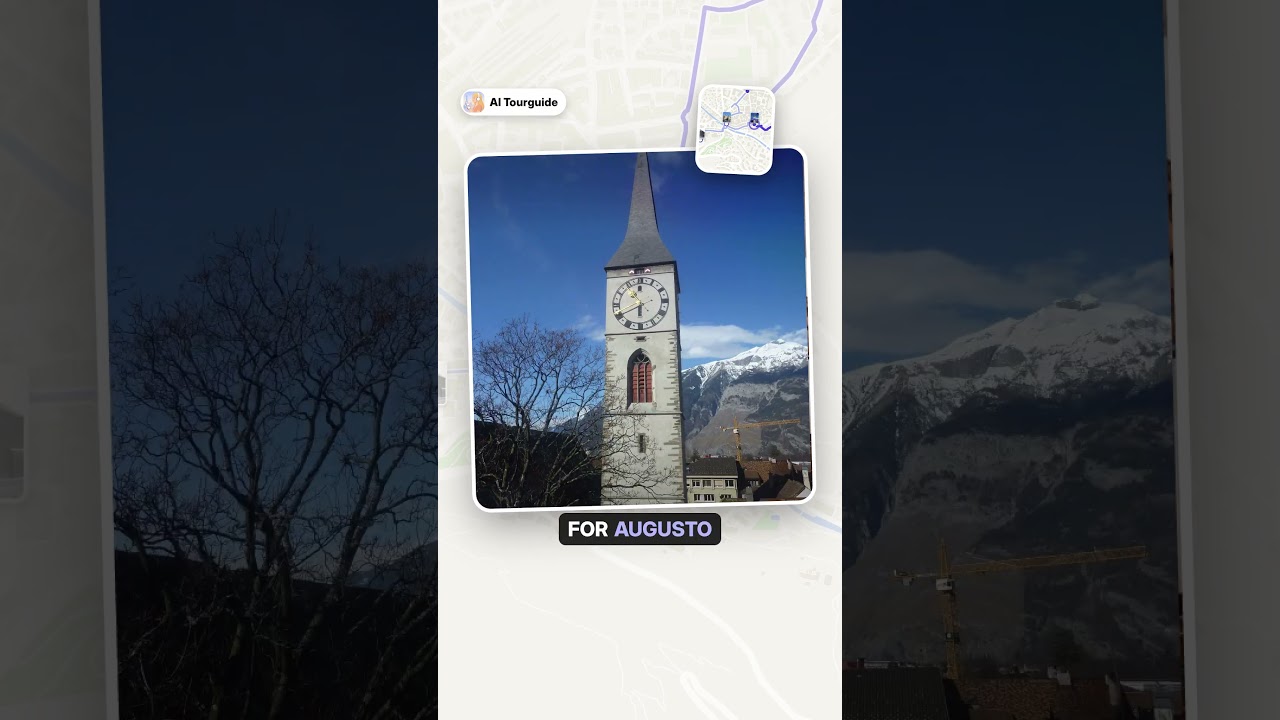
This short shows highlights of the route. All 13 stops follow below.

The Route

Walking Map of Chur: the Loop from Postplatz

13 stops 3.9 km 58 min walking
Tap to load interactive map

The 13 stops along this route

  1. Postplatz in Chur, stop 1 on the self-guided walking tour
    1Postplatz
  2. Bündner Kunstmuseum in Chur, stop 2 on the self-guided walking tour
    2Bündner Kunstmuseum
  3. Bündner Naturmuseum in Chur, stop 3 on the self-guided walking tour
    3Bündner Naturmuseum
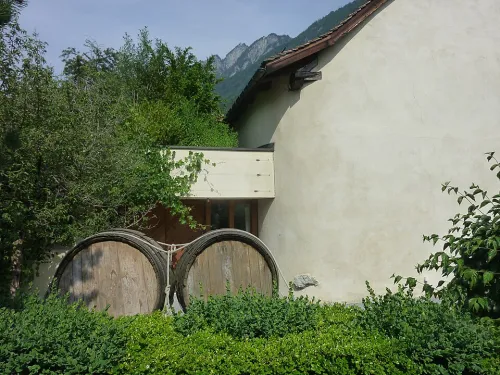
  4. Weinbaumuseum Torculum in Chur, stop 4 on the self-guided walking tour
    4Weinbaumuseum Torculum
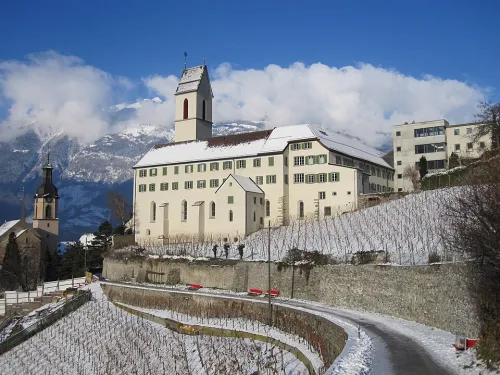
  5. St. Luzius Church, stop 5 on the self-guided walking tour
    5St. Luzius Church
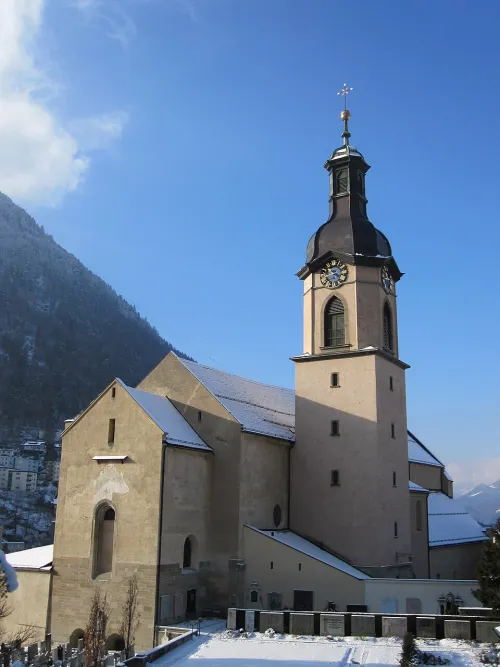
  6. Cathedral of the Assumption of Mary in Chur, stop 6 on the self-guided walking tour
    6Cathedral of the Assumption of Mary
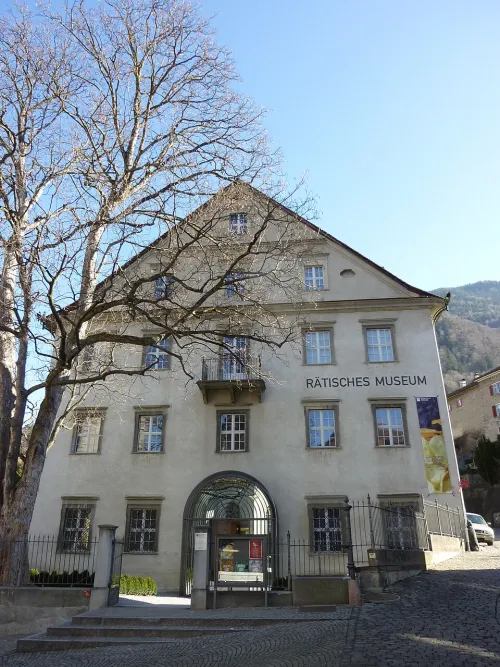
  7. Rätisches Museum in Chur, stop 7 on the self-guided walking tour
    7Rätisches Museum
  8. Martinskirche in Chur, stop 8 on the self-guided walking tour
    8Martinskirche
  9. Arcas Square in Chur, stop 9 on the self-guided walking tour
    9Arcas Square
  10. Welschdörfli in Chur, stop 10 on the self-guided walking tour
    10Welschdörfli
  11. Obertor Gate in Chur, stop 11 on the self-guided walking tour
    11Obertor Gate
  12. Kornplatz in Chur, stop 12 on the self-guided walking tour
    12Kornplatz
  13. Stadtgarten in Chur, stop 13 on the self-guided walking tour
    13Stadtgarten
  14. That's the full loop.

    Walk it with an AI Tour Guide talking you through every one of these streets.

    Start free in your browser
    You made it

Your Chur Walking Tour, Stop by Stop, from Villa Planta to the Obertor

  1. 1

    Postplatz

    Postplatz in Chur, stop 1 on the self-guided walking tour

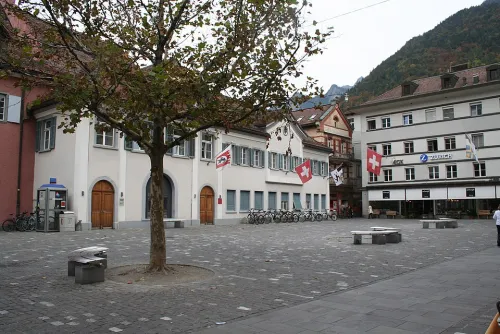
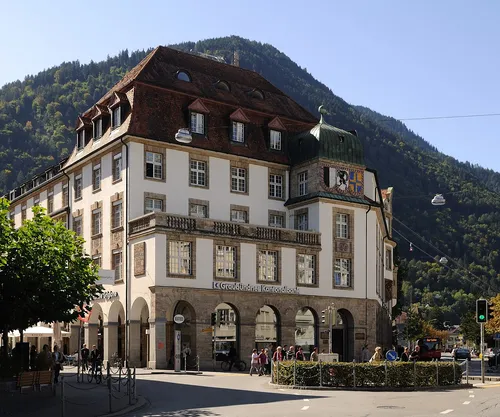
    Postplatz is the hinge of Chur. On one side lies the car-free Old Town with its wide pedestrian zone, on the other the busy roads that lead to the station, to Masans and the A13 motorway feeder, and up towards the Lenzerheide and Julier passes. Stand here for a moment and you see both worlds at once.

    Look around the square: the listed post office building, the administrative building of the Graubündner Kantonalbank and, where Grabenstrasse branches off, the Bündner Kunstmuseum. Watch the traffic too. Chur normally handles junctions with roundabouts, but here a mix of roundabout and traffic lights keeps things moving, an unusual setup for the town.

    This is also where the loop ends, so you will see the square again with the whole town behind you. From here it is only 60 m, about a minute, to the art museum; on the way you pass the spot of Chur's weekly market.
    Hours
    24/7
    Price
    Free
  2. 2

    Bündner Kunstmuseum

    Bündner Kunstmuseum in Chur, stop 2 on the self-guided walking tour

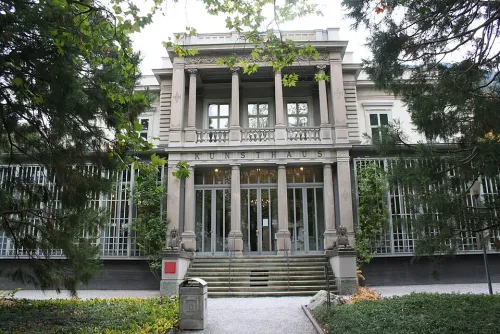
    The canton's art museum lives in two very different buildings side by side. The older one is the Villa Planta, a neoclassical villa that became an art museum in 1919 on the initiative of the Bündner Kunstverein. Next to it stands the extension by the architects Barozzi/Veiga, built from 2014 to 2016 on the site of the former natural history museum. Between 1987 and 1989 the villa itself was converted and restored by Peter Zumthor, Peter Calonder and Hans-Jörg Ruch.

    The collection began in 1900 and has always focused on Graubünden: how the mountain landscape shaped its people, and the push and pull of migration and tourism. Look for works by Angelika Kauffmann, born in Chur and one of the leading women painters of the 18th century. The Giacometti family from the Bergell valley is here in depth, with Giovanni and his sons Alberto and Diego, plus their distant relative Augusto. Expressionism is another strong point, with Ernst Ludwig Kirchner, Hermann Scherer, Albert Müller and Paul Camenisch.

    Is it worth going in? If Swiss art or the Giacomettis mean anything to you, yes, and plan at least an hour. Admission is charged, and it costs a little more when a temporary exhibition is on.

    From here it is 430 m, about 6 minutes, to the natural history museum, whose collection once shared these very rooms.

    Hours
    Tue–Sun 10:00–17:00, Thu 10:00–20:00, Mon closed
    Price
    CHF 15 adults, CHF 12 AHV/apprentices/students under 26, under 16 free (CHF 10 / CHF 8 when no temporary exhibitions)
  3. 3

    Bündner Naturmuseum

    Bündner Naturmuseum in Chur, stop 3 on the self-guided walking tour

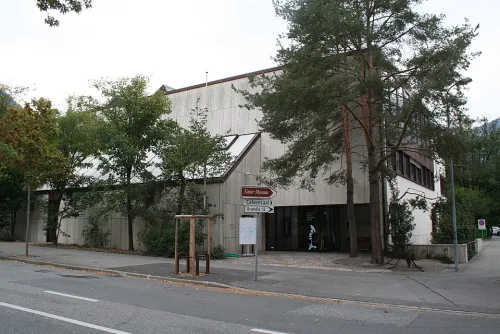
    The Bündner Naturmuseum at Masanserstrasse 31 sees itself as an information centre for the natural history of Graubünden and as a place to build ecological awareness. It is run by the canton together with the art museum and the Rätisches Museum, and it is only five minutes on foot from the station.

    Its story is one of a collection constantly running out of space. Teachers of the cantonal school and members of the local natural science society started collecting at the end of the 18th century. In 1872 the objects moved into the Buol house, today's Rätisches Museum, which soon became too small. From 1919 to 1929 they shared the Villa Planta with the art collection, in a building provided by the administration of the Rhaetian Railway, and from 1929 to 1967 they had their own museum in the park next to the villa.

    The present building exists thanks to a legacy from the geologist Dr. Moritz Blumenthal, who died in 1967. It was designed by Bruno Giacometti and Dante C. Giannini. For nature lovers and families it is an easy choice, and admission is inexpensive.

    Next comes a short hop of 240 m, about 4 minutes, to a 400-year-old wine press house.

    Hours
    Tue–Sun 10:00–17:00, Mon closed
    Price
    CHF 6 adults, CHF 4 AHV/IV/students/apprentices, under 16 free
  4. 4

    Weinbaumuseum Torculum

    Weinbaumuseum Torculum in Chur, stop 4 on the self-guided walking tour

    Chur grows wine, and this museum at Neubruchstrasse 31 shows how. It sits in a press house, a Torkel, built in 1604. Inside is the largest wine press in eastern Switzerland, a giant 14.5 m long, which worked in this very building until 1962.

    The city of Chur bought the house in 1971. The museum was founded in 1982 with the press as its centrepiece, and from 1985 to 1987 the building was restored and fitted out as a wine museum by a cooperative set up for the purpose. The permanent exhibition follows a winemaker through the year, from tending the vines to the fermented juice.

    Visits are only possible by prior arrangement, usually as a guided tour, and the price is given on request; the rooms are also rented out for events. If wine interests you, book ahead and the press alone is worth it. Otherwise enjoy the old Torkel from outside.

    Now comes the longest leg of the loop: 1150 m, about 18 minutes, up to St. Luzius Church. On the way you pass the Regulakirche.

    Local name
    Weinbaumuseum Chur
    Hours
    Visits by prior arrangement only; booking required
    Price
    On request (guided tours / venue rental)
  5. 5

    St. Luzius Church

    St. Luzius Church, stop 5 on the self-guided walking tour

    St. Luzi is a church and former Premonstratensian abbey, and its early history is full of gaps. Around 800 a community of regular clergy seems to have lived here and run a school for clerics, and the scribes' school of Carolingian Rhaetia may have worked here as well. The relics of Saint Lucius, after whom the church is named, were stolen before 821.

    The Premonstratensians are firmly documented here in 1149, as a daughter house of Roggenburg in Bavaria. The Reformation hit them hard: Abbot Theodul Schlegel was executed in 1529, the abbey's property went to burghers of Chur as a hereditary fief in 1539, and the monks went into exile at Bendern. With strong backing from the Habsburgs they returned in 1636. The abbey was dissolved in 1806, and after a brief stay by Redemptorists the buildings took in the seminary driven out of Merano.

    Admission is free. Go in if you can: the place carries twelve centuries of church history. Opening hours are limited, but visits outside them can be arranged on request.

    The cathedral is just 250 m away, about 4 minutes.

    Hours
    Mon–Thu 08:00–17:00, Fri 08:00–16:30, Sat–Sun closed (outside hours on request)
    Price
    Free admission
  6. 6

    Cathedral of the Assumption of Mary

    Cathedral of the Assumption of Mary in Chur, stop 6 on the self-guided walking tour

    This is the seat of the Catholic diocese of Chur, with the bishop's palace right beside it. The church claims the relics of Saint Lucius of Britain, said to have been martyred nearby in the late 2nd century. During the Reformation the Catholics of Chur were confined to a ghetto around the bishop's court next to the cathedral, a reminder of how divided the town once was.

    Three churches have stood here. The first probably dates from the first half of the 5th century; an excavation in 1921 found a small apse from it beneath the floor. Bishop Tello built the second before his death in 773, and some marble carvings in the choir survive from that church. The present Romanesque building was begun under Bishop Adalgott and built from 1154 to 1270; the choir was consecrated in 1178, and in 1272 the church was dedicated to the Assumption of Mary.

    Inside, look for the round-arched window on the central axis, the largest medieval window in Graubünden, and the late-Gothic high altar finished by Jakob Russ in 1492. The cathedral was renovated from 2001 to 2007 and is a Swiss heritage site of national significance. Entry is free, but visits are restricted during services.

    Walk 240 m, about 3 minutes, down to the history museum.

    Local name
    Kathedrale St. Mariä Himmelfahrt
    Hours
    Mon 07:00–19:00, Tue 08:00–19:00, Wed–Sun 07:00–19:00 (visits restricted during services)
    Price
    Free admission
  7. 7

    Rätisches Museum

    Rätisches Museum in Chur, stop 7 on the self-guided walking tour

    The Rätisches Museum, also called the Bündner Historical Museum, occupies a baroque patrician house built in 1675 by Paul von Buol-Strassberg, a baron who belonged to the ruling class of the Free State of the Three Leagues. You can admire the stately facade even if you do not go in.

    The museum was born out of worry. In the late 19th century valuable cultural objects were leaving Graubünden, so the lawyer, historian and politician Peter Conradin von Planta set up a foundation for a museum of science and art. It opened on 8 June 1872 on the ground floor of the Buol house, with a library, a natural history collection and antiquities.

    Today the collection holds almost 100,000 objects, of which about a tenth are on show. The permanent exhibitions cover archaeology, power and politics, work and bread, and faith and knowledge, and an object of the month is presented in the foyer. Past exhibitions even told how tuberculosis patients made Davos and Arosa world-famous. For anyone who wants to understand the canton, this is the museum to choose, and admission is modest.

    Martinskirche is only 70 m away, about a minute.

    Hours
    Tue–Sun 10:00–17:00, Mon closed
    Price
    CHF 6 adults, CHF 4 AHV/IV/students/apprentices, under 16 free
  8. 8

    Martinskirche

    Martinskirche in Chur, stop 8 on the self-guided walking tour

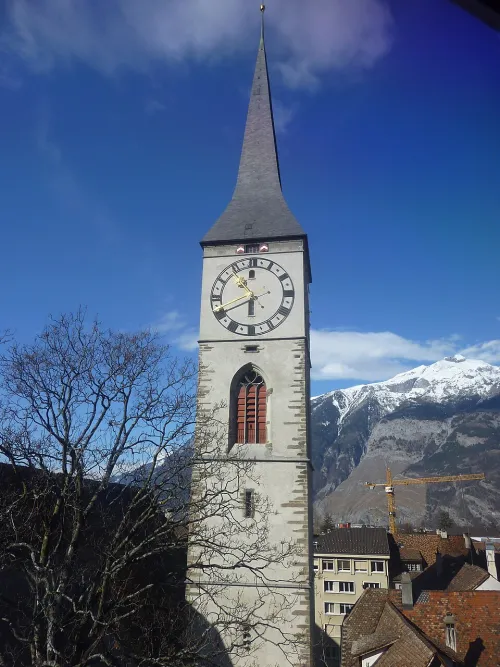
    With its pointed late-Gothic spire, Martinskirche is the landmark of the Old Town. It is the largest late-Gothic church complex in Graubünden and the largest Protestant church building in the canton. It stands on Martinsplatz at the foot of the hill with the cathedral and bishop's residence, in the oldest part of town, which was already fortified in the early Middle Ages.

    First mentioned around 800, it is, next to the cathedral, Chur's oldest place of worship. In 928 Emperor Otto I gave it, along with half the town, to the bishopric. The great fire of 1464 damaged it, and because the townspeople rebuilt their houses first, the new church was only finished in 1535, with a watchman's flat at the top of the new tower.

    By then everything had changed. Johannes Comander launched the Reformation in 1524, the first Protestant communion was held in 1526 and the Catholic mass was abolished in 1527. In 1529 the high altar was removed and the cemetery moved out of town, making Chur one of the first Swiss towns to do so; you will see where it went at the Stadtgarten. Next door, in Kirchgasse, the Antistitium has housed Chur's chief pastor since the Reformation.

    Entry is free, so step inside before moving on. Arcas Square is 140 m away, about 2 minutes.

    Hours
    Daily 09:00–17:00
    Price
    Free admission
  9. 9

    Arcas Square

    Arcas Square in Chur, stop 9 on the self-guided walking tour

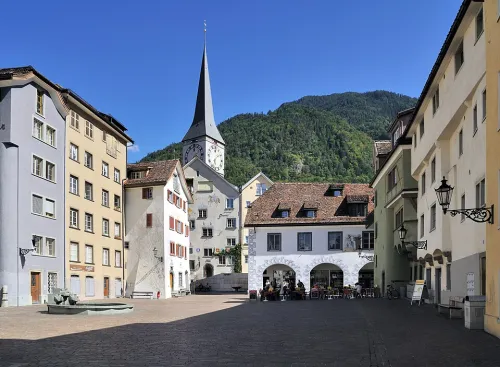
    The Arcas takes its name from the Romansh word archa, a dam or dyke built against the river. It is a large square in the south of the Old Town, close to Martinskirche, and the way into town leads from here past the Bärenloch to Martinsplatz.

    Look at the row of houses along the Plessur: they are built directly onto the medieval town wall from the 13th century. The square you stand on is a product of 1971, when it was completely redesigned with an underground car park and the historic market square was uncovered. The lead architect was Theodor Hartmann, and his design drew sharp criticism from the architect Rudolf Olgiati.

    From here you cross the Old Town to Welschdörfli, 490 m or about 7 minutes.

    Hours
    24/7
    Price
    Free
  10. 10

    Welschdörfli

    Welschdörfli in Chur, stop 10 on the self-guided walking tour

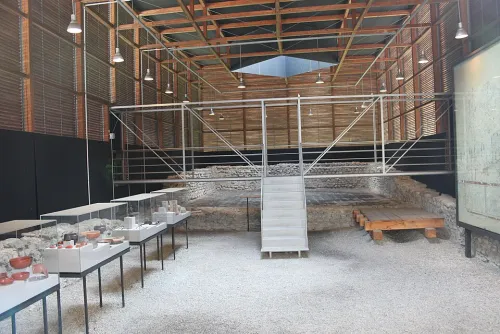
    Today Welschdörfli is best known as Chur's nightlife quarter, but beneath it lies the town's deepest past. In Seilerbahnweg, protective buildings by Peter Zumthor from 1986 shelter the remains of Curia Raetorum, a civilian Roman settlement. Below the Roman layers lie even older ones, dating back to the Neolithic.

    Remains of the settlement turned up again and again from the 18th century, but they were only studied systematically in the early 20th century. The wall paintings were conserved, and in 1967 the newly founded Archaeological Service of Graubünden turned the whole site into a museum. You can see Roman buildings and wall paintings as well as finds from the Neolithic to the Roman period.

    The shelters are worth a look even from outside: an asymmetric timber structure with open walls whose angled beams trace the irregular ground plans of the settlement. Inside, three halls are linked by a walkway and lit only faintly through darkened skylights. The site and its shelters are listed as cultural property of national significance, and the building won an award for good architecture in Graubünden in 1987. Ask on site how to get inside.

    The Obertor is 340 m away, about 5 minutes.

    Hours
    24/7
    Price
    Free
  11. 11

    Obertor Gate

    Obertor Gate in Chur, stop 11 on the self-guided walking tour

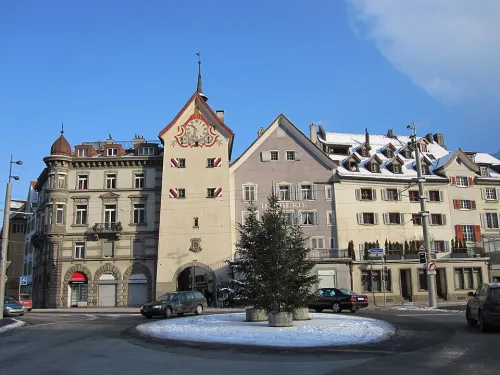
    The Obertor is a listed town gate with a four-storey tower, one of the last pieces of the town fortifications from the first half of the 13th century; the rest were torn down in the 19th century. It stands right by the bridge over the Plessur at the entrance to the Old Town and was once the south-western exit of the town. Goods were last transferred on Ochsenplatz, just inside.

    Look up: the tower narrows towards the top and is painted in the colours of Chur's coat of arms. The upper part was added later for show, and a ridge turret from the 17th century crowns it. The nearby Malteserturm belongs to the ensemble. The facade was last fully restored in 1949.

    The gate sits on a busy route: Schanfiggerstrasse to Arosa begins here, and the roundabout in front was greatly enlarged in 2010 and 2011, partly to show off the gate as a landmark. Since 1854 the Obertor has also been the starting point of the Churer Maiensässfahrt.

    Kornplatz is 190 m away, about 3 minutes.

    Hours
    24/7
    Price
    Free
  12. 12

    Kornplatz

    Kornplatz in Chur, stop 12 on the self-guided walking tour

    Kornplatz is a large car-free square south of the post office in the middle of the Old Town. It used to be called Klosterplatz, after the Dominican monastery of St. Nicolai on its northern side. When the monastery was dissolved around 1672 and granaries were set up, the square got its new name, Grain Square.

    In 1827 and 1828 the choir, side chapel and tower of the old monastery church were demolished, and the Amtshaus by Karl David Lindenmayer went up; it still closes the square to the north. The grain store ended in 1840 when the town's monopoly was given up, and only the name remains. The square stopped serving as a market in the 20th century and is now seen as the link between Old Town and new town.

    Do not miss the house at number 2: its facade paintings are by Alois Carigiet, from 1955, and were last restored in 2017. And a fun detail for board game fans: in the Swiss edition of Monopoly, Kornplatz is the cheapest square.

    The Stadtgarten is 150 m away, about 2 minutes.

    Hours
    24/7
    Price
    Free
  13. 13

    Stadtgarten

    Stadtgarten in Chur, stop 13 on the self-guided walking tour

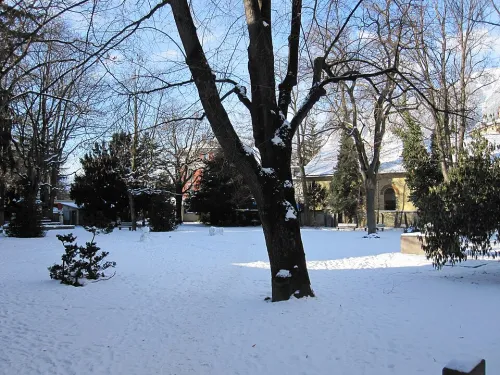
    The Stadtgarten is a public park next to the post office, separated from the Fontanapark by Grabenstrasse. Its quiet hides a long history: from 1529, after Chur adopted the Reformation, this was the Scaletta cemetery of Martinskirche, the one moved out of the town centre.

    Burials ended in 1862, when the Daleu cemetery took over, and in the 1860s the ground was turned into a park. Walk along the walls and you will find many epitaphs from 1558 to 1861. Two monuments stand out: the Salis monument from 1866, honouring Johann Gaudenz von Salis-Seewis, poet and chief of general staff of the Helvetic Republic, and the Bündner soldiers' memorial for the canton's soldiers who died on active duty during the two World Wars.

    Admission is free. From here it is 200 m, about 3 minutes, back to Postplatz, past the Fontanapark, and the loop is complete.

    Hours
    24/7
    Price
    Free
Walking tour route map of Chur Route loaded
PostplatzBündner KunstmuseumBündner NaturmuseumWeinbaumuseum Torculum+9
All 13 stops are already on the map.
You just press start.
AI Tour Guide

You know the way now. Walk Chur with a guide in your ear.

Press start wherever you are, even hundreds of kilometres from Chur, and the guide begins telling its stories right away. In the city, pick any of the 13 stops to start from: it leads you there, then talks with you the whole route, asking, listening, remembering, and shaping the tour around your answers.

13stops 3.9km 58 minwalking 13languages
▶Start the tour free

Free to start · Runs in your browser · No app, no download

Shorter Ways to Walk Chur

The full loop is easy to trim. The longest leg is the walk from the wine museum to St. Luzius Church, so the clearest cut is to start right in the Old Town.

Old Town only

Stops: 6, 7, 8, 9, 10, 11, 12, 13

For a first look with limited time. From the cathedral down to the Stadtgarten you walk 23 minutes, then 3 more back to Postplatz. Everything is free except the Rätisches Museum, which you can simply admire from outside.

The full loop on a weekday

Stops: 1, 2, 3, 4, 5, 6, 7, 8, 9, 10, 11, 12, 13

For anyone with half a day and an interest in art, nature or church history. All 58 minutes of walking, with time for one or two museums. Pick Tuesday to Thursday so the museums and St. Luzius Church are open on the same day.

How Long Does the Chur Old Town Loop Take?

Walking alone takes 58 minutes, and almost a third of it is one leg: 18 minutes from the Weinbaumuseum Torculum up to St. Luzius Church. Every other leg is short, many just a minute or two, so the Old Town half of the loop feels like moving from one square to the next.

With unhurried looks inside St. Luzius Church, the cathedral and Martinskirche, three hours is a realistic total. Each museum you add, whether the Kunstmuseum's art collection or the Rätisches Museum's cantonal history, easily takes an hour or more, so a full loop with two museums fills most of a day. The Old Town variant works in about an hour and a half with church visits.

Before You Start Walking in Chur

  • Start and finish: The recommended start is Postplatz, where the car-free Old Town meets the roads towards the station, and the loop brings you back there. You can join at any stop; the order here is simply the one that flows best.
  • Best day: Pick your day with care: the three cantonal museums and St. Luzius Church do not open every day, so check before you set out.
  • Costs: The walk itself costs nothing. The three museums charge admission; the churches are free.
  • Wine museum: The Weinbaumuseum Torculum only opens by prior arrangement, so book ahead if you want to see the press from inside.
Walking tour route map of Chur
AI Tour Guide

Your guide for Chur is ready when you are.

Press start and a voice AI Tour Guide takes it from here: leading the route through Chur, telling the stories, and turning your walk into a real back-and-forth conversation. No app or download is needed; it runs in your browser.

13stops 3.9km 58 minwalking 13languages
▶Start the tour free

Free to start · Runs in your browser · No app, no download

What the AI Tour Guide Adds in Chur

Chur's story jumps between bishops, reformers, Roman settlers and wine growers, and the AI Tour Guide leads you through it as a conversation. It greets you at Postplatz, tells the stories at each stop, asks what catches your interest and remembers it. If Angelika Kauffmann's life in 18th-century Europe fascinates you, or you want to know what daily life looked like for the monks of St. Luzi, it goes deeper there and keeps it shorter where you just want to keep walking. You can interrupt at any moment. 100 free credits get you started; after that it is €19.99 for this tour with no time limit, or €5 per hour.

A Real Conversation A voice AI Tour Guide greets you, leads the whole route, and tells the stories and facts as you walk, asking what you want to see and keeping a real conversation going. Not a recording you press play on.
Map Navigation Follow the route on the map and walk at your own pace. You choose where to start and when to move to the next stop.
Ask Anything Curious about a building you pass? Ask your AI Tour Guide on the spot and the conversation carries on.
13 Languages Switch language anytime. No separate tour needed.
Start free in your browser

Common Questions about Walking Chur

Is Chur's Old Town car-free?

Yes. The Old Town is a traffic-free pedestrian zone, and Postplatz is where it meets the main roads. Most of the loop runs on foot-only streets and squares.

Is this walk good with children?

Yes. Under-16s get in free at the Bündner Kunstmuseum, the Bündner Naturmuseum and the Rätisches Museum, so families pay adult tickets only. The Roman remains at Welschdörfli and the Obertor tower usually go down well with kids.

Is any museum open in the evening?

Yes, the Bündner Kunstmuseum has one late opening a week, which lets you walk the loop by day and see the art afterwards.

Where can I go after Chur?

Chur is a natural base for the mountains. Davos and Pontresina have their own walking routes, and to the north St. Gallen makes a good city day.

Is the tour really free?

Yes. The whole tour is free: the route, the interactive map and the navigation cost you nothing. Only the voice AI Tour Guide is optional and paid: you test it with 100 free credits, then you pay either €5 per hour or €19.99 for this whole tour, with no time limit. Admission to 3 of the 13 stops is not included: Bündner Kunstmuseum, Bündner Naturmuseum and Rätisches Museum charge their own entry fees.

Do I need to download an app?

No. Everything runs in your phone browser. Open the route and start walking, no download and no sign-up required.

Do I need to book the walking tour in advance?

No booking needed. This self-guided tour is available anytime. Open the route in your browser and start walking. The AI Tour Guide works instantly, no app, no reservation required.

What languages is the AI Tour Guide available in?

The AI Tour Guide speaks 13 languages, so you take the tour in your own language and can switch at any time.

Can I skip stops or change the route?

Yes. Skip any stop, spend extra time at places you like, or start the route from any point. It is your walk, you set the pace.
Image credits
▶ Start free in your browser Runs in your browser, no app, no download