

Holzbrücke Rapperswil-Hurden
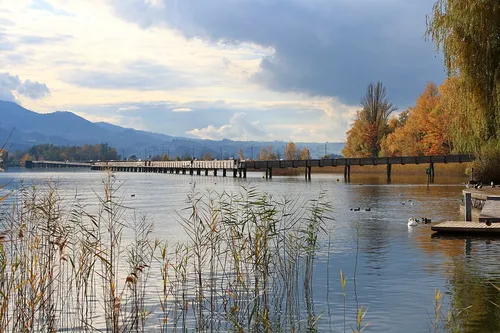
Stand on the boards and look along the deck: 841 metres of wood stretching across the Obersee, the upper part of Lake Zurich, which makes this the longest wooden bridge in Switzerland. It opened on 6 April 2001 as a footbridge, running right beside the Seedamm, the stone and metal causeway that carries two bridges of its own. Both link Rapperswil in the canton of St. Gallen with the village of Hurden in the canton of Schwyz, so a stroll across is also a walk between two cantons.
The new bridge is the latest in a very long line. The water here is the narrowest and shallowest part of the whole lake, and people have been crossing it on wooden structures for thousands of years. At the archaeological site of Hurden Rosshorn, remains of bridges or wooden footpaths go back to the Horgen culture, followed by traces from the Early, Middle and Late Bronze Age. Around them stood pile dwelling settlements, at Hurden Seefeld and at the Technikum site in Rapperswil, where an island village of the 17th century BC existed at the same time as some of those crossings. All three sites belong to the UNESCO World Heritage of prehistoric pile dwellings around the Alps.
The story keeps going: bridge remains from the Hallstatt period in 647 BC, from AD 741 in the Early Middle Ages, and a Roman bridge from AD 165, built under Emperor Marcus Aurelius and six metres wide. After that, ferries carried people across until a new bridge opened in 1360. That medieval bridge then served for centuries as the main traffic route of the whole region, landing at a gate on the town's lakeside.
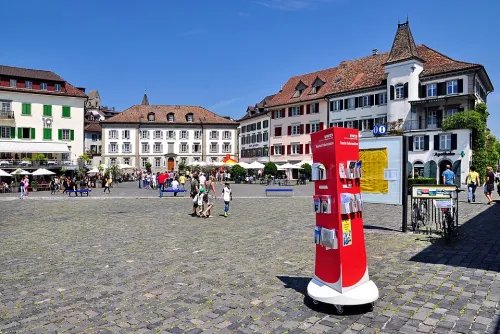
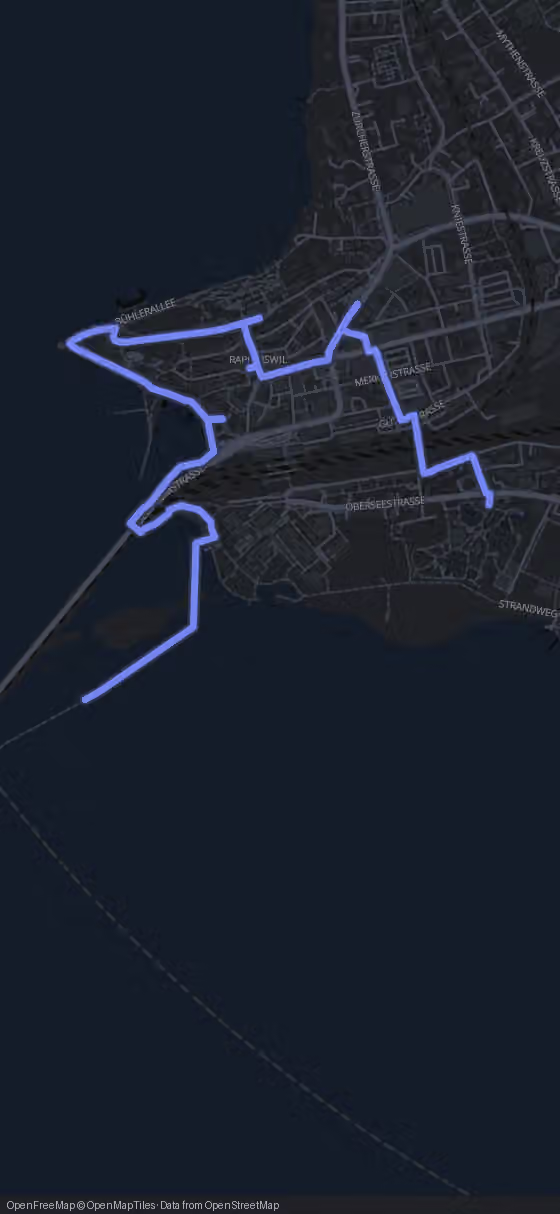
Take your time out here; it costs nothing and never closes. Then follow that old traffic route into town: the leg to Fischmarktplatz is 1010 m, about 14 minutes.