

Haapsalu Episcopal Castle
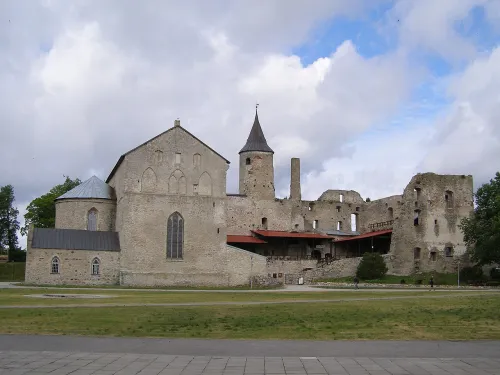
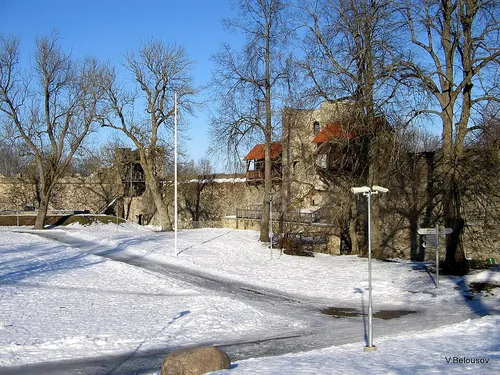
Start at the walls and take in the scale. What you see grew for three centuries: under Bishop Johannes IV Kievel, who ruled from 1515 to 1527, the stronghold reached its final size, more than 30,000 square metres enclosed by walls 1.2 to 1.8 metres thick and over 10 metres high, later raised to 15. Look for the watchtower on the western side. It stands 29 metres tall, dates from the 13th century and later served as a bell tower.
Why Haapsalu? In 1228 Albert of Riga created a new diocese of Läänemaa, Saaremaa and Hiiumaa and made Gottfried, an abbot of the Cistercian monastery at Dünamünde, its bishop. The first seat was Lihula; to avoid clashing with the powerful Order, the bishop moved to Perona, which Lithuanians burned ten years later. Haapsalu was the third attempt, and here stronghold and cathedral were begun together, which is why castle and church still form one complex.
The walls were reshaped again and again as weapons changed. The inner trenches and gun shelters date from the Livonian War of 1558 to 1582, which left the fortress badly damaged; the small castle and the outer fortifications were never fully rebuilt.
Then there is the White Lady. According to legend, on full moon nights in August the image of a young woman shows on the inner wall of the chapel. Stand in the chapel and you will understand why the story has lasted.
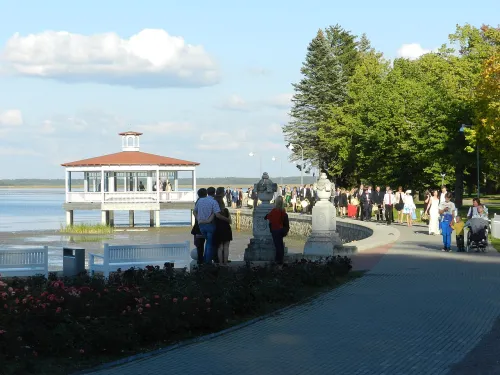
Is the inside worth it? If medieval church history and fortifications interest you, yes: allow about an hour and a quarter. If you mainly want atmosphere, the walls and the park next door give you a lot for free. Krahviaed Park is just 80 m away, a one minute walk.