Free Walking Tour Pärnu: Old Town Gate to the Beach

Start at a Swedish rampart gate, pass a medieval prison tower and two 18th-century churches, and finish with your feet in the sand of Pärnu Bay.

9 Stops 3.6 km ~48 min walking
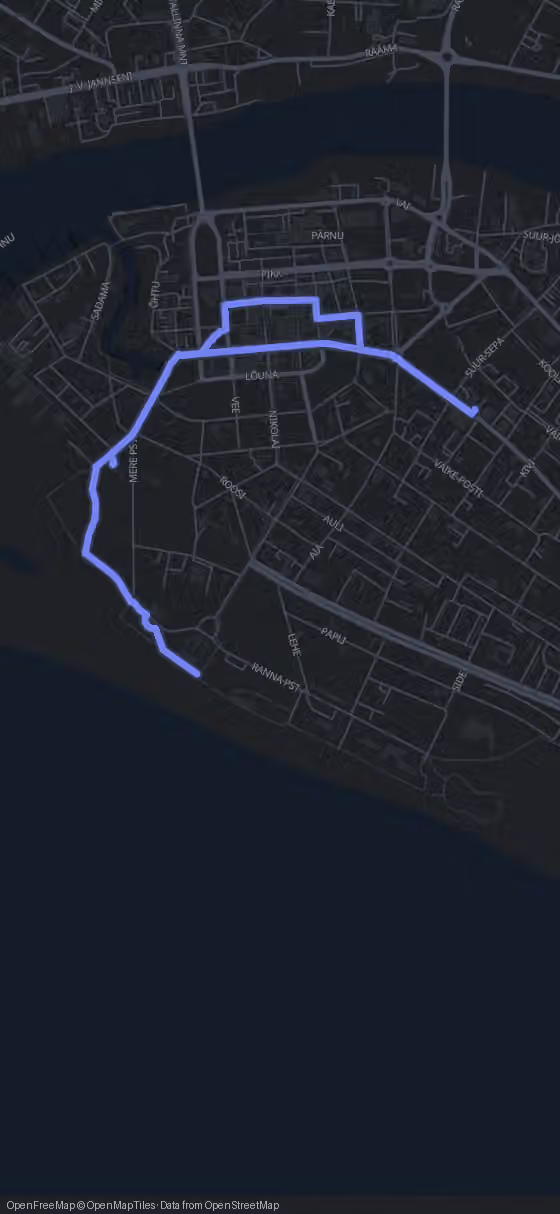
Route map for the Pärnu walking tour
Stop 1 of 9
330 m·4 min
Tallinn Gate
Head east toward Eliisabeti Church
Welcome to Pärnu. I'm Alex, and one elegant gateway here is the lone survivor of a vanished fortress city.
Try this tour with Alex

The Pärnu Walking Route at a Glance

Nine stops take you one way from the Tallinn Gate through the old town to Pärnu Beach: 3.6 km and 48 minutes of pure walking. Plan about two and three quarter hours, closer to four if you go into Pärnu Museum and the Red Tower.

The streets, both churches, the park and the beach cost nothing; Pärnu Museum, the Red Tower and the Ammende Villa charge for entry. The GPS route in your browser is free, and the optional AI Tour Guide tells the stories as you walk.

Open free GPS & optional AI Tour Guide
View of Pärnu

The Route

Walking Map of Pärnu from Rampart to Shore

9 stops 3.6 km 48 min walking
Tap to load interactive map

The 9 stops along this route

  1. Tallinn Gate in Pärnu, stop 1 on the self-guided walking tour
    1Tallinn Gate
  2. Eliisabeti Church in Pärnu, stop 2 on the self-guided walking tour
    2Eliisabeti Church
  3. Pärnu Museum, stop 3 on the self-guided walking tour
    3Pärnu Museum
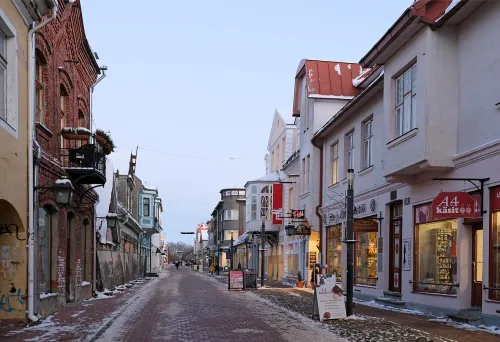
  4. Rüütli Street in Pärnu, stop 4 on the self-guided walking tour
    4Rüütli Street
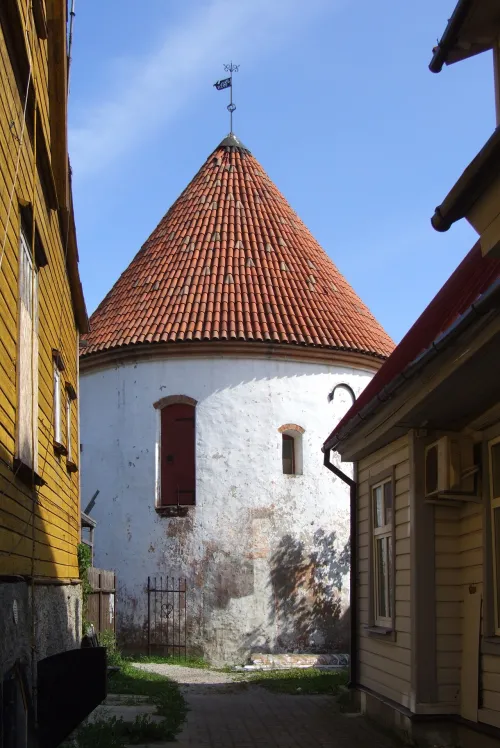
  5. Red Tower in Pärnu, stop 5 on the self-guided walking tour
    5Red Tower
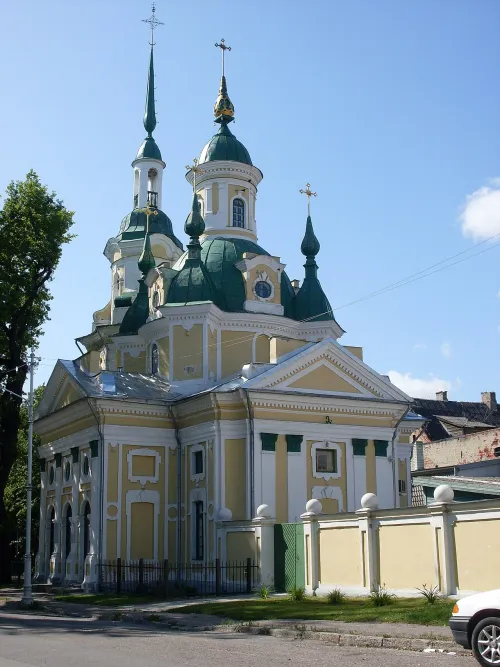
  6. St. Catherine's Church in Pärnu, stop 6 on the self-guided walking tour
    6St. Catherine's Church
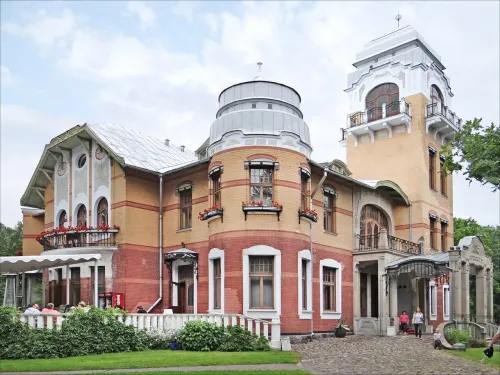
  7. Ammende Villa in Pärnu, stop 7 on the self-guided walking tour
    7Ammende Villa
  8. Rannapark in Pärnu, stop 8 on the self-guided walking tour
    8Rannapark
  9. Pärnu Beach, stop 9 on the self-guided walking tour
    9Pärnu Beach
  10. That's the full route.

    Walk it with an AI Tour Guide talking you through every one of these streets.

    Start free in your browser
    You made it

Your Pärnu Walk, Stop by Stop from Gate to Sand

  1. 1

    Tallinn Gate

    Tallinn Gate in Pärnu, stop 1 on the self-guided walking tour

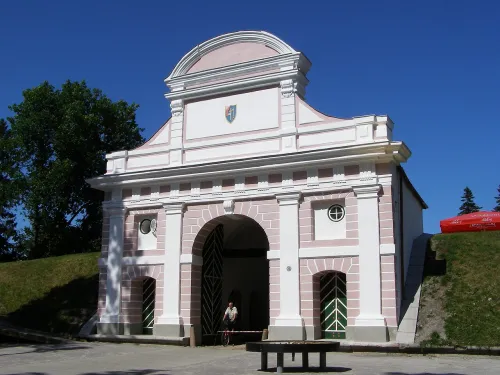
    Begin where travellers once left Pärnu for the north. The Tallinn Gate is a gate in the old earth ramparts, and from here a bridge crossed the moat to the postal road towards Tallinn. Walk into the tunnel and look up: a barrel vault almost five metres wide and close to seven metres high spans the straight passage. Heavy double doors could close it at both ends, and a portcullis once hung in the middle. The walls are fieldstone and brick, faced on the outside with porous dolomite from Riga.

    Until 1710 it carried a royal name, the King's Gate or Carl Gustav Gate. In the second half of the 17th century the Swedish crown rebuilt Pärnu as a bastioned fortress, and the town grew threefold to the south. Three gates pierced the earthworks: the Riga Gate, this one, and a Water Gate down to the river. The drawings came from Paul von Essen, a Swedish fortification engineer who worked with Erik Dahlberg, later Governor General of Livonia. Similar King's Gates and bastions went up in Narva and Riga in the same era.

    The Swedes named their bastions after heavenly bodies: Venus, Saturn, Mars, Luna, Jupiter, Mercury and Sol. This gate sat in the wall between Mercury and Luna, guarded in front by an outwork called the Evening Star; the Riga Gate had its Morning Star. When the fortress was pulled down in the 1860s, the moat was destroyed and the bastions levelled. Only this gate was kept, together with the ramparts and the moat running from here to the Venus bastion by the river, which is the stretch of water you see today.

    The gate is free and always open, so take your time on the rampart side too. From here it is 330 m, about 5 minutes, to Eliisabeti Church.
    Local name
    Tallinna värav
    Hours
    Open 24/7
    Price
    0 EUR
  2. 2

    Eliisabeti Church

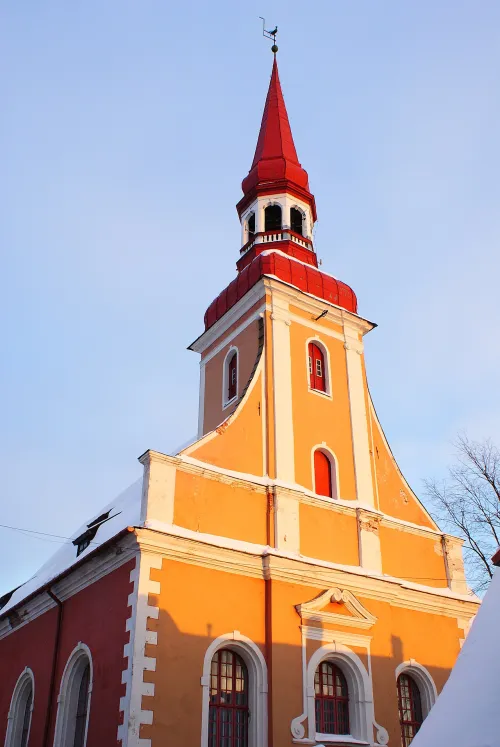
    Eliisabeti Church in Pärnu, stop 2 on the self-guided walking tour

    Look above the main door for the inscription “Anno 1747”. It marks the year the knob and the copper rooster were set on top of the stone tower and the town council accepted the master builder's work. Inside, historic chandeliers still light the church.

    The name goes back to a Russian empress. In 1741 Elizabeth Petrovna ordered 8,000 roubles from the state treasury for a new Lutheran church in Pärnu, and the Estonian St John's congregation took her name for itself and its new church. The cornerstone was laid on 25 June 1744 by Heinrich Güterbock, a master builder from Riga; the tower is credited to Wülbern, also from Riga. Interior work dragged on, and the church was consecrated on 29 March 1750.

    It replaced a long line of predecessors. Pärnu's first large church, the cathedral of St Thomas, stood where the Old Pärnu cemetery is now and was lost in war. For centuries the main church was St Nicholas by the river, which served German, Swedish and at times Estonian congregations, burned in September 1944 and was finally lost after the Second World War.

    Later generations kept adding. In 1850 a major renovation brought a new altar and pulpit, and in 1854 the altar painting by the Dutch artist van der Kann was hung. In 1893 G. Darmer added a brick wing, the old part was repaired with new floors, pews and galleries, and the church was consecrated again on 19 October that year. The organ gallery got its present shape in 1928 with a new organ.

    Entry is free. This is a working Lutheran parish church listed among Estonia's road churches, so keep it quiet during a service. A short look inside for the chandeliers and the altar painting is worth it. Then walk 680 m, about 9 minutes, to Pärnu Museum.

    Local name
    Pärnu Eliisabeti kirik
    Hours
    Services: Sun 10:00 (Holy Mass), Wed 18:00 (weekday mass), every 3rd Sun of the month 12:30 (Finnish mass)
    Price
    0 EUR
  3. 3

    Pärnu Museum

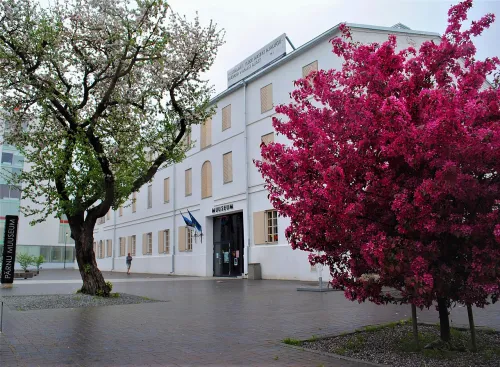
    Pärnu Museum, stop 3 on the self-guided walking tour

    Pärnu Museum exists to collect, keep and share the cultural heritage of Pärnu County. If you want the wider background to this walk, from the Swedish fortress to the seaside resort, this is where you get it under one roof.

    Its story mirrors the town's. The museum grew out of the collection of the Pärnu Antiquarian Society, which founded it in 1896. In 1909 it moved into a building on Elevandi Street, which burned down in September 1944, the same month St Nicholas church went up in flames. What survived was carried to Aia Street and later to the current house on Aida Street.

    Since 2015 the museum has been run by a foundation set up by the Ministry of Culture and the town of Pärnu. The Koidula Museum is a branch, and since November 2020 the museum has also run a visitor centre on Pärnu's history in the Red Tower, with a circular panoramic cinema, which you will reach shortly.

    Entry is paid. It suits a rainy day and anyone who likes to see objects behind the stories; allow about an hour. If the sun is out and time is short, the streets ahead tell plenty on their own. From here it is 510 m, about 7 minutes, to Rüütli Street, passing the Museum of New Art on the way.

    Local name
    Pärnu Muuseum
    Hours
    Tue–Sun 10:00–19:00 (year-round, no separate winter schedule on website), extended to 10:00–20:00 during Pärnu Music Festival (8-18 July); Mon closed; ticket sales end 30 min before closing
    Price
    15 EUR
  4. 4

    Rüütli Street

    Rüütli Street in Pärnu, stop 4 on the self-guided walking tour

    Rüütli Street is counted as Pärnu's main street, a dead straight line of about 915 m running west to east. Between Vee and Hommiku streets it is closed to cars, and that is the stretch to stroll: shops, offices and cafés line it, just as trade has shaped this street for centuries.

    Its straightness is a Swedish plan. The street took shape in the 17th century, when Sweden began building a modern sea fortress here, and it ran directly between two bastions, Luna and Sol. The market was moved from near St Nicholas church to a new square on this street, the New Market, where the Lastepark children's park lies today. The gentry received the right to build around the market, which made Rüütli one of the town's most important addresses.

    The name has had a bumpy ride. In German it was Ritterstraße, Knights' Street, which is exactly what Rüütli means. During the patriotic wave of the 1930s the name fell out of favour and in 1936 it became Kalevi Street. After the upheaval of June 1940 it was renamed after the communist V. Kingissepp, the German occupation brought back Kalevi, and only in 1989 did the historic name return.

    Once Pärnu was struck off the list of fortress towns in 1834, the walls came down and in the 1860s the street was extended beyond Hommiku. The railway arrived in 1896 with its station right on the street, where Independence Square is now. The street is free to wander, and the Red Tower is only 180 m away, about 2 minutes.

    Local name
    Rüütli tänav
    Hours
    Public street, no opening hours
    Price
    0 EUR
  5. 5

    Red Tower

    Red Tower in Pärnu, stop 5 on the self-guided walking tour

    The Red Tower is the only structure of medieval New Pärnu's town wall still standing above ground. It is round, roughly ten metres across, built of brick inside and out around a core of fieldstone, and on the side facing the old moat the masonry was sealed with clay. It stood at the southeast corner of the wall, backed by two small horseshoe-shaped towers on the eastern and southern walls.

    Nobody agrees exactly when it was built. It is usually placed in the 15th century, but it may have gone up with the town wall in the mid-14th century, or around 1520, when the corners of the wall were strengthened. In 1543 it was already called the Red or Prison Tower, “Rode vagen thorn”. In 1624 it had four floors; three survive, and the lost top floor may have been an open platform.

    Inside, the ground floor was a storeroom with walls 2.3 m thick, later used as a prison. The two floors above were for defence, with three gun ports on the second and two on the third. In 1783 J. H. Heyer rebuilt the tower into the lower shape you see now, adding stoves and a domed ceiling. It served as the town prison until 1892, and prisoners escaped so often that the ceiling was reinforced with two or three layers of logs and the beams and door hinges were strengthened.

    Entry is paid. Inside is Pärnu Museum's visitor centre with its circular panoramic cinema on the town's history, a compact choice if you skipped the museum. From here it is 280 m, about 4 minutes, to St. Catherine's Church.

    Local name
    Punane torn
    Hours
    Tue–Sun 10:00–19:00; ticket sales end 30 min before closing
    Price
    8 EUR
  6. 6

    St. Catherine's Church

    St. Catherine's Church in Pärnu, stop 6 on the self-guided walking tour

    St. Catherine's Church stands on the corner of Vee and Uus streets, a Baroque Orthodox church with six towers. Count them as you walk around it; the silhouette is unlike the Orthodox churches you may know from elsewhere in Estonia, and there is a reason for that.

    It was built about a century earlier than most Orthodox churches in the country. Empress Catherine II passed through Pärnu in 1764, and afterwards she ordered and paid for a new church to replace the wooden one built for the Pärnu garrison in 1752. The architect was Pyotr Yegorov; the church was finished in 1768 and consecrated in 1769.

    Put it next to Eliisabeti Church and you have two empresses in one small town: Elizabeth funded a Lutheran church for the Estonian congregation, Catherine an Orthodox one that began with the soldiers. Today the Pärnu congregation of the Estonian Orthodox Church of the Moscow Patriarchate worships here.

    Entry is free, but whether you can go inside depends on the season, so check the current visiting arrangements before you count on it. From here you leave the old town behind: 690 m, about 9 minutes, to the Ammende Villa.

    Local name
    Pärnu Suurmärter Katariina kirik
    Hours
    Daily 10:15–16:00 (1 June – 31 August); 1 September – 31 May by advance booking only
    Price
    Free
  7. 7

    Ammende Villa

    Ammende Villa in Pärnu, stop 7 on the self-guided walking tour

    The Ammende Villa is among the outstanding examples of early Art Nouveau in Estonia, and the facades reward a slow walk around. A tall tower with a high mansard pavilion dominates, joined by smaller towers, a complex hipped roof and wide eaves. Look for the mix of materials: ceramic tiles, wrought iron, stucco, cut stone and cast concrete in different colours.

    It was built as a summer home with a party in mind. In 1904 the Pärnu merchant Hermann Leopold Ammende commissioned the St Petersburg firm Mieritz & Gerassimov to design a luxurious villa for his family's summers and for his daughter's wedding celebrations. The town architect approved the plans on 5 May 1904, and the villa was finished in 1905, richer than first drawn and using building materials that were new for the time.

    The good years did not last. After the First World War and the Russian Revolution the family's finances declined, and in 1927 the town bought the villa for 8 million marks. By 1929 Olev Siinmaa had turned the ground floor into a summer casino, which ran through the 1930s. In 1940 the Soviet authorities took over, the German occupation ran an officers' casino here, and after the war it served as a sanatorium, a library and a restaurant.

    Today it is a protected monument with a hotel and restaurant, and inside you can still find restored Art Nouveau rooms with woodwork, wall paintings, fireplaces and tiled stoves; going in is paid. Rannapark is just 270 m away, about 4 minutes.

  8. 8

    Rannapark

    Rannapark in Pärnu, stop 8 on the self-guided walking tour

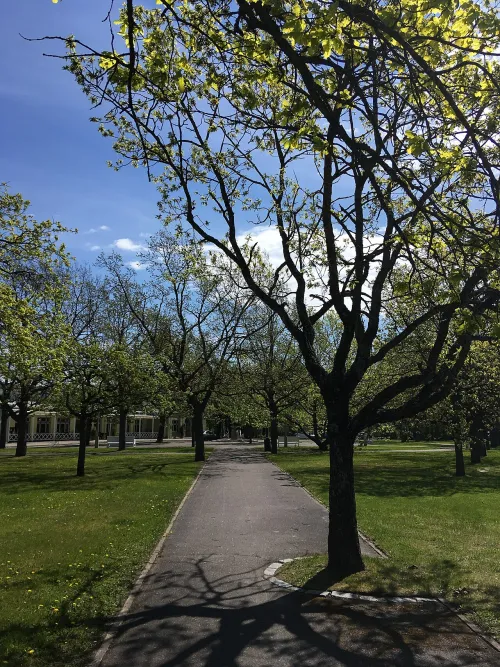
    Rannapark, the beach park, was begun in 1882, as the seaside was turning into Pärnu's playground. Being right by the beach, it has been a favourite place to stroll and rest ever since.

    Look at the trees. Among Estonia's town parks only one has more species, which is why Rannapark is under nature protection. Native pine, oak, black alder, maple, downy birch, spruce and linden dominate, joined by foreign species such as European larch, Serbian spruce, Pennsylvania ash, Berlin poplar and Macedonian pine. Among the shrubs are sea buckthorn's neighbours like mountain pine, Siberian dogwood and snowberry.

    The park is divided by theme and use into a main square, an art square, a square for social games and a square of peace. There are secluded benches, room for a picnic, a playground on the sea side, a fitness trail and a cycle path running through.

    It is free and always open, a good place to pause before the sand. From here it is 640 m, about 9 minutes, to Pärnu Beach, following the Pärnu Beach Promenade.

    Hours
    Open 24/7
    Price
    0 EUR
  9. 9

    Pärnu Beach

    Pärnu Beach, stop 9 on the self-guided walking tour

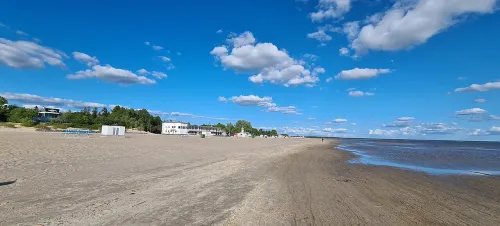
    You have reached the heart of the resort. Pärnu's central beach is a sandy strip of about 1,800 m with dunes behind it, more than a hundred metres wide, stretching from the extension of Side Street to the Pärnu moles.

    The bay made the town famous: shallow water that warms quickly. The seabed slopes gently, the swimming area is marked with buoys and is no deeper than 1.7 m, and even about 200 m out the water is on average only around 1.5 m deep.

    The liveliest part is around the beach building, the beach hotel and the promenade, with cafés, rest areas, playgrounds and beach sports. Towards the west the sand runs on to the moles and the mouth of the Pärnu River, past buildings of the historic resort. Along the shore you will also see the Pärnu mud baths and the Tervise Paradiis water park hotel.

    The beach is free and open around the clock, and this is where the walk ends. Stay for a swim, a coffee or the sunset light over the bay, with no need to walk back.

    Local name
    Pärnu rand
    Hours
    Open 24/7
    Price
    0 EUR
Walking tour route map of Pärnu Route loaded
Tallinn GateEliisabeti ChurchPärnu MuseumRüütli Street+5
All 9 stops are already on the map.
You just press start.
AI Tour Guide

From Reading to Walking: Take a Guide Along to the Sea

Press start wherever you are, even hundreds of kilometres from Pärnu, and the guide begins telling its stories right away. In the city, pick any of the 9 stops to start from: it leads you there, then talks with you the whole route, asking, listening, remembering, and shaping the tour around your answers.

9stops 3.6km 48 minwalking 13languages
▶Start the tour free

Free to start · Runs in your browser · No app, no download

Shorter Ways to Walk Pärnu

If you only have part of a day, split the route where the town changes character: the fortress town on one side, the seaside resort on the other.

Fortress town and old streets

Stops: 1, 2, 3, 4, 5, 6

For history lovers with a morning or afternoon. From the Tallinn Gate to St. Catherine's Church you walk about 2 km, 27 minutes in total. Pärnu Museum and the Red Tower charge for entry; the gate, both churches and Rüütli Street are free.

Resort Pärnu and the beach

Stops: 6, 7, 8, 9

For a relaxed afternoon that ends with a swim. From St. Catherine's Church to Pärnu Beach it is 1.6 km, 22 minutes of walking. Only the interior of the Ammende Villa is paid; the park and the beach are free.

How Long the Pärnu Walk Takes, With and Without Interiors

The 48 minutes of walking split into eight short legs, the longest 690 m, so you are never far from the next stop. Most of the time goes into looking: around ten or fifteen minutes at the gate, the churches, Rüütli Street, the park and the beach adds up to roughly two and three quarter hours.

Going inside changes the day more than the distance does. Give Pärnu Museum about an hour and the Red Tower around 25 minutes, and you are close to four hours. The fortress half alone takes about an hour and three quarters from outside, nearly three hours with both interiors; the resort half takes about an hour and twenty minutes, longer if you stay on the sand.

Before You Set Off in Pärnu

  • Start: The Tallinn Gate is the recommended start, and the order of the walk is the recommended one, but you can join at any stop.
  • Finish: The route is one way and ends at Pärnu Beach, so there is no need to walk back to the gate.
  • Time of day: Do the old town half while Pärnu Museum and the Red Tower are open and save the beach for later in the day.
  • Entry: Pärnu Museum, the Red Tower and the Ammende Villa charge for entry. The Tallinn Gate, both churches, Rüütli Street, Rannapark and the beach are free.
  • Beach kit: If you want a swim at the end, pack a towel and swimwear in your bag.
Walking tour route map of Pärnu
AI Tour Guide

A Guide That Starts Talking When You Reach the Gate

Press start and a voice AI Tour Guide takes it from here: leading the route through Pärnu, telling the stories, and turning your walk into a real back-and-forth conversation. No app or download is needed; it runs in your browser.

9stops 3.6km 48 minwalking 13languages
▶Start the tour free

Free to start · Runs in your browser · No app, no download

What the AI Tour Guide Adds Between Ramparts and Resort

This walk jumps from Swedish engineers to Russian empresses to a merchant's wedding villa, and the AI Tour Guide ties those threads together as a conversation while you walk. It greets you at the gate, tells the stories of each place, asks what interests you and leans into that, whether you want to hear how people lived in the garrison town or how Pärnu turned into a resort. You can interrupt it any time. You start with 100 free credits; after that you choose between this tour all-inclusive for €19.99 with no time limit, or €5 per hour.

A Real Conversation A voice AI Tour Guide greets you, leads the whole route, and tells the stories and facts as you walk, asking what you want to see and keeping a real conversation going. Not a recording you press play on.
Map Navigation Follow the route on the map and walk at your own pace. You choose where to start and when to move to the next stop.
Ask Anything Curious about a building you pass? Ask your AI Tour Guide on the spot and the conversation carries on.
13 Languages Switch language anytime. No separate tour needed.
Start free in your browser

Common Questions About Walking Pärnu

Can I go inside the Ammende Villa if I'm not staying there?

The villa runs as a hotel and restaurant, and visits to the interior are paid. Ask at the reception about the current conditions; the facades are free to admire from the street.

Is there a quieter beach than the central one?

Yes. Across the Pärnu River lies Vana-Pärnu beach, a separate and more natural bathing spot.

Where does the beach promenade lead if I want to keep walking?

At its end, by the Tervise Paradiis water park hotel, the surf area begins and the seaside path continues towards Raeküla, the Pärnu beach meadow nature trail and its nature reserve.

Which other towns pair well with a day in Pärnu?

Haapsalu is another seaside town at 84 km, Tallinn is 118 km away, and Riga at 161 km makes a good next stop if you are heading south.

Is the tour really free?

Yes. The whole tour is free: the route, the interactive map and the navigation cost you nothing. Only the voice AI Tour Guide is optional and paid: you test it with 100 free credits, then you pay either €5 per hour or €19.99 for this whole tour, with no time limit. Admission to 3 of the 9 stops is not included: Pärnu Museum, Red Tower and Ammende Villa charge their own entry fees.

Do I need to download an app?

No. Everything runs in your phone browser. Open the route and start walking, no download and no sign-up required.

Do I need to book the walking tour in advance?

No booking needed. This self-guided tour is available anytime. Open the route in your browser and start walking. The AI Tour Guide works instantly, no app, no reservation required.

What languages is the AI Tour Guide available in?

The AI Tour Guide speaks 13 languages, so you take the tour in your own language and can switch at any time.

Can I skip stops or change the route?

Yes. Skip any stop, spend extra time at places you like, or start the route from any point. It is your walk, you set the pace.
Image credits
▶ Start free in your browser Runs in your browser, no app, no download