

Town Hall Square
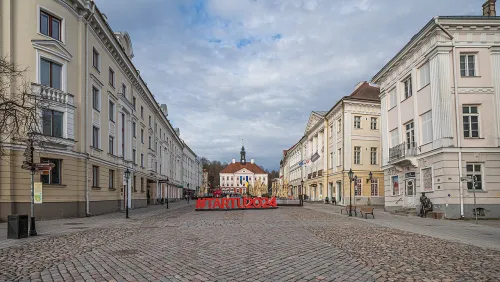
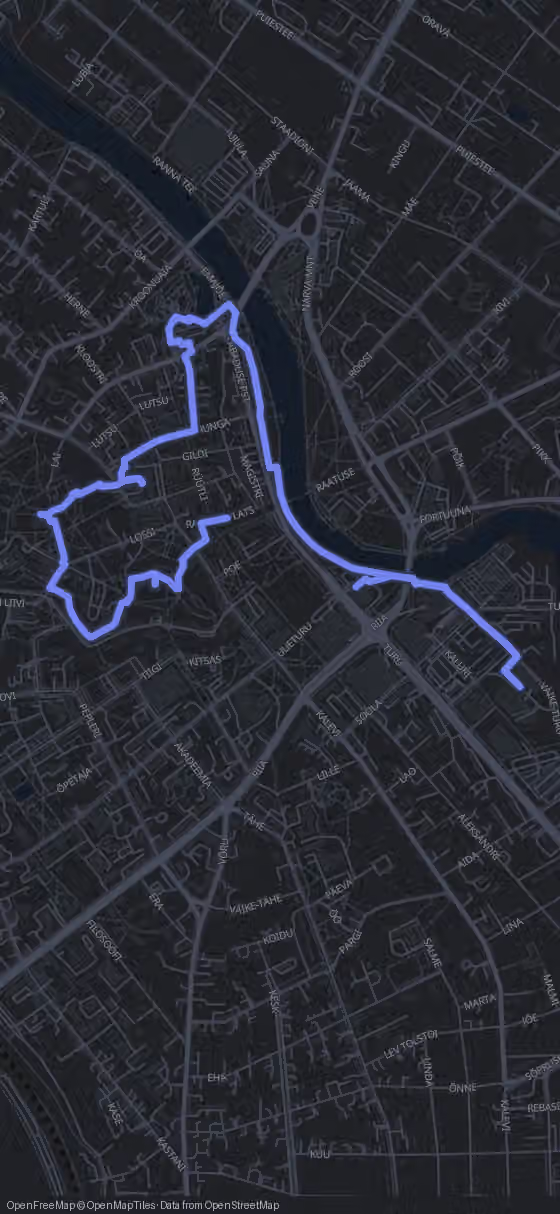
Raekoja plats, as locals call Town Hall Square, is where Tartu's old streets gather: Küüni, Rüütli and Kompanii streets all start here, the university's Ülikooli street runs behind the town hall, and along the river side Vabaduse puiestee passes the Kaarsild, the footbridge over the Emajõgi to the Ülejõe district. In the middle ages and early modern times this was the town market, which is why people also called it the Great Market.
There is no permanent market any more, but the fairs keep coming back: a spring fair in May, the Maarjalaat in autumn and a Hanseatic fair during Tartu's Hanseatic Days, with celebrations and concerts in between. Look for the Kissing Students fountain on the square, a fitting emblem for a town that has been shaped by its students for two centuries.
The town hall itself is the third or fourth on this spot. The medieval one was destroyed in the Swedish-Polish war in 1601. The Swedes began a new one in 1688 to plans by Paul von Essen and held the first official meeting there on 1 September 1693, only for Russian troops to wreck the town and its town hall again in 1708. A temporary wooden town hall built into the ruins burned in the great fire of 1775. The early classicist building you see now was designed by Johann Heinrich Bartholomäus Walther, a master builder who came to Tartu from Rostock, and opened with ceremony on 9 October 1786.
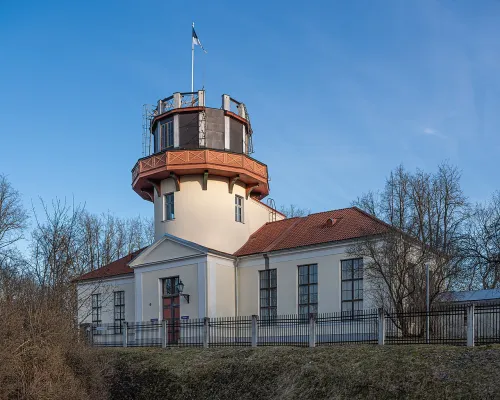
Check the corner house at Raekoja plats 1 on the Ülikooli corner: finished in 1784 as a two-storey stone house, it soon gained a third floor with a dense row of dormer windows. Between 1797 and 1888 it held a pharmacy, later the Tartu Homeowners' Bank. Its neighbour at number 2 dates from 1778. From here it is 340 m, about 6 minutes, up to the observatory on Toomemägi.