



Hermann Castle
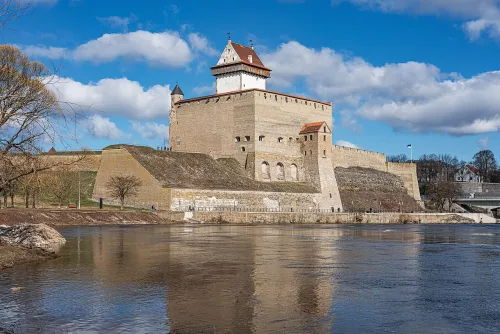
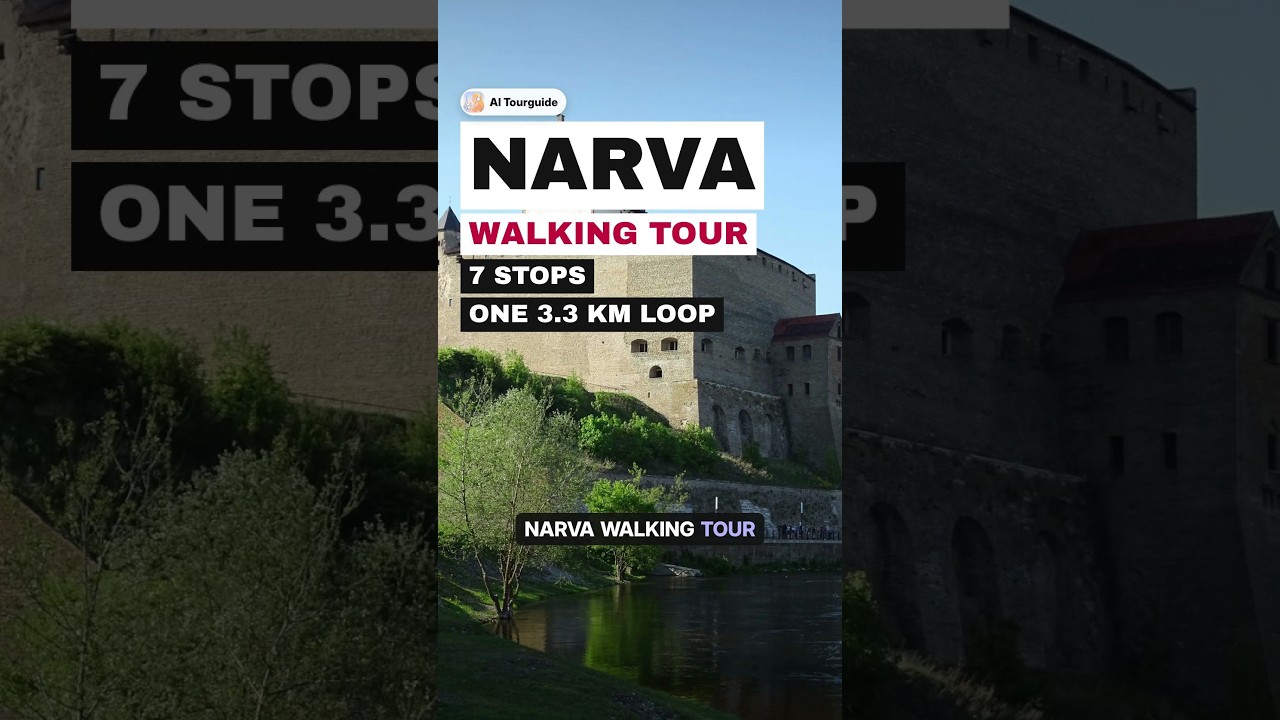
Start at the walls of Hermann Castle and take in the shape first: massive wings around a courtyard in the middle, a ground plan that has largely survived from the Middle Ages, and the Hermann Tower at the corner. It all began far more modestly. Around 1256, when this area belonged to the Danish Realm, Denmark set a wooden border stronghold where an old road met the Narva River. The settlement under its protection grew into the town of Narva, which received Lübeck town rights in the first half of the 14th century.
Clashes with Novgorod and Pskov pushed the Danes to build in stone at the beginning of the 14th century: a compact, castellum-like block with 40-metre sides and a tower at the northwestern corner, the forerunner of today's Hermann Tower. Danish Narva had no town wall, so in the middle of the century a large forecourt was added on the west side where citizens could shelter in wartime.
In 1346 King Valdemar IV of Denmark sold northern Estonia, Narva included, to the Livonian Order, which rebuilt the stronghold as a convent building to suit its own needs. When Muscovite Russia founded the Ivangorod fortress on the opposite side of the river in 1492, the Order answered by completing the Hermann Tower. It also ringed the town with a fortified wall; that wall is gone, ordered demolished in 1777.
Is the ticket worth it? If medieval fortresses are part of why you came to Narva, yes: allow about an hour and a half and arrive in the morning, as soon as it opens. If the castle happens to be closed on your day, walk around the outside and move on.
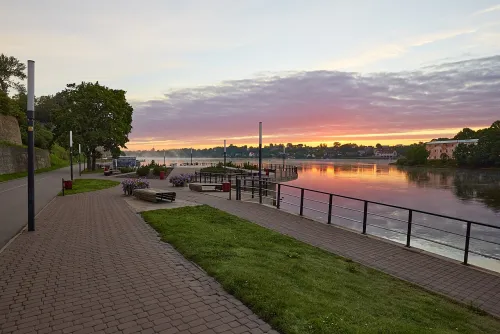
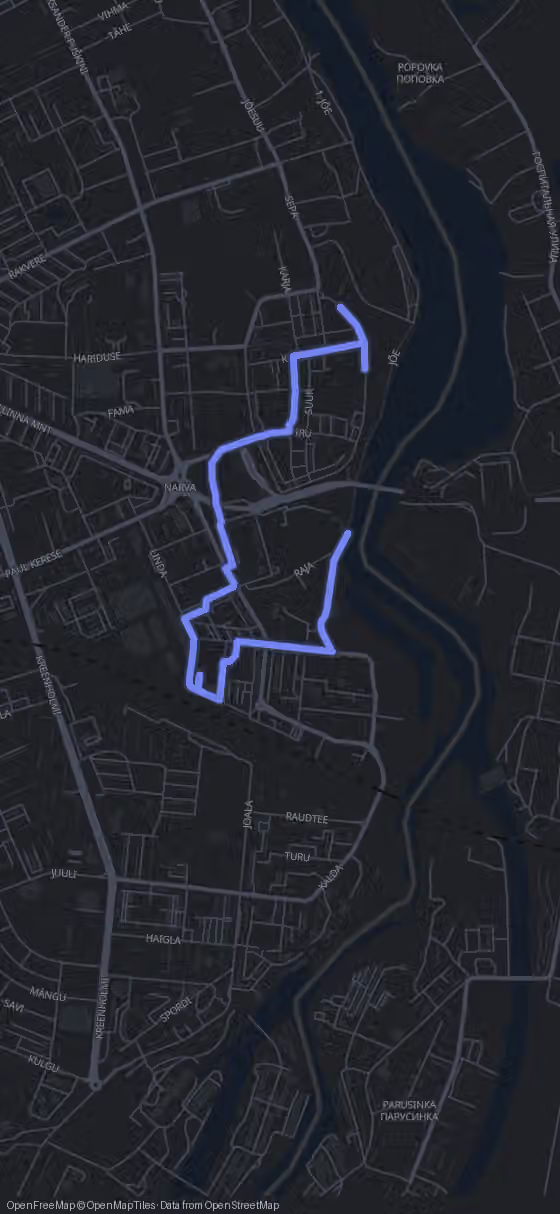
From the castle it is 160 m, about two minutes, down to the river.