

Fat Margaret Tower
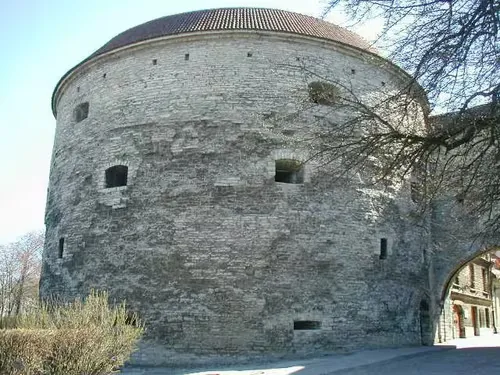
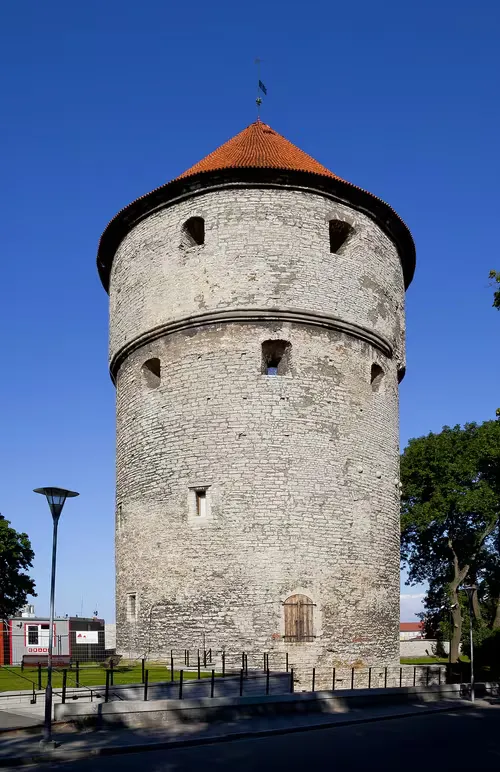
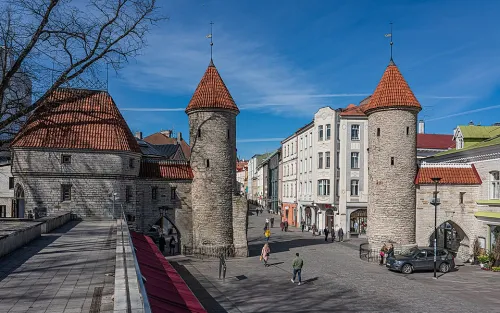
Your walk starts at the northern end of Pikk, the long street of the Old Town, in front of a tower that looks more like a giant stone drum than a spire. Fat Margaret, Paks Margareeta in Estonian, measures about 24 metres across but only around 20 metres high, so it is wider than it is tall, which is rare for a tower. The walls are about five metres thick. Right beside it stands the town gate called the Great Coast Gate.
Work began in 1510 or 1511, when better weapons forced the town to modernise its fortifications, and it was finished around 1530. This was a cannon tower, built to guard the town against attacks from the nearby Baltic Sea and, most likely, to impress anyone arriving by ship. Unlike the older walls, it had gun ports even on the first of its four floors. Later it served as an arsenal, then for twelve years as a prison, until it burned out. And Margaret herself? Nobody knows where the name comes from.
For a long time the tower stood as a ruin. When Moscow was awarded the 1980 Summer Olympics and the sailing events were set for Tallinn, the city restored a number of historic buildings, Fat Margaret and the Great Coast Gate among them. The Polish firm Budimex started in 1978, the work dragged on, and the Estonian Maritime Museum finally opened in the tower in April 1981.
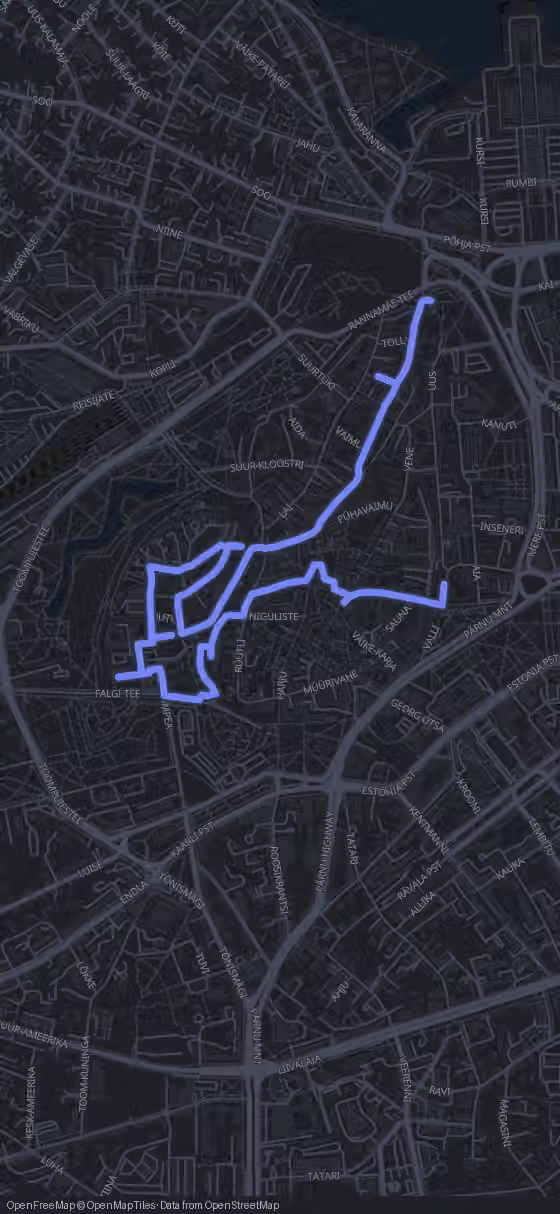
Going in costs entry and makes sense if you like ships and sea history, or if you want the roof: there's a view from the top and, in the summer months, a café up there. If you also plan to visit the Seaplane Harbour, ask about the combined ticket. From here it's 260 metres, about 4 minutes, to St. Olaf's Church.