

Rose Square
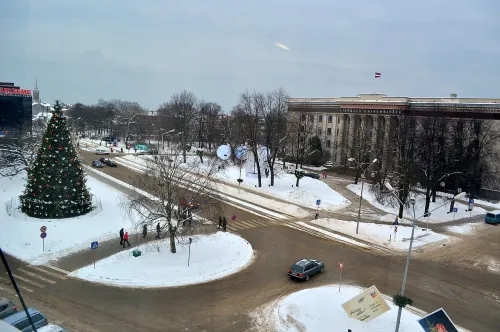
Rose Square is Liepāja's main square and one of its symbols, so much so that locals call it the heart of the city. It sits in Old Liepāja between Lielā iela and Zivju iela, a meeting point for residents as much as a sight for visitors. Look first at the middle: the square takes its name from the large rose bed at its centre, and around that bed runs a ring of coats of arms from Liepāja's twin towns.
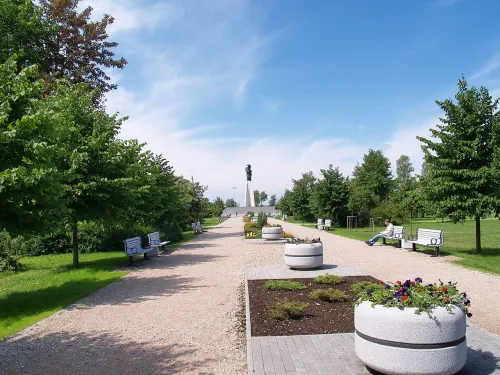
In the 18th century this was not a garden at all but the New Market. In 1910 the market moved to its present site, and the city decided to make the space an open park. A year later the winning design came from Georg Kuphaldt, director of Riga's city gardens: a strictly geometric layout with paths aligned around a central rose bed planted with 500 roses, and hornbeams and lindens as the first trees. The name Rose Square came from the residents themselves. Later, as fashions in planting changed, loosely placed trees and shrubs crept in that never fitted Kuphaldt's plan. One of them is now a notable tree in its own right: look for the Manchurian walnut.
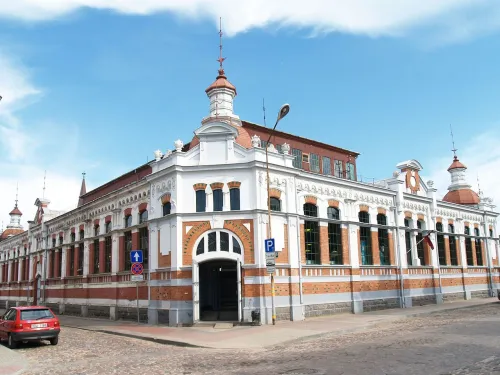
The square also carries the city's harder 20th century. Between 1934 and 1935 the Army Economic Shop rose at its edge, designed by Aleksandrs Rācenis; it burned on 28 June 1941 during the battle for Liepāja. After the war the square became Victory Square, and only in 1988 did it get its old name back. In the spring of 1991, during the barricade days, the Soviet military command decided to guard the Lenin monument that stood here. It was taken down after the August coup failed, on 23 August.
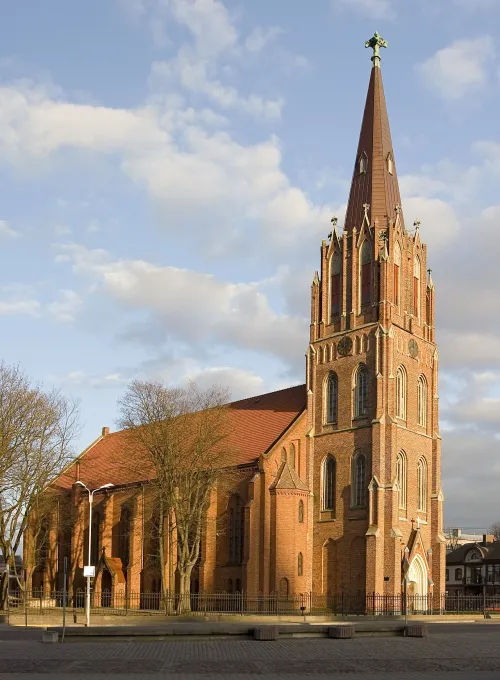
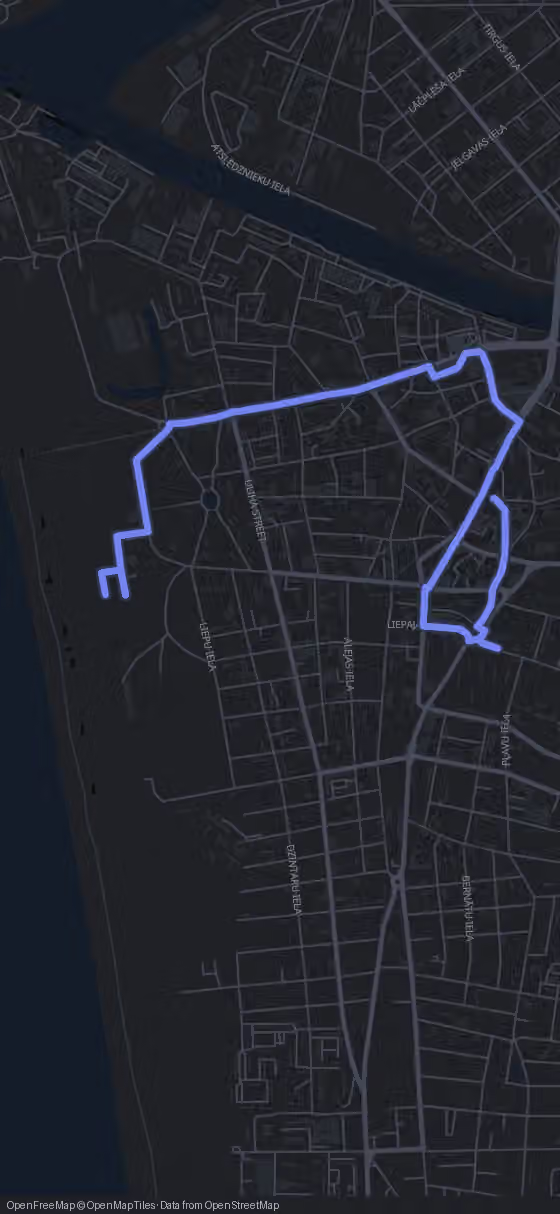
In 1999 the city asked architect Andris Kokins for a reconstruction concept, and he kept what makes the place work: the geometry, the clipped hornbeams and the central roses. The local band Līvi even wrote a song called “Rožu laukums”. From here it is 520 m, about 7 minutes, to St. Anne's Church.