

Riga Cathedral
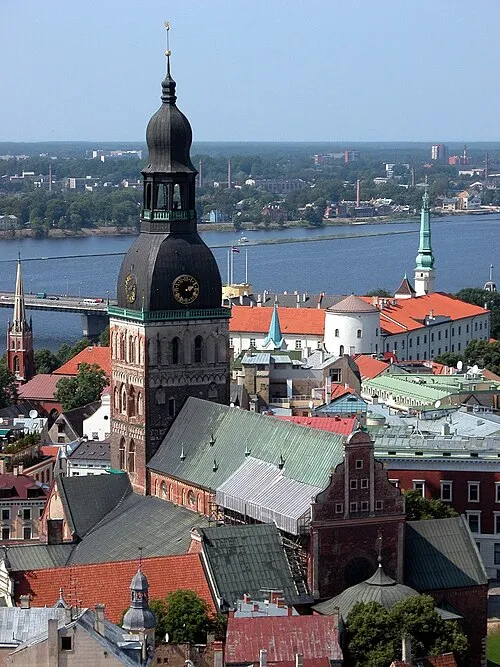
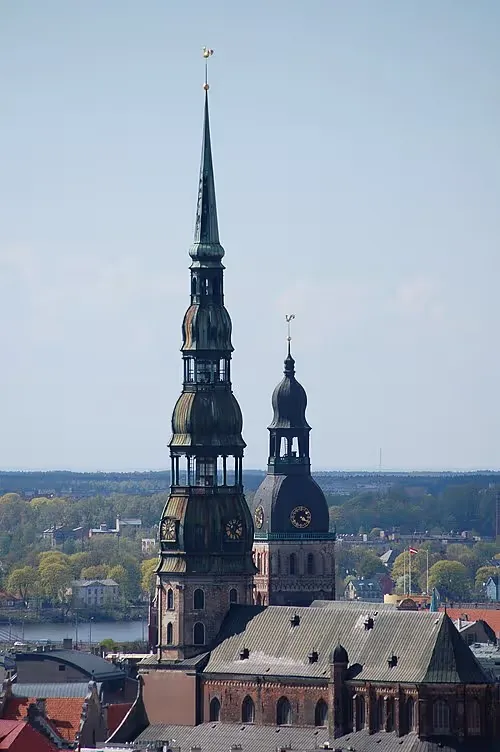
Begin with the building that has stood for Riga longer than almost anything else. Riga Cathedral, formally the Cathedral Church of Saint Mary, was founded in 1211 near the Daugava by Bishop Albert, a churchman from Lower Saxony. It's considered the largest medieval church in the Baltic states, and it has been altered so many times over the centuries that its walls carry several eras at once. Look up at the tower: like all of Riga's oldest churches, it wears a weathercock. The copper roof over the nave was renewed in 2011, and the tower exterior was re-plated in 2015.
You'll often hear it called the Dome Cathedral, a doubled word, since the German “Dom” already means cathedral. Its 20th century was anything but quiet. After a 1923 referendum the Lutherans had to share it with the Roman Catholic Church, until a second referendum in 1931 returned it to them. Under Soviet occupation religious services were banned for decades and the building served as a concert hall; worship resumed only in 1991. Today it's the seat of the Lutheran Archbishop of Riga.
The strongest reason to buy a ticket is the organ. Walcker of Ludwigsburg built it in 1882 and 1883, and it was inaugurated on 31 January 1884: four manuals, 124 stops and 6,718 pipes. During the Second World War, a recording of composer Lūcija Garūta playing it for a cantata even captured the sound of fighting nearby. If you love church music or big medieval spaces, go in; if you're short on time, the exterior gives you the essentials.
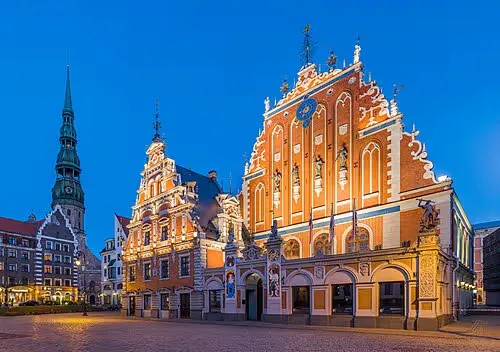
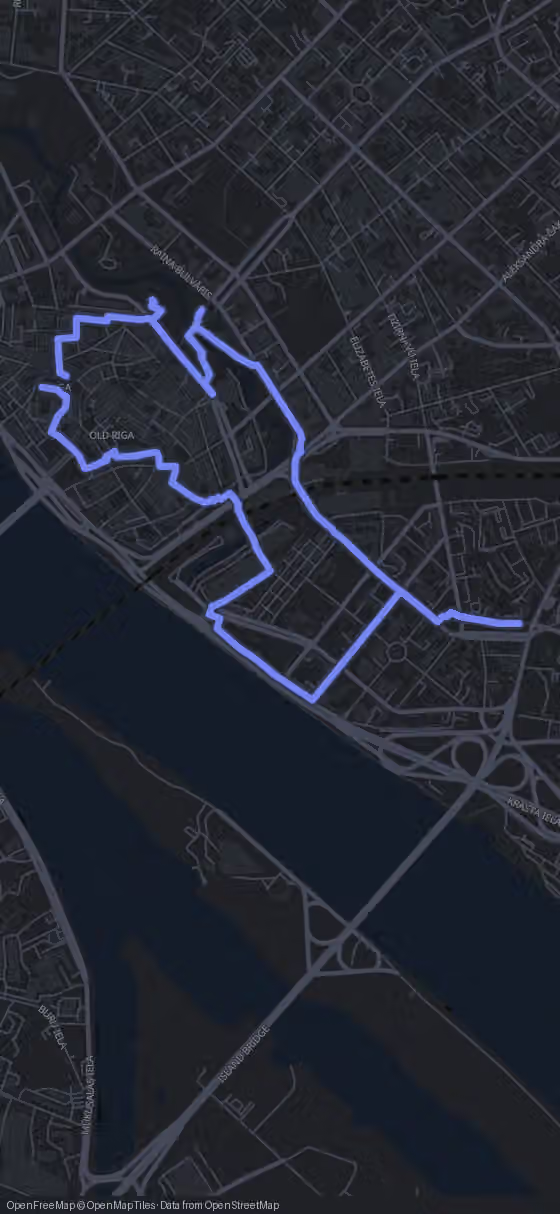
From here it's 370 metres, about 5 minutes, to the House of the Blackheads.