

Cathedral of Saints Peter and Paul
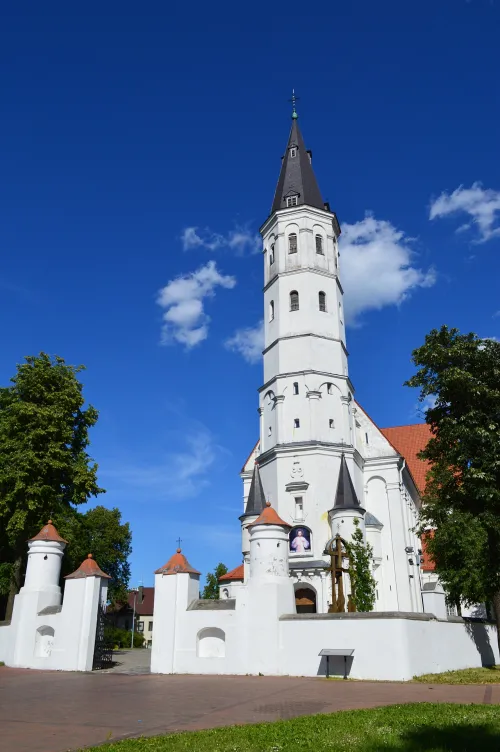
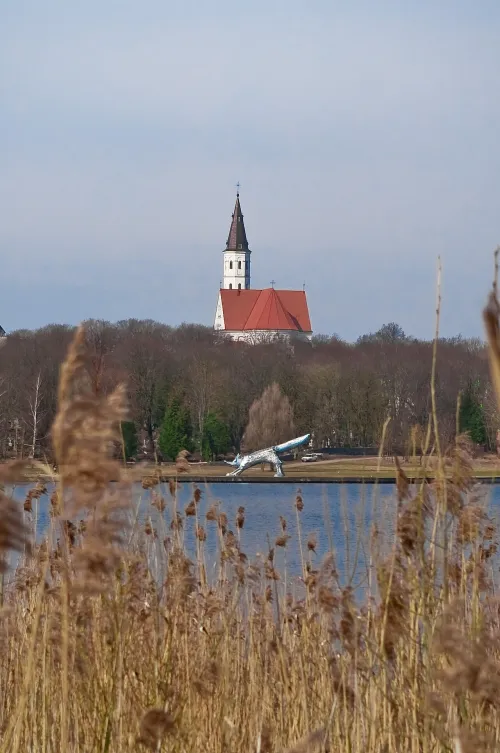
Start where Šiauliai has always looked up: the Cathedral of Saints Peter and Paul. Its tower rises 70 m and can be seen from far off on every road into the city. Look at the main façade first. The oriels and the little towers on the churchyard gate, pierced with gun loops, make the church look more like a fortress than a parish church. Those gates in front of the façade are the only ones of their kind in Lithuania.
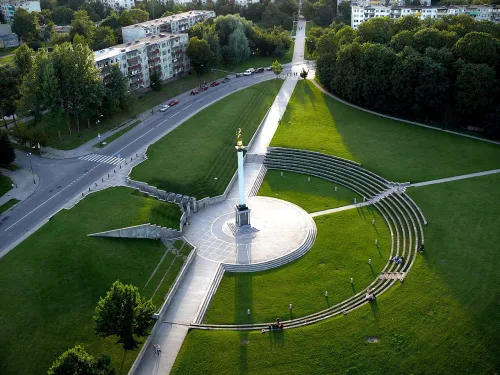
The defensive look was not just style. Renaissance tradition played its part, but church treasuries tempted robbers, and churches often suffered in Protestant riots. Bishop Motiejus Valančius called it the finest church in all Samogitia, and the building is now almost 400 years old. Find the sundial on the wall: it was fixed there in 1625, and the walk ends at a square that turns the idea of a sundial into a whole city monument.
A wooden church stood here from 1445, built by Mykolas Kęsgaila, the Elder of Samogitia, with its own resident priest. Work on the brick church began after 1617, the year King Sigismund Vasa granted 72 voloks of land for its upkeep, and Bishop Jurgis Tiškevičius consecrated it on 8 October 1634, an event that holds a place in the history of Lithuanian writing. Fire damaged it in 1655, and in 1676 the parish priest was ordered to restore it. Locals tell a different origin story: a huge ox once wandered into Šiauliai, lay down to rest and never woke. The wind piled earth over it, and the cathedral stands on the mound that formed.
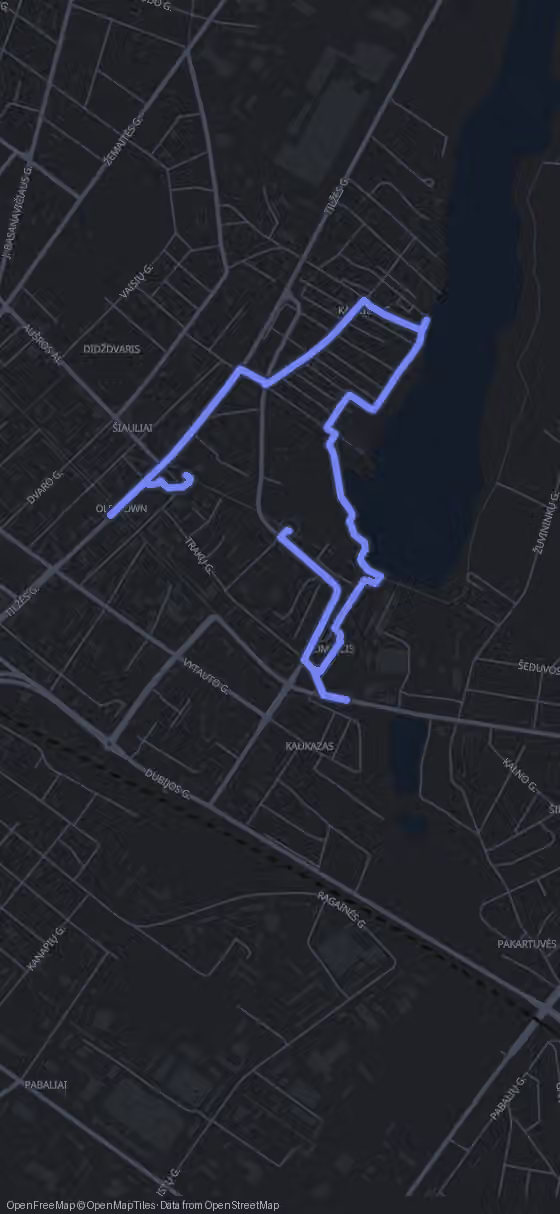
The church became a cathedral after Pope John Paul II visited the Hill of Crosses and the Diocese of Šiauliai was founded. Entry is free, so step inside for a few minutes even if you are not religious. Then head 400 m, about 5 minutes, to Vilniaus Street; on the way you pass the Photography Museum.