

Museo de Arte de Lima
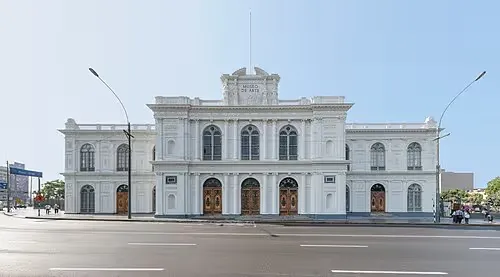
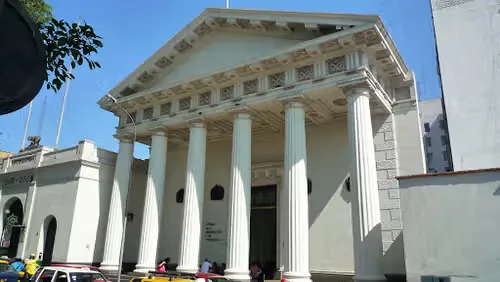
Before you go in, look at the building itself. The museum, known to everyone as MALI, sits in the Palacio de la Exposición, built for the 1872 World's Fair in Exposition Park at the entrance to the historic centre. The Italianate façade was designed by Antonio Leonardi, an Italian architect then living in Lima, and it wraps a cast-iron structure that came from Gustave Eiffel's atelier between 1870 and 1871.
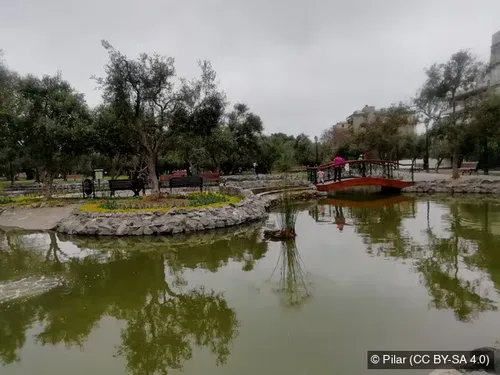
The park around you has its own story. It was laid out by Leonardi together with the journalist Manuel Atanasio Fuentes on the site of the Guadalupe Gate, one of ten gates in Lima's city wall. The wall came down in 1868 during José Balta's modernisation campaigns, and this palace and park were part of the new, open city that replaced it. Remember Fuentes: you will meet his name again on the next street.
The museum opened in 1961 and is a private institution, kept alive by admission fees, members and donations. Its collection spans almost 3,000 years, from pre-Columbian ceramics and textiles to sculpture and painting of the modern era. The renovated galleries on the second floor, reopened in 2015, hold the most important pieces. More than 1,000 contemporary works mostly wait in storage for a new wing, but the temporary shows are strong: Gerhard Richter, Martin Chambi and Annie and Josef Albers have all been exhibited here.
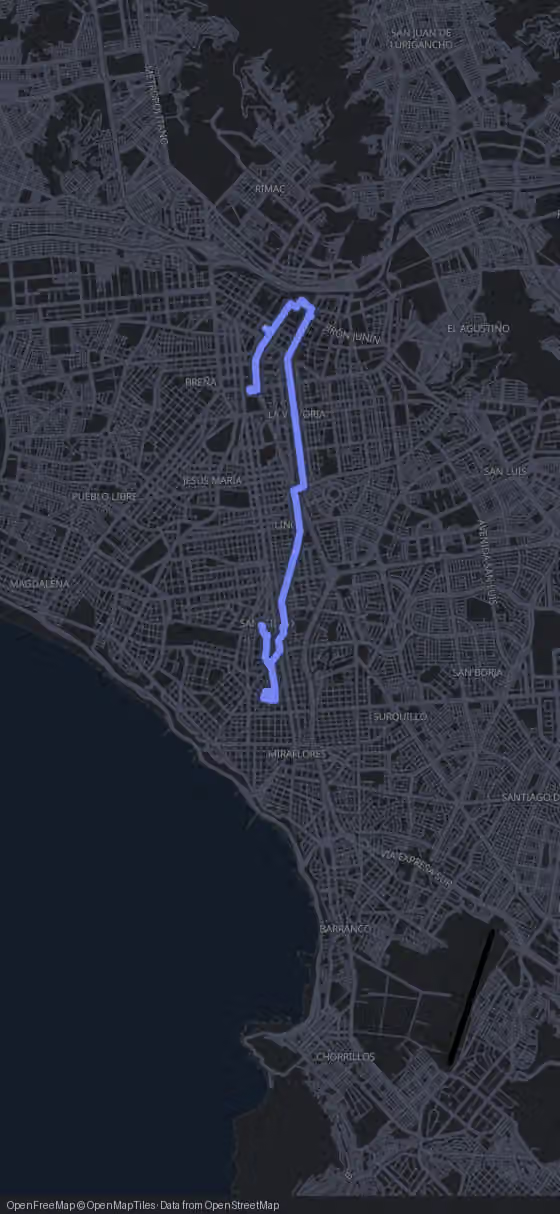
Is it worth going inside? If you only visit one museum in Lima and want to understand Peru's art from its earliest cultures onwards, yes; an hour gives you the highlights. Then walk 1,470 m, about 22 minutes, towards the old city, passing the Paseo de los Héroes Navales on the way to Jirón de la Unión.