Free Walking Tour Cusco: Sun Temple to San Pedro Market

Seven stops on 2.3 km, from the Inca sun temple of Qorikancha past the Twelve-Angled Stone to San Pedro Market, with a free GPS route in your browser.

7 Stops 2.3 km ~35 min walking
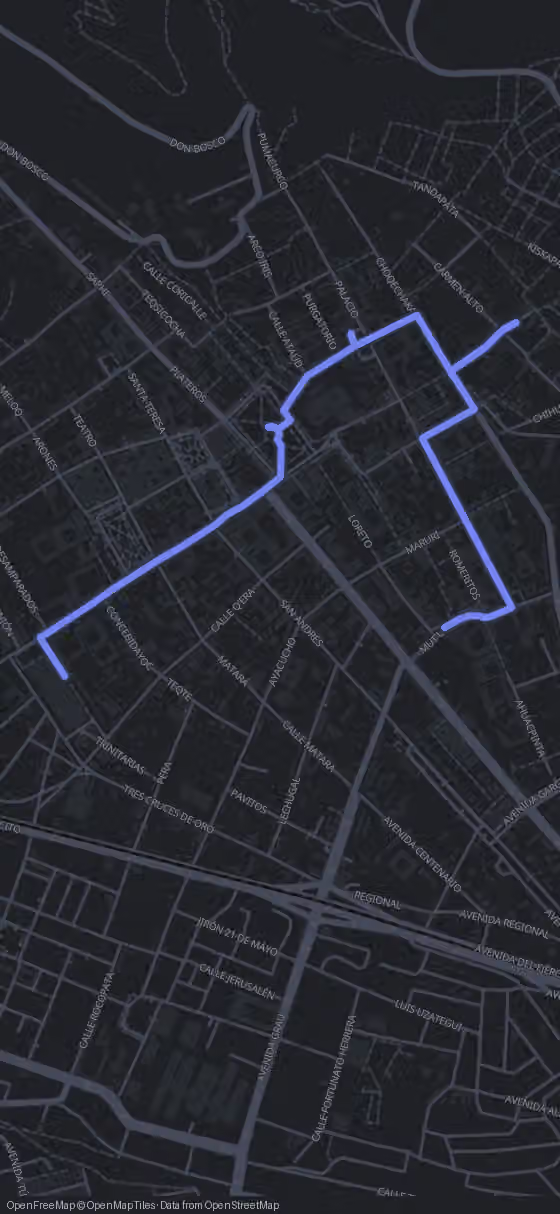
Route map for the Cusco walking tour
Stop 1 of 7
850 m·11 min
Qorikancha
Head north uphill toward San Blas Church
Hola, welcome to Cusco. I'm Alex, and this city's layered stonework has survived more than a change of rulers.
Try this tour with Alex

The Route at a Glance

Seven stops over 2.3 km, from Qorikancha via San Blas Church, the Twelve-Angled Stone, the Museum of Pre-Columbian Art, the Cathedral of Cusco and the Plaza de Armas to San Pedro Market. Pure walking time is 35 min; with the best interiors, plan about four and a half hours.

The stone, the plaza and the market cost nothing; the temple, the two churches and the museum charge admission. Route, map and GPS navigation are free in your browser, and the optional AI Tour Guide can lead the walk as a conversation.

Open free GPS & optional AI Tour Guide
This short shows highlights of the route. All 7 stops follow below.

The Route

Walking Map of Cusco: Sun Temple to Market

7 stops 2.3 km 35 min walking
Tap to load interactive map

The 7 stops along this route

  1. Qorikancha in Cusco, stop 1 on the self-guided walking tour
    1Qorikancha
  2. San Blas Church in Cusco, stop 2 on the self-guided walking tour
    2San Blas Church
  3. Twelve-Angled Stone in Cusco, stop 3 on the self-guided walking tour
    3Twelve-Angled Stone
  4. Museum of Pre-Columbian Art in Cusco, stop 4 on the self-guided walking tour
    4Museum of Pre-Columbian Art
  5. Cathedral of Cusco, stop 5 on the self-guided walking tour
    5Cathedral of Cusco
  6. Plaza de Armas in Cusco, stop 6 on the self-guided walking tour
    6Plaza de Armas
  7. San Pedro Market in Cusco, stop 7 on the self-guided walking tour
    7San Pedro Market
  8. That's the full route.

    Walk it with an AI Tour Guide talking you through every one of these streets.

    Start free in your browser
    You made it

Cusco Walking Tour: Seven Stops in Order

  1. 1

    Qorikancha

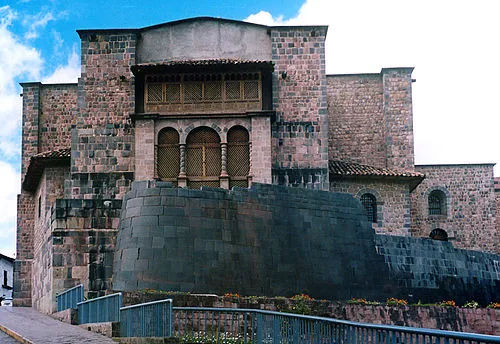
    Qorikancha in Cusco, stop 1 on the self-guided walking tour

    Start where the Inca Empire kept its most important temple. Qorikancha, Quechua for 'golden temple', was first called Intikancha or Intiwasi and belonged to Inti, the Sun god. The High Priest lived here and carried out the regular sacrifices and rites with a staff of other priests. What you see today is two worlds fused together: Inca walls of fitted stone, and resting on them the Church and Convent of Santo Domingo.

    Look closely at the masonry. The builders used ashlar, blocks of similar size cut and shaped by hand, and they rejected any stone with even a slight flaw or break. That made the temple far harder to build, and that was the point: the sheer labor showed how many workers the state could mobilize and direct. The same techniques were repeated across the Andes, a sign of how far Inca control reached.

    Pachakuti Inca Yupanqui rebuilt Cusco and this House of the Sun, added oracles and buildings and covered it with plates of fine gold. He also supplied gold and silver vessels for the Mama-cunas, cloistered women who wove and dyed wool for the temple and brewed chicha. After the 16th-century war with the Spanish conquistadors most of the complex was destroyed, and settlers carried off its stones for their own churches and houses. The church you see dates from the 17th century, built after the 1650 earthquake brought down the first Dominican convent.

    Go inside: nowhere on this walk shows more clearly how colonial Cusco was built on top of Inca Cusco, and the ticket is worth it. Allow about 45 minutes. From here it is 850 m, about 14 minutes on foot, to San Blas Church, passing the Casa de los cuatro bustos, a colonial house, on the way.
    Local name
    Coricancha
    Hours
    Mon–Sat 08:30–17:30, Sun 14:00–17:00
    Price
    15 PEN general, 8 PEN students (with valid student ID); children free
  2. 2

    San Blas Church

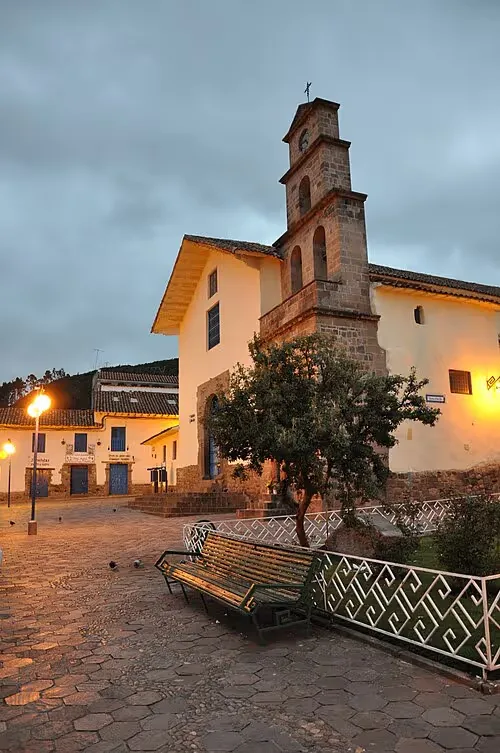
    San Blas Church in Cusco, stop 2 on the self-guided walking tour

    San Blas Church stands on the Plazoleta de San Blas, the heart of a neighborhood known today for its craft traditions. In Inca times this quarter was T'oqokachi, Quechua for 'salt hole'. On the orders of Viceroy Andrés Hurtado de Mendoza, the corregidor Juan Polo de Ondegardo founded one of the first five parishes for the Indigenous people of Cusco here, on ground called Arrayan-pata. Tradition says the church rose over an Inca shrine to Illapa, god of lightning and thunder; another account dates it to 1544, under Fray Juan Solano, the second bishop of Cusco.

    From outside it looks modest, and it is. The plan is a simple rectangle with adobe walls, partly reinforced with stone after the 1650 earthquake. There is no tower, only a bell gable with three tiers, and a side door opens straight onto the little square.

    The reason to buy a ticket is inside: the pulpit, carved from cedar and described as the most astonishing piece of Spanish Churrigueresque woodwork in the church's tradition. It is attributed to the Indigenous architect and sculptor Juan Tomás Tuyro Túpac, while Bishop Manuel de Mollinedo y Angulo paid for the work. If carved wood interests you even a little, the single ticket is worth it for this one piece; give it about 20 minutes.

    From the church it is 390 m, about 6 minutes, to the Twelve-Angled Stone on Hatun Rumiyoq street, where you swap colonial carving for Inca stone again.

    Hours
    Mon–Sat 08:00–18:00; Sun restricted/closed for religious services
    Price
    15 PEN individual ticket (adults), 7.50 PEN students; or 30 PEN Boleto del Circuito Religioso (adults), 15 PEN students
  3. 3

    Twelve-Angled Stone

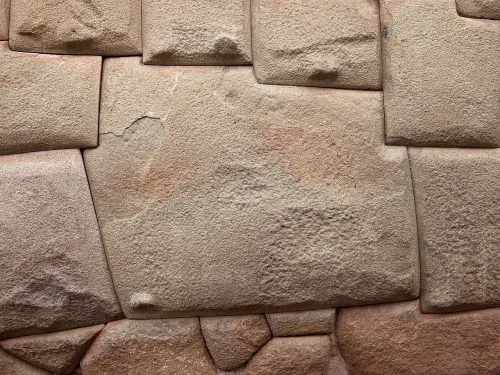
    Twelve-Angled Stone in Cusco, stop 3 on the self-guided walking tour

    On Hatun Rumiyoq street, set into a long wall, sits a single block of diorite with twelve corners, each one fitted so precisely against its neighbors that the joints show no asymmetry at all. The wall belongs to the seat of the Archbishop's Palace of Cusco, which was once the residence of Inca Roca, the sixth ruler of Cusco.

    Count the angles yourself; it takes a moment to find all twelve. The stone is listed as Cultural Heritage of the Nation of Peru, and visitors come constantly because it sums up Inca building knowledge in one glance. It is not unique: other Inca stones have as many corners or more. This is simply the one that became famous.

    Look at the surface, too. On 8 March 2014 someone painted on the block, and it could never be cleaned completely. Seeing it is free at any hour, so five minutes here cost you nothing but attention.

    The Museum of Pre-Columbian Art is only 40 m away, a one-minute walk.

    Local name
    Piedra de los doce ángulos
    Hours
    24/7
    Price
    Free
  4. 4

    Museum of Pre-Columbian Art

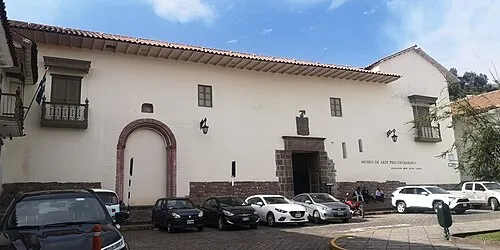
    Museum of Pre-Columbian Art in Cusco, stop 4 on the self-guided walking tour

    The Museum of Pre-Columbian Art, known by its Spanish initials MAP, sits on Plazoleta de las Nazarenas in the San Blas district. Its building carries the city's layers once more: first an Inca ceremonial courthouse, then bought in 1580 by the conquistador Alonso Díaz and rebuilt in colonial style as the mansion of Viceroy Hernandez de Cabrera, whose name it still bears. It passed through many hands, fell into ruin and was restored by Fundación BBVA before the museum reopened in June 2003, inaugurated by Peruvian President Alejandro Toledo.

    Inside, around 450 pieces from the collection of the Larco Museum in Lima cover the span from 1250 BC to AD 1532. Ten galleries are arranged by culture and material: Formative, Nasca, Mochica, Huari, Chancay and Chimu, Inca, Wood, Jewelry and Stone, Silver, and Gold and Metals.

    Begin with the Formative Gallery. Pieces from the Cupisnique, Salinar, Vicus, Viru and early Paracas cultures show the moment ceramic art took a leap, with naturalistic and symbolic forms, painting and sculpture, and incised decoration that Cupisnique artists developed to a high level.

    This is the stop for art lovers and for anyone who wants to see what came before the Inca whose walls you just passed. It charges entry and is worth about an hour. The Cathedral of Cusco is 180 m away, two minutes on foot, past the Casa del Almirante, a colonial mansion.

    Local name
    Museo de Arte Precolombino Cusco
    Hours
    Daily 08:00–22:00 (last admission 21:30)
    Price
    20 PEN general foreign adults, 10 PEN foreign students / Peruvian adults, 5 PEN Peruvian students; free for Cusco residents 09:00-16:00
  5. 5

    Cathedral of Cusco

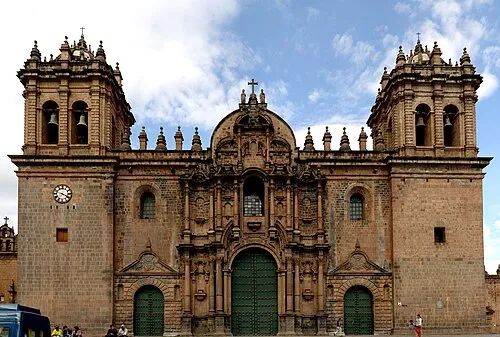
    Cathedral of Cusco, stop 5 on the self-guided walking tour

    The Cathedral of Cusco, formally the Cathedral Basilica of the Virgin of the Assumption, is the city's main church and the seat of the Archdiocese. Together with the Triunfo temple it forms the Cathedral Complex, covering 3,920 square meters on the Plaza de Armas, and it counts as the most important religious monument of the historic center.

    The ground beneath it was Inca ground. Here stood Kiswarkancha, the palace of Viracocha, the eighth Inca, who ruled around a century before the Spanish arrived, and beside it Suntur Wasi, an armory and heraldry center for the Inca royalty. The conquistadors decided to tear down the temple and raise their Christian cathedral on this prominent site.

    The city's own name reaches back further still. Its original form was Qusqu, used in Quechua but traced to Aymara, from the phrase qusqu wanka, 'rock of the owl', which ties into the founding myth of the Ayar siblings.

    The single ticket is the most expensive on this route; if you also want San Blas Church, the religious circuit ticket is the better buy. Plan an hour if you go in. From the door it is 110 m, about a minute, onto the Plaza de Armas.

    Hours
    Tourist visits daily, including holidays, 10:00–18:00
    Price
    40 PEN adult foreign tourists, 25 PEN adult Peruvian nationals, 20 PEN students; or 30 PEN Boleto del Circuito Religioso (covers Cathedral + 3 temples)
  6. 6

    Plaza de Armas

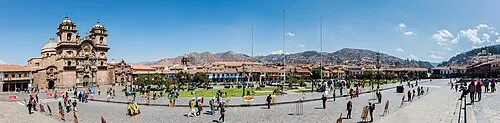
    Plaza de Armas in Cusco, stop 6 on the self-guided walking tour

    The Plaza de Armas has been Cusco's main public space since before the Spanish founding of the city in 1534. Geological studies show that a swamp lay here, crossed by the Saphy river, which today runs channeled and covered. The Incas drained it and turned it into the administrative, religious and cultural center of their capital, the stage for ceremonies and for celebrating the army's victories.

    After the conquest the new rulers made it a plaza and built churches and mansions on the ruins of Inca palaces. Two of the city's most important monuments face it: the cathedral you just left and the Church of the Compañía de Jesús. Today restaurants, jewelers and travel agencies fill the buildings around it.

    The square also holds a hard memory. In 1781 Túpac Amaru II was executed here, as were the cacique Bernardo Tambohuacso, Mateo Pumacahua and several other figures of Peru's independence. Since 1972 it has belonged to the Monumental Zone of Cusco, and since 1983 to the historic center listed by UNESCO as World Heritage.

    Take a quarter of an hour to look around; it costs nothing. Then it is 740 m, about 11 minutes, to San Pedro Market, past the Plaza San Francisco, the Arco de Santa Clara and the Convento de Santa Clara.

    Hours
    24/7
    Price
    Free
  7. 7

    San Pedro Market

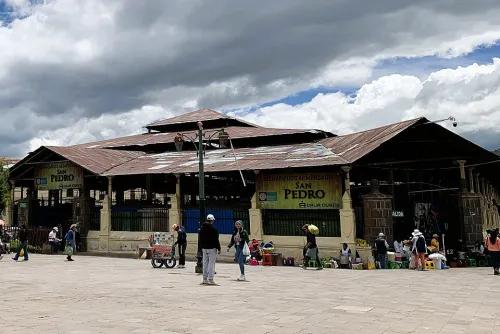
    San Pedro Market in Cusco, stop 7 on the self-guided walking tour

    San Pedro Market is the main and oldest food market in Cusco. It faces the Plazoleta San Pedro and Calle Santa Clara, a street whose course follows the old Inca road that ran from Huacaypata toward Contisuyo, linking the capital of Tawantinsuyo with that region.

    The building stands for Cusco's modernization in the 1920s. In the 1910s the city argued over where its market should go, since trading had moved between makeshift sites with poor hygiene; in 1917 the newspaper El Comercio del Cusco even ran a public survey on the location. Under mayor Manuel Silvestre Frisancho the market left the Plaza de Armas and the Plaza San Francisco for the San Pedro quarter, onto the 'pampa de Qasqaparo', land of the Convent of Santa Clara across from San Pedro Church. The reason was hygiene.

    It opened on 7 June 1925, yet construction was not finished until 1950. The paving came from the Rumiqolqa quarries, ordered by the city in December 1924 and laid by 16 January 1925.

    Entry is free, and half an hour in the aisles is a fitting end to the walk. If you want to return to Qorikancha, the GPS navigation leads you back.

    Local name
    Mercado Central de San Pedro
    Hours
    Mon–Sat 06:00–18:00, Sun 06:00–16:00
    Price
    Free (entry)
Walking tour route map of Cusco Route loaded
QorikanchaSan Blas ChurchTwelve-Angled StoneMuseum of Pre-Columbian Art+3
All 7 stops are already on the map.
You just press start.
AI Tour Guide

The route is in your head. Now walk it with a guide beside you.

Press start wherever you are, even hundreds of kilometres from Cusco, and the guide begins telling its stories right away. In the city, pick any of the 7 stops to start from: it leads you there, then talks with you the whole route, asking, listening, remembering, and shaping the tour around your answers.

7stops 2.3km 35 minwalking 13languages
▶Start the tour free

Free to start · Runs in your browser · No app, no download

Shorter Versions of the Route

Short on time? The route splits neatly into an Inca half and a city half.

Full route, sun temple to market

Stops: 1, 2, 3, 4, 5, 6, 7

For a first day in Cusco with half a day free: 35 minutes on foot, tickets for Qorikancha, San Blas Church, the museum and the cathedral, about four and a half hours in total.

Inca stonework and San Blas

Stops: 1, 2, 3

For travelers who care most about Inca masonry: 20 minutes on foot, tickets for Qorikancha and San Blas Church, the stone is free. About an hour and a half.

Museum, cathedral and market

Stops: 4, 5, 6, 7

For art and city life: 14 minutes on foot, tickets for the museum and the cathedral, while the plaza and the market are free. About three hours.

How Long the Cusco Tour Takes, Interiors Included

Pure walking time is 35 min. The longest leg is the first one, 850 m from Qorikancha to San Blas Church; after that the stone, the museum, the cathedral and the plaza follow each other within a couple of minutes, and the final walk to the market takes 11.

With the interiors that repay the time (45 minutes at Qorikancha, 20 at San Blas Church, an hour each in the museum and the cathedral) plus short looks at the stone, the plaza and the market, you need about four and a half hours. Start at 08:30 and you reach the cathedral shortly after 11:00, stand in the market around 12:30 and finish around 13:00.

Before You Set Off

  • Start: Qorikancha is the recommended start, but you can join at any stop; the suggested order runs from the sun temple to the market.
  • Finish: San Pedro Market. If you want to return, the GPS navigation leads you from the market back to Qorikancha.
  • Best day and time: Start in the morning at Qorikancha, around 08:30. Qorikancha and San Blas Church are both religious sites, so services can limit access; if you find one closed, see it from outside or shift the order.
  • Costs: The stone, the plaza and the market are free. If you go into everything, you need tickets for Qorikancha and the museum plus the Boleto del Circuito Religioso, which covers the cathedral and San Blas Church and costs less than separate tickets for the two churches.
Walking tour route map of Cusco
AI Tour Guide

Your Cusco guide is ready when you are.

Press start and a voice AI Tour Guide takes it from here: leading the route through Cusco, telling the stories, and turning your walk into a real back-and-forth conversation. No app or download is needed; it runs in your browser.

7stops 2.3km 35 minwalking 13languages
▶Start the tour free

Free to start · Runs in your browser · No app, no download

What the AI Tour Guide Adds in Cusco

On this route the AI Tour Guide leads the walk as a conversation: it greets you at Qorikancha, tells the stories of each place as you arrive, asks what you want more of and remembers whether you lean toward Inca engineering or colonial art. Ask how the masons cut blocks to fit without gaps, or what Túpac Amaru II's uprising was about, and it takes the conversation there. Route, map and GPS navigation stay free; the guide starts with 100 free credits, then costs €19.99 for this tour with no time limit, or €5 per hour.

A Real Conversation A voice AI Tour Guide greets you, leads the whole route, and tells the stories and facts as you walk, asking what you want to see and keeping a real conversation going. Not a recording you press play on.
Map Navigation Follow the route on the map and walk at your own pace. You choose where to start and when to move to the next stop.
Ask Anything Curious about a building you pass? Ask your AI Tour Guide on the spot and the conversation carries on.
13 Languages Switch language anytime. No separate tour needed.
Start free in your browser

Common Questions About Walking Cusco

Can I skip the Museum of Pre-Columbian Art and come back later?

Yes. It is close to the cathedral, so it is easy to return to later in the day.

Are there discounts for students and children along the route?

Yes. Students with a valid ID pay less at Qorikancha, San Blas Church, the cathedral and with the religious circuit ticket, foreign students get a reduced rate at the museum, and children go free at Qorikancha.

Does the walk fit around a trip to Aguas Calientes?

The full route takes about half a day, so it fits a free morning before or after the trip to Aguas Calientes, which has its own walking route.

Where else in the region can I walk a route like this?

Arequipa and Puno have their own routes in Peru, and across the border so do Copacabana and La Paz.

Is the tour really free?

Yes. The whole tour is free: the route, the interactive map and the navigation cost you nothing. Only the voice AI Tour Guide is optional and paid: you test it with 100 free credits, then you pay either €5 per hour or €19.99 for this whole tour, with no time limit. Admission to 4 of the 7 stops is not included: Qorikancha, San Blas Church, Museum of Pre-Columbian Art and Cathedral of Cusco charge their own entry fees.

Do I need to download an app?

No. Everything runs in your phone browser. Open the route and start walking, no download and no sign-up required.

Do I need to book the walking tour in advance?

No booking needed. This self-guided tour is available anytime. Open the route in your browser and start walking. The AI Tour Guide works instantly, no app, no reservation required.

What languages is the AI Tour Guide available in?

The AI Tour Guide speaks 13 languages, so you take the tour in your own language and can switch at any time.

Can I skip stops or change the route?

Yes. Skip any stop, spend extra time at places you like, or start the route from any point. It is your walk, you set the pace.
Image credits
▶ Start free in your browser Runs in your browser, no app, no download