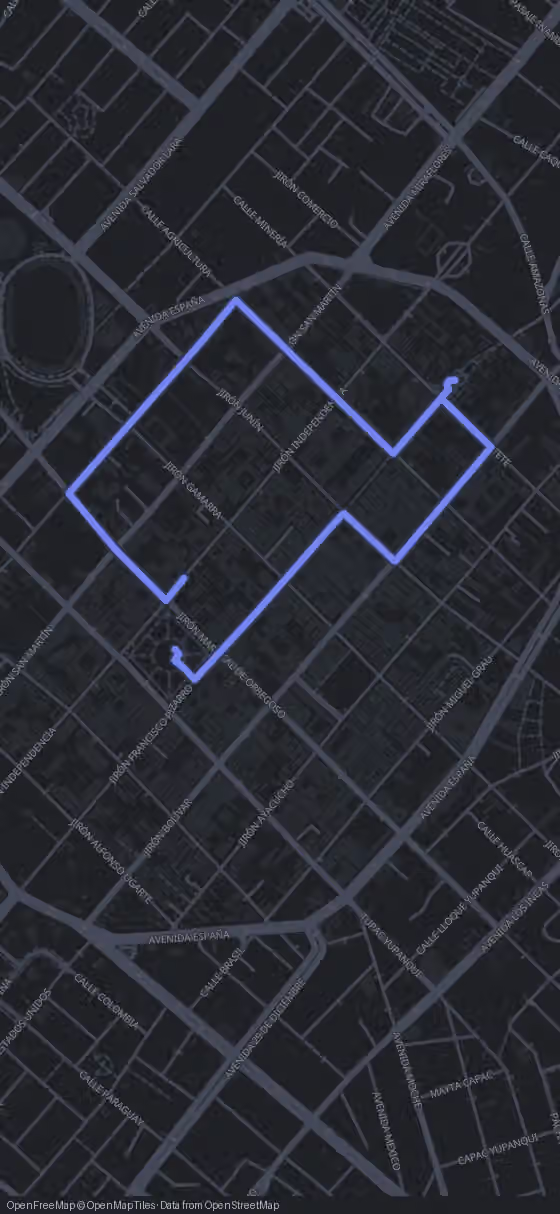


Plaza de Armas de Trujillo
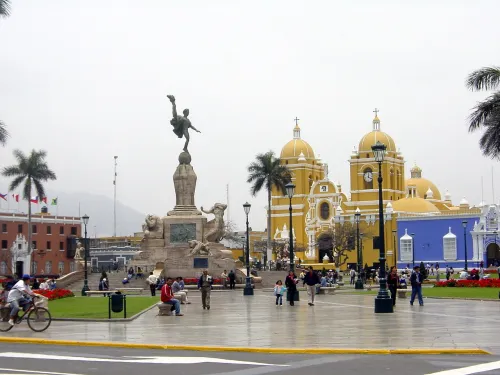
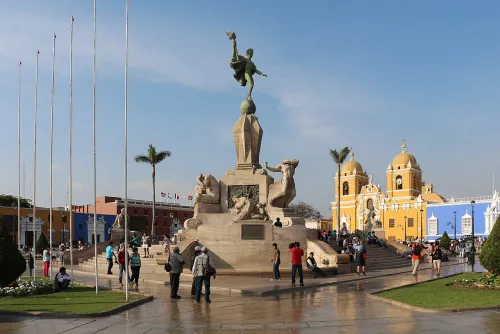
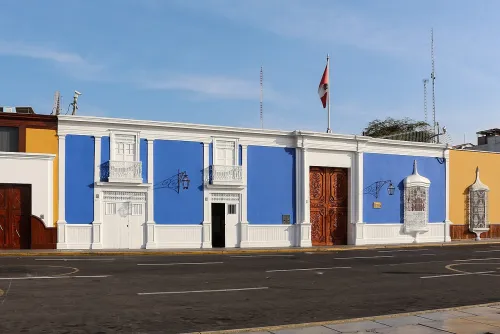
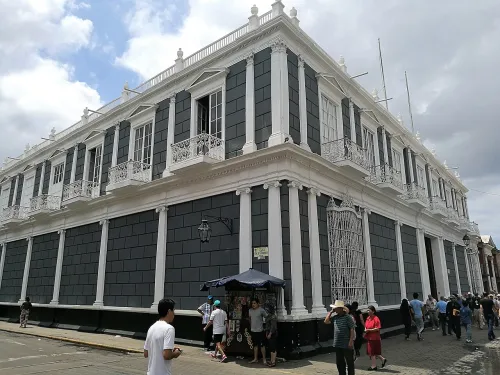
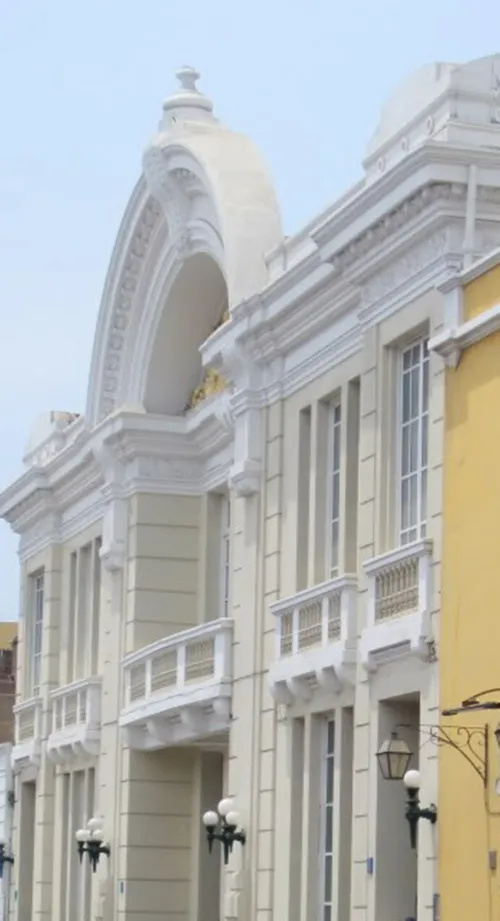
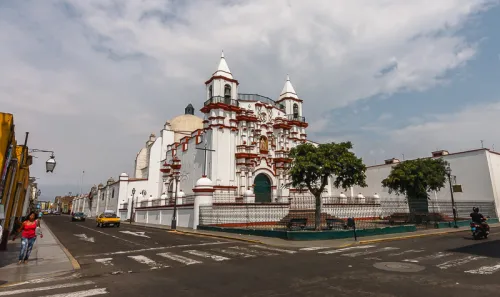
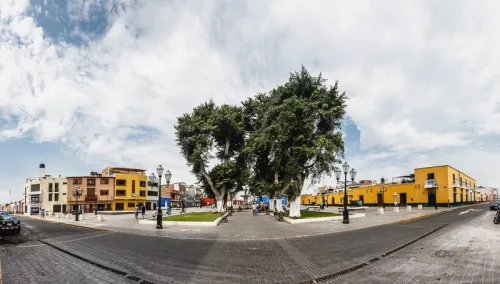
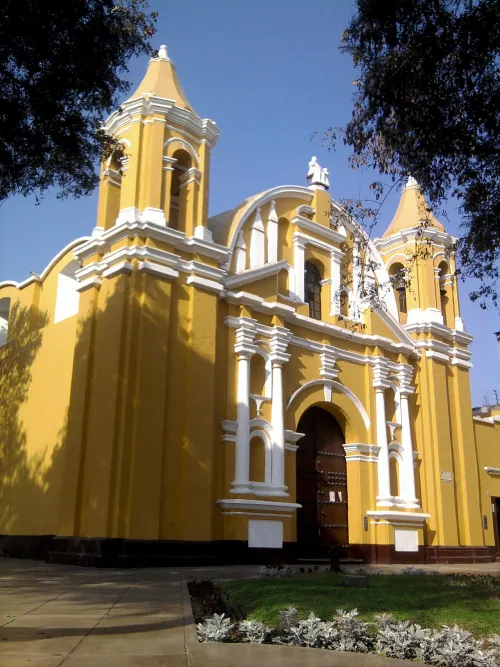
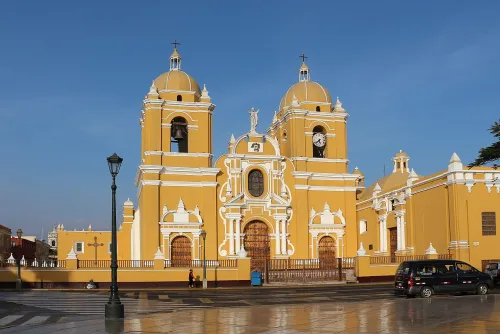
Start where Trujillo itself started. At the end of 1534, on orders from Diego de Almagro, Martín de Estete began laying out the town's streets, and he fixed the shape and the size of this square. Four streets frame it today: Pizarro, Independencia, Orbegoso and Almagro. Turn slowly and you'll see what the square was built to hold: the Municipal Palace, the cathedral where this walk ends, and mansions from both the Spanish colonial and the republican eras.
This is also where Trujillo broke with Spain. On 29 December 1820 the Marquis of Torre Tagle proclaimed the city's independence here, and through the republican years the square remained the stage on which the city's history played out. Keep that date in mind; you'll meet it again in bronze within a minute.
The square has changed its furniture over time. In 1841 Pedro de Mandalengoitia Sanz de Zárate gave it a fountain of white stone, made on his own estate and mill in Santa Cruz de Carabamba. A marble fountain that once stood here was later moved to Plazuela El Recreo, which you'll reach further along the walk.
The square is free and open to everyone. Walk 30 meters, about a minute, into its center to the monument that has stood there since 1929.