

Lucca Cathedral (Duomo di San Martino)
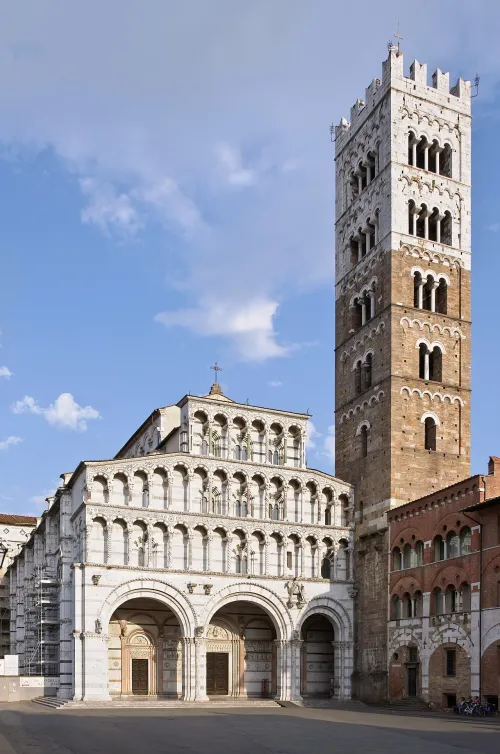
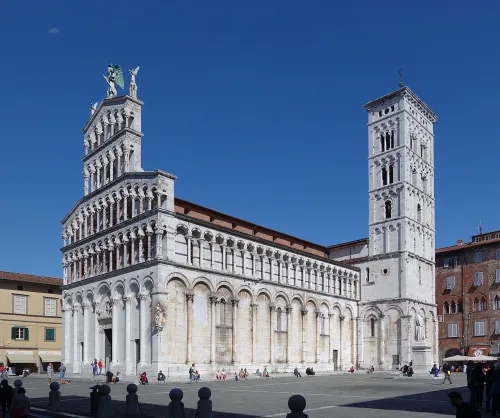
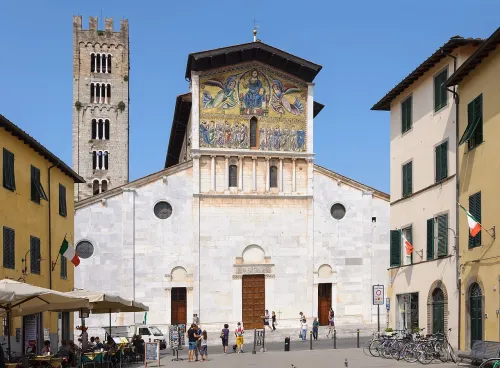
Stand back in the square and take in the west front: a vast portico of three arches, and above it three ranges of open galleries crowded with sculpture. Guido Bigarelli of Como began this façade in 1204. The tall bell tower beside it and the great apse with its columned arcades are what survive of the original building; the nave and transepts were rebuilt in Gothic style in the 14th century.
A church stood here as early as the 6th century, and early in the 8th century the bishop's seat moved to this spot. The cathedral you see was begun in 1060 by Bishop Anselm, who later became Pope Alexander II and came back to consecrate it in 1070. Its chapter of canons was a powerful body: in 1225 they chose their bishop, a canon named Riccardus, by drawing lots, and Pope Honorius III confirmed him despite his displeasure at the method.
Inside, look for the small octagonal chapel in the nave. It holds the Holy Face of Lucca, the city's most precious relic, a crucifix that legend says was carved by a contemporary of Jesus and reached this church through a chain of miracles in 782. The chapel itself was built in 1484 by Matteo Civitali, the most famous Luccese sculptor of the early Renaissance, a name you'll meet again at the next stop.
Is it worth going in? Yes, if only for the Holy Face. The cathedral charges admission on its own, and if you have a relaxed morning, the combi ticket adds the bell tower, the museum and the church of SS. Giovanni e Reparata.
From here it's 260 m and 4 minutes to Piazza San Michele, passing the little Piazzetta del Libro on the way.