Free Walking Tour Seattle: Space Needle to Pioneer Square

From the 1962 World's Fair grounds to the waterfront, the fish stalls of Pike Place and the brick blocks rebuilt after the fire of 1889.

7 Stops 4.1 km ~1 h walking
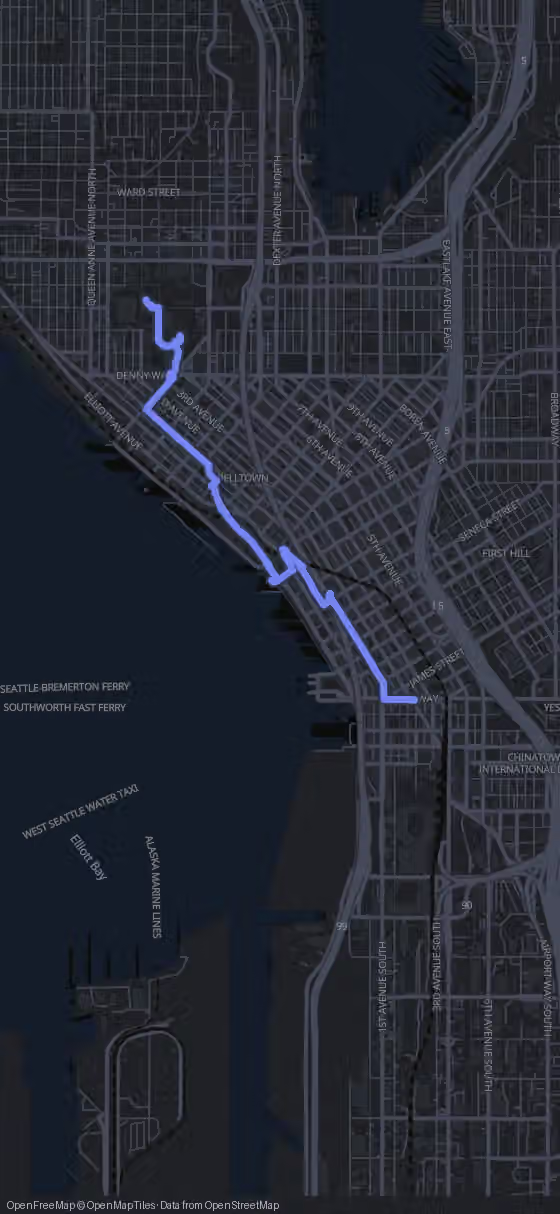
Route map for the Seattle walking tour
Stop 1 of 7
500 m·6 min
Seattle Center
Head south-east toward Chihuly Garden and Glass
Welcome to Seattle. I'm Alex, and our first story begins with a wall that refused to stay clean.
Try this tour with Alex

This Seattle Route at a Glance

Seven stops lead from Seattle Center past Chihuly Garden and Glass and the Seattle Aquarium to Pike Place Market, the Gum Wall, the Seattle Art Museum and Pioneer Square. The route covers 4.1 km with 1 h of pure walking: about three hours with time to look around, close to seven with all three paid interiors.

The grounds of Seattle Center, the market, the Gum Wall and Pioneer Square are free; Chihuly, the aquarium and the art museum charge admission. The GPS route runs free in your browser, and the AI Tour Guide is an optional companion.

Open free GPS & optional AI Tour Guide
View of Seattle

The Route

Walking Map of Seattle from the Fairgrounds to Pioneer Square

7 stops 4.1 km 1 h walking
Tap to load interactive map

The 7 stops along this route

  1. Seattle Center, stop 1 on the self-guided walking tour
    1Seattle Center
  2. Chihuly Garden and Glass in Seattle, stop 2 on the self-guided walking tour
    2Chihuly Garden and Glass
  3. Seattle Aquarium, stop 3 on the self-guided walking tour
    3Seattle Aquarium
  4. Pike Place Market in Seattle, stop 4 on the self-guided walking tour
    4Pike Place Market
  5. Gum Wall in Seattle, stop 5 on the self-guided walking tour
    5Gum Wall
  6. Seattle Art Museum, stop 6 on the self-guided walking tour
    6Seattle Art Museum
  7. Pioneer Square in Seattle, stop 7 on the self-guided walking tour
    7Pioneer Square
  8. That's the full route.

    Walk it with an AI Tour Guide talking you through every one of these streets.

    Start free in your browser
    You made it

Stop by Stop: Your Seattle Walking Tour from World's Fair to First Settlement

  1. 1

    Seattle Center

    Seattle Center, stop 1 on the self-guided walking tour

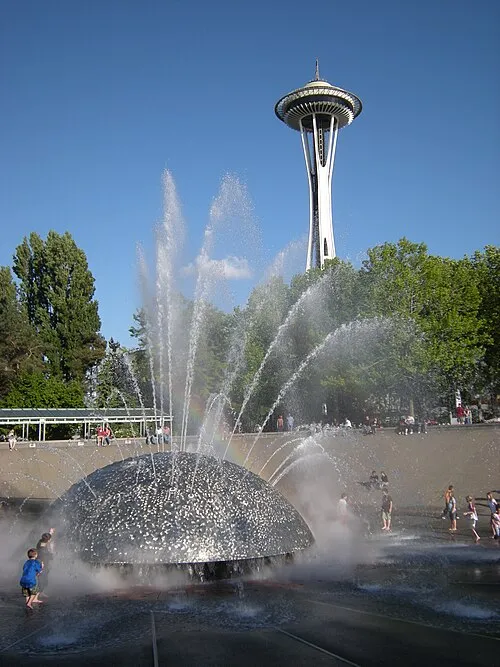
    Start where Seattle once staged its future. The Seattle Center campus was built for the 1962 World's Fair, and its landmark still rises above everything: the Space Needle, 605 feet (184 m) tall, an official city landmark and the shape people around the world recognize in Seattle's skyline. Around it stand the Pacific Science Center, Climate Pledge Arena, the Museum of Pop Culture (MoPOP) and McCaw Hall, home of Seattle Opera and Pacific Northwest Ballet. Walking the grounds is free; each attraction charges its own admission.

    The land came with a promise. In 1886 Seattle founder David Denny donated the tract on the condition that it stay in “public use forever”. In 1928 mayor Bertha Knight Landes dedicated a new arena and auditorium here as the Civic Center, and the Seattle Field Artillery Armory followed in 1939. When the Civic Auditorium was chosen as the site of the World's Fair in 1958, demolition began after a countdown ceremony set off by President Dwight D. Eisenhower.

    Look for the International Fountain, designed by the Japanese architects Hideki Shimizu and Kazuyuki Matsushita, and for the monorail built by Alweg, which still runs between Seattle Center and Westlake Center downtown and counts as an attraction in its own right. President John F. Kennedy opened the fair on April 21, 1962. Over six months it drew astronaut John Glenn, Robert F. Kennedy and Elvis Presley, who arrived that September to shoot It Happened at the World's Fair. On June 1, 1963 the city took the complex back and has run it ever since as its home for performing arts and sports.

    Chihuly Garden and Glass sits right beside the Space Needle, a 500 m stroll of about 7 minutes across the grounds.
    Hours
    Daily 07:00–24:00
    Price
    Free (campus grounds; individual attractions charge separate admission)
  2. 2

    Chihuly Garden and Glass

    Chihuly Garden and Glass in Seattle, stop 2 on the self-guided walking tour

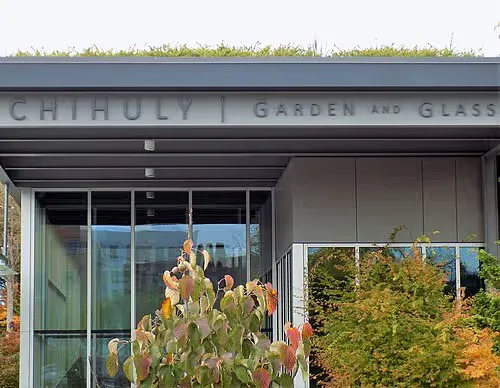
    Here the studio glass of Dale Chihuly fills a garden, a glasshouse and a set of galleries. The 1.5 hectare site once held the Fun Forest amusement park. The heart of it is the glasshouse, with a suspended installation 100 feet (about 30 m) long, one of the largest hanging sculptures Chihuly has made.

    The idea came from the Space Needle's own family. The Needle is owned and run by the Wrights, the children of Howard S. Wright II, who built it. Looking for a way to bring new life to Seattle Center, they invited Chihuly to show a large body of his work. Together with Center Art he planned the site: turn the existing building into an exhibition hall, add gardens, and design a glasshouse as the centerpiece. Chihuly picked existing works and designed new sculptures for the place; installation began in the garden in March 2012 and then moved into the glasshouse and galleries. The building by architect Owen Richards earned LEED Silver certification at the end of 2012.

    Don't skip the bar. It is the only place in the world where more than 25 of Dale Chihuly's personal pieces are spread through a single room. The complex also has a 50-seat theater and a lecture room, and since 2019 it has hosted Refract: The Seattle Glass Experience, a free festival that brings together artists, collectors and glass from the Puget Sound region.

    Is it worth the ticket? If color, light and craft speak to you, yes: of the paid attractions on the fairgrounds, this is the one tied most closely to Seattle's own art scene. Then comes the longest leg of the day: 1,910 m, about 26 minutes, down to the waterfront.

    Hours
    Mon–Thu 10:30–17:30, Fri–Sat 10:00–19:30, Sun 10:00–18:30
    Price
    $35.00-$45.00 adult (regular 13-64), $30.00-$40.00 senior (65+) & youth (5-12), free for children 4 and under
  3. 3

    Seattle Aquarium

    Seattle Aquarium, stop 3 on the self-guided walking tour

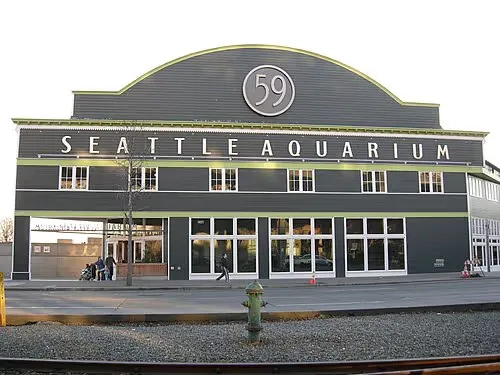
    The Seattle Aquarium stands on Piers 59 and 60 on the Elliott Bay waterfront. It is made up of three buildings: the two originals hold six major exhibits, and the Ocean Pavilion, opened in August 2024, is devoted to the ecosystem of the Coral Triangle. The aquarium is accredited by the Association of Zoos and Aquariums and runs education and conservation programs.

    Getting it built took patience. Voters backed a city aquarium, to replace a private one, in the 1968 Forward Thrust ballot. In April 1971 the City Council chose a site near Golden Gardens Park in Ballard, then reversed itself months later after a public outcry. The following year the north side of Pier 59 won out, which meant demolishing more piers. Design revisions delayed the start, and only in early 1975 were piles driven into the seabed to carry the building. It was part of a larger makeover of the Alaskan Way promenade that also brought Waterfront Park and viewpoints.

    The doors opened on May 20, 1977, and 1,524 visitors came on the first day. The celebrations included releasing salmon fingerlings into Elliott Bay and a three-day festival on the waterfront. Local scientists helped shape the exhibits, among them Dixy Lee Ray, director of the Pacific Science Center and later governor.

    Go inside if you're traveling with children or if marine life and the coral reefs of the Ocean Pavilion draw you; admission is charged. Pike Place Market is only 320 m away, about 6 minutes on foot.

    Hours
    Daily 09:30–18:00 (last entry 17:00)
    Price
    $49.95 adult, $39.95 youth (ages 4-12), free child (ages 3 and under)
  4. 4

    Pike Place Market

    Pike Place Market in Seattle, stop 4 on the self-guided walking tour

    Pike Place Market opened on August 17, 1907, and is one of the older public farmers' markets in the United States still running without a break. It overlooks the Elliott Bay waterfront and takes its name from its central street, Pike Place, which runs from Pike Street to Virginia Street on the western edge of downtown. With more than 20 million visitors a year, it is Seattle's most popular tourist destination, and walking through costs nothing.

    On the upper street level you'll find fishmongers, produce stands and craft stalls under covered arcades. Local farmers and craftspeople rent their tables from the Market day by day, true to its founding idea, “Meet the Producer”: you buy from the person who grew or made what's on the table.

    The Market is built on the edge of a steep hill, so several lower levels sit below the main floor. That's where the surprises hide: antique dealers, comic book and collectible shops, small family-owned restaurants and one of the oldest head shops in Seattle. Nearly 500 people live here too, in eight buildings spread through the Market, many of them low-income housing in the past. The whole district is run by a quasi-governmental body, the Pike Place Market Preservation and Development Authority.

    The stalls trade in the daytime, while the restaurants stay open into the evening. The Gum Wall is 240 m away, about 4 minutes, in Post Alley beneath the Market.

    Hours
    Daily 09:00–19:00 (market stalls active 10:00–17:00; restaurants open until late; closed Thanksgiving and Christmas Day)
    Price
    Free (public market district)
  5. 5

    Gum Wall

    Gum Wall in Seattle, stop 5 on the self-guided walking tour

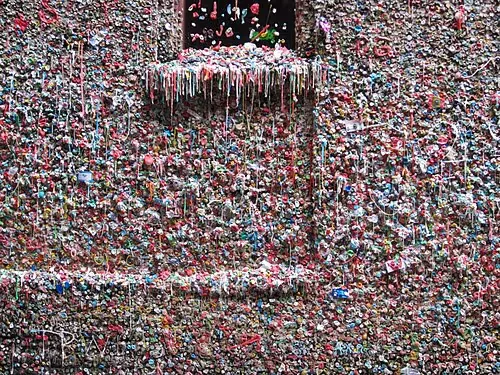
    In Post Alley near Pike Street, south of the Market's main entrance off 1st Avenue, a brick wall is covered in used chewing gum. As of 2024 the coating stretches 54 feet (16 m) long and 8 feet (2.4 m) high, with an estimated 180 pieces per brick. Look closely: some people arrange their gum into small works of art.

    It started by accident. The wall belongs to the Market Theater, a small venue for comedy and other shows, and after Unexpected Productions' Theatresports moved in in 1991, theatergoers began sticking their gum on the wall with pennies pressed into it. The coins were later removed, but the gum stayed through several cleanings ordered by the Market's authority. Around 1999 officials gave in and accepted the wall as a tourist attraction. By the late 2000s it ran 50 feet long, with pieces as high as 20 feet.

    On November 3, 2015, the Market announced the first full cleaning in 20 years, because the sugar in the gum was eating into the bricks. The wall was steam-cleaned, and officials launched a photo contest so fans could share their memories of it online. Since then it has been cleaned regularly, and it keeps growing back.

    It's free, and a few minutes are enough unless you want photos. The Seattle Art Museum is 290 m on, about 5 minutes.

    Hours
    24/7
    Price
    Free
  6. 6

    Seattle Art Museum

    Seattle Art Museum, stop 6 on the self-guided walking tour

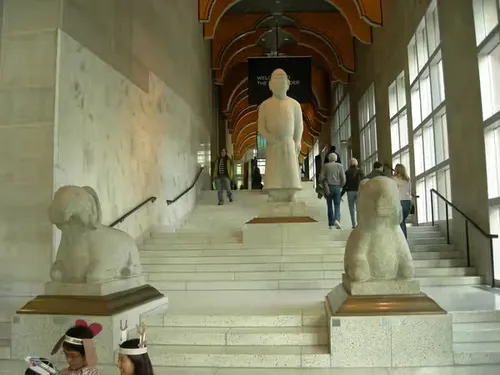
    The Seattle Art Museum, known simply as SAM, runs three sites: this main museum downtown, the Seattle Asian Art Museum in Volunteer Park on Capitol Hill, and the Olympic Sculpture Park on the central waterfront, opened in 2007. The collection grew from 1,926 pieces in 1933 to nearly 25,000 by 2008.

    Its roots go back to two groups, the Seattle Fine Arts Society, founded in 1905, and the Washington Arts Association of 1906, which merged in 1917. In 1931 the society renamed itself the Art Institute of Seattle and kept its collection in Henry House on Capitol Hill, the former home of collector Horace C. Henry. That same year, in the depths of the Great Depression, Richard E. Fuller and his mother Margaret MacTavish Fuller paid for a real museum in Volunteer Park. The city provided the land, Carl F. Gould of Bebb and Gould designed an Art Deco/Art Moderne building, and the museum opened on June 23, 1933.

    Fuller is the person to remember here. He was the driving force of SAM's early years, he and his mother soon added works of their own to the collection, and he served as director into the 1970s without ever taking a salary.

    Go in if art is one of the reasons you travel; admission is charged, and it pays to check the museum's opening days before you build your day around it. If you're short on time, keep walking: Pioneer Square is 870 m away, about 13 minutes.

    Hours
    Wed 10:00–17:00, Thu 10:00–20:00, Fri–Sun 10:00–17:00, Mon–Tue closed
    Price
    $32.99 adult, $29.99 senior (65+), $24.99 student (with ID), free for children 14 and under
  7. 7

    Pioneer Square

    Pioneer Square in Seattle, stop 7 on the self-guided walking tour

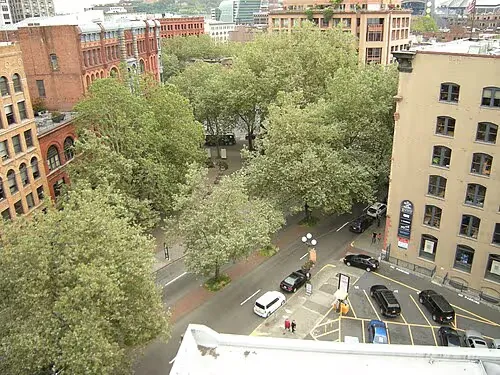
    This is where Seattle began. The founders settled here in 1852, after a brief six-month stay at Alki Point on the far side of Elliott Bay. The neighborhood takes its name from a small triangular plaza near the corner of First Avenue and Yesler Way, originally called Pioneer Place.

    Most of what you see is a rebuild. The early town was largely wooden, and nearly all of it burned in the Great Seattle Fire of 1889. By the end of 1890 dozens of brick and stone buildings had gone up in its place, mostly in the Richardsonian Romanesque style, and they still give the streets their character. The plaza and several surrounding blocks form the Pioneer Square, Skid Road Historic District, listed on the National Register of Historic Places; in places it reaches beyond the neighborhood to include Union Station.

    Watch the street grid as you walk. Yesler Way marks the line between two different plats, so the streets north of it don't line up with the rest of the neighborhood, nor with the compass, and the district's northern edge zigzags across several streets.

    The walk ends here, free to explore at your own pace. You started on the fairgrounds of 1962 and finish on the ground of 1852. If Portland is next on your trip, a free walking route is waiting there too.

    Hours
    24/7
    Price
    Free
Walking tour route map of Seattle Route loaded
Seattle CenterChihuly Garden and GlassSeattle AquariumPike Place Market+3
All 7 stops are already on the map.
You just press start.
AI Tour Guide

You know the way now. Walk it with a guide in your ear.

Press start wherever you are, even hundreds of kilometres from Seattle, and the guide begins telling its stories right away. In the city, pick any of the 7 stops to start from: it leads you there, then talks with you the whole route, asking, listening, remembering, and shaping the tour around your answers.

7stops 4.1km 1 hwalking 13languages
▶Start the tour free

Free to start · Runs in your browser · No app, no download

Shorter Ways to Walk Seattle

Not every day has room for seven stops and three interiors. These versions keep the logic of the route and fit a tighter schedule.

The free outdoor walk

Stops: 1, 2, 3, 4, 5, 6, 7

For anyone who wants the whole story without tickets. You walk the full route, about 1 h on foot, and see Chihuly, the aquarium and the art museum from outside only. With time at the market, the Gum Wall and Pioneer Square, plan about three hours, and no admission at all.

Waterfront and downtown

Stops: 3, 4, 5, 6, 7

For a half day without the long first leg. Start at the Seattle Aquarium and walk 1.7 km, about 28 minutes on foot, through the market and the Gum Wall to the art museum and Pioneer Square. The aquarium and SAM charge admission; with both, count on about five hours.

Seattle Center and glass

Stops: 1, 2

For art lovers with a morning to spare. Only 500 m and 7 minutes separate the fairgrounds from Chihuly's glasshouse. Chihuly is the one ticket here; about an hour and a half covers both.

How Long Does This Seattle Tour Take with Glass, Fish and Art?

The pure walking time is 1 h over 4.1 km, and almost half of it falls on a single leg: the 26 minutes from Chihuly Garden and Glass down to the Seattle Aquarium. After that the stops sit close together, with 6, 4 and 5 minutes between aquarium, market, Gum Wall and art museum, then a final 13 minutes to Pioneer Square.

Allow about 20 minutes on the Seattle Center grounds, 45 at the market, 10 at the Gum Wall and half an hour in Pioneer Square. Add roughly an hour inside Chihuly and an hour and a half each in the aquarium and SAM, and the full day reaches close to seven hours. Pick one interior and you are done in about four.

Before You Set Off from Seattle Center

  • Start: Seattle Center, beside the Space Needle, is the recommended start. You can join the route at any stop.
  • Finish: Pioneer Square, where Seattle's founders settled in 1852.
  • Time of day: Start in the morning if you want the interiors, and reach Pike Place Market while its stalls are trading in the daytime.
  • Tickets: Only Chihuly Garden and Glass, the Seattle Aquarium and the Seattle Art Museum charge admission; buy them as you go.
Walking tour route map of Seattle
AI Tour Guide

Your guide is waiting at Seattle Center whenever you are

Press start and a voice AI Tour Guide takes it from here: leading the route through Seattle, telling the stories, and turning your walk into a real back-and-forth conversation. No app or download is needed; it runs in your browser.

7stops 4.1km 1 hwalking 13languages
▶Start the tour free

Free to start · Runs in your browser · No app, no download

What the AI Tour Guide Adds Between Fairground and Waterfront

This route ties two Seattles together: the city that showed off its future in 1962 and the town that burned and rebuilt itself in 1889. The AI Tour Guide walks you through both as a conversation. It greets you at Seattle Center, tells the stories of each place, asks what you care about and remembers it: if Chihuly's glass grabs you, it can go into how such pieces are made; if the waterfront interests you more, it follows that thread. Interrupt it whenever you like. It's optional: 100 free credits to start, then this tour all-inclusive for €19.99 with no time limit, or €5 per hour.

A Real Conversation A voice AI Tour Guide greets you, leads the whole route, and tells the stories and facts as you walk, asking what you want to see and keeping a real conversation going. Not a recording you press play on.
Map Navigation Follow the route on the map and walk at your own pace. You choose where to start and when to move to the next stop.
Ask Anything Curious about a building you pass? Ask your AI Tour Guide on the spot and the conversation carries on.
13 Languages Switch language anytime. No separate tour needed.
Start free in your browser

Common Questions About Walking Seattle

Can I go up the Space Needle on this walk?

The walk starts on the Seattle Center grounds right by the Needle, but going up is a separate attraction with its own admission. Add the time to your morning if you want it.

Which paid stop should I choose if I only have time for one?

Chihuly Garden and Glass if color and craft move you, the Seattle Aquarium if you travel with children or love marine life, the Seattle Art Museum if a broad art collection is your thing.

Is this walk good with children?

Yes. The legs are short except the 26 minutes from Chihuly to the waterfront, and the aquarium, Chihuly and SAM all let small children in free, with the age limits set by each venue.

Am I allowed to add gum to the Gum Wall?

The Market has accepted the wall as an attraction since around 1999, so people still add gum. It is cleaned regularly, and gum stuck in prohibited spots gets removed.

Is the tour really free?

Yes. The whole tour is free: the route, the interactive map and the navigation cost you nothing. Only the voice AI Tour Guide is optional and paid: you test it with 100 free credits, then you pay either €5 per hour or €19.99 for this whole tour, with no time limit. Admission to 3 of the 7 stops is not included: Chihuly Garden and Glass, Seattle Aquarium and Seattle Art Museum charge their own entry fees.

Do I need to download an app?

No. Everything runs in your phone browser. Open the route and start walking, no download and no sign-up required.

Do I need to book the walking tour in advance?

No booking needed. This self-guided tour is available anytime. Open the route in your browser and start walking. The AI Tour Guide works instantly, no app, no reservation required.

What languages is the AI Tour Guide available in?

The AI Tour Guide speaks 13 languages, so you take the tour in your own language and can switch at any time.

Can I skip stops or change the route?

Yes. Skip any stop, spend extra time at places you like, or start the route from any point. It is your walk, you set the pace.
Image credits
▶ Start free in your browser Runs in your browser, no app, no download