

Cathédrale Notre-Dame de Sion
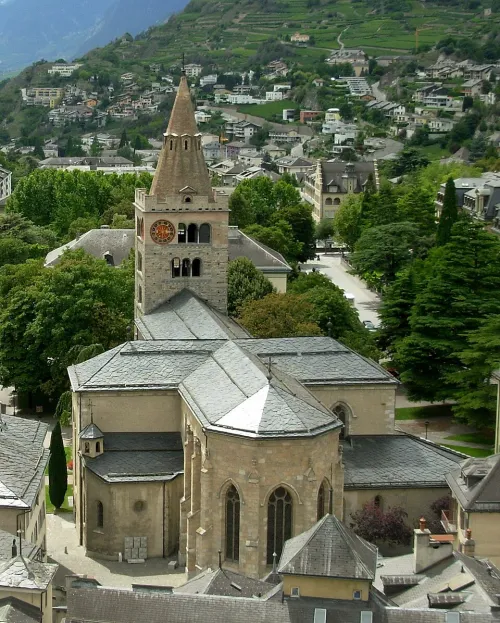
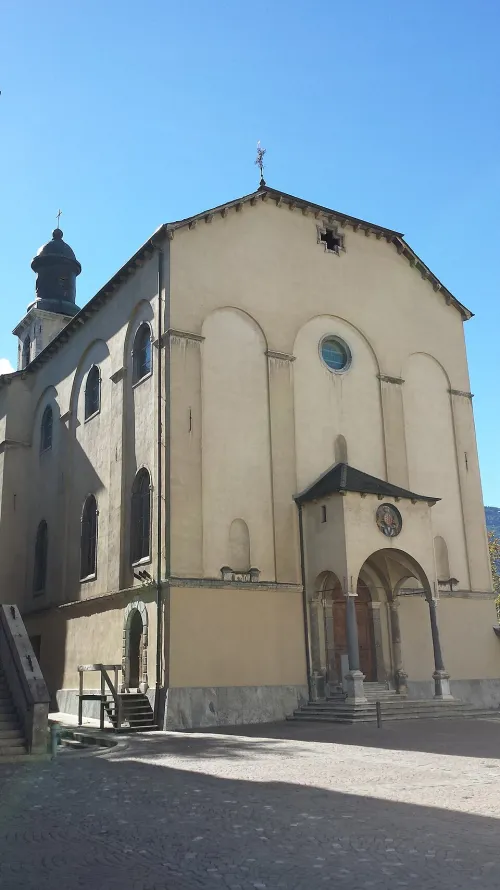
Start where Sion's bishops have held their cathedral for more than a thousand years. The first thing you notice is the tower: massive, Romanesque, topped with a conical spire, it dominates the townscape, and its core has stood since around 1200. Before you go in, look at the portal tympanum. The fresco there, painted in the manner of the northern Italian Trecento, shows the Mother of God between two holy bishops, with the donors who paid for it alongside them.
The bishopric moved here from Martigny, the Roman Octodurum, at the end of the 6th century. Where Sion's first cathedral stood, nobody knows. The first church on this spot was Carolingian, built around 800 and destroyed by fire in 1010. A Romanesque cathedral followed and lasted with few changes into the 15th century, when fires and wars had damaged it so badly that the nave was rebuilt in Gothic style between 1450 and 1500. Four bishops saw the work through, among them Cardinal Matthäus Schiner and Walter Supersaxo, whose family name you'll meet again two minutes from here. The choir was lengthened by two bays as late as 1947/48.
Going in is free, and it's worth twenty minutes. You're in a three-aisled basilica with a transept and a long choir. Head for the late Gothic altar triptych showing the Tree of Jesse, the most important piece of the furnishings. The organ is modern, built in 1988 by Hans Füglister.
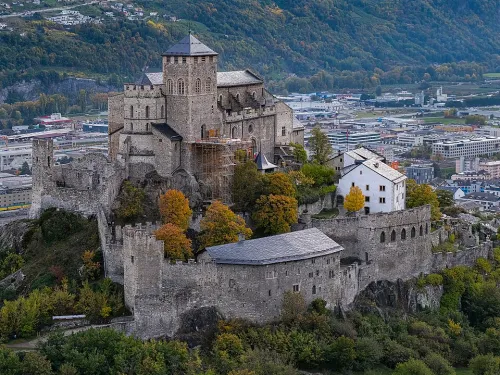
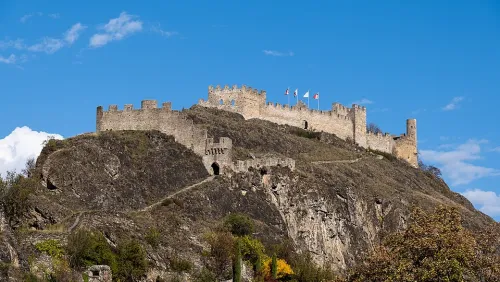
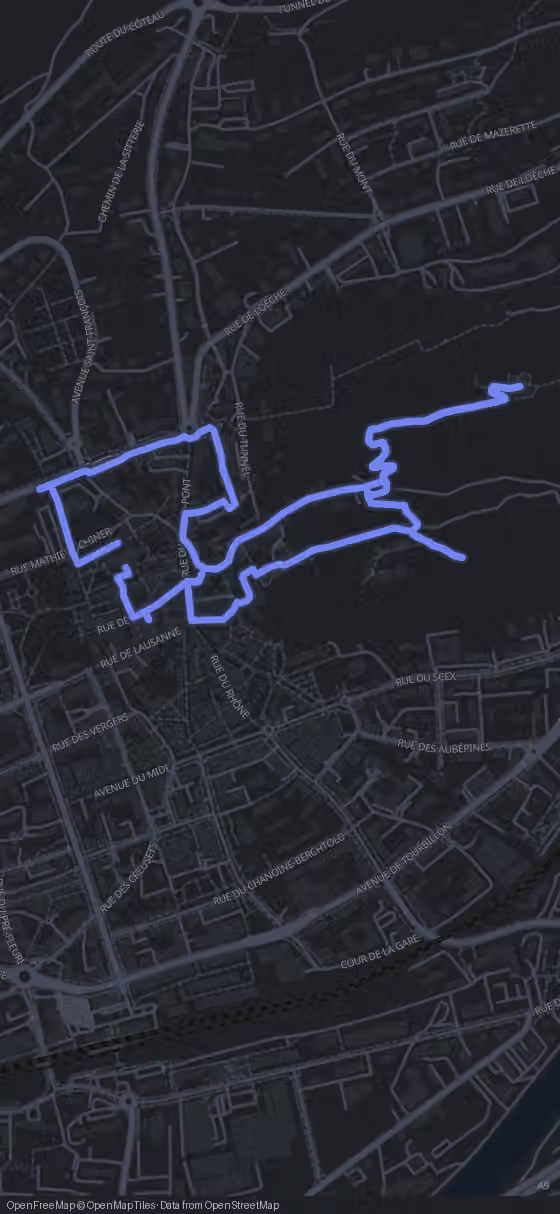
One curiosity to keep in mind for later: even when the cathedral chapter sat up on the Valère hill and the bishops showed off their power there, the cathedral title stayed down here with Notre-Dame du Glarier, the church's other name. From the square, Maison Supersaxo is 130 m away, a two-minute walk.