Matterhorn Museum Zermatlantis
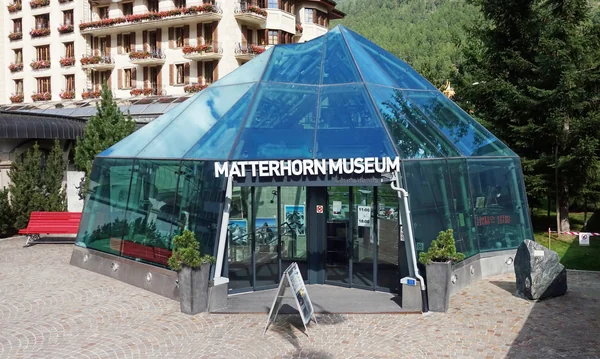
At street level you only find the ticket desk and a shop with books. The real museum is underground. A raised gallery runs around a sunken village rebuilt from original houses: a cobbled square with 14 buildings, among them the mountain guides' house, a dairy, a home, a storehouse, a stable with animals, a church, the presbytery and the reception of the old Hotel Monte Rosa. It tells how Zermatt grew from a mountain farming village into a destination known around the world.
The heart of the museum is the drama of 14 July 1865. Edward Whymper reached the summit of the Matterhorn that day with Michel Croz, Peter Taugwalder and his son of the same name, Francis Douglas, Douglas Robert Hadow and Charles Hudson. On the way down, four of the seven fell to their deaths. Look for the original rope that snapped, displayed with equipment and scraps of clothing.
The story goes on: the north face climbs, the achievements of the alpinist Yvette Vaucher, and Ulrich Inderbinen, a Zermatt mountain guide born in 1900 who died in 2004 and climbed the Matterhorn 371 times. A relief of the mountain lights up the ascent routes, and clips from Luis Trenker's film Der Berg ruft, shot in Zermatt in 1937 and 1938, play on screen.
Older finds reach much further back: a Neolithic stone axe, and the belongings and remains of an unknown man who died on the Theodul Glacier around 1600. Audio guides come in German, English, French and Japanese.
This is the only stop with admission, and it is worth it for anyone curious about the mountain or about how people lived here before the hotels. If you skip it, nothing else on the route explains the first ascent this well. From the exit, the cemetery is 240 m away, about 3 minutes on foot.
- Hours
- Daily 15:00–18:00 (1 Jun – 30 Sep: daily 14:00–18:00; 1 Nov – 19 Nov: closed)
- Price
- CHF 12.00 full, CHF 10.00 seniors (64+), CHF 8.00 students, CHF 7.00 teenagers (10-16), free for children under 10