



Ring
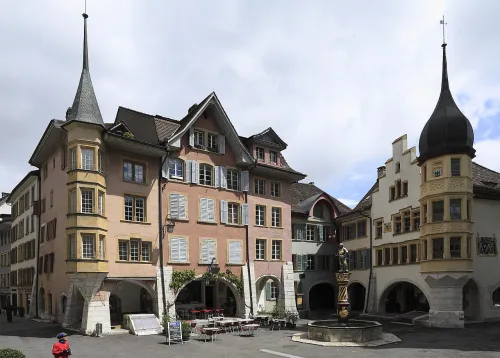
Start where Biel itself started. The Ring is the medieval heart of the old town, a square laid out as a trapezoid, with the Obergässli, Untergässli, Kirchgässli and Obergasse all running into it. Turn once on the spot and you have the whole scene: the Stadtkirche, the Vennerbrunnen fountain, a row of former guild houses and the arcades that frame the square. The enclosed space also carries sound well, which makes it a natural stage when the town holds festivals.
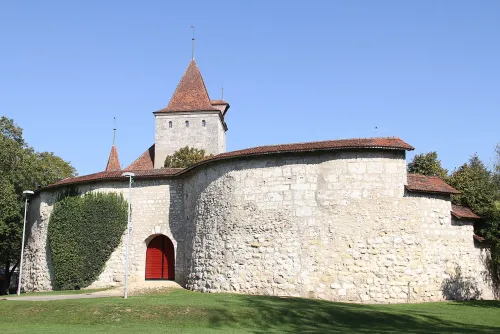
This was most likely a trading place even before the town was founded. The first town was little more than a ring of houses around a church, and the ground beside the church served as the cemetery. A wall with probably four gates closed it off; excavations at Obergasse 4 have found its traces. Drinking water came from the Brunnquelle, later called the Römerquelle, which also cut a ditch on the northeast side. Biel's first town hall stood where the Alte Krone now stands, at the exit of the Ring.
Picture the square in its early days: simple two-storey timber houses, some with a single room, an open hearth at the centre and the smoke drifting out through the upper floor and the roof. Windows had wooden shutters, and against the wind people stretched animal hides or oil-soaked cloth. In the 13th century the first stone houses and tiled stoves appeared, and the nobility lived in multi-storey residential towers with the first bullseye panes. Spring water ran through wooden pipes to a fountain right on the Ring.
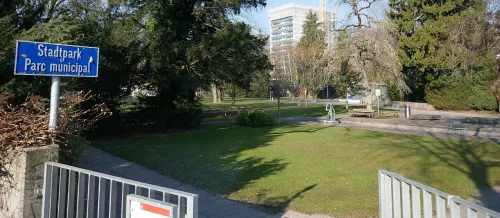
The market here is first mentioned in 1230, the grain measures in 1235. Wine growing and fishing kept the town going, while fields and livestock fed its own people and craftsmen settled around the square. From here it is 900 m, about 12 minutes, to the Stadtpark, through the old town and past the Burgplatz market.