

Villa Blanche (Maison Blanche)
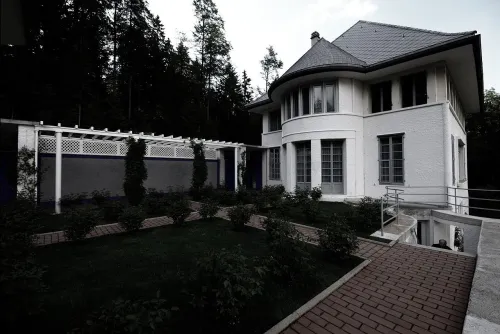
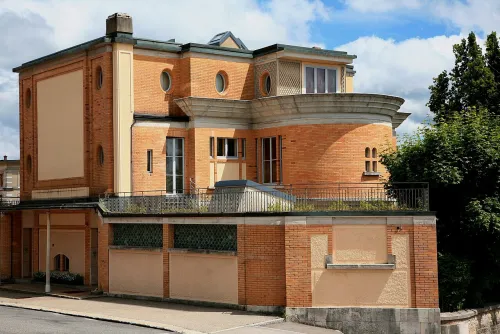
The white house in front of you is where Le Corbusier began. In 1912, still called Charles-Édouard Jeanneret and only 25, he built it in La Chaux-de-Fonds, the town where he was born in 1887, as a home for his parents. It was his first work as an independent architect, and today it is listed as a cultural property of national importance. Don't mix it up with the Maison Jeanneret in Paris, which belongs to the group of Le Corbusier works on the UNESCO World Heritage list.
His road here started at the local art school, where he enrolled in 1903 to become an engraver. From 1905 he followed the advanced course of Charles L'Eplattenier, who pushed him toward architecture. By February 1912 he had opened his own office in town, but he had also moved away from his teacher and from the regional Art Nouveau known as the “Style sapin”, the fir-tree style. He had worked with Auguste Perret in Paris and Peter Behrens in Berlin, and in 1911 he travelled to the East, where Mediterranean building traditions left their mark.
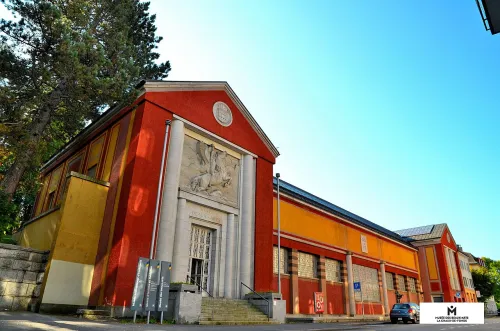
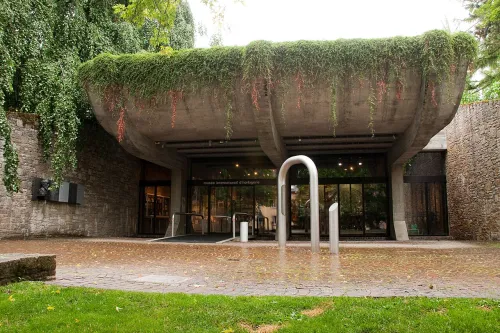
That is what you see in the villa: a neoclassical calm that breaks with the ornament around it. Look closely and you can already spot ideas of his later pure style, such as the strip windows, the roof terrace and the way the house is meant to be walked through as a sequence of views. His parents moved in in November 1912, and he lived and worked here on and off until 1917. He also designed part of the furniture, which is now kept by the Museum of Fine Arts you'll reach later.
The family left in 1919 and sold the house. Owners came and went until 2000, when an association bought it, restored it and opened it to the public in 2005. If Le Corbusier is part of why you came, go in: the villa charges admission and is not open every day, so plan your visit around it.
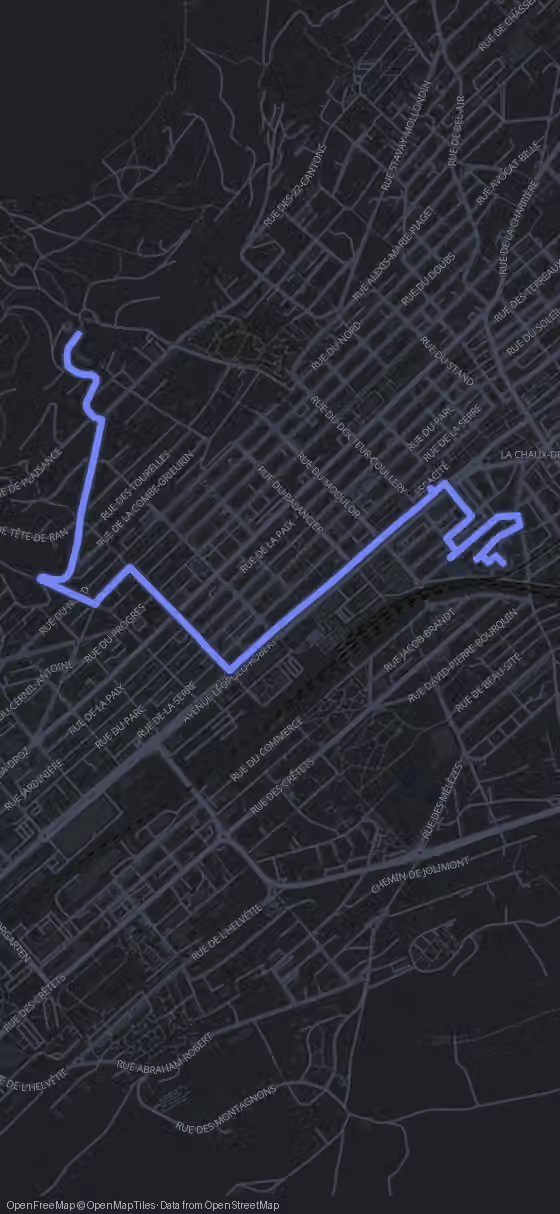
From here it is 1030 m, about 14 minutes on foot, to the house he built a few years later for a watch manufacturer.