

Morspoort
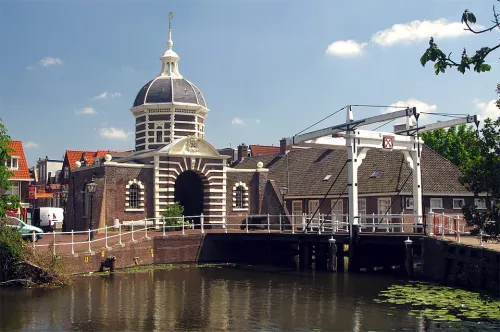
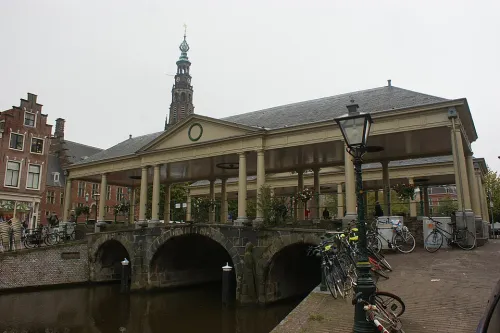
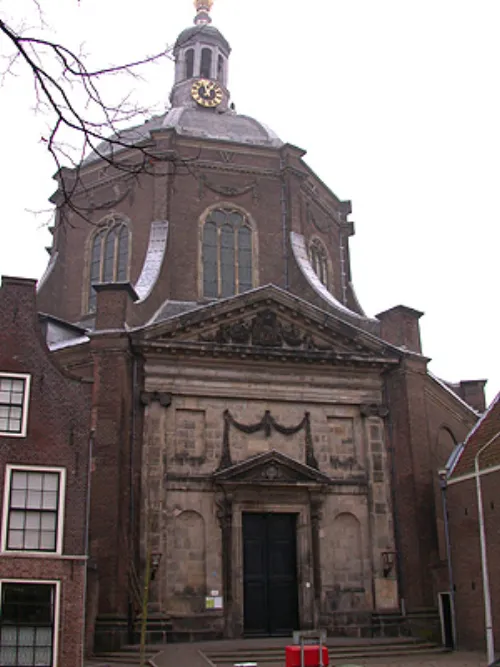
Start at the Morspoort, the stone gate on the Morssingel that once closed off Leiden to the west. Look up at the octagonal dome on top: for a long time the rooms under it served as a prison. The gate you see was built in 1669 in mannerist style to a design by the Leiden master builder Willem van der Helm. It replaced a wooden structure put up around 1611, when the city expanded to the north.
Leiden once had eight city gates. Only two survive, this one and the Zijlpoort, and the gate and its bridge are both protected national monuments. The name comes from De Morsch, the soggy pastureland outside the old walls, and it stuck to everything nearby: the little neighbourhood of D'Oude Morsch around the gate, the Morsstraat running toward the Haarlemmerstraat, the Morssingel and the Morsdistrict across the water.
The area kept a military flavour long after the walls lost their purpose. In 1817 the Morschpoortkazerne barracks went up on the Galgewater, linked to the Wittepoortkazerne on the Noordeinde opposite by a footbridge, today's Rembrandtbrug, or by a small ferry. Infantry was stationed here until 1940, and army cooks were still trained in Leiden until 1981. That year the training moved to Haarlem, and Leiden, a garrison town for generations, lost its last army presence.
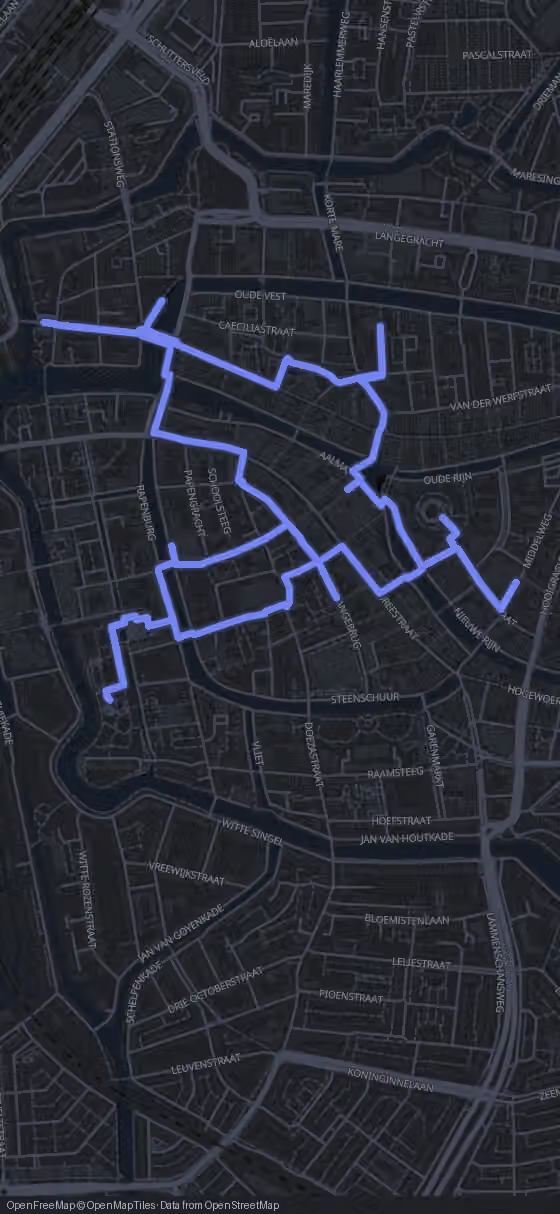
The gate is free and always accessible, so take your time. Then comes the longest leg of the loop: 910 m, about 13 minutes, to the Young Rembrandt Studio.