

Engelberg Abbey
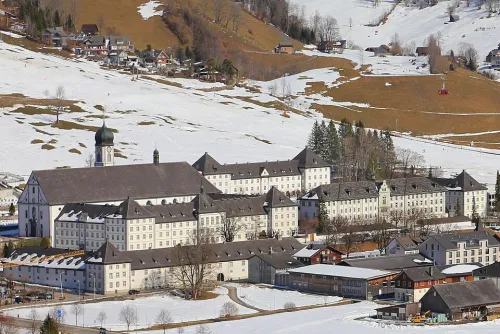
Engelberg grew around this monastery, not the other way round. The Benedictine abbey, dedicated to Our Lady of the Angels, stands at the head of the valley, and the village you walk through today sprang up around its walls. The grounds and the exterior are free, and the Spiegelsee lies right here at the start, so take it in before you set off.
The story begins on 1 April 1120, when Count Conrad of Sellenbüren founded the abbey. Its first monks and its first abbot, Adelhelm, came from Muri Abbey, and Conrad himself later entered as a monk and died here in 1126. The founding documents call the place Mons Angelorum, the mountain of the angels, and Engilberc, which is where the name Engelberg comes from. Pope Callistus II recognised the abbey in 1124 and placed it directly under the Holy See.
The early years were rough: after Adelhelm, three disputed abbots split the community, until three abbots from St. Blaise's Abbey in the Black Forest restored order. The first of them, Frowin, founded a scriptorium, and around 1200 the so-called Engelberger Meister wrote and illustrated books here. From Frowin's time on, monks and nuns lived side by side in a double monastery, until the nuns founded their own convent of St. Andreas in Sarnen in 1615.
Then there is the power. The abbots acted almost like bishops over their dependents, and in worldly matters they ruled a territory of 115 towns and villages, confirmed by a bull of Pope Gregory IX in 1236. They kept most of these rights until the French Revolution reached Switzerland in 1798.
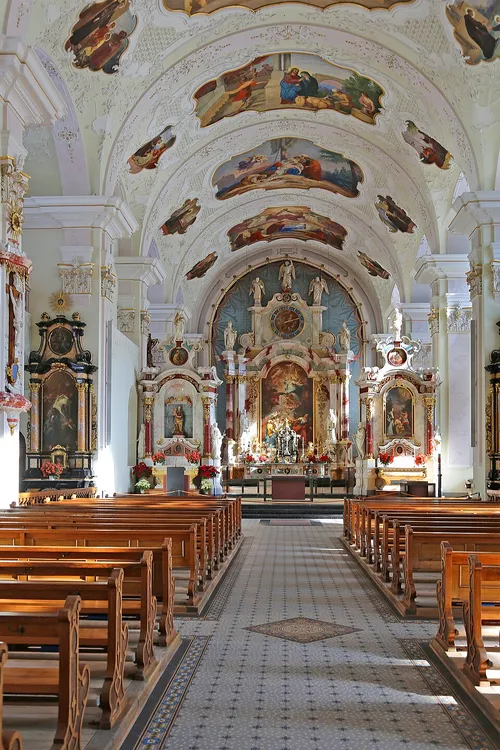
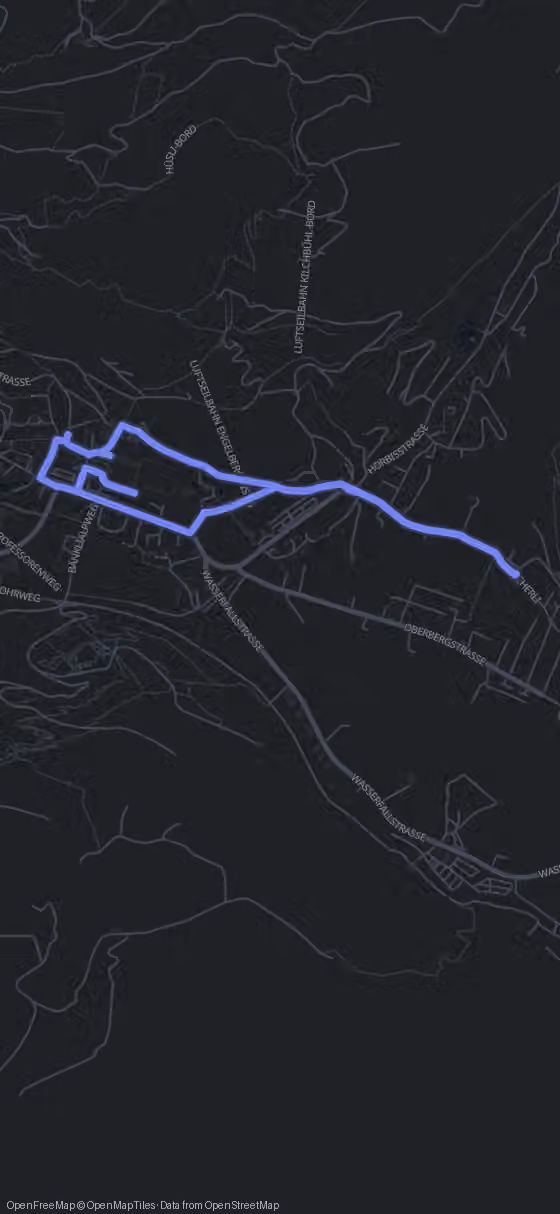
The monastery interior is open only on a guided tour, which charges admission. If this history has hooked you, the tour is worth it; if your day doesn't fit, the abbey church gives you an interior for free. From the abbey, Klosterstrasse leads 320 m, about 4 minutes, to Kunst im Wald.