Free Walking Tour Guayaquil: Iguanas, River and Hill

Eleven stops, from a neo-Gothic cathedral and a park full of iguanas to the Guayas River, a colonial barrio and the hill where Guayaquil began.

11 Stops 8.7 km ~2 h 3 min walking
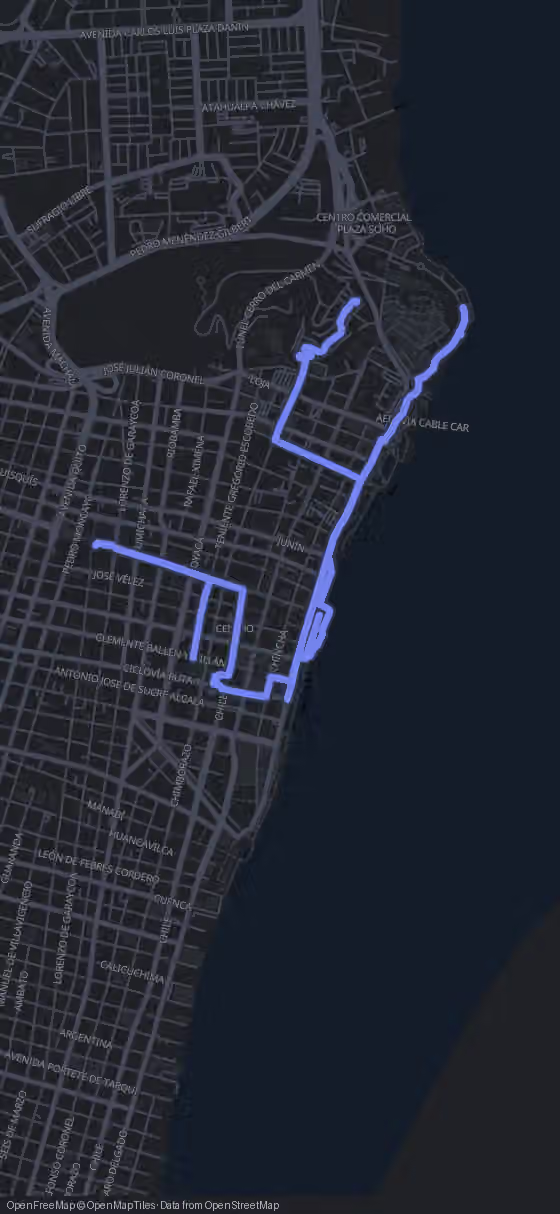
Route map for the Guayaquil walking tour
Stop 1 of 11
830 m·10 min
Catedral Metropolitana de Guayaquil
Head north-west toward Parque Centenario
Hola, welcome to Guayaquil. I'm Alex, and the city's most surprising residents lounge in a downtown park.
Try this tour with Alex

What this Guayaquil walk covers

This free walking tour Guayaquil route links 11 stops over 8.7 km, from the Catedral Metropolitana de Guayaquil through the old colonial square and down to the river, ending on Cerro Santa Ana. Pure walking time is 2 h 3 min; with the visits worth making, plan on about six hours.

Every stop is free to see, and the Museo Antropológico y de Arte Contemporáneo (MAAC) is free inside too; only the cathedral's guided tour has a fee. Route, map and GPS navigation run free in your browser, and the AI Tour Guide is optional.

Open free GPS & optional AI Tour Guide
This short shows highlights of the route. All 11 stops follow below.

The Route

Walking Map of Guayaquil: Cathedral, Malecon and Cerro Santa Ana

11 stops 8.7 km 2 h 3 min walking
Tap to load interactive map

The 11 stops along this route

  1. Catedral Metropolitana de Guayaquil, stop 1 on the self-guided walking tour
    1Catedral Metropolitana de Guayaquil
  2. Parque Centenario in Guayaquil, stop 2 on the self-guided walking tour
    2Parque Centenario
  3. Parque Seminario (Parque de las Iguanas) in Guayaquil, stop 3 on the self-guided walking tour
    3Parque Seminario (Parque de las Iguanas)
  4. Palacio Municipal de Guayaquil, stop 4 on the self-guided walking tour
    4Palacio Municipal de Guayaquil
  5. Hemiciclo de la Rotonda in Guayaquil, stop 5 on the self-guided walking tour
    5Hemiciclo de la Rotonda
  6. Malecón Simón Bolívar (Malecón 2000) in Guayaquil, stop 6 on the self-guided walking tour
    6Malecón Simón Bolívar (Malecón 2000)
  7. Museo Antropológico y de Arte Contemporáneo (MAAC) in Guayaquil, stop 7 on the self-guided walking tour
    7Museo Antropológico y de Arte Contemporáneo (MAAC)
  8. Las Peñas in Guayaquil, stop 8 on the self-guided walking tour
    8Las Peñas
  9. Puerto Santa Ana in Guayaquil, stop 9 on the self-guided walking tour
    9Puerto Santa Ana
  10. Torre del Reloj (Moorish Clock Tower) in Guayaquil, stop 10 on the self-guided walking tour
    10Torre del Reloj (Moorish Clock Tower)
  11. Cerro Santa Ana in Guayaquil, stop 11 on the self-guided walking tour
    11Cerro Santa Ana
  12. That's the full route.

    Walk it with an AI Tour Guide talking you through every one of these streets.

    Start free in your browser
    You made it

Your Guayaquil Walking Tour, from the Iguana Park to the Hilltop

  1. 1

    Catedral Metropolitana de Guayaquil

    Catedral Metropolitana de Guayaquil, stop 1 on the self-guided walking tour

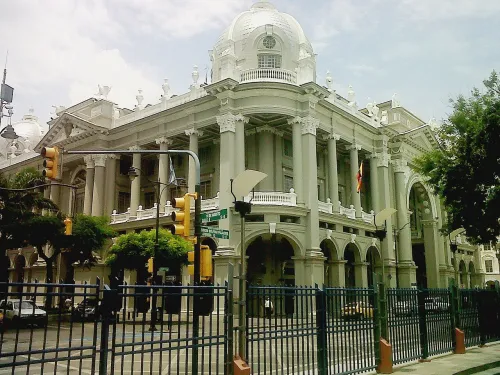
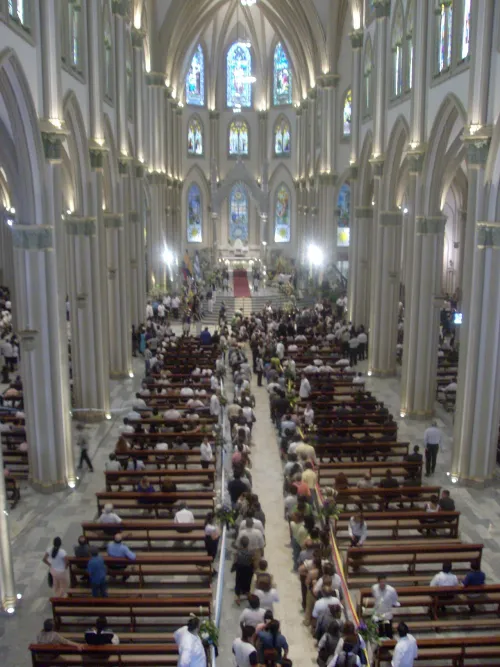
    You start in front of Guayaquil's main church, officially the Catedral de San Pedro. What you see is a twentieth century building in reinforced concrete, designed in neo-Gothic style, yet it stands on a site the city has used for its principal church since the late seventeenth century. The square it faces, today Parque Seminario, was the old Plaza Mayor of colonial Guayaquil.

    The church did not start here. The first one was built of wood around 1547 on the summit of the Santa Ana hill, next to the Casa del Cabildo, where the town was first laid out. Fire was its constant enemy: after heavy damage it was torn down in 1639, and on 6 December 1692 a blaze swept through the whole city. People moved their core further away from the hill to an area called La Sabaneta or Puerto Cazones, and that became the Ciudad Nueva.

    Work on the new church, known as the Matriz, began here in 1694, and it opened the following year. It stayed largely unchanged until 1822, when the Guayaquil-born Monsignor Francisco Xavier de Garaycoa y Llaguno added a second tower to the facade. In 1870 a neoclassical makeover erased its colonial look, and in 1924 the old wooden church was dismantled to make way for the present Gothic-style cathedral.

    If you enjoy the backstory of a building, the paid guided “Destino de Luz” tour is worth it; if you just want a quiet look, a short visit is enough.

    Keep the square in mind: you will return to it later as Parque Seminario. First you head 830 m, about 11 minutes, to Parque Centenario.
    Hours
    Mon–Sat: 07:20–18:00 | Sun: 07:00–18:00
    Price
    USD $3 ("Destino de Luz" guided tour, adult; children/seniors $1.50)
  2. 2

    Parque Centenario

    Parque Centenario in Guayaquil, stop 2 on the self-guided walking tour

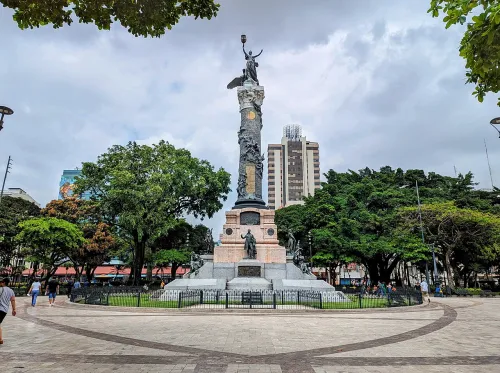
    Parque Centenario sits where Avenida Nueve de Octubre meets Calle 6 de Marzo, and it is one of the city's emblematic squares. At its heart rises the Columna a los Próceres, the column honouring the leaders of Guayaquil's independence, declared on 9 October 1820.

    The idea of a memorial dates back to 1821, the year after independence, but it took decades to happen. In 1891 the city council, led by Dr. Pedro J. Boloña, decided to build a monument for the centenary. The first stone was laid on 9 October 1899. By 1901 it was clear the square was too small for the central monument, so the perimeter had to grow, and from 1911, on the advice of José Gabriel Pino Roca, the council bought up more land to widen the park.

    President José Luis Tamayo inaugurated the park on 7 October 1920, a hundred years after independence. Even then it was not finished: the last statue on the surrounding streets went up only in 1937. Walk the edges as well as the centre, since the statuary spreads around the park, and look at the north portico: its sculptures are by José Antonio Homs, whose name comes up again at the river.

    The park is free to enter. Ten minutes are enough unless you want to study every figure. From here it is 1060 m, about 15 minutes, back toward the cathedral and Parque Seminario.

    Hours
    Daily 06:00–19:30
    Price
    Free
  3. 3

    Parque Seminario (Parque de las Iguanas)

    Parque Seminario (Parque de las Iguanas) in Guayaquil, stop 3 on the self-guided walking tour

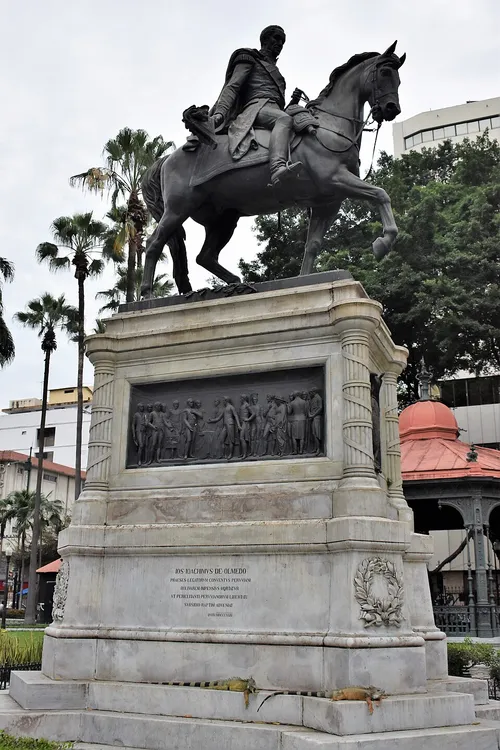
    This small square goes by three names: Parque Seminario, Parque Bolívar and, the one everybody remembers, Parque de las Iguanas. Iguanas of the species Iguana iguana live among the trees and lawns; in 2017 the city counted around 350 of them. Look out also for the pond with its turtles and the monument to Simón Bolívar in the middle.

    The park is framed by Calle Clemente Ballén, Calle Diez de Agosto, Calle Chile and Calle Chimborazo. Chimborazo has been turned into a pedestrian street linking the park with the cathedral you saw at the start, so you are back on the old colonial square.

    This was the Plaza de Armas of the Ciudad Nueva, laid out in 1693. The first major building to open was the Matriz church in 1695. In 1696 and 1697 the Casa del Cabildo went up on the corner of today's Diez de Agosto and Chimborazo, with the jail on its ground floor, a project of the alderman Blas García de la Peña. The building appears on the city plan of 1741 and on Requena's plans of 1770. In colonial times the square was never paved, and for a while it was called Plaza de la Constitución, because the liberal Cádiz Constitution of 1812 was sworn here a few months before independence.

    The park in its present form was inaugurated on 25 July 1895 by President Eloy Alfaro. It is free to enter. Take a quarter of an hour on a bench to watch the iguanas, then walk 390 m, about 6 minutes, to the Palacio Municipal.

    Hours
    Daily 06:00–18:00
    Price
    Free
  4. 4

    Palacio Municipal de Guayaquil

    Palacio Municipal de Guayaquil, stop 4 on the self-guided walking tour

    The Palacio Municipal, known locally as the Cabildo or simply the Municipio, is the seat of the city council and the mayor. The building you see dates from 1921 and was designed by the architect Francesco Maccaferri. It stands where the old Casa Consistorial used to be.

    Guayaquil's local government has moved house almost as often as its church. The colonial Cabildo first sat in La Planchada, in the Ciudad Vieja. When the move to the Ciudad Nueva began in 1693, many residents refused to leave their homes, so the colonial authorities pushed things along by moving the Cabildo and the Holy Sacrament for good. The new Cabildo houses stood on the south side of the Plaza de Armas you have just left.

    As the city grew, a new seat went up on the site of the old food market, between the Calle Real (today Calle Pichincha) and the river. This Casa Consistorial opened in 1817, and three years later Guayaquil's Act of Independence was signed inside. It served as the seat of the government of the Free Province of Guayaquil, and the provisional rules of government were drafted there. After nearly a century the wooden building had aged and was overrun by rats and other pests, so the authorities ordered it burned, which happened in 1908.

    Entry is free, so step inside if the doors are open; otherwise the facade alone is worth a look. From here it is 380 m, about 5 minutes, to the river and the Hemiciclo de la Rotonda.

    Hours
    Mon–Fri 08:30–17:00, Sat–Sun closed
    Price
    Free
  5. 5

    Hemiciclo de la Rotonda

    Hemiciclo de la Rotonda in Guayaquil, stop 5 on the self-guided walking tour

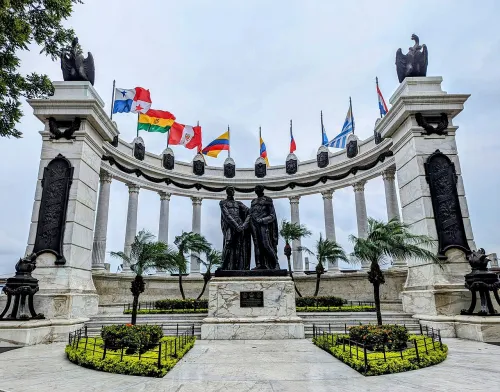
    At the meeting of Avenida Nueve de Octubre and the Malecon Simón Bolívar, right on the Guayas River, a marble semicircle frames the figures of Simón Bolívar and José de San Martín. The monument is also called the Monument to the Guayaquil Interview, and it marks the alliance of the two liberators.

    On 26 July 1822 Bolívar, representing Gran Colombia, and San Martín, representing Peru, met in Guayaquil to decide the future of the Free Province of Guayaquil and of South American independence. The meeting became one of the famous episodes of the continent's history, and this is the city's way of remembering it.

    The monument took a quarter of a century. In 1913 the National Congress approved a memorial project; the city handed coordination to the Sociedad Bolivariana together with ten thousand sucres. A final budget came in 1927, the marble semicircle was built by the Sociedad Constructora Nacional Fénix and finished in 1929, and then the first stone of the pedestal was laid. In 1935 the council gave the sculpture to the Spanish sculptor José Antonio Homs, the same man behind the north portico of Parque Centenario, while Juan Rovira was responsible for the overall architectural concept. The Rotonda was inaugurated in 1938.

    It is free and open air; ten minutes are enough to walk the curve and read the figures. The Malecon begins right here, 220 m and about 3 minutes away.

    Hours
    Daily 07:00–00:00 (open from 06:00 for runners/athletes)
    Price
    Free
  6. 6

    Malecón Simón Bolívar (Malecón 2000)

    Malecón Simón Bolívar (Malecón 2000) in Guayaquil, stop 6 on the self-guided walking tour

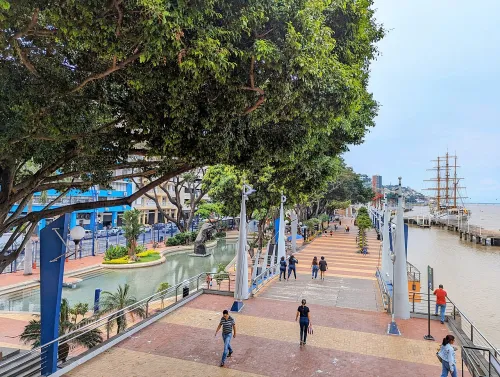
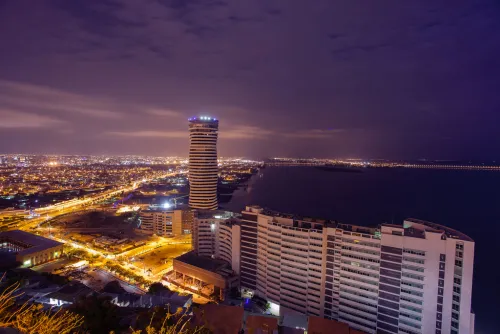
    The Malecon Simón Bolívar is the city's oldest riverside promenade, and most people call it Malecón 2000, after the regeneration project of the late 1990s. Back then the city government set out to rescue the run-down commercial and banking district along the river. The result is 2.5 km of promenade with green areas, gardens, fountains and monuments, plus shops, restaurants, bars, food courts and the first IMAX cinema in South America. Along the way you pass the Palacio de Cristal and viewpoints over the Guayas.

    This waterfront is where Guayaquil's story is rooted. In colonial times visitors to Ecuador arrived here, and the docks unloaded the goods that fed the city and the country. The city grew outward from this point, which is why the regeneration of the Malecon mattered so much to Guayaquileños.

    The project is considered one of the largest the city has undertaken and has been held up as a model abroad; the Pan American Health Organization and the World Health Organization declared it a healthy public space. To keep it in shape, the city created the Fundación Malecón 2000, a private-law foundation chaired by the mayor and made up of public and private institutions.

    Entry is free. If you want to go out on the river, the piers on the Malecon are where boats leave. Then follow the promenade for 1150 m, about 16 minutes, to the MAAC.

    Hours
    Daily 07:00–00:00 (open from 06:00 for runners/athletes)
    Price
    Free
  7. 7

    Museo Antropológico y de Arte Contemporáneo (MAAC)

    Museo Antropológico y de Arte Contemporáneo (MAAC) in Guayaquil, stop 7 on the self-guided walking tour

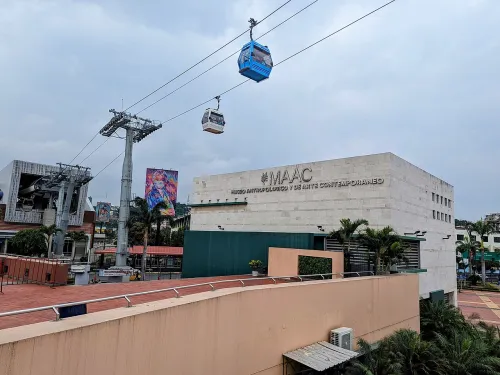
    The MAAC is hard to miss: the building is shaped like a Huancavilca boat. It stands on the Malecón 2000 at the corner of Malecon and Calle Loja, close to Cerro Santa Ana and facing the Las Peñas campus of the ESPOL polytechnic, inside what is today the Centro Cultural Simón Bolívar.

    Inside you find art and culture from Ecuador, Latin America and the pre-Columbian era. The collection holds 50,000 Ecuadorian archaeological pieces and more than 3,000 modern artworks. Over the years the museum has given whole rooms to individual Ecuadorian artists, among them Enrique Tábara, Peter Mussfeldt, Judith Gutiérrez, Estuardo Maldonado, Galo Moncayo, Oswaldo Viteri and Juan Villafuerte. The house also runs lectures, forums, film screenings and performing arts, and has its own library, the Biblioteca Olaf Holm.

    This is the stop where going inside pays off most, and it costs nothing. Give it an hour if archaeology or Ecuadorian painting interests you; half an hour still gives you a feel for the pre-Columbian pieces.

    From the museum it is only 320 m, about 5 minutes, to the old houses of Las Peñas.

    Hours
    Tue–Sun 09:00–17:00 (last entry 16:30), Mon closed
    Price
    Free
  8. 8

    Las Peñas

    Las Peñas in Guayaquil, stop 8 on the self-guided walking tour

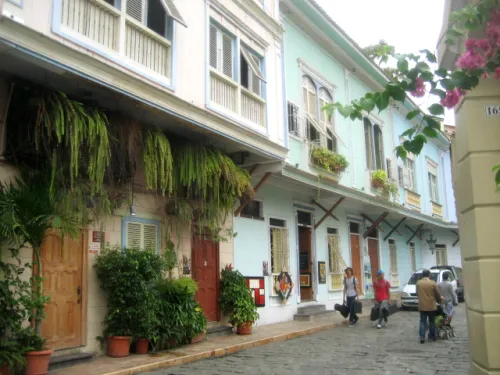
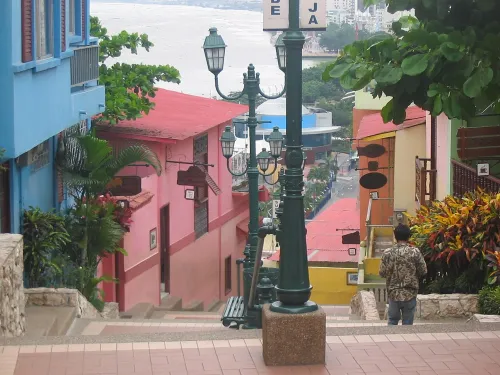
    Las Peñas is the barrio where Guayaquil was born. It clings to the slopes of Cerro Santa Ana, and its name comes from the many crags, peñascos, on the hill when the Spanish settled here in the sixteenth century. The street that runs through it, Calle Numa Pompilio Llona, was named by the city in 1912.

    For a long time this was a neighbourhood of fishermen and craftsmen. With the cacao boom of the 1920s, wealthy plantation owners moved in and built most of the stately houses you see today, some of them more than a hundred years old. The city declared Las Peñas a Historic Monument on 24 July 1973, it became part of Ecuador's cultural heritage in 1982, and between 2002 and 2008 the municipality restored and regenerated the area.

    Look at the house fronts and imagine who lived behind them. Eleven former presidents of the republic lived here, among them Francisco Robles, José Luis Tamayo, who opened Parque Centenario, Alfredo Baquerizo Moreno, Eloy Alfaro and Carlos Alberto Arroyo del Río. So did writers and artists such as Juan Montalvo, Enrique Gil Gilbert and Manuel Rendón Seminario, as well as Antonio Neumane, composer of the national anthem, and the educator Rita Lecumberri. Visitors stayed for shorter spells: Ernest Hemingway, Pablo Neruda, the English choreographer Frederick Ashton, and Che Guevara, who for a time worked here as an unpaid paediatrician.

    The barrio is open all day and free; half an hour of slow walking does it justice. Calle Numa Pompilio Llona then leads you 260 m, about 3 minutes, to Puerto Santa Ana.

    Hours
    Open 24/7
    Price
    Free (open-air colonial barrio/neighborhood, no ticket desk)
  9. 9

    Puerto Santa Ana

    Puerto Santa Ana in Guayaquil, stop 9 on the self-guided walking tour

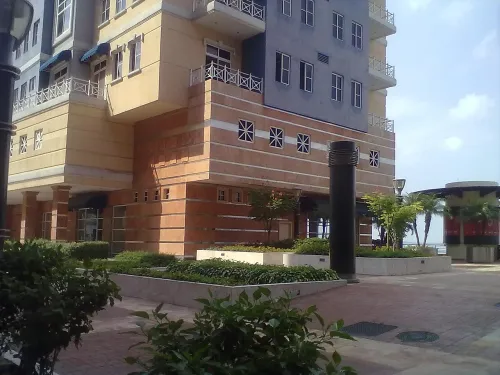
    Right after the colonial lanes comes a complete contrast. Puerto Santa Ana is a modern upmarket complex at the foot of Cerro Santa Ana, with office and apartment buildings, shops, squares, museums and its own riverside promenade along the Guayas.

    Construction began in January 2005 on 4 hectares, at a cost of almost 20 million dollars from city and private money. The first plans came from the American architecture firm DDG, modelled on Coconut Grove in Miami, and even included a lighthouse made entirely of glass. The first phase opened on 15 April 2007. The apartments and offices were sold at public auctions; in November 2011 one building, the Sotavento, went for more than 5 million dollars.

    Before the concrete, this was industrial ground: the old Cervecería Nacional brewery stood here, along with the Indulac factory and the Modelo rice mill. Go back further and you reach the city's early decades: according to the historian Francisco Campos, a shipyard was set up here in 1602, building vessels of up to 400 tons.

    It is free and open around the clock; ten minutes on the promenade are enough. Now come the long legs of the day: 1850 m, about 26 minutes, to the Torre del Reloj.

    Hours
    Open 24/7
    Price
    Free (public waterfront complex, no ticket desk)
  10. 10

    Torre del Reloj (Moorish Clock Tower)

    Torre del Reloj (Moorish Clock Tower) in Guayaquil, stop 10 on the self-guided walking tour

    The Torre del Reloj, also called the Torre Morisca or Moorish Tower, stands on the Malecón 2000 grounds. Its Moorish styling sets it apart from the neo-Gothic cathedral and the classical monuments you have seen so far.

    The tower has gone through several versions over the years; the one in front of you was completed in 1931. Seen together with the Rotonda and the Palacio Municipal, it belongs to the same wave of building that reshaped the city centre in the 1920s and 1930s.

    When the tower is open, you can go inside free of charge; otherwise enjoy it from the promenade. Then comes the longest leg of the route: 2210 m, about 33 minutes, to Cerro Santa Ana.

    Hours
    Thu–Sat 10:00–17:00 (interior visits); Malecón 2000 grounds daily 07:00–00:00
    Price
    Free
  11. 11

    Cerro Santa Ana

    Cerro Santa Ana in Guayaquil, stop 11 on the self-guided walking tour

    You finish where Guayaquil began. Cerro Santa Ana rises beside the Guayas River next to Las Peñas, covers about 13.5 hectares and is home to an estimated 4,105 people. On its slopes, facing the plateau once called “de los Ciruelos”, the city settled for good in 1547.

    The hill was first known as Cerrito Verde or Cerrito de la Culata. Legend says the Spanish treasure hunter Nino de Lecumberri was close to death because of the curse of an ancient king, who ruled here long before the Huancavilcas and was punished for his greed. Lecumberri called on Saint Anne for help, and in gratitude he set up a cross bearing the words “Santa Ana” on the summit. The name stuck.

    Because the town sat on a slope, it could not follow the usual grid of regular blocks around a square plaza, and chroniclers such as Fray Fernando de Lizárraga said Guayaquil had a “mal asiento”, a poor site. The first main church stood at the very top, where a chapel built during the regeneration of the hill in the 2000s stands today. Opposite it, where the lighthouse now rises, were the Cabildo houses, which around 1600 were made of oak and roofed with tiles. They did not last: they burned in 1624 during the pirate attack of Jacques L'Hermite.

    Here the walk comes full circle with the cathedral where you started, whose first wooden predecessor stood on this summit. The hill is open at all hours and free; give yourself half an hour at the chapel and the lighthouse before heading back down.

    Hours
    Open 24/7
    Price
    Free (open-air hillside neighborhood/viewpoint, no ticket desk)
Walking tour route map of Guayaquil Route loaded
Catedral Metropolitana de GuayaquilParque CentenarioParque Seminario (Parque de las Iguanas)Palacio Municipal de Guayaquil+7
All 11 stops are already on the map.
You just press start.
AI Tour Guide

You've read the route. Now walk it with a guide in your ear.

Press start wherever you are, even hundreds of kilometres from Guayaquil, and the guide begins telling its stories right away. In the city, pick any of the 11 stops to start from: it leads you there, then talks with you the whole route, asking, listening, remembering, and shaping the tour around your answers.

11stops 8.7km 2 h 3 minwalking 13languages
▶Start the tour free

Free to start · Runs in your browser · No app, no download

Shorter Ways to Walk Guayaquil

The route splits neatly at the Malecon, so you can walk it as one long day or as two relaxed halves.

Old centre and riverfront

Stops: 1, 2, 3, 4, 5, 6

For a morning in the colonial core: cathedral, the two parks, the city hall and the Bolívar and San Martín monument, ending on the Malecon. About 2.9 km and 40 minutes of walking. Only the cathedral's guided tour costs money; come on a weekday if you want to look inside the Palacio Municipal.

River, barrio and hill

Stops: 6, 7, 8, 9, 10, 11

For an afternoon or a second day: the Malecon, the MAAC, Las Peñas, Puerto Santa Ana, the clock tower and Cerro Santa Ana. About 5.8 km and 1 h 23 min of walking, everything free. Avoid Monday if you want the museum, and come Thursday, Friday or Saturday for the inside of the Torre del Reloj.

Short riverside walk

Stops: 6, 7, 8, 9

For travellers with little time: the Malecon, the MAAC and the old streets of Las Peñas, finishing at Puerto Santa Ana. About 1.7 km and 24 minutes of walking, no entry fees at all.

How Long This Guayaquil Tour Takes, Visits Included

The walking itself takes 2 h 3 min over 8.7 km, but it is unevenly spread. The six stops from the cathedral to the Malecon sit close together, while the end stretches out: from Puerto Santa Ana to the Torre del Reloj and on to Cerro Santa Ana you walk almost an hour with only one stop in between.

With the visits, count on about six hours: around an hour in the MAAC, half an hour each in Las Peñas and on Cerro Santa Ana, twenty minutes for the cathedral and shorter pauses elsewhere. Start at 09:00 at the cathedral and you reach the Palacio Municipal at about 10:15, the MAAC around 11:20, the Torre del Reloj around 13:35, and you finish on Cerro Santa Ana around 15:00.

Split in two, the old centre fills about two hours, and the river half with the museum needs around four. The short riverside walk, MAAC included, takes roughly two hours.

Before You Set Off in Guayaquil

  • Start and finish: The recommended start is the Catedral Metropolitana de Guayaquil, and the walk ends on Cerro Santa Ana. You can join at any stop; the order given is simply the one that works best.
  • Best day and time: Start in the morning, around 09:00, so you have time for the MAAC and for looking inside the Palacio Municipal and the Torre del Reloj along the way.
  • Costs: Walking the route costs nothing, and the Palacio Municipal, the MAAC and the Torre del Reloj are free inside; only the cathedral's guided tour is paid. The AI Tour Guide starts with 100 free credits; after that you choose this tour all-inclusive for €19.99 with no time limit, or €5 per hour.
Walking tour route map of Guayaquil
AI Tour Guide

Your guide is ready whenever you reach the first stop.

Press start and a voice AI Tour Guide takes it from here: leading the route through Guayaquil, telling the stories, and turning your walk into a real back-and-forth conversation. No app or download is needed; it runs in your browser.

11stops 8.7km 2 h 3 minwalking 13languages
▶Start the tour free

Free to start · Runs in your browser · No app, no download

What the AI Tour Guide Adds Between the Malecon and Las Peñas

Guayaquil's story is one of a city that kept moving: from the hilltop to the Ciudad Nueva, from wooden churches to concrete ones, from breweries to apartment towers. The AI Tour Guide walks that thread with you as a conversation, notices whether the pirates, the presidents or the poets of Las Peñas grab you, and fills the long final legs with the stories you care about. Want to know what Bolívar and San Martín actually said to each other, or which artist's room in the MAAC to see first? Just ask, and interrupt whenever something catches your eye.

A Real Conversation A voice AI Tour Guide greets you, leads the whole route, and tells the stories and facts as you walk, asking what you want to see and keeping a real conversation going. Not a recording you press play on.
Map Navigation Follow the route on the map and walk at your own pace. You choose where to start and when to move to the next stop.
Ask Anything Curious about a building you pass? Ask your AI Tour Guide on the spot and the conversation carries on.
13 Languages Switch language anytime. No separate tour needed.
Start free in your browser

Common Questions About Walking Guayaquil

Can I take a boat trip on the Guayas River during the walk?

Yes. The Malecón 2000 has piers where boats leave for daytime and evening trips on the river. Ask at the piers for times and fares; a trip fits in well after the Malecon or the MAAC.

Is the Malecon open in the evening?

Yes, the Malecón 2000 is open every day well into the evening. The riverside half of the walk, outdoors, works late in the day; the MAAC and the clock tower interior are better visited earlier.

Where can I go after Guayaquil?

Cuenca is 126 km away and has its own walking route through a colonial centre. Quito lies 266 km away, and Puerto Ayora is a destination further afield with its own tour.

Is the tour really free?

Yes. The whole tour is free: the route, the interactive map and the navigation cost you nothing. Only the voice AI Tour Guide is optional and paid: you test it with 100 free credits, then you pay either €5 per hour or €19.99 for this whole tour, with no time limit.

Do I need to download an app?

No. Everything runs in your phone browser. Open the route and start walking, no download and no sign-up required.

Do I need to book the walking tour in advance?

No booking needed. This self-guided tour is available anytime. Open the route in your browser and start walking. The AI Tour Guide works instantly, no app, no reservation required.

What languages is the AI Tour Guide available in?

The AI Tour Guide speaks 13 languages, so you take the tour in your own language and can switch at any time.

Can I skip stops or change the route?

Yes. Skip any stop, spend extra time at places you like, or start the route from any point. It is your walk, you set the pace.
Image credits
▶ Start free in your browser Runs in your browser, no app, no download