Free Walking Tour Cali: Plazas, River and San Antonio

Walk from Cali's main square along the Río Cali, up to the colonial chapel of San Antonio and into the gold of the Calima cultures.

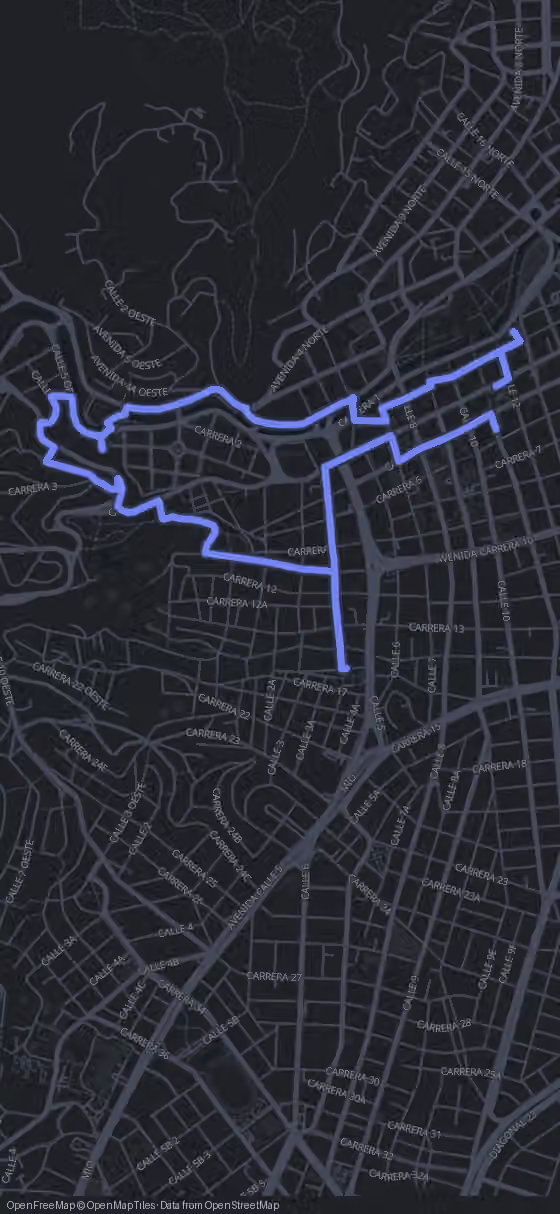
10 Stops 6.2 km ~1 h 33 min walking
Route map for the Cali walking tour
Stop 1 of 10
270 m·3 min
Plaza de Caycedo
Head north toward Iglesia de La Ermita
Hola, welcome to Cali. I'm Alex, and one enormous bronze cat inspired an entire family of public art.
Try this tour with Alex

Cali on Foot at a Glance

This route links 10 stops over 6.2 km, from Plaza de Caycedo to the Catedral Metropolitana de San Pedro on the same square. Pure walking time is 1 h 33 min; with the museums worth entering, plan about five and a half hours.

Squares, monuments and churches are free, and so is the Museo del Oro Calima. Only Museo La Tertulia and Iglesia y Museo La Merced charge admission. The GPS route in your browser costs nothing; the AI Tour Guide is optional.

Open free GPS & optional AI Tour Guide
This short shows highlights of the route. All 10 stops follow below.

The Route

Walking Map of Cali: Old Town, Riverside and San Antonio

10 stops 6.2 km 1 h 33 min walking
Tap to load interactive map

The 10 stops along this route

  1. Plaza de Caycedo in Cali, stop 1 on the self-guided walking tour
    1Plaza de Caycedo
  2. Iglesia de La Ermita in Cali, stop 2 on the self-guided walking tour
    2Iglesia de La Ermita
  3. Iglesia y Museo La Merced in Cali, stop 3 on the self-guided walking tour
    3Iglesia y Museo La Merced
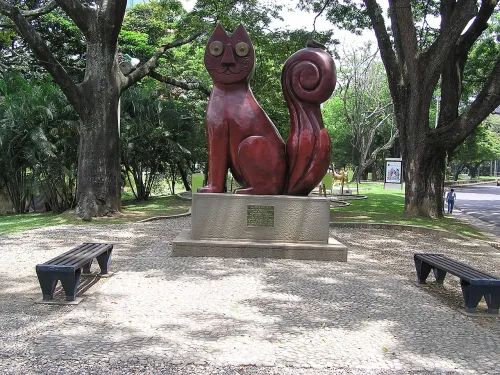
  4. El Gato del Río in Cali, stop 4 on the self-guided walking tour
    4El Gato del Río
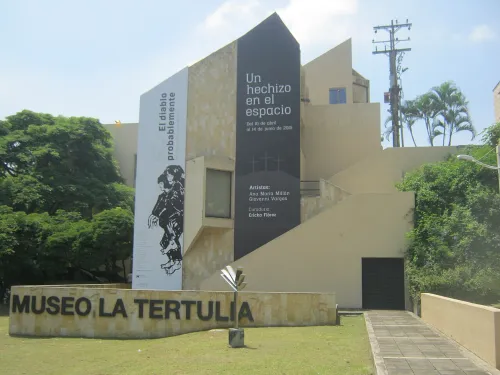
  5. Museo La Tertulia in Cali, stop 5 on the self-guided walking tour
    5Museo La Tertulia
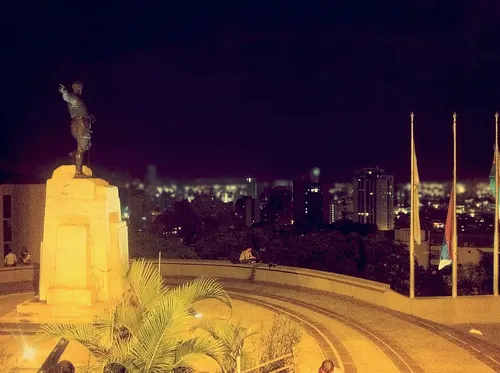
  6. Monumento a Sebastián de Belalcázar in Cali, stop 6 on the self-guided walking tour
    6Monumento a Sebastián de Belalcázar
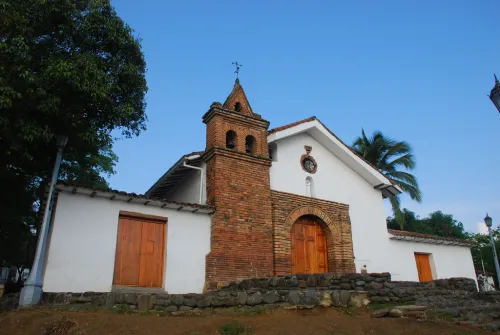
  7. Capilla de San Antonio in Cali, stop 7 on the self-guided walking tour
    7Capilla de San Antonio
  8. Parque Artesanal Loma de la Cruz in Cali, stop 8 on the self-guided walking tour
    8Parque Artesanal Loma de la Cruz
  9. Museo del Oro Calima, stop 9 on the self-guided walking tour
    9Museo del Oro Calima
  10. Catedral Metropolitana de San Pedro in Cali, stop 10 on the self-guided walking tour
    10Catedral Metropolitana de San Pedro
  11. That's the full route.

    Walk it with an AI Tour Guide talking you through every one of these streets.

    Start free in your browser
    You made it

Your Cali Walking Tour, From the Main Square to the Cathedral

  1. 1

    Plaza de Caycedo

    Plaza de Caycedo in Cali, stop 1 on the self-guided walking tour

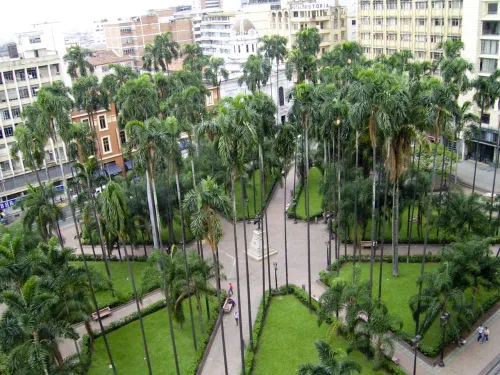
    Start in the square where Cali began to grow. Plaza de Caycedo covers 6,500 m², and in colonial times the wealthiest families built their houses around it, which quickly made it the commercial heart of the young town. Look at the frame of buildings: the Palacio Nacional, the Edificio Otero and the Catedral Metropolitana de San Pedro are national monuments, and so is the square itself. In the middle stands Joaquín de Cayzedo y Cuero, the independence hero and martyr from Cali whose name the plaza has carried since 1913.

    The square has changed names and uses more than once. In the colonial era it was the Plaza Mayor, the place for spectacles, gatherings and even bullfights; from 1813 it was called Plaza de la Constitución. From 1674 it served above all as the public market, for more than two centuries. In 1898 it was turned into a park with a kiosk for the municipal band and closed off with an ornamental fence, which stayed until 1936, when the space became an open public square again. The last big remodelling came in 1986, for the 450th anniversary of the city's founding.

    Two small stories make the place feel lived in. Public scribes and shoeshiners once worked here until they were moved to the Parque de los Poetas, one block away. And the first car ever to reach Cali, driven by Ernesto Seydardh on 13 June 1913, crashed right on this square during a rehearsal of its drive.

    There is nothing to pay and no opening time to watch; the plaza is open around the clock. You will return to its edge at the very end, when you enter the cathedral. For now, head 270 m, 4 minutes, to the little Gothic-looking church by the river.
    Local name
    Plaza de Cayzedo
    Hours
    24/7
    Price
    Free
  2. 2

    Iglesia de La Ermita

    Iglesia de La Ermita in Cali, stop 2 on the self-guided walking tour

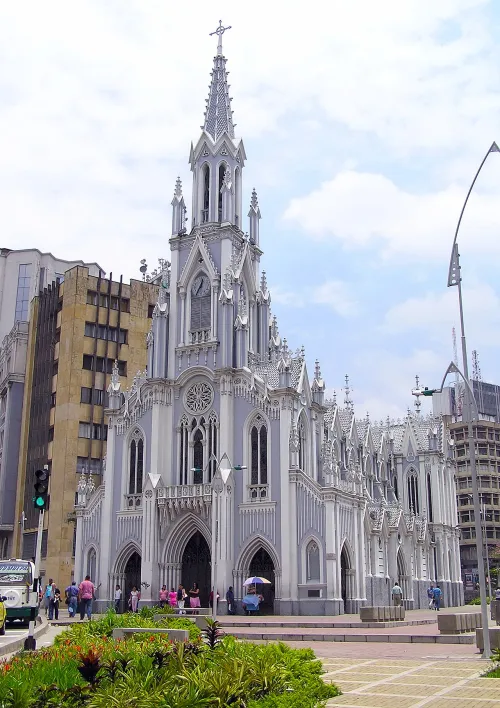
    La Ermita looks like a Gothic cathedral shrunk to the size of a parish church, and that is exactly what it is: a neo-Gothic church in miniature, built in 1942 and, like many neo-Gothic churches in the Americas, modelled on Ulm Cathedral in Germany. Its setting right on the bank of the Río Cali is a big part of its appeal, and it draws far more visitors from around the world than local worshippers.

    The church you see is the second one here. The first was a simple thatched hermitage from the early 17th century near the river, dedicated to Our Lady of Solitude and to the Señor de la Caña; it is known today mainly through a painting by Farfán. The earthquake of 1925 brought it down, and only the figure of the Señor de la Caña survived.

    That figure is still inside, on the left-hand side altar. Both it and the main altar are made of white marble, and the church is now dedicated to Our Lady of Sorrows. Look up at the rib vaults over the three naves and at the stained-glass windows showing the apostles. In front of the central nave, the side arches carry rosettes in their spandrels and a painted pattern of interlaced arcades on slender decorative columns, one of the building's most distinctive details.

    It is an active Catholic church, free to enter during the day, and a quarter of an hour is enough to take it in. Then walk 720 m, 10 minutes, to the place where Cali was founded; on the way you pass the Teatro Jorge Isaacs.

    Hours
    Mon–Sat: 07:30–17:00 | Sun: 10:00–17:00
    Price
    Free (active Catholic temple)
  3. 3

    Iglesia y Museo La Merced

    Iglesia y Museo La Merced in Cali, stop 3 on the self-guided walking tour

    This is where Santiago de Cali, in its present location, began. Sebastián de Belalcázar founded the city on 25 July 1536, at first at a different site near Vijes and Riofrío. On his orders Captain Miguel Muñoz moved it here, and the chaplain Fray Santos de Añasco celebrated a mass on the very ground now occupied by La Merced.

    Today it is a whole religious complex: the main nave dedicated to Our Lady of Mercy, patroness of the city, side chapels for Our Lady of Remedies and the Cristo de Letrán, the convent, a museum of religious art and an archaeological museum. The convent was declared a National Monument in February 1975. The chapel of the Virgen de los Remedios dates from 1678, though repeated restorations have stripped much of its original look; the most remembered followed the explosion of 7 August 1956, which brought down its roof.

    The convent's story mirrors the city's. Monks lived here until 1813, when it became a barracks for the troops of General Tomás Cipriano de Mosquera; later the Augustinian Recollect nuns moved in. Inside the church, the colonial main altar of red wood with gold holds the Virgin of Mercy, whose jewels and those of the Christ Child are 18-carat gold with precious stones. Her rosary was a gift from Pope John Paul II during his visit to Cali in July 1986.

    The doors open only for short spells in the early morning and early evening, so on a daytime walk you will mostly see the complex from outside, which still lets you stand on the founding ground. If your timing works, the altar and the two museums are worth the modest ticket for anyone curious about colonial Cali. From here it is 1080 m, 16 minutes, down to the river and its bronze cat.

    Hours
    Mon–Sat: 7:00–08:00, 17:30–18:30 | Sun: 9:00–10:00, 17:30–18:30
    Price
    COP $4.000 adults, $2.000 children
  4. 4

    El Gato del Río

    El Gato del Río in Cali, stop 4 on the self-guided walking tour

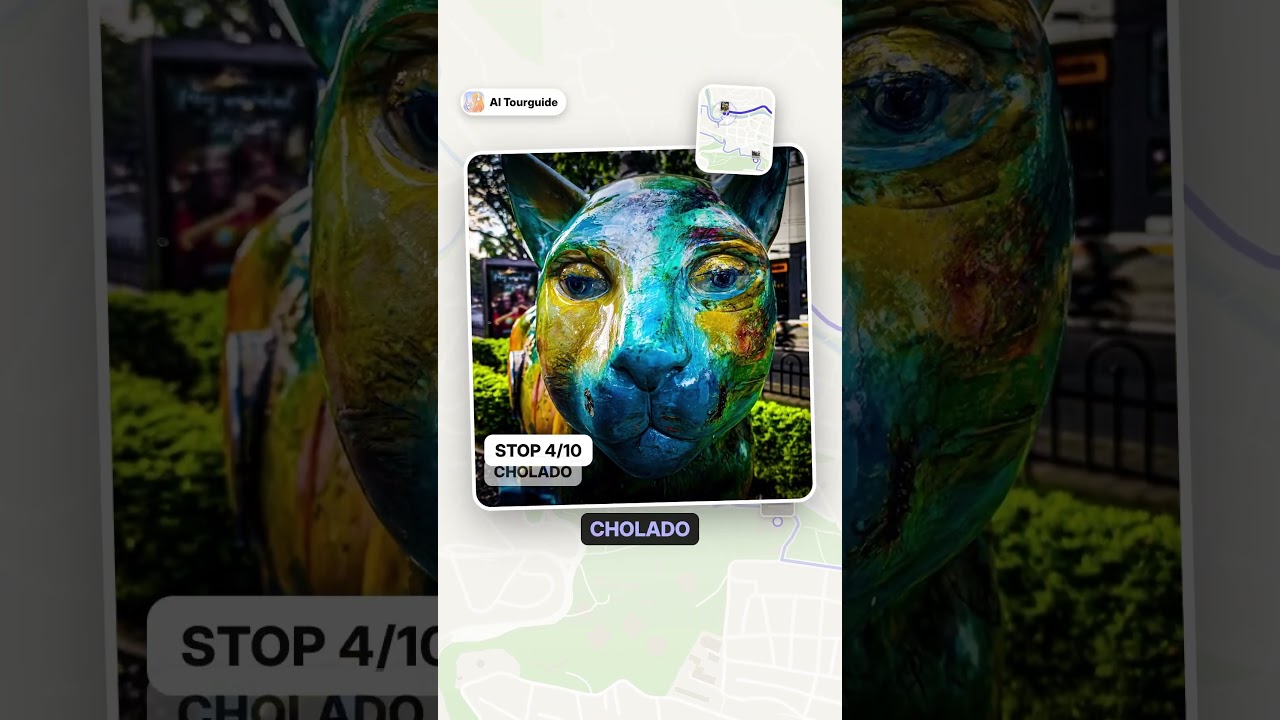
    On the river bank sits a big bronze cat, and Caleños count it among their best-known monuments, alongside the Belalcázar statue and the Cristo Rey hill. It is the work of the painter and sculptor Hernando Tejada, who donated it to the city. It was unveiled on 3 July 1996 as part of a plan begun that year to beautify and recover the banks of the Río Cali, which included a space made especially for the cat.

    Its making had its own drama. The sculpture was cast at large scale in Bogotá, in the workshop of Rafael Franco, and to get it out for the journey to Cali the roof of the workshop had to be taken off. It stands on the Avenida del Río where it meets Calle 4 Oeste, in a lively area of shops and nightlife.

    Look around and you will see the cat is not alone. Ten years after the unveiling, in October 2006, the Chamber of Commerce of Cali led a project to restore the monument and its surroundings and commissioned fifteen companion sculptures, all with the same basic shape but painted and decorated by different artists. They were called las novias del gato, the cat's girlfriends, and well-known Colombian artists such as Maripaz Jaramillo and Omar Rayo took part. More cats have been added since, so there are now more than the original fifteen.

    Everything here is outdoors and free at any hour. Take your time comparing the painted cats, then walk 170 m, just 3 minutes, along the river to La Tertulia.

    Hours
    24/7
    Price
    Free
  5. 5

    Museo La Tertulia

    Museo La Tertulia in Cali, stop 5 on the self-guided walking tour

    La Tertulia is Cali's big art museum, with an important collection of Latin American and above all Colombian art. It spreads over three buildings: the main gallery with some 300 works by national and international artists plus an art workshop for children, the Cinemateca arthouse cinema, which regularly hosts touring film festivals such as EuroCine, and a building for printing and restoration workshops.

    The name tells its origin. A tertulia is a social gathering to talk about art or literature, and that is how it began. Under the dictatorship of General Gustavo Rojas Pinilla, cultural life in Cali collapsed: the Municipal Theatre was reduced to a cinema and the Institute of Fine Arts used for state propaganda. Private houses became improvised cultural centres. Clara Inés Suárez, whose husband served as ambassador in several countries, persuaded artists to come to Cali, and together with Maritza Uribe de Urdinola, who ran another cultural salon in her own home, she built a cultural circle in the city.

    On 9 March 1956 La Tertulia was founded in a house rented by the journalist Alfonso Bonilla Aragón in the San Antonio neighbourhood, whose hill you reach later on this walk. The meetings went unnoticed by state security, which banned such gatherings. For twelve years a private school ran there in the mornings, supported by the members, and in the afternoons works by local and foreign artists were shown, slowly building the collection. Growth and the need for a proper exhibition hall led in 1968 to the Foundational Building here on the Río Cali, at the spot known as El Charco del Burro.

    If modern Colombian art interests you even a little, this is the ticket worth paying for on the route; give it about an hour. Next comes a walk of 840 m, 15 minutes, up to the founder's statue, passing the Museo Caliwood on the way.

    Hours
    Tue: 10:00–18:00 | Wed–Sat: 10:00–19:00 | Sun: 14:00–18:00 | Mon: Closed
    Price
    COP $12.000 general exhibitions; students/discounted COP $6.000
  6. 6

    Monumento a Sebastián de Belalcázar

    Monumento a Sebastián de Belalcázar in Cali, stop 6 on the self-guided walking tour

    On a small plaza on the hill that bears his name stands the man who founded Cali. The bronze Sebastián de Belalcázar points with his right hand to the west, towards the Pacific, and holds his sword, Tizona, in his left. On the pedestal you can see the coat of arms of Santiago de Cali and a plaque with the dedication. It is one of the city's most recognisable monuments.

    It is also one of its most contested. On the morning of 28 April 2021, during the nationwide protests in Colombia, members of the Indigenous Misak people pulled the statue down, leaving only the pedestal. The Regional Indigenous Council of Cauca, CRIC, explained that for them the figure of Belalcázar stood for symbolic violence against all the Indigenous peoples who still exist and hold on to their identity today.

    The city ordered by decree that the statue be put back as soon as possible. It was restored in December 2021, and moving it somewhere else was discussed for a while. On 4 November 2022, after a year away, it returned to its pedestal, which officials presented as an answer to voices claiming the city did not want it back in its usual place.

    There is nothing to enter here and no ticket; the plaza is open at all hours. Stand by the pedestal for a moment and think about both readings of the figure, then walk 590 m, 9 minutes, to the white chapel on San Antonio hill.

    Hours
    24/7
    Price
    Free
  7. 7

    Capilla de San Antonio

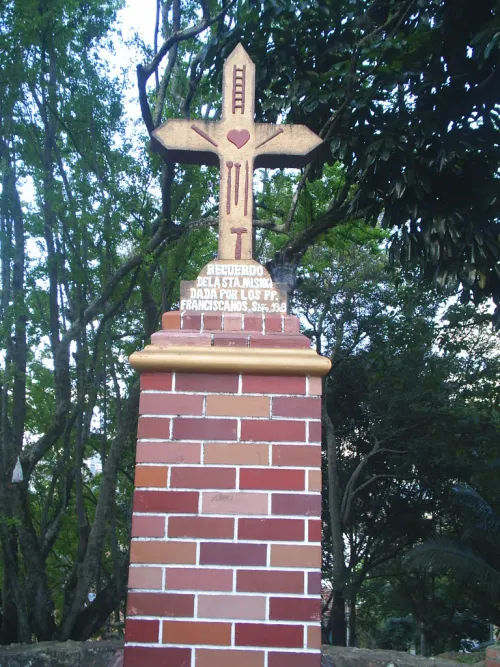
    Capilla de San Antonio in Cali, stop 7 on the self-guided walking tour

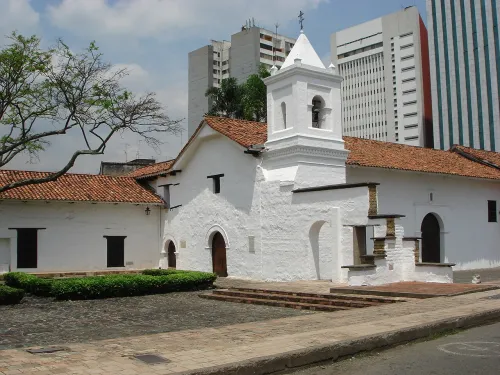
    The small baroque chapel on the Colina de San Antonio takes you back to a Cali of fewer than 5,000 inhabitants, a town that in the mid-18th century reached only as far as this hill. Until then, the faithful went to a chapel of San Antonio de Padua inside the main church of San Pedro for Sunday and holiday mass, and getting there was not easy for everyone.

    In 1742 the parish priest José de Alegría saw the need for a sub-parish up here. The Spaniard Juan de Orejuela left 1,000 patacones in his will to start the project, and Juan Francisco Garcés de Aguilar donated the land in 1746. Forty years later the plot was enlarged through a donation from his daughter-in-law, Antonia Josefa Vallecilla y Salazar. Construction began in 1746, and the chapel was consecrated in 1747.

    Records from 1786 describe the interior: a figure of Saint Anthony in the central niche, Our Lady of Bethlehem to the right, and Saint Joachim and Saint Anne to the left. That same year the chapel was rebuilt for the first time, again in 1803, and in 1944 it was restored to mark its 200th anniversary.

    It is an active Catholic chapel, free and open into the evening, so even a late start lets you look inside; ten minutes is plenty. From the hill, walk 970 m, 14 minutes, to the craft park of Loma de la Cruz.

    Hours
    Daily: 08:00–21:00
    Price
    Free (active Catholic chapel)
  8. 8

    Parque Artesanal Loma de la Cruz

    Parque Artesanal Loma de la Cruz in Cali, stop 8 on the self-guided walking tour

    Loma de la Cruz is an open-air crafts park where local artisans display and sell their work. It goes back to 1987, when the state crafts company Artesanías de Colombia opened a branch in the Valle del Cauca to give the region's craftspeople an organised place to work and sell. The park was officially inaugurated on 12 July 1990 under an agreement between the company and the city.

    In December 1992 Artesanías de Colombia closed its branch, and in 1993 the city took over the park, with the aim of promoting crafts and sales and turning it into an exhibition space for them.

    The name comes from a legend set in 1559. Two enslaved people, Crescencio and Juana, fell in love with the quiet help of their mistress, Doña Carmen de la Ronda, and married in secret at the altar of Piedra Grande in the Valle del Lili. When Juana told her mistress that both of them kept hearing a deep voice from the mountains, at the spot now known as the Cerro de las Tres Cruces, Doña Carmen remembered the old story of a demon living beneath that peak.

    Entry is free. Give yourself half an hour to browse the stalls. Then walk 1060 m, 16 minutes, back towards the centre and the gold museum, passing the Museo Arqueológico La Merced on the way.

    Hours
    Daily: 08:00–23:00
    Price
    Free (open-air public park)
  9. 9

    Museo del Oro Calima

    Museo del Oro Calima, stop 9 on the self-guided walking tour

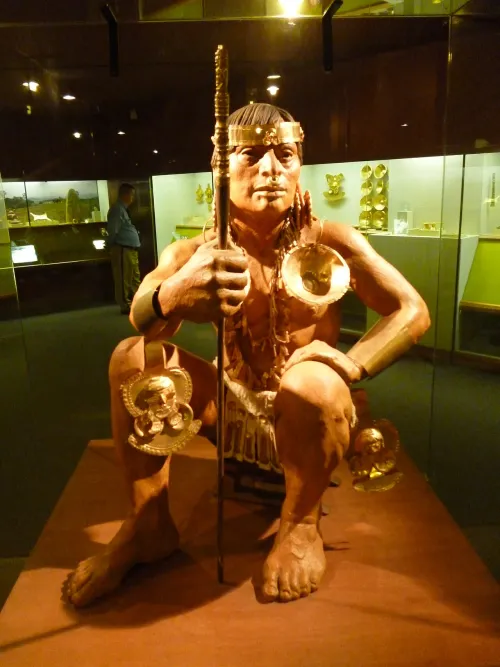
    This free museum is dedicated to the Calima culture, the collective name for several peoples who lived in the Valle del Cauca over different periods before the Spanish arrived. It belongs to the Banco de la República, which runs seven regional museums to show the art and culture of Colombia's pre-Hispanic societies, and it opened on 9 May 1991.

    The collection counts 454 pieces: goldwork, ceramics, stone, wood, shell, bone and ethnographic objects from the Ilama, Yotoco and Sonso cultures. Pieces from the Malagana culture, also part of the Calima world, were discovered only recently and are kept in the Museo del Oro in Bogotá. The exhibition explains how these people lived: their view of the world, religion, hierarchies, adornment, trade with other cultures, goldsmithing techniques, myths and the symbols you see on the objects.

    The museum sits in the cultural building of the Banco de la República, which also houses a documentation centre on regional authors and culture, a music room and an exhibition hall for temporary and touring shows.

    For anyone interested in what Cali was before Belalcázar, this is a must, and it costs nothing; plan about 45 minutes. The last leg is short: 460 m, 6 minutes, back to the main square and its cathedral.

    Hours
    Tue–Fri: 09:00–17:00 | Sat: 10:00–17:00 | Sun–Mon: Closed
    Price
    Free
  10. 10

    Catedral Metropolitana de San Pedro

    Catedral Metropolitana de San Pedro in Cali, stop 10 on the self-guided walking tour

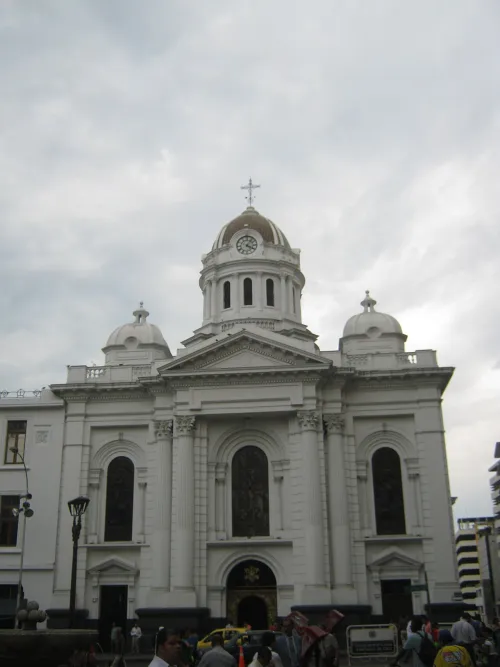
    You are back on Plaza de Caycedo, in front of the main church of the Archdiocese of Cali, seat of the archbishop and parish church in its own right. Next to it on its left side stands the Episcopal Palace, designed by the French architect Julien Polti. The cathedral was proposed as a National Monument in 1982 and in 2004 declared a Bien de Interés Cultural de Carácter Nacional, the title that replaced it.

    A church dedicated to Saint Peter must have gone up soon after the founding in 1536. No documents describe it well enough to reconstruct it, but by the 16th century it had foundations of cut stone and masonry, a brick chancel arch and a straw roof, later replaced by tiles. Its main entrance faced today's Calle 11, while the side door, the Puerta Falsa, opened onto the Plaza Mayor.

    In the early 17th century the building was in such poor shape that it had to be rebuilt. The master mason Sánchez de Medina drew the plans, rebuilt the old sacristy and added a second one with a door into the church, so priests could reach the side altars. The master carpenter Pedro Chaparro lined the main chapel, the chancel arch and both sacristies in wood, and the town council also commissioned from him the church doors and a grille for the baptismal font.

    It is an active cathedral and free to enter, a fitting place for a quiet look inside at the end of the walk. When you come out, you are standing on the square where the whole walk began.

    Local name
    Catedral Metropolitana de Cali
    Hours
    Mon–Sat: 07:30–17:00 | Sun: 08:00–18:00
    Price
    Free (active Catholic cathedral)
Walking tour route map of Cali Route loaded
Plaza de CaycedoIglesia de La ErmitaIglesia y Museo La MercedEl Gato del Río+6
All 10 stops are already on the map.
You just press start.
AI Tour Guide

Now walk Cali's river and hills with a guide in your ear

Press start wherever you are, even hundreds of kilometres from Cali, and the guide begins telling its stories right away. In the city, pick any of the 10 stops to start from: it leads you there, then talks with you the whole route, asking, listening, remembering, and shaping the tour around your answers.

10stops 6.2km 1 h 33 minwalking 13languages
▶Start the tour free

Free to start · Runs in your browser · No app, no download

Shorter Ways to Walk Cali

Split the route in two if you only have half a day, or if a closing day rules out one of the museums.

Old town and riverside art

Stops: 1, 2, 3, 4, 5

For art lovers with a morning: the main square, the two churches near the river, the bronze cat and its painted companions, then La Tertulia. Walking time 33 min. La Tertulia is the one ticket you will almost certainly buy; La Merced only if you happen to arrive while its doors are open.

San Antonio hill and Calima gold

Stops: 6, 7, 8, 9, 10

For colonial history and crafts: the founder's statue, the baroque chapel, the craft park and the gold museum, ending in the cathedral. Walking time 45 min and no admission fees at all. Come on a day when the Museo del Oro Calima is open.

How Long This Cali Tour Takes, With and Without Museums

The walking itself is the smaller part of the day. Allow about an hour in Museo La Tertulia, 45 minutes in the Museo del Oro Calima, half an hour among the craft stalls of Loma de la Cruz and roughly a quarter of an hour at each of the other stops, and you arrive at the five and a half hours of the full route, plus any lunch break you add.

A sample day: start on Plaza de Caycedo at 9:30, reach La Tertulia at 10:58, stand in front of Belalcázar at 12:13, arrive at the Museo del Oro Calima at 13:52 and finish in the cathedral around 15:00.

Split in two, the riverside half takes about two and a half hours including La Tertulia, and the hill and gold half about two and three quarter hours including the Museo del Oro.

Before You Set Off in Cali

  • Start and finish: Plaza de Caycedo is the recommended start, but you can join at any stop. You finish at the Catedral Metropolitana de San Pedro, which stands on that same square; if you began elsewhere, the browser GPS guides you back to your starting point.
  • Best day: Pick a day when both Museo La Tertulia and the Museo del Oro Calima are open. A morning start works best for the museums.
  • Costs: Museo La Tertulia and Iglesia y Museo La Merced charge admission. Everything else on the route is free.
  • Evening option: Capilla de San Antonio and Parque Artesanal Loma de la Cruz stay open into the evening, so the hill section also works as an evening walk once the museums have closed.
Walking tour route map of Cali
AI Tour Guide

Ready when you are: a guide for Cali's ten stops

Press start and a voice AI Tour Guide takes it from here: leading the route through Cali, telling the stories, and turning your walk into a real back-and-forth conversation. No app or download is needed; it runs in your browser.

10stops 6.2km 1 h 33 minwalking 13languages
▶Start the tour free

Free to start · Runs in your browser · No app, no download

What the AI Tour Guide Adds on This Route

This walk covers almost five centuries, from the founding mass to the painted cats of 2006, and the AI Tour Guide turns that into a conversation shaped around you. It greets you on Plaza de Caycedo, tells the story of each place, asks what you noticed and remembers it: if the cats on the river bank caught your eye, it picks up the art thread again at La Tertulia; if the toppled statue on the hill left you with questions, it returns to them later on the walk. You can interrupt it whenever you like. You start with 100 free credits; after that you choose this tour all-inclusive for €19.99 with no time limit, or credits at €5 per hour.

A Real Conversation A voice AI Tour Guide greets you, leads the whole route, and tells the stories and facts as you walk, asking what you want to see and keeping a real conversation going. Not a recording you press play on.
Map Navigation Follow the route on the map and walk at your own pace. You choose where to start and when to move to the next stop.
Ask Anything Curious about a building you pass? Ask your AI Tour Guide on the spot and the conversation carries on.
13 Languages Switch language anytime. No separate tour needed.
Start free in your browser

Common Questions About Walking Cali

Is there a reduced ticket at Museo La Tertulia?

Yes. Students and other reduced-rate visitors pay less than the full price for the general exhibitions.

Can I go inside Iglesia y Museo La Merced?

Yes, but only during two short windows a day, one in the morning and one in the early evening. At other times you see the complex from the street.

Is the Iglesia de La Ermita worth seeing after dark?

From outside, yes: the church is lit up at night and stands right on the Río Cali. The interior is closed by then.

Which other Colombian walks combine well with Cali?

The closest is the coffee-country town of Salento, 170 km away, with its own Salento walking tour. Travelling on, there are routes for Medellín and Cartagena de Indias, and across the border for Quito.

Is the tour really free?

Yes. The whole tour is free: the route, the interactive map and the navigation cost you nothing. Only the voice AI Tour Guide is optional and paid: you test it with 100 free credits, then you pay either €5 per hour or €19.99 for this whole tour, with no time limit. Admission to 2 of the 10 stops is not included: Iglesia y Museo La Merced and Museo La Tertulia charge their own entry fees.

Do I need to download an app?

No. Everything runs in your phone browser. Open the route and start walking, no download and no sign-up required.

Do I need to book the walking tour in advance?

No booking needed. This self-guided tour is available anytime. Open the route in your browser and start walking. The AI Tour Guide works instantly, no app, no reservation required.

What languages is the AI Tour Guide available in?

The AI Tour Guide speaks 13 languages, so you take the tour in your own language and can switch at any time.

Can I skip stops or change the route?

Yes. Skip any stop, spend extra time at places you like, or start the route from any point. It is your walk, you set the pace.
Image credits
▶ Start free in your browser Runs in your browser, no app, no download