

Euromast
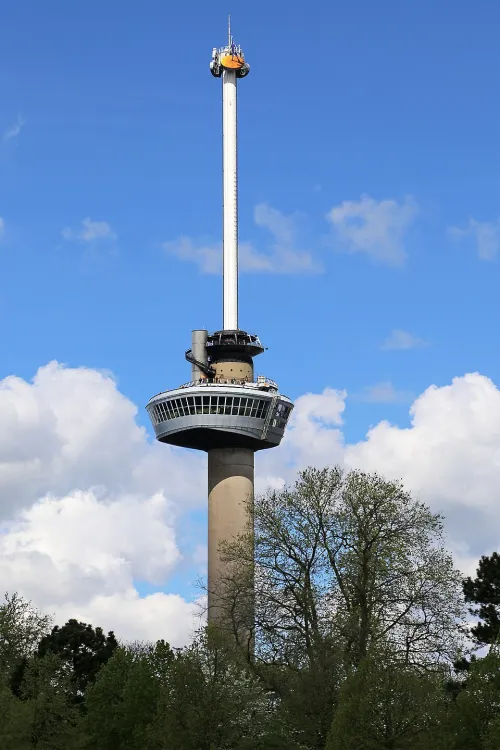
Look up and you will see why architect Huig Maaskant called it a mast. He took the rigging of a ship as his model, and the round restaurant with its viewing deck is the crow's nest, the lookout high on a ship's mast from which sailors scanned the horizon. The tower stands in Het Park, close to the entrance of the Maastunnel, and its outline is one of the easiest to pick out on the Rotterdam skyline.
It was built for the Floriade horticultural exhibition of 1960, with contractor J.P. van Eesteren, and Princess Beatrix opened it on 25 March 1960. The shaft is reinforced concrete, 9 metres across with walls 30 centimetres thick. To keep the centre of gravity low, a concrete block of some 1,900 tonnes sits in the foundation. The steel restaurant, weighing 240 tonnes, hangs 96 metres above the ground and was jacked up to its height in just five days. At 32 metres, visitors once found a replica ship's bridge with navigation instruments and a chart room.
The location was deliberate: anyone driving into Rotterdam on the motorways of the day saw the 107 metre tower rise straight ahead. Then the city grew taller. In 1968 the Medical Faculty on the Westzeedijk overtook it by ten metres. Rotterdam's answer came in 1970: an 85 metre steel Space Tower on top, which brought the Euromast to 185 metres and made it the tallest structure in the city again.
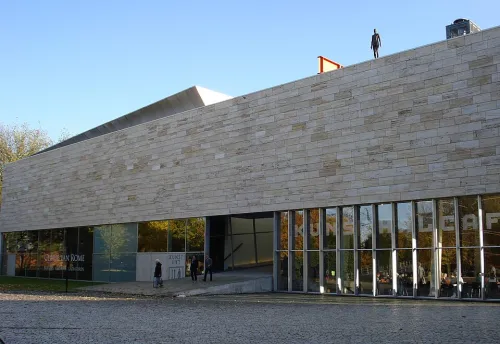
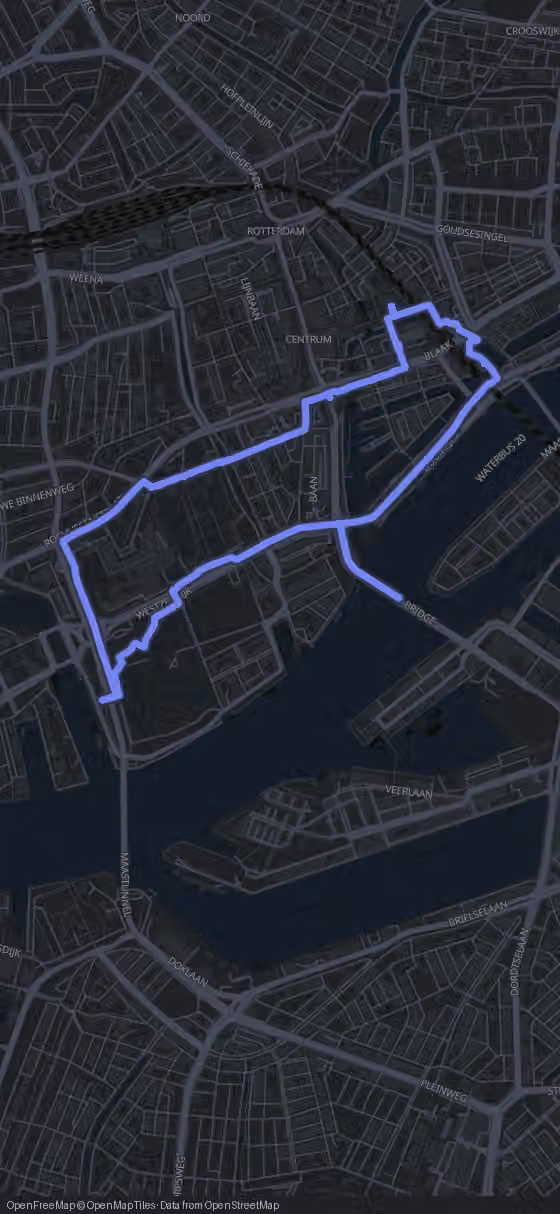
Is it worth going up? On a clear day, yes: two lifts travelling at four metres per second take you up, and the view stretches some thirty kilometres, which gives you the whole walk ahead at a glance. On a grey day, admire it from the park and keep your ticket money for a museum. From here it is 940 metres, about 13 minutes, to the Kunsthal Rotterdam.