

Neude Square
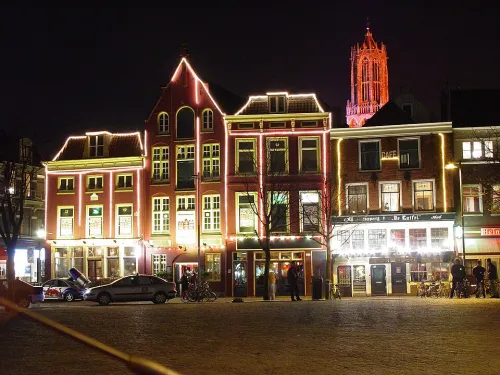
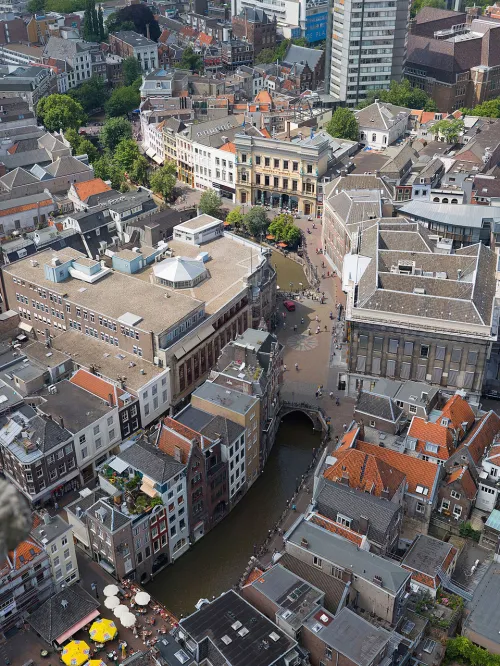
Start on the Neude, a broad square originally laid out as a symmetrical trapezium with two streets leaving each corner. The traffic route of the Potterstraat and Lange Jansstraat now cuts across it, so one corner no longer feels part of the square. Look for the striking flagpole, and picture the whole space as a car park, which it was until the 1990s. Today cafés put out terraces in summer and the square hosts festivals and big events.
The name comes from 'Node', a marshy hollow left by an old bed of the Rhine. At the end of the 15th century the city government had sand, cobbles and rubble dumped here to firm up and raise the ground. Because the square lay on the trade road from Holland to Gelre and close to the Oudegracht, merchants came, and the Neude became an important market. Grain was sold on its south side until 1894, when the Fruithal and Korenbeurs on the Vredenburg took that trade away.
The square has had darker uses too: executions were carried out here, the bodies of war victims were gathered here, and political speeches were made at the pump. On Cossack Day, 28 November 1813, the liberators of Utrecht slept on the Neude under the open sky, around their campfires. Locals still debate the article in front of the name: books from 1674 already say 'de Neude', and in the old Utrecht dialect it is simply 'de Neu'.
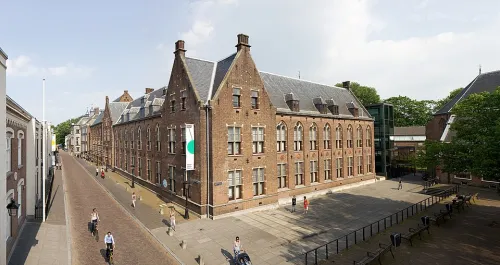
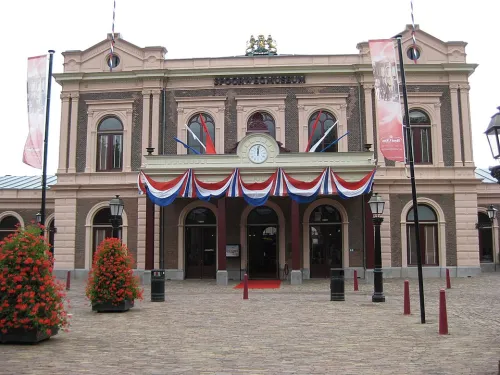
Right by the square is the Utrecht Archives Expo, if city history on paper appeals. From here it is 390 metres, about 5 minutes, to Museum Speelklok.