

Lithuanian Square
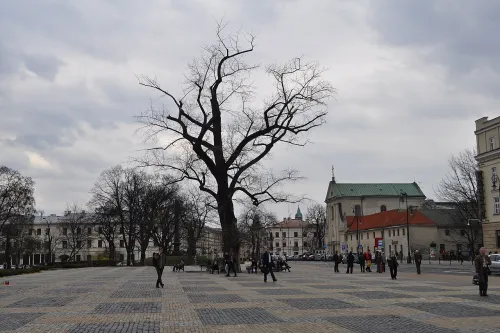
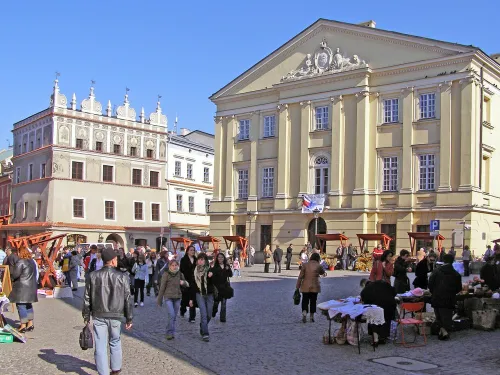
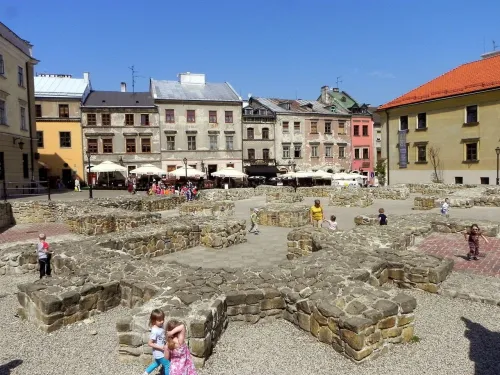
Start on Lithuanian Square, Plac Litewski, the big open space at the centre of Lublin. It covers about 35,000 square metres and is still where the city holds state ceremonies, happenings and public events. It was laid out in the 1820s for something less festive: military parades, which is why its first name was Drill Square.
Look for the Union of Lublin monument, an iron obelisk with a classical relief of Poland and Lithuania designed by Paweł Maliński. Tradition says that in 1569 the Polish and Lithuanian nobility met on this spot before the union of the two countries was signed. A brick obelisk once marked the place, but it was destroyed when the Church of the Brothers of St. John of God was demolished in 1819. Rev. Stanisław Staszic won permission from the tsarist authorities in 1826 to raise the new one. Keep his name in mind; you will meet him again at the castle.
The ground has had many owners. In the 16th century a road crossed it to a bridge over the Czechówka River and on towards Warsaw, on land of the Radziwiłł family. Józef Karol Lubomirski, the Sanguszkos and the Szepetyckis followed, until Beniamin Finke bought it at auction in 1801 and gave it to the government. Until 1818 it served as a straw warehouse. In the 1870s the tsarist authorities built the Orthodox Church of the Elevation of the Holy Cross here, where the fountain is today.
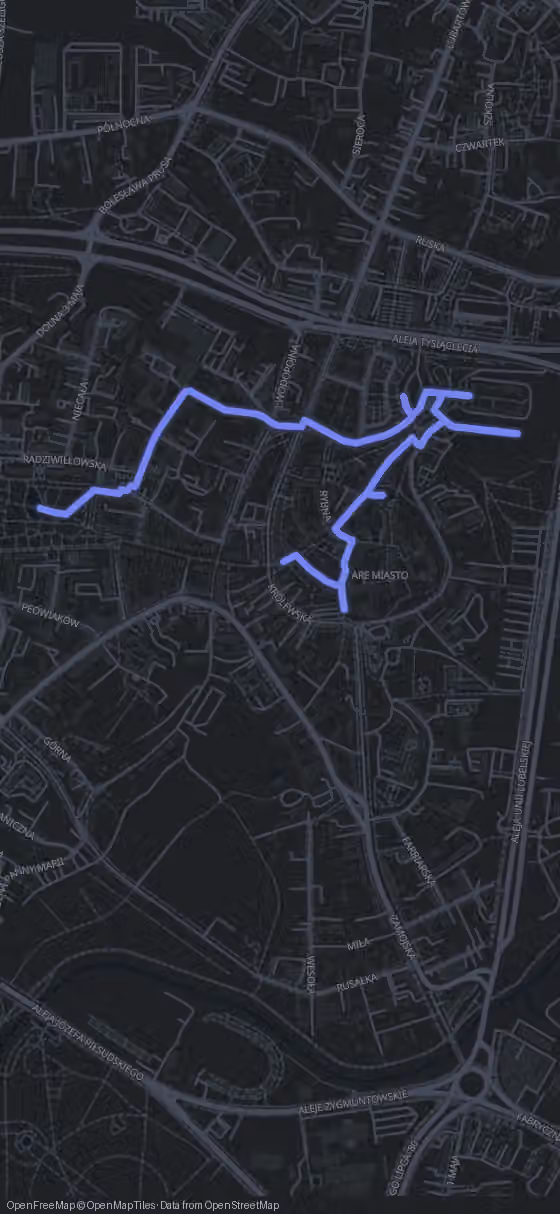
Now comes the longest leg of the walk: 980 m, about 13 minutes, to the Old Town Market Square.