



Jasna Góra Monastery
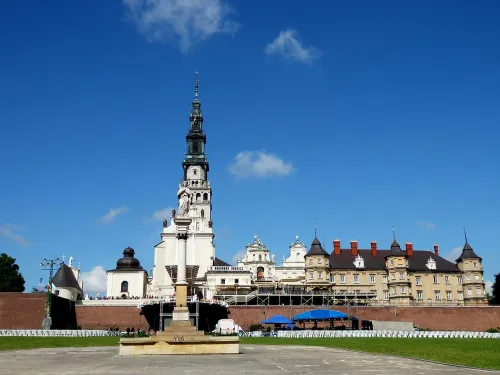
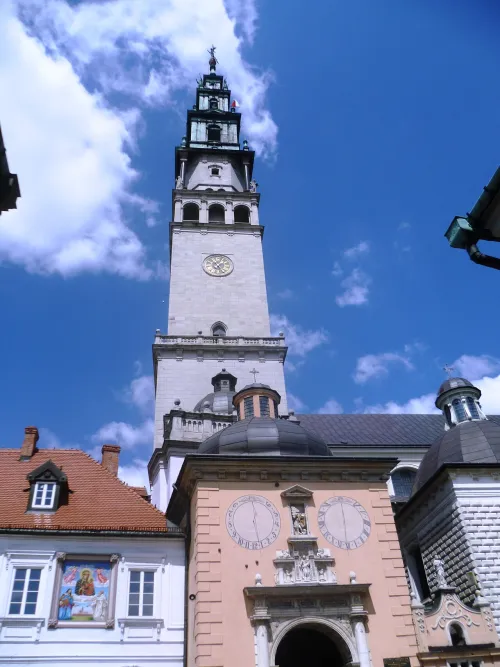
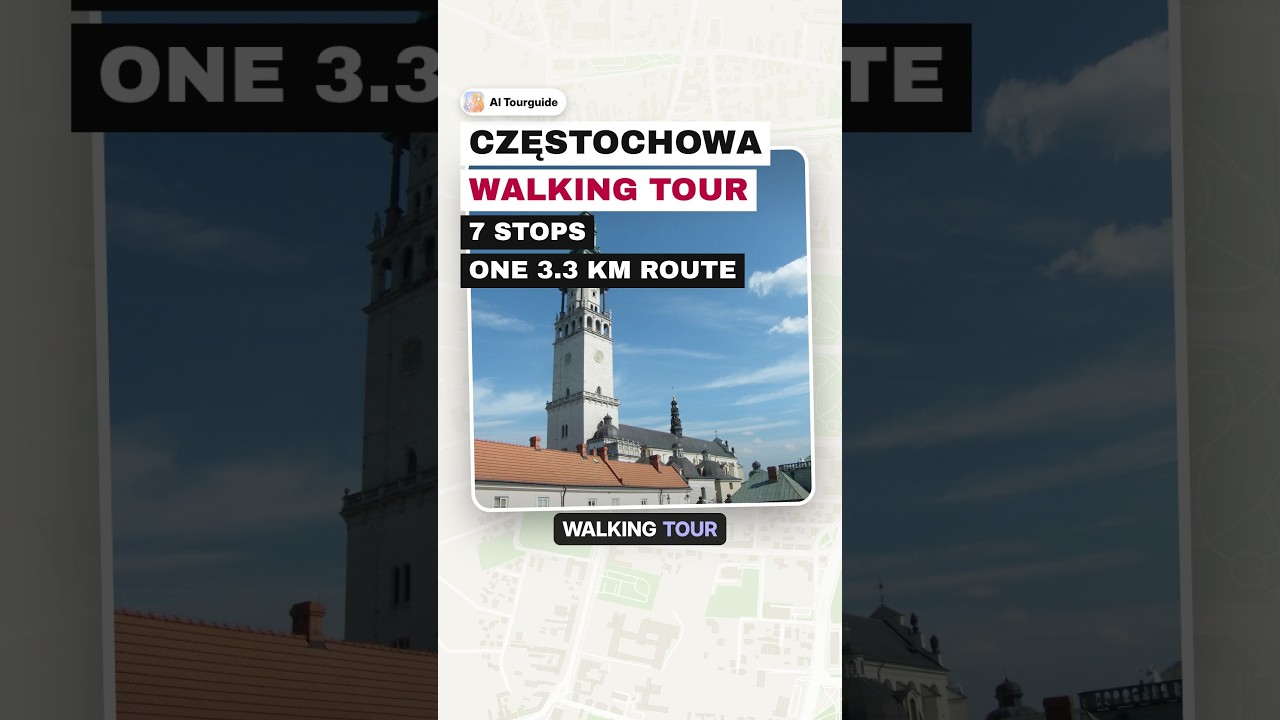
Your walk begins on Jasna Góra, the Luminous Mountain, Clarus Mons in Latin: a shrine dedicated to the Virgin Mary and one of Poland's places of pilgrimage. Pauline monks from Hungary founded the monastery in 1382 at the invitation of Vladislaus II of Opole, and they were entrusted with the icon that still draws people here. The Black Madonna of Częstochowa, also called Our Lady of Częstochowa, shows the Mother of God with the Christ Child; miraculous powers are attributed to it, and it counts among Jasna Góra's most precious treasures.
The church you see is the result of centuries of rebuilding. Hussites sacked the monastery on 14 April 1430. Around 1463 the original single-nave church was enlarged into a three-nave Gothic hall church, the Baroque reconstruction followed in the early 1690s, and between 1693 and 1696 the walls of the nave and chancel were raised, turning the hall into a basilica. Look for that mix as you go in: a Gothic plan wearing Baroque clothes.
The story that made Jasna Góra a national symbol is the winter of 1655, when the Swedish army besieged the monastery during the Deluge and failed. The resistance spread, and on 1 April 1656, in the cathedral of Lwów, King Jan Kazimierz vowed to place his country under the protection of the Mother of God and proclaimed her Queen of his lands; on 16 March 1657 he came here to pray. The Swedes tried again in 1702, 1705 and 1709 without success. In 1717 the icon was crowned by decision of Pope Clement XI, and between 1760 and 1772 the monastery held an unusual prisoner: Jacob Frank, the Polish-Jewish founder of the Frankist sect, who considered himself a messiah.
Going in is free, for the grounds, the chapel and the basilica alike, so the only thing you spend is time. Whether or not you are religious, the Chapel of the Miraculous Image is the reason to come, and the whole site is one of Poland's official national Historic Monuments. Allow a good hour. The Jasna Góra Tower stands in the same complex, a minute away.