

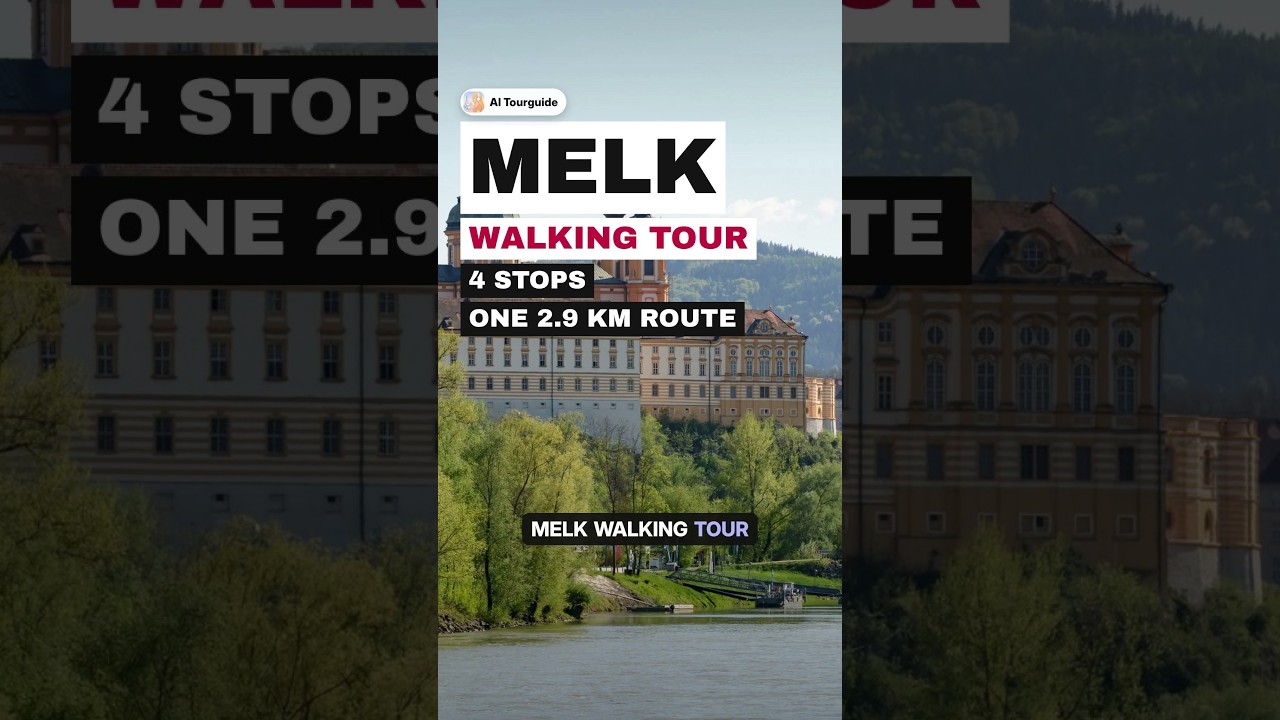


Melk Abbey
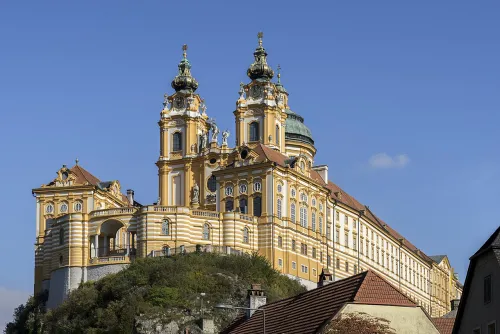
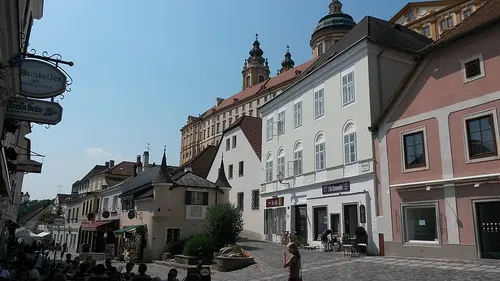
You start at the building that put Melk on the map. The Benedictine abbey sits on a rocky outcrop high over the town, looking out across the Danube where the Wachau valley begins. What you see today is pure Baroque, built between 1702 and 1736 to designs by Jakob Prandtauer, but the story here is much older. In 1089 Leopold II, Margrave of Austria, handed one of his castles to Benedictine monks from Lambach Abbey, and they never left.
Inside, the abbey church is the reason most people pay admission. Look up: the frescos are by Johann Michael Rottmayr and Paul Troger. The church also holds the tomb of Saint Coloman of Stockerau and the remains of several members of the House of Babenberg, Austria's first ruling dynasty. Remember Coloman's name, because he will turn up twice more on this walk.
The monks were scholars from early on. A monastic school was founded in the twelfth century, and the library became renowned for its manuscripts, many of them containing music. In the fifteenth century Melk led the Melk Reform, which brought new life to monasteries across Austria and Southern Germany. Later, in the age of the Enlightenment, the abbey became a place of open debate; several monks were Freemasons and there was even a Masonic lodge here. Umberto Eco paid tribute to this reputation by naming a character in The Name of the Rose "Adso of Melk".
The abbey's fame protected it. When Emperor Joseph II dissolved many Austrian monasteries between 1780 and 1790, Melk was spared, and it also came through the Napoleonic Wars. After the Anschluss in 1938 the state confiscated the school and much of the building; the school was returned after the Second World War. If you care about Baroque art, church history or simply want to see the frescos and Coloman's tomb, going inside is worth the ticket. If you only have an hour, admire it from the outside and save your time for the town.
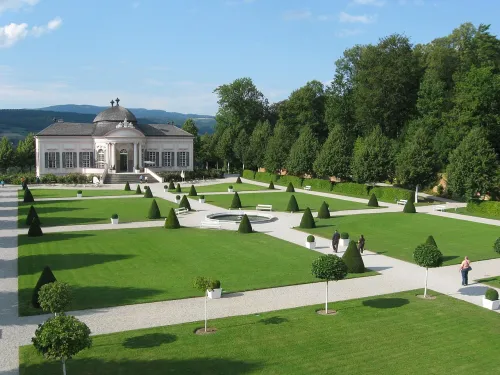
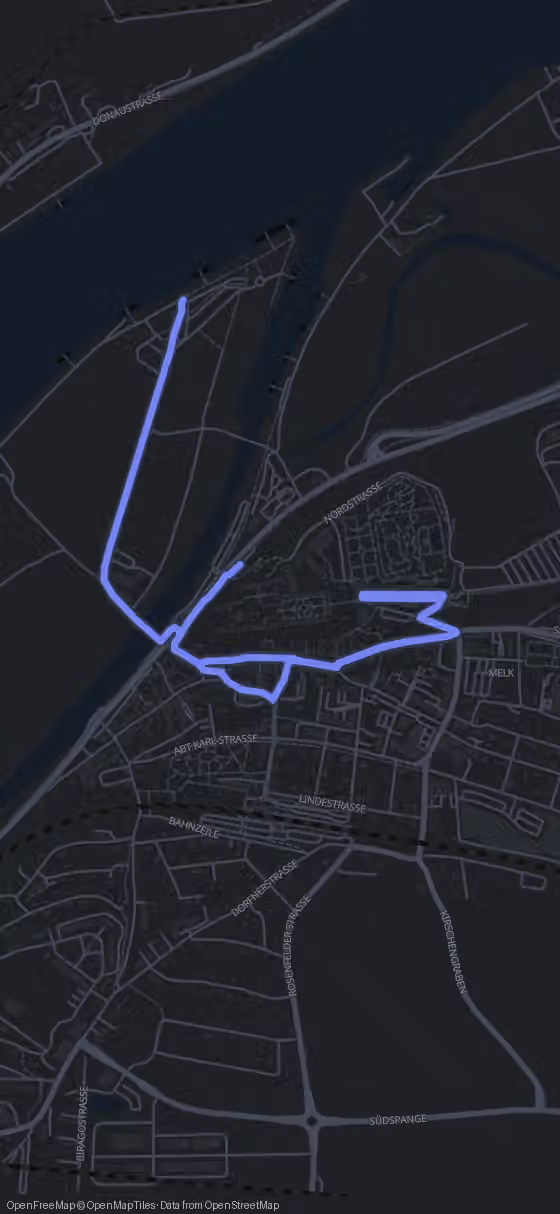
From here it is 1120 m, about 17 minutes on foot, to the abbey's gardens, which your ticket already covers.