Free Walking Tour Mendoza: Earthquake Ruins to Hilltop

Walk from the square where Mendoza was founded, past the ruins of 1861, through the rebuilt city's plazas and park to the Andes monument on its hill.

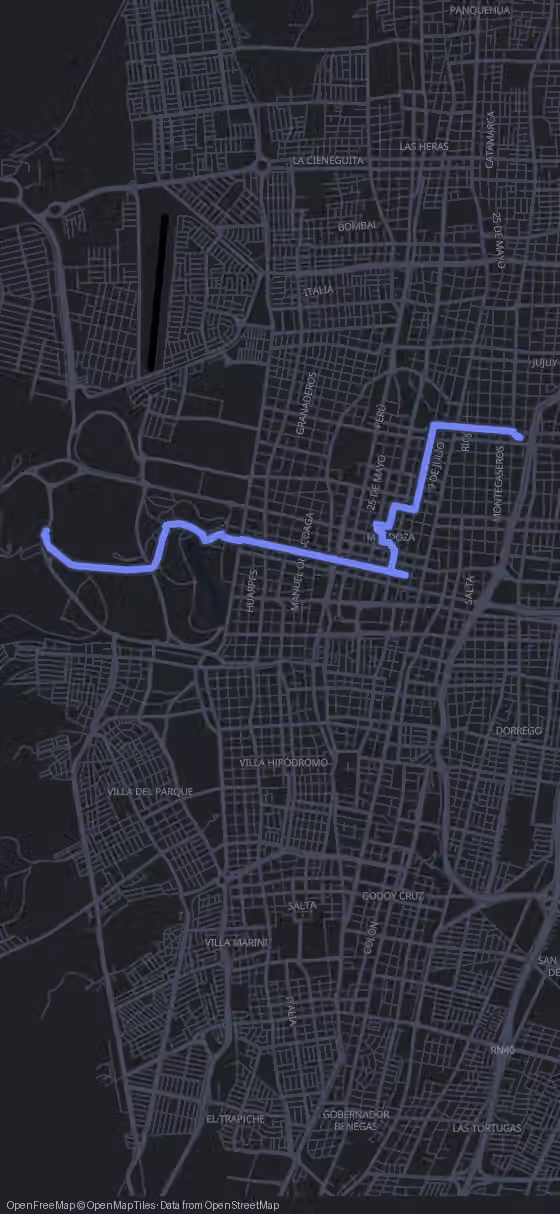
8 Stops 8.3 km ~2 h walking
Route map for the Mendoza walking tour
Stop 1 of 8
150 m·2 min
Plaza Pedro del Castillo
Head north-west toward Ruinas de San Francisco
Hola, welcome to Mendoza. I'm Alex, and this city had to begin again after disaster erased its colonial center.
Try this tour with Alex

This Route at a Glance

Eight stops lead from Plaza Pedro del Castillo, where colonial Mendoza stood until the 1861 earthquake, through the rebuilt city to the monument on Cerro de la Gloria. It's 8.3 km with 2 hours of pure walking; with time at each stop, plan about 4.5 hours.

Every square, the park and the hill are free, and so are the Ruinas de San Francisco and the Basílica de San Francisco. Only the backstage tour of the Teatro Independencia costs money. The GPS route runs free in your browser; the AI Tour Guide is optional.

Open free GPS & optional AI Tour Guide
This short shows highlights of the route. All 8 stops follow below.

The Route

Walking Map of Mendoza, Founding Quarter to Cerro de la Gloria

8 stops 8.3 km 2 h walking
Tap to load interactive map

The 8 stops along this route

  1. Plaza Pedro del Castillo in Mendoza, stop 1 on the self-guided walking tour
    1Plaza Pedro del Castillo
  2. Ruinas de San Francisco in Mendoza, stop 2 on the self-guided walking tour
    2Ruinas de San Francisco
  3. Basílica de San Francisco in Mendoza, stop 3 on the self-guided walking tour
    3Basílica de San Francisco
  4. Teatro Independencia in Mendoza, stop 4 on the self-guided walking tour
    4Teatro Independencia
  5. Plaza Independencia in Mendoza, stop 5 on the self-guided walking tour
    5Plaza Independencia
  6. Plaza España in Mendoza, stop 6 on the self-guided walking tour
    6Plaza España
  7. Parque General San Martín in Mendoza, stop 7 on the self-guided walking tour
    7Parque General San Martín
  8. Cerro de la Gloria in Mendoza, stop 8 on the self-guided walking tour
    8Cerro de la Gloria
  9. That's the full route.

    Walk it with an AI Tour Guide talking you through every one of these streets.

    Start free in your browser
    You made it

Your Mendoza Walking Tour, Stop by Stop Through the Rebuilt City

  1. 1

    Plaza Pedro del Castillo

    Plaza Pedro del Castillo in Mendoza, stop 1 on the self-guided walking tour

    This green square is where Mendoza began. Pedro del Castillo reached the Huentata valley on 22 February 1561 and on 2 March founded the 'Ciudad de Mendoza del Nuevo Valle de La Rioja', at first on the east bank of the channel known today as the Cacique Guaymallén. The young town answered to the Captaincy General of Chile. On 28 March 1562 Juan Jufré moved it west of the channel, onto the ground you're standing on now.

    Picture the square in the 1810s: a double row of low tamarind trees framing the centre, and in the middle an old fountain that supplied water to the whole town, ringed by lanterns that were lit in the first hours of the night. Around it rose the great churches of colonial Mendoza: the Iglesia Matriz of Nuestra Señora de la Candelaria, Santo Domingo, San Agustín, the convent of Santa Mónica and San Francisco. Between 1814 and 1817 this was also the town where General José de San Martín prepared the crossing of the Andes, a story that waits for you at the end of the walk.

    On 20 March 1861 an earthquake brought down most of the colonial buildings around the square. Instead of rebuilding here, Mendoza laid out a new city about a kilometre to the southwest, on the old Hacienda de San Nicolás, and the founding quarter was left behind. In 1993 the plaza was restored together with the Museo del Área Fundacional, the San Francisco ruins, an underground chamber and the adjoining part of Parque O'Higgins.

    Take a slow lap and look for the ruined walls at the edge of the square; you can already see them from here. The walk over is just 140 m, about 2 minutes, passing the Museo del Área Fundacional on the way.
    Hours
    Open 24/7
    Price
    Free
  2. 2

    Ruinas de San Francisco

    Ruinas de San Francisco in Mendoza, stop 2 on the self-guided walking tour

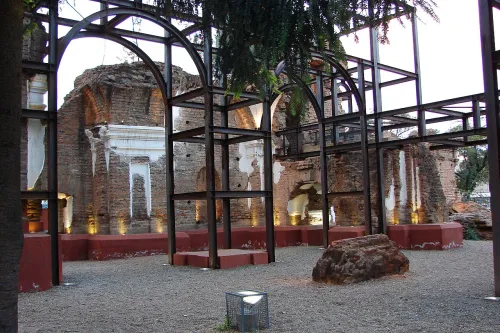
    These roofless walls are what remains of the church of San Francisco, dedicated to the Immaculate Conception, on today's Beltrán and Ituzaingó streets. The building first belonged to the Jesuits; after the order was expelled it passed to the Franciscans, and the 1861 earthquake destroyed it. The ruins are now protected as a Monumento Histórico Nacional and stand in the open.

    Of all the great churches that once surrounded the founding square, this is the one you can still stand next to. That makes it the founding quarter's most direct link to the city before the earthquake, and seeing the walls up close is a different experience from glimpsing them across the plaza. It costs nothing to stand in front of them.

    The site isn't open every day, and a small interpretation centre inside prefers a prior appointment, so arrange one if you want the full explanation. If it's shut when you pass, you aren't missing the main event: the walls are.

    The Franciscans didn't stay among the rubble. Their new church went up in 1875 in the new city, and that's where you head next: 1850 m, about 27 minutes, the walk from old Mendoza into the one built after the earthquake. Seeing ruin and basilica within half an hour of each other is the clearest before-and-after on the route.

    Local name
    Ruinas del Templo de San Francisco
    Hours
    Tue–Sat 09:00–19:00, Sun & holidays 16:00–19:00, Mon closed
    Price
    Free
  3. 3

    Basílica de San Francisco

    Basílica de San Francisco in Mendoza, stop 3 on the self-guided walking tour

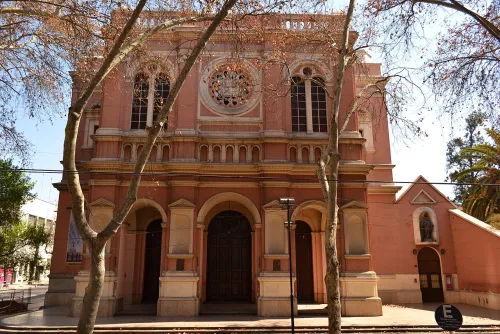
    The neo-Romanesque façade on Avenida España, at the corner of Necochea opposite Plaza San Martín, belongs to the church the Franciscans built to replace the one you just saw in ruins. Architect Urbano Barbier designed it, and when it was finished in 1875 it was the first church raised in Mendoza after the 1861 earthquake. The façade takes its cue from La Trinité in Paris.

    Look up and something seems missing, and it is. The original plan had two towers and a central bell tower; another earthquake in 1920 destroyed them, and the idea was dropped afterwards, so today a gable roof closes the building. Pope Pius XI raised the church to a minor basilica in 1926, and on 30 July 1928 it was declared a National Historic Monument.

    Inside you find a three-nave basilica covering 2300 square metres, enclosed by brick walls 0.90 m thick. Twelve large columns with Corinthian capitals carry the vaulted ceiling and divide the naves into seven bays, while four broad columns mark out a wide atrium. Look for the image of the Virgen del Carmen de Cuyo, the Virgin that San Martín, general of the Army of the Andes, called upon.

    Going in is free and worth about twenty minutes if the earthquake story or San Martín interests you. Timing matters: its hours are short on some days, and a mid-week morning is your best chance to find it open. From here it's 600 m, about 9 minutes, to the theatre on the city's central square.

    Hours
    Tue–Fri 10:00–19:00, Sat 19:00–20:00, Sun 09:30–12:15 & 19:00–20:00, Mon closed
    Price
    Free
  4. 4

    Teatro Independencia

    Teatro Independencia in Mendoza, stop 4 on the self-guided walking tour

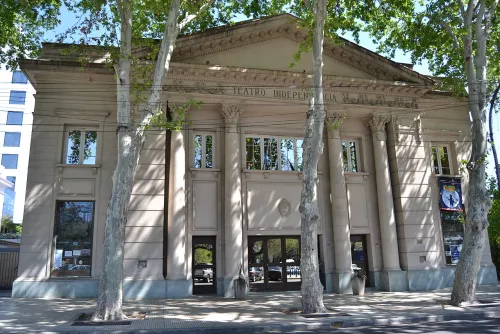
    Teatro Independencia is Mendoza's main stage, and its front on Calle Chile tells you it was built to impress: a neoclassical pediment on Corinthian columns, a rococo frieze, the coat of arms of Mendoza in bas-relief and a balustrade crowning it all, in the French academic style.

    It grew out of a 1922 provincial plan for a tourist corridor on Plaza Independencia. That year Governor Carlos Washington Lencinas opened the Plaza Hotel on the same street and signed a contract for the province's first opera house with Faustino and Mauricio da Rosa, who were then running the Teatro Colón in Buenos Aires under concession. Architect Alfredo Israel's plans were approved in October 1923, and the firm of engineers Perrone and Ayerza took two years to build it.

    The theatre opened on 18 November 1925 with the premiere of 'La emigrada', by the Argentine librettist Vicente Martínez Cuitiño, starring Camila Quiroga. On 15 May 1930 Mendoza saw its first sound film here, 'El desfile del amor' with Maurice Chevalier, Jeanette MacDonald and Lupino Lane. When the hall was adapted for cinema in 1944, the first film it showed was Casablanca.

    Inside, the hall follows the Italian opera houses: grey marble in the vestibule, four levels of galleries and 730 seats. To see it without a show, book the guided tour 'Tras el Telón' through entradaweb.com.ar; otherwise enjoy the façade. The plaza itself is only 180 m away, about 2 minutes.

    Hours
    Guided tours Saturdays from 11:00 (booking required); box office open Wed–Sun 18:00–21:00 during scheduled performances
    Price
    Variable according to show programming; guided tour 'Tras el Telón' from 1,000 ARS via entradaweb.com.ar
  5. 5

    Plaza Independencia

    Plaza Independencia in Mendoza, stop 5 on the self-guided walking tour

    After the 1861 earthquake, engineer Julio Balloffet redrew Mendoza as a checkerboard and made open space the priority: squares where people could find refuge from future quakes. He planned five of them, one in the centre and four at equal distances around it. Plaza Independencia, opened in 1863, is the central one, filling the four central blocks between Patricias Mendocinas, Chile, General Espejo and Rivadavia.

    In its first years people simply called it the Parque. It had a balustrade, a horse-drawn carousel for children and an artificial lake that was the main attraction. The buildings around it came later: the Colegio Nacional Agustín Álvarez on Calle Chile in 1911, the Plaza Hotel in 1922 and the theatre in 1925. The Legislatura Provincial at the corner of Patricias Mendocinas and Sarmiento is older, from 1889.

    Remodelling began in the early 1940s. In 1968, under mayor Víctor Fayad, a municipal mini-theatre opened beneath the square, the plaza was connected to the Paseo Peatonal Sarmiento, the Museo Municipal de Arte Moderno opened and the Teatro Julio Quintanilla was refurbished. The square's present look comes from a complete remodel under mayor Roberto Iglesias.

    Today it covers more than 55,000 square metres. Find the dancing-water fountain and its frieze 'La Libertad, esa gesta anónima'. At weekends artisans set up stalls along some of the side streets, and street performers are a regular sight. It's all free, so linger before the 700 m, about 10 minute walk to Plaza España, which takes you past the Museo Municipal de Arte Moderno de Mendoza.

    Hours
    Open 24/7
    Price
    Free
  6. 6

    Plaza España

    Plaza España in Mendoza, stop 6 on the self-guided walking tour

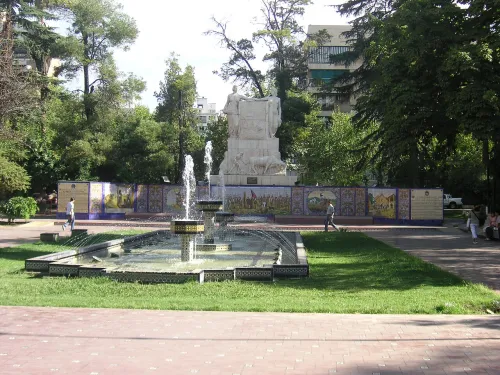
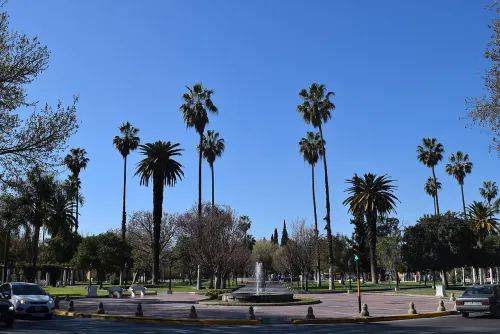
    Plaza España is one of the four squares set symmetrically around Plaza Independencia, alongside San Martín, Chile and Italia, and it's widely considered the prettiest in the city. It lies between Avenida España, Montevideo, 9 de Julio and San Lorenzo. Like its siblings it goes back to the rebuilding after 1861; it was first called Montevideo, then Carlos Pellegrini, before taking its current name.

    The layout borrows from a Spanish patio, with a fountain at the centre, and at the far end rises the Monument to Hispanic-Argentine Brotherhood. Spanish sculptor Luis Bartolomé Somoza carved it in travertine marble from San Juan. It was handed over to Governor Faustino Picallo on 11 March 1949, at the end of his term, and after a remodel the square was inaugurated on 12 November that year by Blas Brisoli.

    Read the monument from the top. A woman stands for Spain, and a young woman for Argentina, holding a bunch of grapes for the land of Mendoza. The central block shows one of the caravels of Columbus's first voyage in relief, and beneath it two oxen pull a plough, a symbol of the country's fertile soil.

    Then go close to the base. Its frieze by Manuel Escudero has seven painted ceramic scenes, among them the discovery of America, the missionary work of the religious orders and the founding of Mendoza by Pedro del Castillo in 1561, the very square where you started. Ahead is the longest leg: 3090 m, about 45 minutes, to Parque General San Martín.

    Hours
    Open 24/7
    Price
    Free
  7. 7

    Parque General San Martín

    Parque General San Martín in Mendoza, stop 7 on the self-guided walking tour

    The park is another child of the earthquake. After 1861 the city suffered epidemics of diphtheria, cholera and measles, and public health shaped the reconstruction plans of Emilio Civit, Minister of Works and Utilities. His Provincial Law No. 3 provided for reforestation as part of a flood-control plan. After many delays, Governor Juan Cornelio Moyano signed Law No. 19 on 6 December 1896, creating the Parque del Oeste, the Western Park, and construction began that same day.

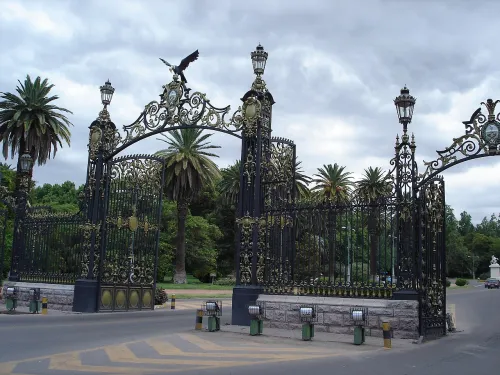
    Its designer was the French-Argentine landscape architect Carlos Thays, who combined English and French 19th-century styles. At the main entrance, look for the gates installed in 1909, decorated with a condor and the city's coat of arms. The park was later renamed in honour of General José de San Martín.

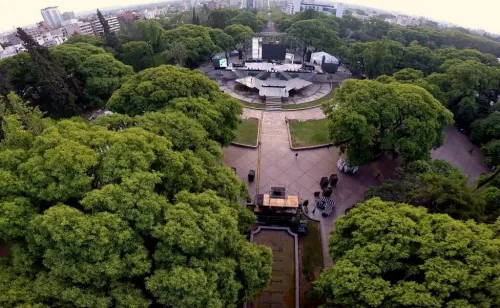
    It's vast: 393 hectares, with 34 sculptures along its paths and roads. The rose garden promenade opened in 1919, and the large lake dates from 1906; the Club Mendoza de Regatas, founded in 1909, is based there. Since 1936 the Frank Romero Day amphitheatre in the park has hosted the Fiesta Nacional de la Vendimia, the national grape harvest festival.

    The park is free and open at any hour. Give yourself half an hour for whichever corner draws you, then follow the route 1730 m, about 25 minutes, to Cerro de la Gloria.

    Hours
    Open 24/7
    Price
    Free
  8. 8

    Cerro de la Gloria

    Cerro de la Gloria in Mendoza, stop 8 on the self-guided walking tour

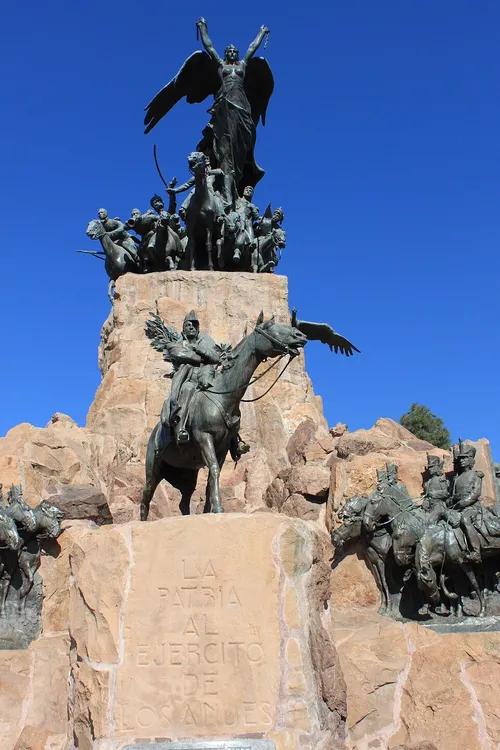
    The hill was called Cerro del Pilar until 30 January 1913, when the provincial government renamed it Cerro de la Gloria. The name points to what stands on top: the Monument to the Army of the Andes, marking the centenary of San Martín's crossing of the Andes to free Chile and Peru and secure the independence of the United Provinces of the Río de la Plata. It's the campaign that was prepared in the old town where you began.

    The monument was inaugurated on 12 February 1914, the 97th anniversary of the battle of Chacabuco. Uruguayan sculptor Juan Manuel Ferrari merged two of his own models into the final design, working with Francisco Moreno of the national selection commission. The large bronzes were made in Buenos Aires, and the base of rocks weighing several tons symbolises the Andes range itself.

    Walk around it slowly. Statues and reliefs tell the main episodes of the campaign, and the ensemble reaches 16 metres at its highest point. Footpaths lead up to the summit, and you'll see the old Mendoza zoo on one of the slopes, which the provincial government wants to turn into an Ecoparque.

    This is where the walk ends. If San Martín's story has hooked you, Santiago de Chile lies on the other side of the crossing.

    Hours
    Open 24/7
    Price
    Free
Walking tour route map of Mendoza Route loaded
Plaza Pedro del CastilloRuinas de San FranciscoBasílica de San FranciscoTeatro Independencia+4
All 8 stops are already on the map.
You just press start.
AI Tour Guide

You've read the Mendoza route. Now walk it with a guide in your ear.

Press start wherever you are, even hundreds of kilometres from Mendoza, and the guide begins telling its stories right away. In the city, pick any of the 8 stops to start from: it leads you there, then talks with you the whole route, asking, listening, remembering, and shaping the tour around your answers.

8stops 8.3km 2 hwalking 13languages
▶Start the tour free

Free to start · Runs in your browser · No app, no download

Shorter Ways to Walk Mendoza

The route splits naturally at Plaza España, where the old-city story ends and the long walk to the park begins.

Earthquake story, founding square to Plaza España

Stops: 1, 2, 3, 4, 5, 6

For anyone here mainly for history. Six stops and 50 minutes of walking take you from the colonial town to the squares of the new city. Everything is free; only the theatre tour costs extra.

City-centre loop

Stops: 3, 4, 5, 6

If you're staying in the centre and have a spare morning: 21 minutes of walking between the basilica, the theatre and the two squares. Free, apart from the theatre tour.

Park and Cerro de la Gloria

Stops: 6, 7, 8

For walkers who want green space and the monument: start at Plaza España and walk 70 minutes through the park to the hill. No admission anywhere.

How Long Does This Mendoza Tour Take, From Plaza to Summit?

The walking alone takes 2 hours for 8.3 km, and the legs are uneven: the first hop takes 2 minutes, the stretch from Plaza España to the park 45 minutes. With about twenty minutes each at the ruins and inside the basilica, a proper lap of each square and half an hour in the park, plan about 4.5 hours.

A sample weekday: leave Plaza Pedro del Castillo at 09:30, reach the basilica around 10:35, be on Plaza Independencia around 11:15 and in the park around 12:45. You'd reach the monument around 13:40 and wrap up around 14:00.

Short on time? The earthquake half to Plaza España takes about 2.5 hours with visits, the centre loop about 1.5 hours, and the park with the hill a little over 2 hours.

Before You Set Off in Mendoza

  • Start and finish: Start at Plaza Pedro del Castillo and finish on Cerro de la Gloria. You can join at any stop, but this order follows the city's story from colonial town to rebuilt city to the monument.
  • Best day and time: A mid-week morning works best, when both the ruins and the basilica are open. At weekends their hours are much shorter, so the inside visits are harder to fit in.
  • Costs: The squares, the park, the hill, the ruins and the basilica are free; only the theatre's guided tour costs extra. The GPS route is free. The AI Tour Guide starts with 100 free credits; after that you choose this tour all-inclusive for €19.99 with no time limit, or €5 per hour.
Walking tour route map of Mendoza
AI Tour Guide

Your Mendoza guide is ready when you are.

Press start and a voice AI Tour Guide takes it from here: leading the route through Mendoza, telling the stories, and turning your walk into a real back-and-forth conversation. No app or download is needed; it runs in your browser.

8stops 8.3km 2 hwalking 13languages
▶Start the tour free

Free to start · Runs in your browser · No app, no download

What the AI Tour Guide Adds Between the Ruins and the Summit

On this route the AI Tour Guide ties two threads together while you walk: the 1861 earthquake that runs from the ruined church to Balloffet's squares, and San Martín, who links the founding quarter to the monument on the hill. It notices which thread you follow and shapes the long walk to the park around it. Wonder aloud what became of the Jesuits who first owned San Francisco, or how Mendoza lived in the years after the quake, and it picks up the story; cut in whenever you like.

A Real Conversation A voice AI Tour Guide greets you, leads the whole route, and tells the stories and facts as you walk, asking what you want to see and keeping a real conversation going. Not a recording you press play on.
Map Navigation Follow the route on the map and walk at your own pace. You choose where to start and when to move to the next stop.
Ask Anything Curious about a building you pass? Ask your AI Tour Guide on the spot and the conversation carries on.
13 Languages Switch language anytime. No separate tour needed.
Start free in your browser

Common Questions About Walking Mendoza

Can I get to Cerro de la Gloria by car or coach instead of walking?

Yes. Paved roads, with separate lanes up and down, lead to the summit and pass several viewpoints. A few metres from the monument there's parking for about 40 cars, and coaches are allowed too.

Are there toilets on the route?

Near the monument on Cerro de la Gloria there are toilets and a police post, handy since the route ends there.

Where can I catch a concert or show along the route?

Teatro Independencia is home to the Philharmonic Orchestra of the Province of Mendoza. When performances are scheduled, you can buy tickets at its box office.

What else is there in Parque General San Martín if I have more time?

Besides the rose garden and the lake, the park holds the Cornelio Moyano Museum of Anthropology and Natural Sciences with 40,000 exhibits, a botanical garden, the Universidad Nacional de Cuyo and the Estadio Malvinas Argentinas.

Is the tour really free?

Yes. The whole tour is free: the route, the interactive map and the navigation cost you nothing. Only the voice AI Tour Guide is optional and paid: you test it with 100 free credits, then you pay either €5 per hour or €19.99 for this whole tour, with no time limit.

Do I need to download an app?

No. Everything runs in your phone browser. Open the route and start walking, no download and no sign-up required.

Do I need to book the walking tour in advance?

No booking needed. This self-guided tour is available anytime. Open the route in your browser and start walking. The AI Tour Guide works instantly, no app, no reservation required.

What languages is the AI Tour Guide available in?

The AI Tour Guide speaks 13 languages, so you take the tour in your own language and can switch at any time.

Can I skip stops or change the route?

Yes. Skip any stop, spend extra time at places you like, or start the route from any point. It is your walk, you set the pace.
Image credits
▶ Start free in your browser Runs in your browser, no app, no download