



Castel dell'Ovo
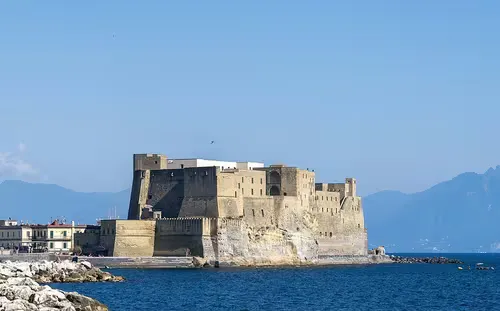
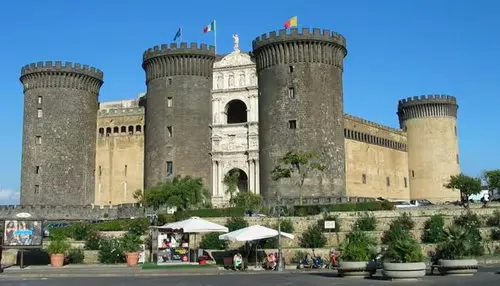
The squat yellow fortress on its spit of rock is where Naples began. Castel dell'Ovo stands on Megaride, once an island and now joined to the shore, and it is the oldest castle in the city. It is currently closed, so this is a stop for the outside: walk out along the causeway, look at the massive walls rising straight from the water and back at the city curving around the gulf.
The name means Egg Castle. Medieval Neapolitans thought of the Roman poet Virgil as a sorcerer, and legend says he set a magic egg into the foundations to hold the walls up. If the egg ever broke, the castle would fall and disaster would strike Naples. It is said to lie there still, together with his bones.
The real history is just as layered. Greek settlers from Cumae founded Palaeopolis, the Old City, around this harbour in about 650 BC; when the town grew on a new grid it became Neapolis, the New City. In the 1st century BC the Roman Lucullus built a lavish villa here, and in 476 Romulus Augustulus, one of the last Western Roman emperors, was sent here into exile. Locals later tore the ruins down so Saracen raiders could not use them, and the Normans built the first castle in the 12th century. Once the Anjou kings moved their court to Castel Nuovo, it became treasury and prison.
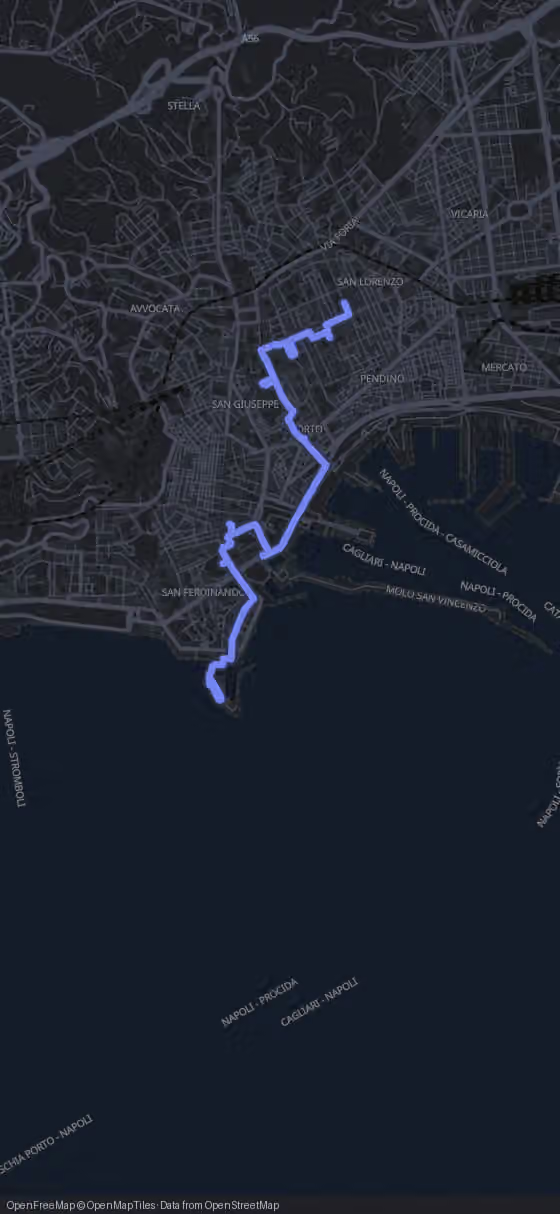
From here you walk 1450 metres, about 21 minutes, along the water and up to the great square of the kings.